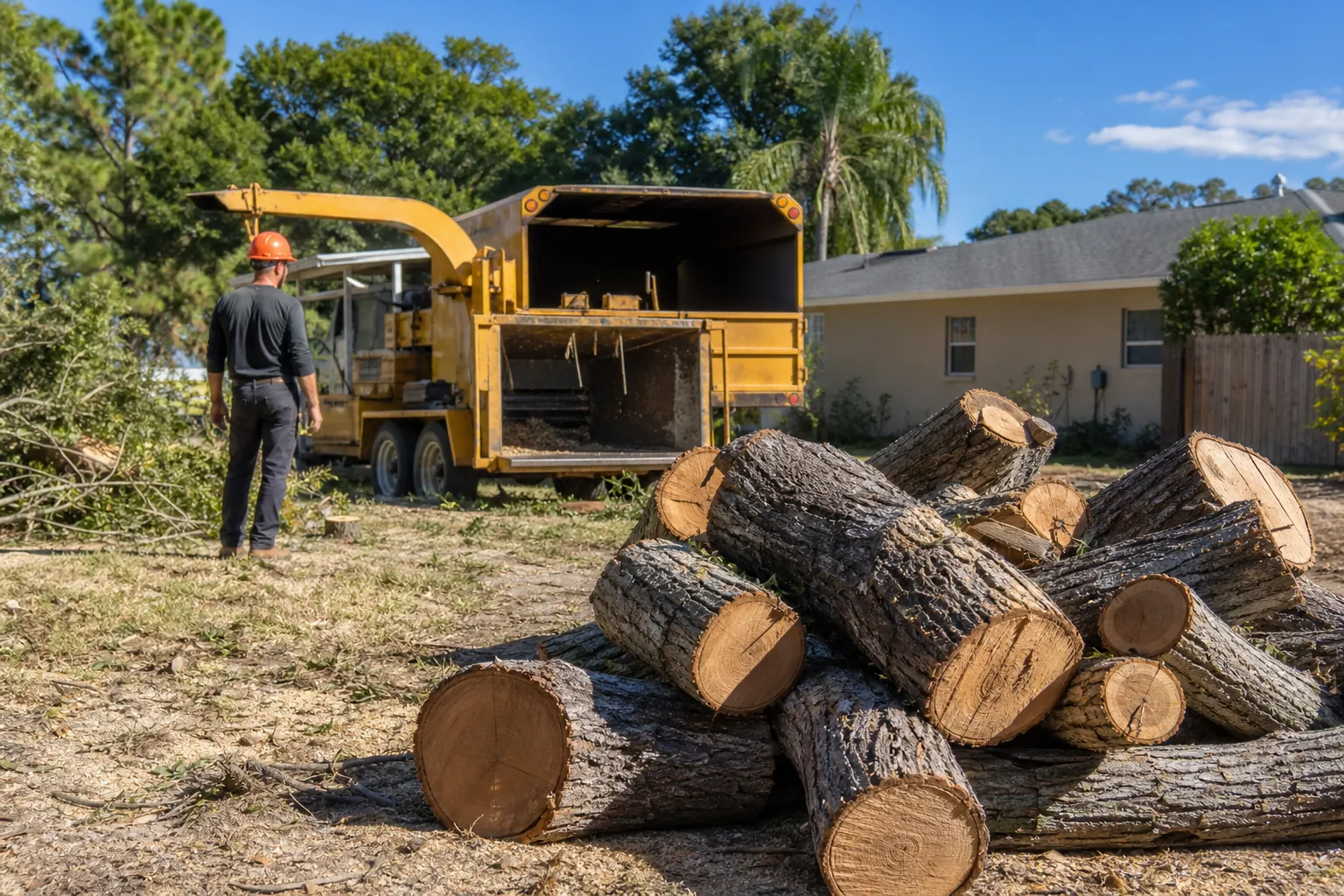
A tree coming down does not always mean every piece has to leave your property. You may want to save a few logs for woodworking, retain suitable wood for an outdoor fire, or keep a section with sentimental value. In Deltona, planning those choices before tree removal helps prevent confusion about what stays, where it goes, and who will handle it afterward.
If you are wondering whether you can keep wood after tree removal in Deltona, the practical answer is often yes, subject to the condition of the tree, safe handling, property access, and the agreed scope of work. Keeping wood is a decision to discuss before work begins, not something to leave until the truck is loaded.
Florida Foliage can discuss retained wood when planning tree removal. This guide explains what to ask, which pieces may be useful, and how Florida moisture, pests, and storm preparation affect your decision.
Agree On What Stays Before The Tree Comes Down
Do not assume that hiring a company for tree removal automatically means you will keep the trunk. Likewise, do not assume every branch and log will be removed unless that is included in your agreement. A clear written scope should identify the materials to remain and the materials to leave.
Be specific about your goal. Saving one attractive trunk section is very different from retaining the entire tree. The first choice may require a designated placement area. The second can leave you with a substantial pile of wood, small limbs, bark, and leaves.
Discuss your request during the property assessment. The crew needs to consider equipment access, the tree's condition, nearby structures, and how the tree can be dismantled safely. Your preferred log length may not fit the safest removal method.
- Tell the company whether you want selected trunk sections, larger branches, or all suitable wood retained.
- Identify a placement area that does not block driveways, gates, sidewalks, drainage paths, or equipment access.
- Ask what cutting and placement are included, rather than assuming the wood will be ready for your intended use.
- Confirm who is responsible for moving, splitting, storing, or removing retained pieces after the job.
- Ask how unsuitable wood and leftover brush will be handled under the agreed scope.
Keep the agreement realistic. Cutting a tree into manageable removal sections is not the same as producing uniform firewood or preserving a woodworking log. Discuss those distinctions before selecting what to retain.
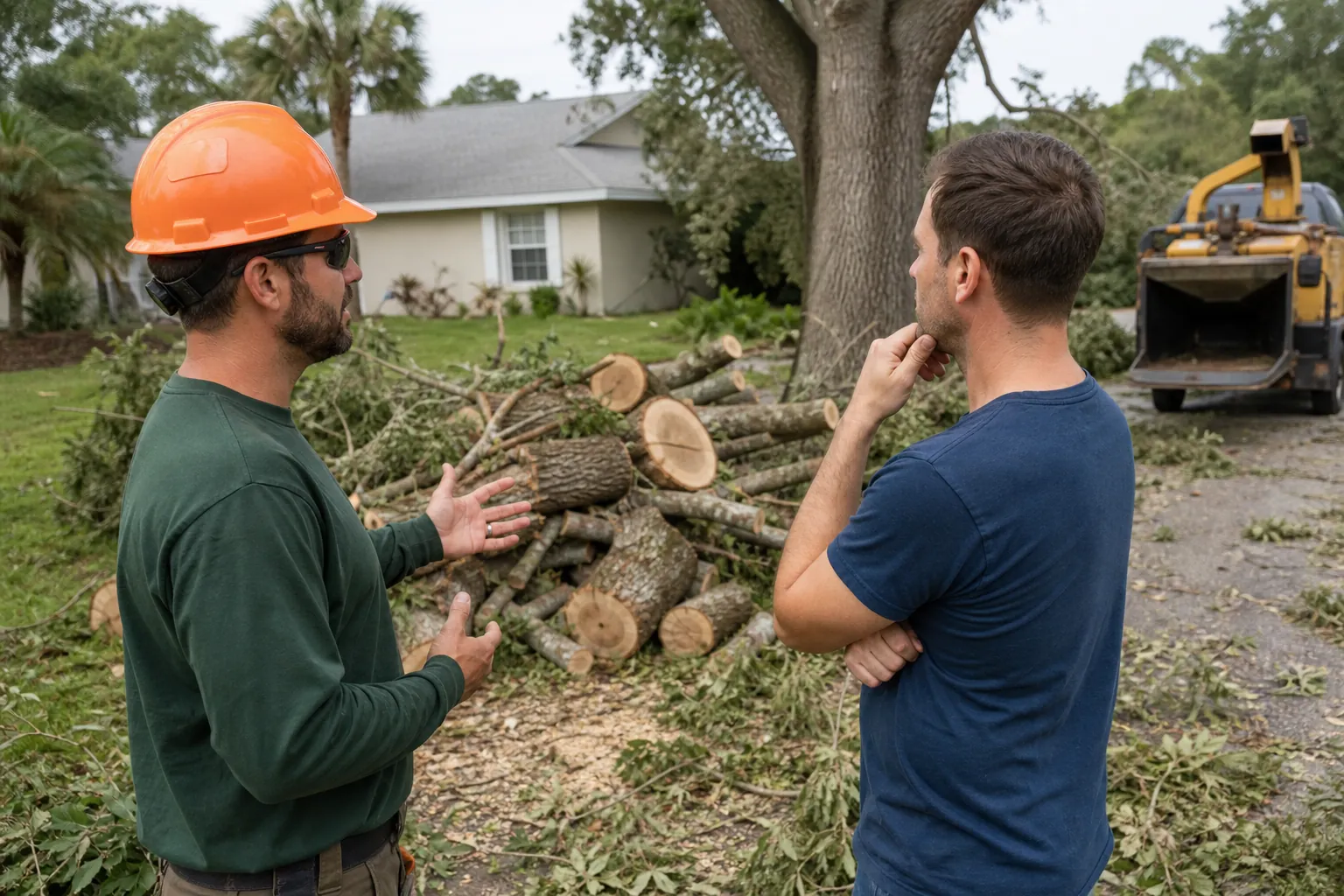
Choose Wood Based On Its Condition And Intended Use
The right wood to save depends on what you plan to do with it. A solid trunk section could interest a woodworker, while smaller sound pieces might be suitable for an outdoor wood-burning appliance. Hollow, decayed, or pest-damaged sections may have little practical value.
Start with identification. Knowing the tree species helps you research drying behavior, durability, and suitability for a particular project. If identification is uncertain, ask during a tree inspection rather than guessing from the bark after removal.
Wood For Outdoor Burning
Freshly cut wood generally contains too much moisture to burn well. Suitable wood needs to be prepared, stored, and dried before use. Follow the instructions for your fire pit or other appliance, and confirm current local fire restrictions with the appropriate authority.
Do not burn painted, chemically treated, or otherwise contaminated wood. Avoid treating every piece from a removed tree as automatically suitable for cooking. For food preparation, use positively identified, appropriate wood and follow the appliance manufacturer's guidance.
Wood For Furniture Or Craft Projects
For woodworking, useful characteristics may include sound wood, an interesting grain pattern, or sufficient dimensions for the project. However, an attractive exterior does not reveal every internal defect. Cracks, embedded metal, rot, and insect damage can limit what you can make.
Contact the person who will process the wood before removal if you have a specific project in mind. Ask about acceptable dimensions, transport arrangements, and drying needs. Do not assume Florida Foliage provides milling, woodworking, or firewood preparation as part of tree removal.
Wood Kept For Sentimental Reasons
If the tree has personal meaning, a small section may be easier to preserve than a large log. Choose a manageable piece and discuss its condition. A keepsake still needs appropriate drying and storage to reduce cracking, mold, and insect problems.
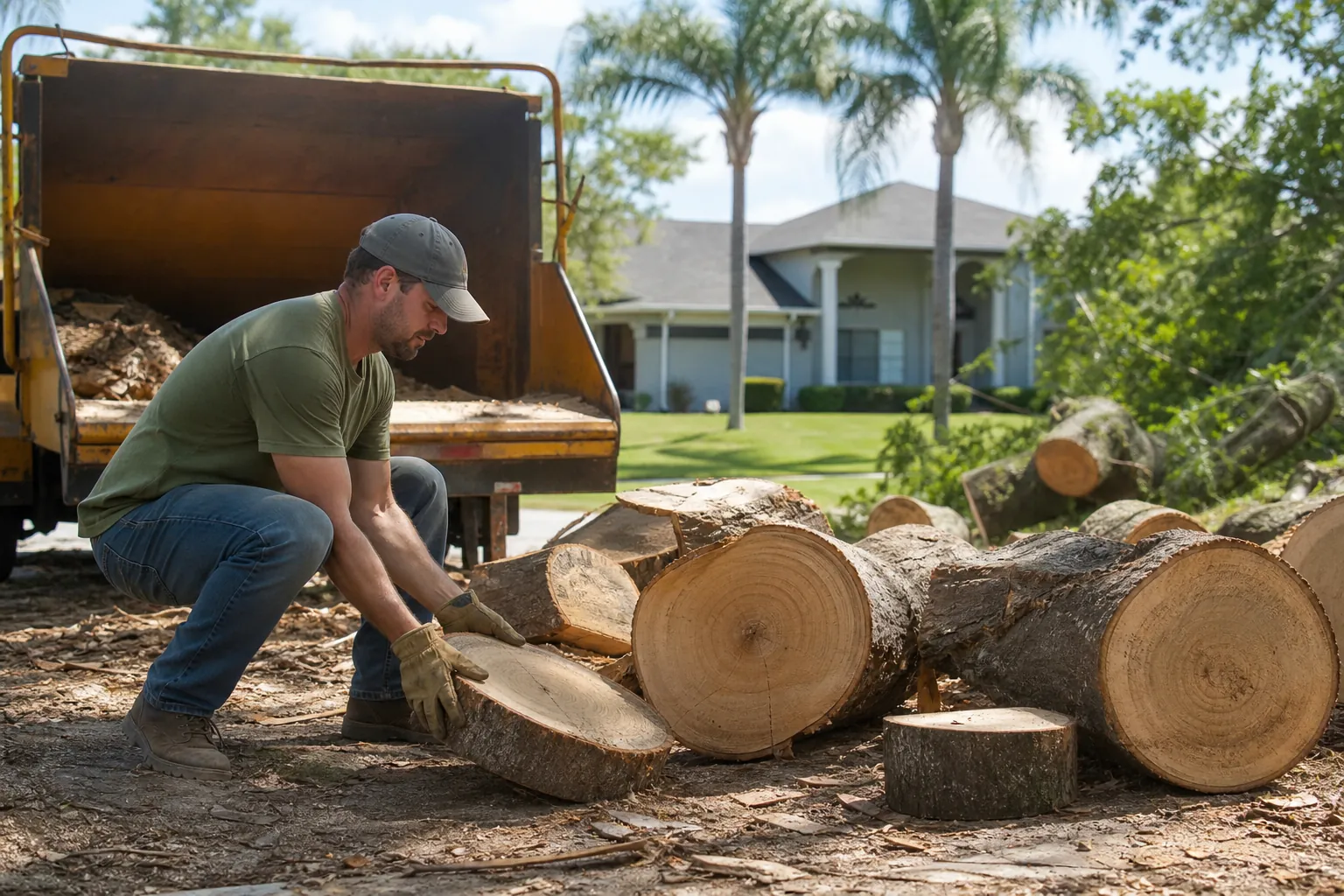
Understand What Removal Methods Mean For Saved Logs
Tree removal near a home, fence, pool, or utility line often requires controlled cutting into sections. The size of each section depends on the available space, equipment, tree structure, and the crew's safety plan. Preserving a long trunk cannot take priority over protecting people and property.
Crane tree removal may be appropriate for certain site conditions, but it does not automatically mean a large log can be placed wherever you want. Equipment reach, load considerations, access, and ground conditions all influence how material can be handled.
Tell the company about a desired woodworking section early. Once a trunk has been cut into short pieces, its original length cannot be restored. Even with advance notice, decay or hidden defects may make the requested section unsuitable.
Stump grinding is a separate consideration. Retaining aboveground wood does not determine whether the stump will remain or be ground. Confirm both decisions in the scope, including how grinding material will be addressed. Do not treat stump grindings as equivalent to clean trunk wood.
The same planning principle applies during land and lot clearing. If you want selected logs saved, identify that preference before work starts. Separating useful wood from a mixed clearing pile afterward may be difficult and unsafe.
Plan A Safe Storage Area In Deltona
Florida's humid conditions and frequent rain can make wood storage challenging. A damp pile resting directly on soil is more likely to stay wet and provide shelter for pests. Choose a location with airflow, sensible drainage, and enough room to access the wood without climbing over it.
Keep stored wood away from the house and other structures where practical. Avoid placing it against siding, fences, or shed walls. Ask a qualified pest professional about appropriate separation for your property if termites or other wood-destroying insects are a concern.
A stable base helps keep wood off the ground, but it must support the weight safely. Do not improvise a platform from weak or deteriorated materials. Round logs can roll, and tall stacks can collapse, especially as pieces shift during drying.
- Choose a level location where stored wood will not obstruct drainage or routine property maintenance.
- Keep stacks low and stable, with a layout that limits rolling and shifting.
- Cover the top when appropriate while allowing air to circulate around the sides.
- Keep children and pets away from loose logs, unstable stacks, and active cutting areas.
- Inspect the storage area periodically for shifting pieces, standing water, and signs of pests.
Check community requirements before choosing a visible storage location. HOA or condo rules may address outdoor storage and common areas. Confirm any applicable city or county requirements directly rather than assuming a woodpile is unrestricted.
Allow For Drying Without Relying On A Fixed Timeline
Fresh wood does not dry on a universal schedule. Species, piece size, whether it has been split, airflow, rainfall exposure, and storage conditions all matter. In Deltona, a shaded, tightly covered pile may stay damp even when the top appears dry.
For burning, use a moisture meter correctly and follow the requirements of the intended appliance. A surface reading alone can be misleading. If you do not know how to assess firewood moisture, seek guidance before using it.
For woodworking, drying is a different process. Large rounds and thick sections can crack as moisture leaves unevenly. A woodworker may recommend specific preparation and storage methods, including protecting cut ends. Get that advice before attempting to preserve valuable pieces.
Do not seal wet wood inside an unventilated container and expect it to dry. Similarly, moving fresh logs into a garage or enclosed room can introduce moisture and insects. Plan outdoor storage or a suitable processing destination before retaining the wood.
Be honest about your available time. If you do not have the tools, space, or help to manage a pile, saving only a few pieces may be more useful than keeping everything. Retention should match a practical plan, not just the possibility that the wood might be useful someday.
Check For Pests, Decay, And Transport Concerns
A removed tree may contain insects even when the visible wood looks sound. Some insects use dead or declining wood, while others may already be present in the surrounding landscape. Storing logs close to buildings can create avoidable concerns.
Look for holes, tunnels, loose bark, insect activity, soft areas, and unusual debris. These signs do not always identify a specific pest or disease. If the tree was removed because of unexplained decline, ask whether an arborist report or tree inspection is appropriate before deciding how to use the material.
Keep suspect wood separate from healthy plants and other stored wood until you have reliable guidance. Do not assume that cutting a diseased tree down makes every piece harmless. Recommendations depend on the organism and the condition of the material.
Transport is another issue. Moving untreated wood can spread pests. Before taking logs or firewood beyond your local area, check current guidance and any applicable movement restrictions through official state and federal plant-health sources. A receiving campground or property may also have its own rules.
If someone offers to collect your retained wood, explain known concerns and confirm where the material is going. Giving it away does not eliminate the need for safe handling or responsible movement.
Avoid Injuries When Handling Heavy Tree Sections
Logs are often heavier than they appear. A short round can be difficult to lift, and irregular pieces may roll unexpectedly. Never assume you can move retained wood by hand just because it fits within the space you have chosen.
Stay out of the active work area during tree removal. Let the crew finish cutting, lowering, and placing material before inspecting saved pieces. Do not approach a suspended section or try to guide it yourself.
After the job, plan each move before starting. Consider the route, the weight, the footing, and where the piece will stop. Avoid moving logs on slopes without appropriate equipment and competent help.
- Wear suitable footwear and gloves when handling wood, while recognizing that protective gear does not make an unsafe lift safe.
- Keep hands and feet out of pinch points between logs, equipment, and fixed surfaces.
- Do not leave round sections positioned where they could roll toward a walkway or driveway.
- Use cutting or splitting equipment only if you are trained and can follow its safety instructions.
- Stop if a piece is too heavy or unstable to handle with the resources available.
Storm-damaged wood deserves extra caution. Bent limbs, tangled branches, and leaning sections can hold tension that releases suddenly. Leave hazardous material to professionals rather than attempting to salvage it yourself.
Make A Different Plan For Storms And Shared Properties
During emergency and hurricane tree removal, immediate hazards take priority over preserving wood. A blocked entrance, damaged structure, or unstable tree may require decisions that leave fewer options for preferred cuts or placement.
If conditions allow, explain your retention preference before work starts. Be prepared for the plan to change when hidden damage or unstable material becomes apparent. Never delay necessary hazard management simply to preserve a particular trunk section.
Stored wood also belongs in your broader storm preparation. Keep it out of drainage routes and evacuation access areas. Review loose or unstable stacks before severe weather, and do not assume a heavy piece is incapable of moving.
On commercial, HOA, or condo properties, ownership and approval should be clear before anyone keeps wood. Material from a common-area tree should not be treated as an individual resident's property without authorization.
Commercial tree services and HOA and condo tree services may involve several decision-makers. Identify who can approve retained material, where it may be placed, and who will manage it afterward. A documented plan helps prevent a saved log from becoming an access or maintenance problem.
Use A Simple Checklist Before Scheduling Removal
A useful retention plan answers three questions: What do you want, where will it go, and what will happen to it next? If any answer is unclear, reduce the amount you plan to keep or seek advice before the removal date.
- Identify your intended use and select only the amount of wood you can realistically manage.
- Discuss tree condition, desired section sizes, and safe placement with the removal company.
- Confirm the retention and debris-handling details in the agreed scope of work.
- Prepare a stable storage location and verify applicable community or local requirements.
- Arrange any later transport or processing without assuming it is included in tree removal.
- Plan how you will handle wood that proves unsuitable after cutting.
If removal is not yet clearly necessary, tree inspections and arborist reports can help inform the decision. Depending on the tree and site, tree trimming, canopy thinning, or crown reduction may be considered instead. Those options require an assessment and are not substitutes for removing a tree that cannot be retained safely.
Keeping wood can be worthwhile when it has a clear purpose and a safe destination. It can also create unnecessary work when there is no storage space or practical use. Saving a small, suitable portion is often the more manageable choice.
To discuss tree removal in Deltona and whether selected wood can remain on your property, call Florida Foliage at (386) 481-7913. Explain what you hope to keep before scheduling so the request can be considered alongside access, tree condition, and safe removal planning.
Call (386) 481-7913 to talk through next steps.