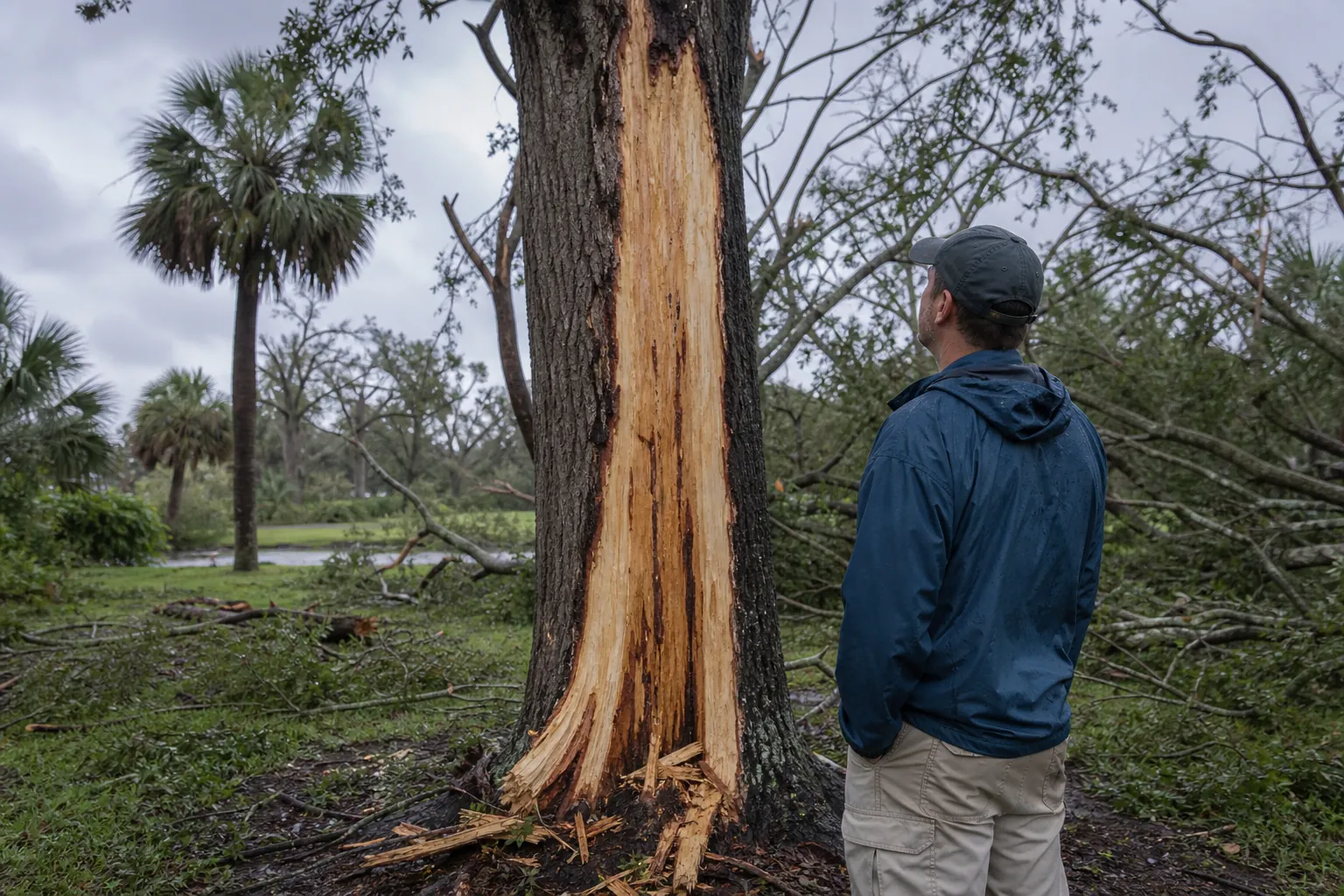
A tree can survive a lightning strike, but it can also become unsafe without looking dramatically different. A narrow bark scar, a suddenly bare branch or disturbed soil around the trunk may deserve attention, especially when thunderstorms arrive with heavy rain and gusty onshore winds.
For Florida property owners searching for lightning-struck tree signs, Florida's October 7-10, 2026 storm window calls for a cautious approach. Look from a safe location, keep people away from suspicious trees and avoid treating every storm symptom as proof of lightning. Wind, saturated soil and existing decay can produce overlapping signs.
This guide explains what to notice, when to stop inspecting and how to plan tree care and debris cleanup. Florida Foliage can help with tree inspections and arborist reports, tree trimming and tree removal when a closer assessment is needed.
Understand The October 7-10 Weather Context
As of the NHC Intermediate Advisory 4A at 1 PM CDT on October 7, 2026, Tropical Storm Isaias had formed in the southern Gulf of Mexico. The hurricane, tropical storm and storm surge watches described in that advisory covered only the northern Gulf Coast, including areas such as Bay St. Louis to Indian Pass, not Florida's east coast.
The practical tree-care concern on the east coast is the locally forecast combination of thunderstorms, repeated rain and onshore wind. The NWS Melbourne forecast discussion issued the morning of October 7 called for high coverage of showers and lightning storms through late week, with a marginal risk of excessive rainfall across east central Florida. Minor flooding was possible where heavy rain repeated.
The NWS Jacksonville forecast discussion issued the morning of October 7 reported saturated ground along the Northeast Florida I-95 corridor, strengthening onshore winds and additional periods of heavy rain Friday and Saturday. Those Friday and Saturday periods correspond to October 9 and 10.
These dated forecasts are not a claim of a hurricane threat, direct hit or coastal watch for Daytona Beach, Volusia County, Flagler County or other east coast locations. Follow updated official information as conditions change. For trees, the immediate priorities are keeping clear of falling limbs and recognizing when wet ground makes an already compromised tree less stable.
Recognize The Most Useful Signs Of Lightning Damage
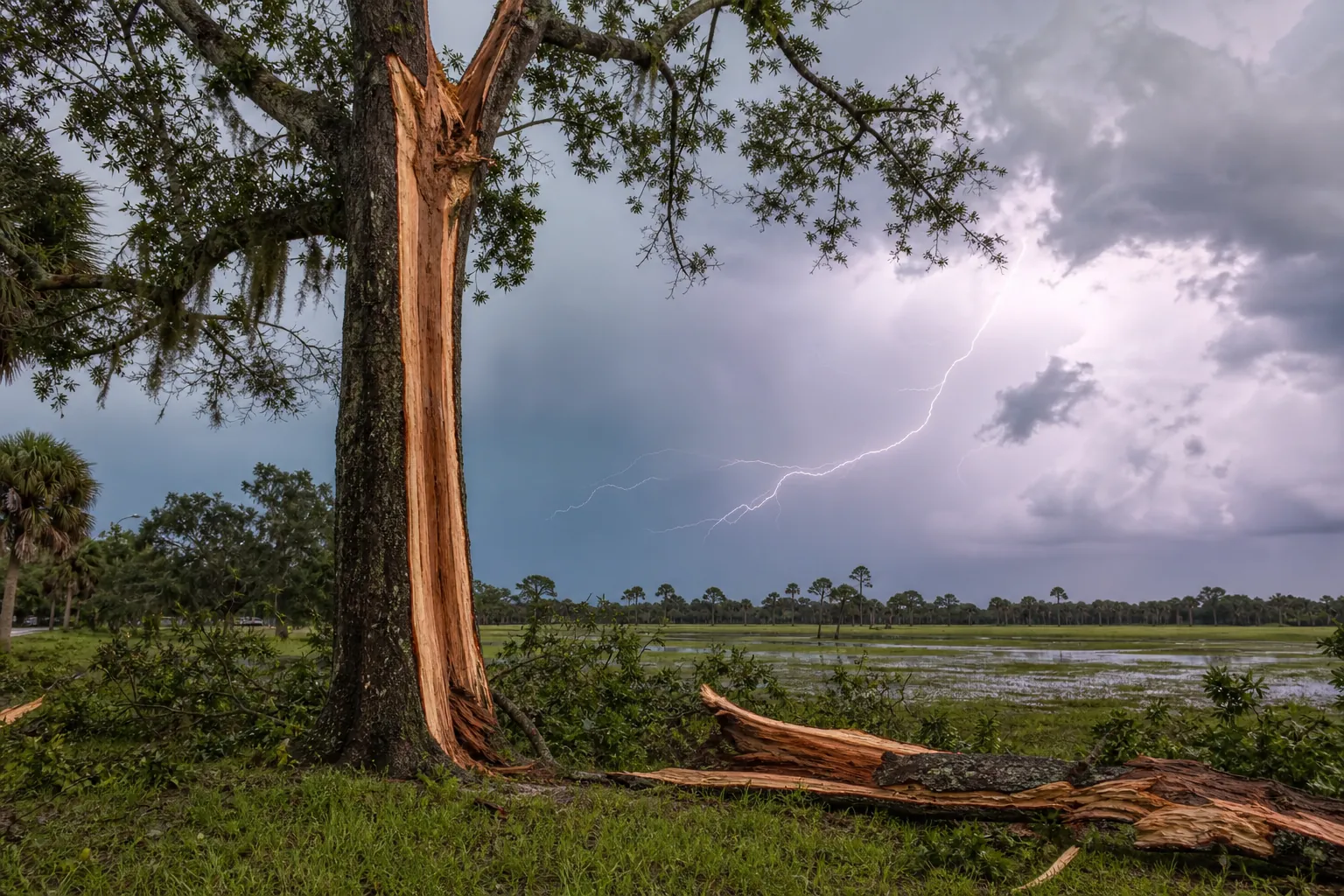
Lightning can travel along the outside of a tree or through internal tissues. Its effects vary with the tree's condition, moisture and the path of the electrical discharge. Some trees show obvious bark loss immediately; others develop symptoms later.
No single visual sign confirms a strike in every case. A tree inspection should consider the pattern of damage, the timing of symptoms and other possible causes.
- A fresh vertical strip of missing bark may trace a path from the upper trunk toward the ground. Exposed wood can look lighter than the surrounding weathered bark.
- A long split or irregular wound may appear where rapidly heated moisture damaged wood and bark. Do not approach closely to measure a new crack.
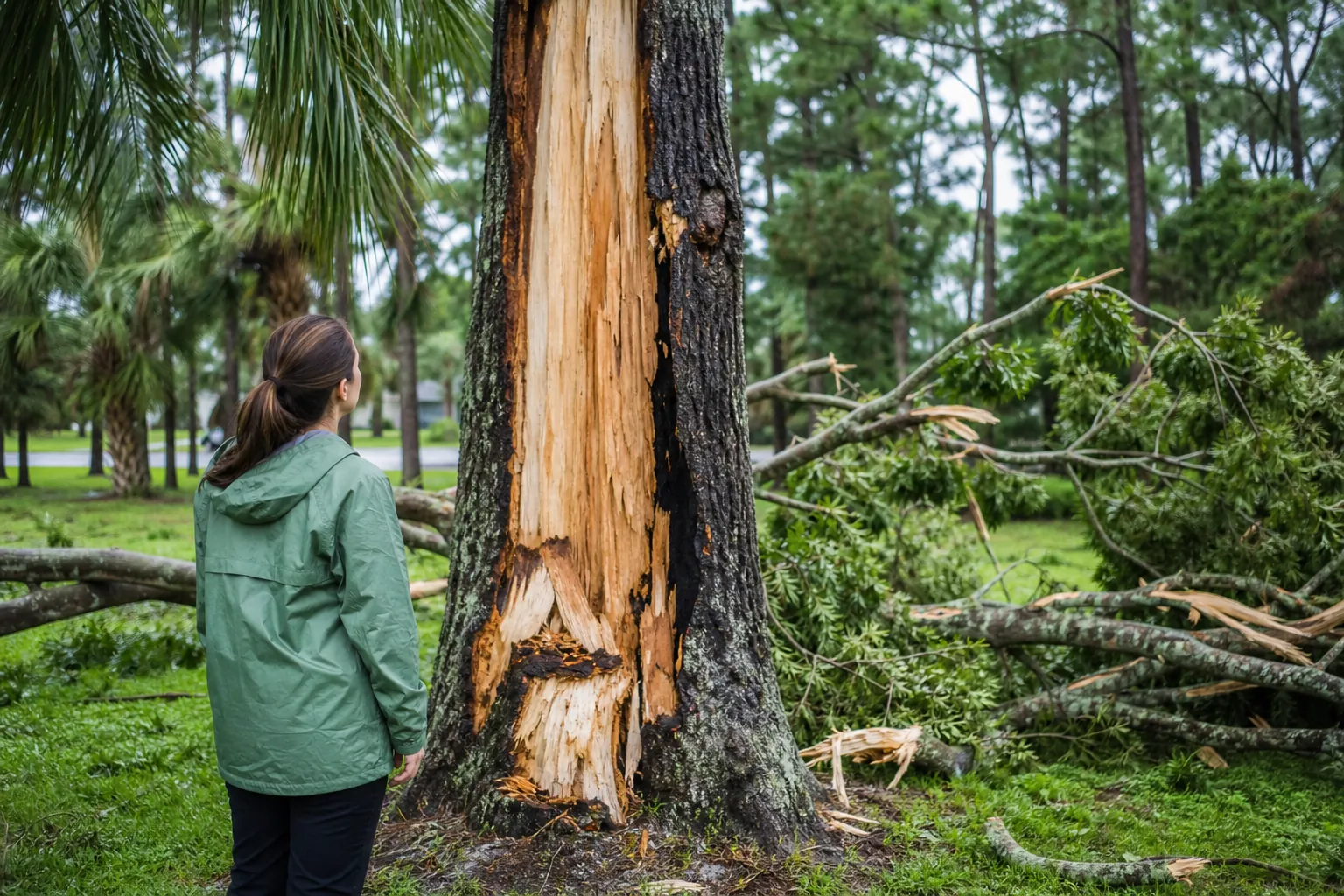
- Fresh bark fragments or wood splinters around the trunk may accompany a strike. They can also result from branch failure, so examine the overall scene from a safe distance.
- One section of the canopy may wilt, brown or lose leaves while nearby foliage remains green. This uneven decline can suggest damaged water-conducting tissue.
- A large branch may split, hang or break after the storm. Whether lightning or wind caused it, a suspended limb needs an exclusion area beneath it.
- A tree may show little visible damage even when lightning affected internal tissues or roots. The absence of a dramatic scar is not proof that the tree is unaffected.
A scorch mark is not required for lightning damage. Likewise, an old trunk seam, peeling bark or a preexisting cavity does not establish a recent strike. Photographs taken before the storm can help separate longstanding features from new changes.
Separate Lightning Symptoms From Wind And Wet-Soil Problems
During the October 7-10 window, a tree might experience lightning, branch-loading from wind and root stress from saturated soil at the same time. Identifying the immediate hazard matters more than assigning a cause from the yard.
A broken branch with torn wood can result from wind acting on a weak attachment. A vertical bark injury may be associated with lightning, but mechanical injury or an older wound can look similar. Browning leaves may reflect damaged roots, broken branches or another health problem.
Ground changes deserve special attention after repeated rain. Soil that was firm before a storm may soften, reducing the support available to some root systems. A tree with existing root damage or decay can become more vulnerable under those conditions.
- A new lean, especially toward a house, driveway or walkway, warrants keeping people away until the tree is assessed.
- Fresh cracks in the soil, a lifting root plate or newly raised ground near the trunk can indicate root movement.
- A mound on one side of the trunk with a depression on the other may suggest movement rather than ordinary surface erosion.
- A hanging limb, widening trunk split or visibly separated branch attachment is a concern regardless of whether lightning caused it.
Do not push on the trunk, dig around the roots or walk beneath the canopy to test stability. If the tree appears to be moving or failing, leave the area and keep others out. A professional inspection is safer than trying to distinguish every possible cause yourself.
Put Electrical Safety Before Tree Inspection
Any suspected contact between a tree and an electrical line changes the situation. A branch resting on a wire, a fallen line across debris or a line hidden in vegetation must not be treated as routine cleanup.
Stay away from downed power lines and call your electric utility for any line contact. Do not assume a line is harmless because it is quiet, does not spark or appears insulated. Trees, fences, wet ground and debris near electrical contact can present hazards.
- Keep people and pets away from the affected area without approaching the line to place a barrier.
- Do not touch a tree, limb, vehicle or other object that may be contacting an electrical line.
- Do not move debris with a rake, pole, rope or chainsaw when electrical contact is possible.
- Call emergency services if there is an immediate threat to life, a fire or someone injured, and notify the electric utility about the line contact.
Wait for the utility to address the electrical hazard before considering tree work. Tree removal or trimming should not be used as a substitute for utility clearance. When reporting the situation, describe what you can see from a safe position rather than moving closer for a photograph.
Check Your Property Safely After Thunderstorms
Wait until thunderstorms have passed and conditions allow a safe observation. Do not inspect trees during lightning, gusty conditions or active branch fall. Start from indoors if you have a clear view, then use an open area away from suspect trees when it is safe to go outside.
Look at the canopy, trunk and surrounding ground without standing beneath damaged branches. Scan nearby trees too, since a failed limb can land beyond the tree's immediate footprint.
- Photograph the whole tree from a safe location, then use camera zoom for bark wounds, broken branches and root-area changes.
- Record when you first noticed the symptoms and whether the tree's lean or canopy appearance has changed since then.
- Note nearby buildings, parking spaces, play areas and frequently used paths that could be affected by a failure.
- Keep vehicles, outdoor activities and pedestrian traffic away from suspect trees while arranging an inspection.
- Recheck from the same safe viewpoint after additional heavy rain or gusty wind, without entering the exclusion area.
For an HOA, condo property or commercial site, communicate temporary closures clearly. Do not route residents or customers beneath a damaged canopy to avoid a puddle or blocked walkway. Designate a safe alternate path instead.
Photos and notes help explain the concern, but they do not replace an on-site assessment. Internal decay, damaged branch attachments and root problems may not be visible in a phone image.
Decide Whether Inspection, Trimming Or Removal Is Appropriate
A lightning strike does not automatically mean a tree must be removed. The decision depends on structural damage, remaining living tissue, root condition and the consequences of a possible failure. A lightly damaged tree in an open area presents a different situation from a split tree over a home entrance.
Tree inspections and arborist reports can help document observed damage and explain reasonable next steps. An assessment should address both health and structure, including bark loss, cracks, branch attachments, existing decay and evidence of root movement.
Tree trimming may be appropriate when damaged limbs can be removed while retaining a stable tree. Canopy thinning or crown reduction should have a specific purpose based on the tree's structure, not be prescribed automatically because a storm is forecast. Excessive cutting can create additional wounds and weaken future growth.
Tree removal may be appropriate when damage leaves unacceptable structural risk or the tree cannot reasonably be retained. Emergency and hurricane tree removal can address urgent storm-related tree hazards, while crane tree removal may be considered when access, size or surrounding structures require a different removal approach.
Ask how the proposed work addresses the observed problem and what limitations remain afterward. No inspection can promise that a tree will withstand every future storm. Confirm any applicable tree-work requirements with your city or county before proceeding, especially for protected trees or site-specific restrictions.
Prepare Before More Rain And Wind Arrive
Preparation during the October 7-10 storm window should focus on practical risk reduction, not rushed cutting. If thunderstorms are approaching or the ground is already saturated, avoid starting work that leaves branches partly cut or equipment positioned beneath questionable trees.
From a safe location, identify trees with visible dead limbs, previous splits, cavities or existing lean near occupied areas. Share those observations when scheduling a tree inspection. Prioritize areas where a falling limb could affect people rather than treating every tree as equally urgent.
- Move movable outdoor items and vehicles away from suspect trees when doing so does not require entering a hazardous area.
- Keep accessible drainage routes clear of loose small debris only when there are no overhead or electrical hazards.
- Arrange a way to report fallen limbs or blocked access so residents, employees or family members do not investigate independently.
- Leave major pruning, climbing and chainsaw work to appropriately equipped tree-care professionals.
Commercial tree services and HOA and condo tree services can support a coordinated approach across shared properties. A clear list of tree locations, visible concerns and access limitations helps focus an inspection and reduces confusion when additional rain interrupts outdoor work.
Handle Debris Cleanup Without Creating Another Hazard
After a storm, separate ordinary loose debris from material that is still supporting or attached to a damaged tree. A branch on the ground can remain under tension, and a fallen trunk can shift if supporting limbs are cut.
Do not pull down hanging branches or cut a partly fallen tree yourself. Avoid climbing onto debris piles, working beneath suspended wood or placing equipment on soft ground beside an unstable root plate. Wet footing adds another reason to slow down.
- Check for electrical hazards before entering any debris area, and call the electric utility for any line contact.
- Leave attached, suspended or heavily loaded wood for professional assessment rather than trying to drag it free.
- Keep debris piles out of walkways and away from places where they could block visibility or drainage.
- Confirm current debris collection instructions with your local city or county before placing material for pickup.
Tree removal and tree trimming may be part of clearing damaged trees and limbs. Stump grinding can be considered after removal once access, ground conditions and underground utilities have been addressed. Broader land and lot clearing or brush hogging should remain separate decisions, not automatic additions to lightning-damage cleanup.
Monitor A Retained Tree And Know When To Call
A tree retained after a suspected strike may need follow-up because symptoms can develop gradually. Watch for expanding canopy dieback, new cracks, additional bark loss or changes around the roots. Take photographs from the same safe viewpoint so changes are easier to compare.
Do not strip loose bark, drill into the trunk or apply wound paint as a do-it-yourself diagnosis or treatment. Avoid piling soil or mulch against the trunk, and do not assume extra watering is helpful when the ground is already saturated. Follow tree-specific care recommendations after assessment.
If you notice a new lean, a hanging limb, a fresh trunk split or lifting soil near a tree that could affect people or structures, keep the area clear and seek professional help. For any electrical line contact, stay away and call the electric utility first.
To discuss tree inspections and arborist reports, storm-related tree trimming or tree removal, call Florida Foliage at (386) 481-7913. Describe the visible damage, nearby structures and any access concerns. A calm, safety-first assessment is the right starting point for deciding what the tree needs next.
Call (386) 481-7913 to talk through next steps.