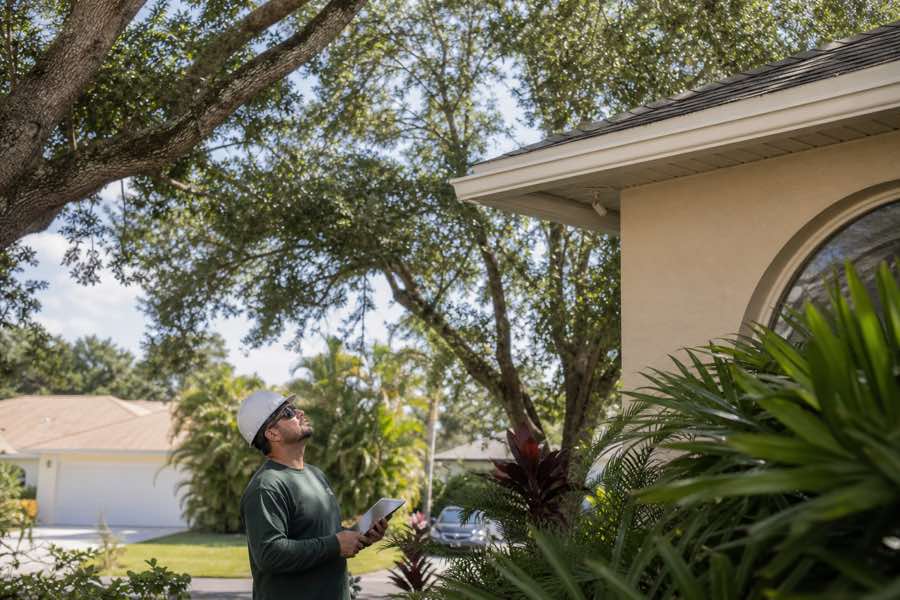
Choosing local tree trimming services for gutter clearance is about more than cutting back branches. In Port Orange, the right scope protects roof edges, keeps gutters open, and avoids turning a simple clearance job into unnecessary tree removal. A careful estimate should separate tree work from gutter or roofing work, then spell out where cuts end and cleanup begins.
- Measure branch contact, more than visible overhang.
- State the cut point and the roof boundary.
- Separate tree trimming from gutter or roofing repairs.
- Protect downspouts, drains, and the work area.
- Plan for future growth after the trim.
Florida Foliage serves Volusia and Flagler counties, with Daytona Beach as the primary market, and the team includes ISA Certified Arborists. If you are comparing Port Orange tree service options, ask for a scope that fits the site, the tree species, and the access around the house. That is often the difference between a useful trim and a rushed one.
For homeowners comparing tree pruning and gutter clearance, the main question is how much can be removed without creating avoidable stress or poor structure. UF/IFAS notes that cuts should be made with proper pruning technique and at appropriate locations, not at random points along a limb. See UF/IFAS pruning guidance for that basic principle.
What Affects Local Tree Trimming Service Cost?
Local tree trimming services are priced by scope, access, and risk around the house. A trim that only clears a few gutter-touching limbs costs less to organize than one that requires roof-edge access, dense canopy work, debris control, or careful work near utilities, fences, pools, or tight driveways.
Cost also shifts with tree size, species, and how many limbs need selective removal. A live oak over a tile roof is different from a small ornamental near a single-story gutter line. In coastal Florida, sandy soil, salt exposure, and storm history can change branch growth and access, so the estimate should reflect the real site, not a generic plan.
When you compare quotes, ask what is included in the trimming scope, where debris will go, and whether cleanup includes the roof edge, gutters, driveway, and yard. Florida Foliage can provide a free estimate, and the written scope should help you compare work fairly instead of guessing from a short phone description. You can request a free estimate or call (386) 481-7913.
| Scope item | What to confirm | Why it matters |
|---|---|---|
| Branch contact | Which limbs touch gutters, shingles, or siding | Defines the actual pruning target |
| Access | Ladder reach, roof boundaries, and work path | Changes the time and safety plan |
| Cut location | Where each limb will be reduced or removed | Helps prevent poor cuts and excess removal |
| Debris handling | Where cut material will be contained and staged | Protects the site during work |
| Cleanup | What surfaces are cleared after trimming | Sets the end point of the job |
Can You Negotiate a Local Tree Trimming Scope?
Yes, local tree trimming services can often be scoped more precisely, as long as the request stays realistic and safe. You can ask for gutter clearance only, roof-edge clearance only, or selective thinning around a problem side of the canopy. That keeps the work focused without asking for unnecessary removal.
A useful scope talks about branch contact, not vague “trim it all” language. Ask whether the crew will just create clearance at the gutter line, or also reduce limbs that lean over the roof. If a branch is healthy and only crosses overhead, it may be a pruning candidate rather than a removal candidate, but that judgment belongs in the estimate.
It also helps to separate tree work from non-tree work. Gutter repair, roof repair, and staining or sealing are different trades. A trimming contractor should identify where the tree work ends. The homeowner or the appropriate trade can handle the rest. That keeps the estimate cleaner and avoids confusion about who is responsible for what.
If the tree is near a street, utility service, or a shared boundary, the scope may need extra review before work begins. Florida Foliage can discuss those boundaries during the estimate process, and the same attention is useful in Daytona Beach, where older homes and narrow side yards can limit access. Call (386) 481-7913 if you want to compare options clearly.
Is It Bad for Branches to Touch a House?
Yes, branches touching a house are usually a problem for local tree trimming services to address because rubbing can damage siding, screens, paint, and trim. Contact also creates a path for pests and holds moisture against the structure, especially after rain and in humid coastal weather.
That does not always mean the tree should come down. Many cases call for selective pruning that creates separation from the wall or window area. The goal is often to stop contact and restore airflow, not to strip the tree bare. The right cut point matters because poor cuts can invite weak regrowth and an awkward canopy.
If the branch is already scraping a wall during wind, ask for an assessment before the next storm season. In Port Orange and nearby Daytona Beach, moving air off the water can push flexible limbs into siding again and again. A good tree trimming service should explain the likely growth pattern after the trim.
Is It Bad for Tree Branches to Touch the Roof?
Yes, roof contact is usually a higher priority issue for local tree trimming services because branches can wear on shingles, flashings, gutters, and vents. Contact after wind, rain, or repeated movement can lead to damage that is separate from the tree itself, so the tree scope should be documented carefully.
Roof-edge clearance often needs more than a quick cut from the ground. Crews should account for ladder placement, roof boundaries, and where removed limbs will land or be lowered. That is one reason homeowners should not assume every over-roof branch means removal. The right response may be a targeted reduction or a selective raise.
UF/IFAS also cautions against topping trees, which can create weak regrowth and structural problems. That matters when a roof feels close and someone wants a fast fix. See UF/IFAS guidance on not topping trees for the limited point that topping is not a good substitute for proper pruning.
Florida Foliage can help set a measured scope for roof-edge clearance without drifting into roofing work. If the roof itself is damaged, that is a separate trade. The trimming estimate should say what limb work is planned, what surfaces need protection, and what cleanup will follow. If you need to talk it through, call (386) 481-7913.
How Far Should Tree Limbs Be From the Roof?
Tree limbs should be far enough from the roof that normal wind movement does not cause contact, but the exact clearance depends on species, branch size, and canopy shape. Local tree trimming services should not promise one universal number without seeing the property, because a safe gap on one tree may be too little on another.
A practical estimate often starts with the point of contact and then adds room for future growth. That matters in Port Orange, where fast growth and storm season can bring limbs back toward the roof sooner than expected. The goal is to create space that lasts long enough to be useful, while keeping the tree balanced.
Ask the crew to describe how they will handle the roof line and the outer canopy. The answer should mention whether limbs will be shortened, removed to a branch collar, or selectively thinned to reduce rubbing. If a contractor cannot explain cut location in plain terms, that is a sign to ask more questions before approving the work.
- Identify every point of branch contact.
- Mark gutters, vents, and roof boundaries.
- Ask where each cut will be made.
- Confirm debris containment and cleanup areas.
- Request room for future growth.
Which Months May Be Poor Choices for Tree Trimming?
Some months may be poor choices for local tree trimming services if they overlap with heavy storm patterns, active nesting concerns, or periods when a tree is already stressed. The best timing depends on species, condition, and the property’s exposure, so calendar-only advice is often too simple.
In coastal Florida, late summer and hurricane season can complicate scheduling because weather changes quickly and access can be limited by wet ground, wind, or debris from prior storms. On the other hand, a needed clearance job should not be delayed just because the season is busy. The right timing balances urgency with tree condition and crew safety.
For flowering or fruiting trees, the timing question can be more specific. For example, some trees respond better when pruning avoids the most active growth window. A tree pruning discussion should cover the species, more than the roof issue. Florida Foliage can help evaluate timing during a free estimate for homes in Volusia and Flagler counties.
How Do You Choose Local Tree Trimming Services?
You choose local tree trimming services by comparing scope, qualifications, and how clearly the contractor explains the work. Look for an estimate that separates gutter clearance, roof-edge clearance, cleanup, and any non-tree repairs. ISA Certified Arborists on staff can help translate a homeowner’s problem into a practical trimming plan.
Also ask whether the company is licensed and insured, and whether the scope is specific enough to avoid guesswork. The contractor should identify the problem limbs, the intended cut locations, and the limits of the job. A strong estimate will not treat every over-roof branch as an automatic removal candidate, because many trees can be managed more selectively.
In a place like Daytona Beach, access and weather matter. Tight side yards, sandy soil, wind exposure, and nearby utilities can all change how a crew plans the job. That is why Florida Foliage treats the inspection as part of the value. A clear plan is easier to compare than a vague promise.
If you are ready to compare options, Florida Foliage offers free estimates across Volusia and Flagler counties. Use the estimate to ask where the cuts will end, how debris will be contained, and what growth to expect after trimming. A detailed scope helps you choose work that solves the issue without going too far.
For a direct next step, contact Florida Foliage through the request a free estimate page or call (386) 481-7913. The right tree trimming service should leave you with better clearance, clearer boundaries, and a plan that fits the house and the tree.
How should gutter clearance be measured?
Gutter clearance should be measured from the gutter edge to the nearest branch contact point, including any spots that swing into the gutter line in wind. A useful estimate also notes whether debris buildup is caused by overhang, seed drop, or rubbing. That makes the scope easier to compare and prevents vague promises.
Who handles gutter or roof repairs?
Gutter or roof repairs should be handled by the proper trade, not bundled into tree trimming unless the contractor clearly states that work is separate and authorized. Local tree trimming services should define the pruning task only. If a gutter is bent or shingles are damaged, those items may need a roofer, gutter contractor, insurer, or other qualified professional.
Can branches be pruned without topping the tree?
Yes, branches can often be pruned without topping the tree. Proper pruning removes or reduces selected limbs at appropriate cut points and keeps the tree’s structure more intact. UF/IFAS advises against topping because it can create weak regrowth and long-term problems. A qualified crew should explain the difference before work starts.
Should roof protection appear in the scope?
Yes, roof protection should appear in the scope when trimming near a roofline. The estimate should say how the crew will protect shingles, gutters, vents, and nearby surfaces while working. It should also state what debris containment and cleanup will be provided. That helps separate tree work from any roof repair needs.
How can I request a Port Orange trimming estimate?
You can request a Port Orange trimming estimate by describing the branch contact, the roof or gutter edge involved, and any access limits around the house. Florida Foliage serves Port Orange, Daytona Beach, and the wider Volusia and Flagler area, and free estimates are available. Call (386) 481-7913 or use the estimate page.
If you need local tree trimming services for gutter clearance, ask Florida Foliage for a focused scope, a clear cut plan, and a cleanup plan that fits the property. Start with a free estimate or call (386) 481-7913 today.