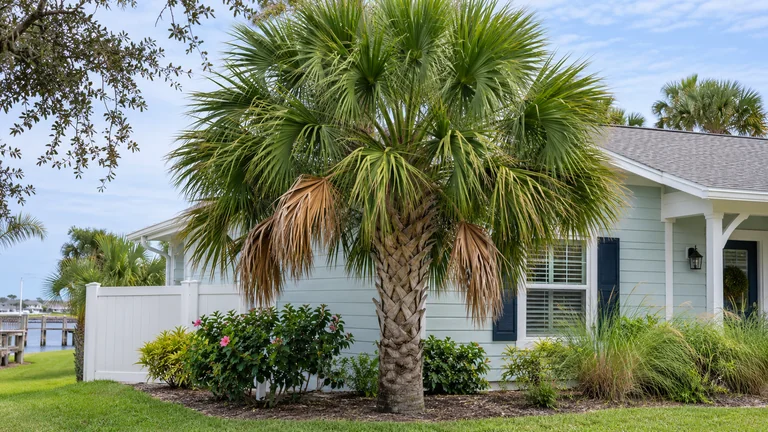
Palm tree trimming in New Smyrna Beach, FL, should address a clear need without stripping away healthy foliage. Completely brown fronds, falling debris, and heavy fruit clusters present different decisions from a full green crown. A tidy appearance is not a reason to remove leaves the palm still uses.
The first question is whether your palm needs pruning at all. Its species, current condition, and location matter. A palm beside a busy entrance presents a different maintenance concern from one standing away from walking routes, even when both carry similar dead foliage.
Before approving work, ask Florida Foliage for a site assessment that separates frond removal, fruit management, and any health concerns. The goal is a justified scope, not the largest possible pile of removed material.
Which Palm Fronds Should a Trimming Visit Address?
Completely dead, brown fronds are the usual candidates for removal, while healthy green fronds should remain. Florida Foliage's tree trimming services include palm care, and its tree assessment services address condition questions that may change the recommendation.
According to UF/IFAS guidance on pruning palms, lower fronds naturally die as new leaves develop at the top. Dead fronds do not themselves damage the palm or threaten its health. Their removal can still serve a useful purpose when appearance matters or when falling material could injure people or damage property.
This distinction helps owners avoid paying for unnecessary work. A brown skirt against the trunk is not proof that the palm is sick. However, retained dead fronds above a walkway deserve a discussion about falling debris. The proposal should identify that location-specific concern rather than describe every brown leaf as a health emergency.
| Visible Finding | What It May Mean | Service Decision | What to Confirm |
|---|---|---|---|
| Fully brown lower fronds | Normal turnover of older leaves | Consider removal for appearance or falling-debris concerns | Which fronds are completely dead |
| Healthy green fronds | Working foliage that produces food | Retain rather than remove for a sparse outline | That the scope protects live foliage |
| Yellow or partly green fronds | Possible nutrient symptoms or species-related aging | Assess before authorizing removal | Whether a separate health evaluation is appropriate |
| Heavy fruit clusters | Potential falling material or cleanup concerns | Discuss fruit-stalk removal separately | Location, timing, and pollinator preferences |
Use these categories to discuss the work, not to perform it. Ground-level observations can help explain your concern, but they do not establish that a frond is safe to handle. Leave overhead evaluation and removal to qualified professionals, and keep clear of areas where material could fall.
Why Should the Green Crown Stay Full?
A full green crown supports the palm, while severe stripping removes useful leaves. Ask about foliage protection when discussing professional palm trimming, and request a tree condition assessment if the crown already looks unusually sparse or has declined.
UF/IFAS explains that healthy green fronds produce food through photosynthesis. Removing them can also create crown wounds that leave the palm vulnerable to disease. An upright tuft with few leaves extending to the sides is a sign of overpruning, not a model for a well-maintained palm.
The consequences are more than cosmetic. UF/IFAS describes an overpruned palm as weaker than one with a full canopy. Repeated overpruning can lead to smaller leaves and a smaller trunk diameter. These effects give owners a reason to reject a service proposal based mainly on exposing more trunk or making every crown look narrow.
The familiar clock-face comparison also needs care. UF/IFAS describes the horizontal nine-and-three position as an absolute pruning limit, not an ideal target. It recommends a round, full crown with green leaves extending down to the bottom. An owner should not interpret that comparison as permission to remove every green frond below an imaginary line.
If a previous visit left the crown sparse, do not make another trim automatic. Request an evaluation of its present condition. The supplied guidance does not establish one recovery period for every overpruned palm, so promises about a fixed recovery date are not a sound basis for approving more work.
When Does Yellowing Need Assessment Instead of More Trimming?
Yellow or partly green fronds call for evaluation rather than automatic removal. Florida Foliage's arborist consultation information explains its assessment role, while its guide to young-tree structural pruning in Daytona Beach, FL helps distinguish shade-tree branch planning from the different decisions required for palms.
That distinction matters on properties with mixed plantings. A young shade tree may need attention to competing stems or crossing branches. A palm should not receive the same branch-development treatment simply because both plants are included in one maintenance visit. Ask for separate objectives for palms and shade trees rather than one broad instruction to reshape everything.
UF/IFAS advises against removing yellow or partly dead palm leaves prematurely. Such leaves may show nutrient deficiencies, and removing them can erase symptoms useful for identifying the problem. They may also still provide nutrients to the palm. Trimming away the visible symptom does not establish that its cause has been addressed.
Color alone is not a diagnosis. The same guidance notes that some palms, including areca palms, naturally develop yellowing older fronds without a nutritional problem. Species identification therefore belongs in the conversation before anyone recommends removing every discolored leaf or adding a standard fertilizer treatment.
- Describe the change: Explain whether the appearance is new or has remained similar through previous maintenance visits.
- Share the pruning history: Tell the assessor if earlier work removed substantial green foliage or left a narrow crown.
- Keep the questions separate: Ask what needs assessment, what can remain, and whether any completely dead material warrants removal.
Florida Foliage works with an ISA Certified Arborist consultant. Ask whether that consultation is appropriate when symptoms complicate a routine trimming request. A recommendation should identify the unresolved concern without assuming that more pruning, fertilizer, or removal is the answer before the palm has been evaluated.
How Should Species, Fruit, and Timing Affect the Plan?
Pruning needs depend on the palm and the material being considered, not just the calendar. Use Florida Foliage's trimming service information to discuss maintenance, and its assessment information when identification or condition makes the appropriate scope unclear.
Some palms shed their older fronds naturally. UF/IFAS identifies royal, foxtail, and Christmas palms as self-pruning examples that do not need routine frond pruning. Other palms retain dead leaves against the trunk. This difference is one reason a property-wide contract should not require identical work on every palm.
Self-pruning does not mean that the space beneath a palm can be ignored. Naturally shed fronds still fall. For an entrance, parking area, or shared path, discuss how fallen material will be managed and whether the location creates a concern. Do not assume that stripping healthy leaves is the solution to natural leaf turnover.
Fruit management is a separate decision. Heavy fruit clusters can fall and create a mess or hazard, and UF/IFAS states that there is no evidence that removing living flower or fruit stalks harms the palm. A request to address fruit above a frequently used area does not require expanding the job to healthy fronds.
There is no single best season for palm pruning under the supplied UF/IFAS guidance. Commercial work may follow a fixed schedule, but appropriate pruning can occur when convenient. A scheduled visit should still evaluate actual need. It is not a standing instruction to remove foliage merely because the service date has arrived.
If supporting pollinators is a priority, UF/IFAS recommends waiting until blooms have dropped and fruit growth has begun before removing fruit stalks. Tell the estimator about that preference. Where falling material is also a concern, ask the professional to explain the competing considerations rather than promise one schedule for every location.
What Should a Palm Trimming Estimate Include?
A useful estimate identifies the palms, the reason for each task, and what will remain untouched. Florida Foliage's tree trimming service is the starting point for maintenance requests; its arborist assessment service addresses questions that need a professional opinion before work is authorized.
Start by explaining the property use. Mention entrances, occupied patios, parking spaces, and shared walking routes near the palms. Describe access restrictions and who can approve work. For an association or commercial property in New Smyrna Beach, FL, identify the responsible contact so the service discussion and approval process stay clear.
The written scope should make it possible to distinguish routine maintenance from a health investigation. A request to remove dead fronds should not silently become permission to strip yellow leaves, reshape the green crown, or remove a palm. If the assessment raises a different concern, request an explanation and a revised scope before authorizing additional work.
- Identify each palm: Use its location and species, when known, so the proposal cannot be confused with work on a nearby plant.
- Name the material: Separate completely dead fronds from flower or fruit stalks and from any condition concern.
- State foliage limits: Confirm that healthy green fronds will remain and that yellowing leaves will not be removed automatically.
- Clarify site arrangements: Ask about access, keeping people away from the work area, debris handling, and cleanup.
- Separate later decisions: Identify any assessment, follow-up, or additional work that is not included in the present estimate.
UF/IFAS guidance on hiring tree-care professionals recommends written proposals, checking references, requesting proof of workers' compensation insurance, and checking applicable permits and licenses. These are useful hiring questions, not credentials to assume from an advertisement. Confirm any property-specific requirements with the city or county, especially if the project expands beyond routine maintenance.
Ask how the proposed work will protect the palm from avoidable injury. UF/IFAS cautions against climbing spikes and forcibly pulling attached fronds because these practices can damage the palm or create disease entry sites. These are standards to discuss with the service provider, not instructions for performing the work yourself.
For palm tree trimming in New Smyrna Beach, FL, call Florida Foliage to request an estimate and site assessment. Describe whether your main concern is dead foliage, falling fruit, appearance, or a change in condition. A clear request helps keep the recommendation focused on the palm's needs and the way your property is used.