Reviewed by Clinton Funk
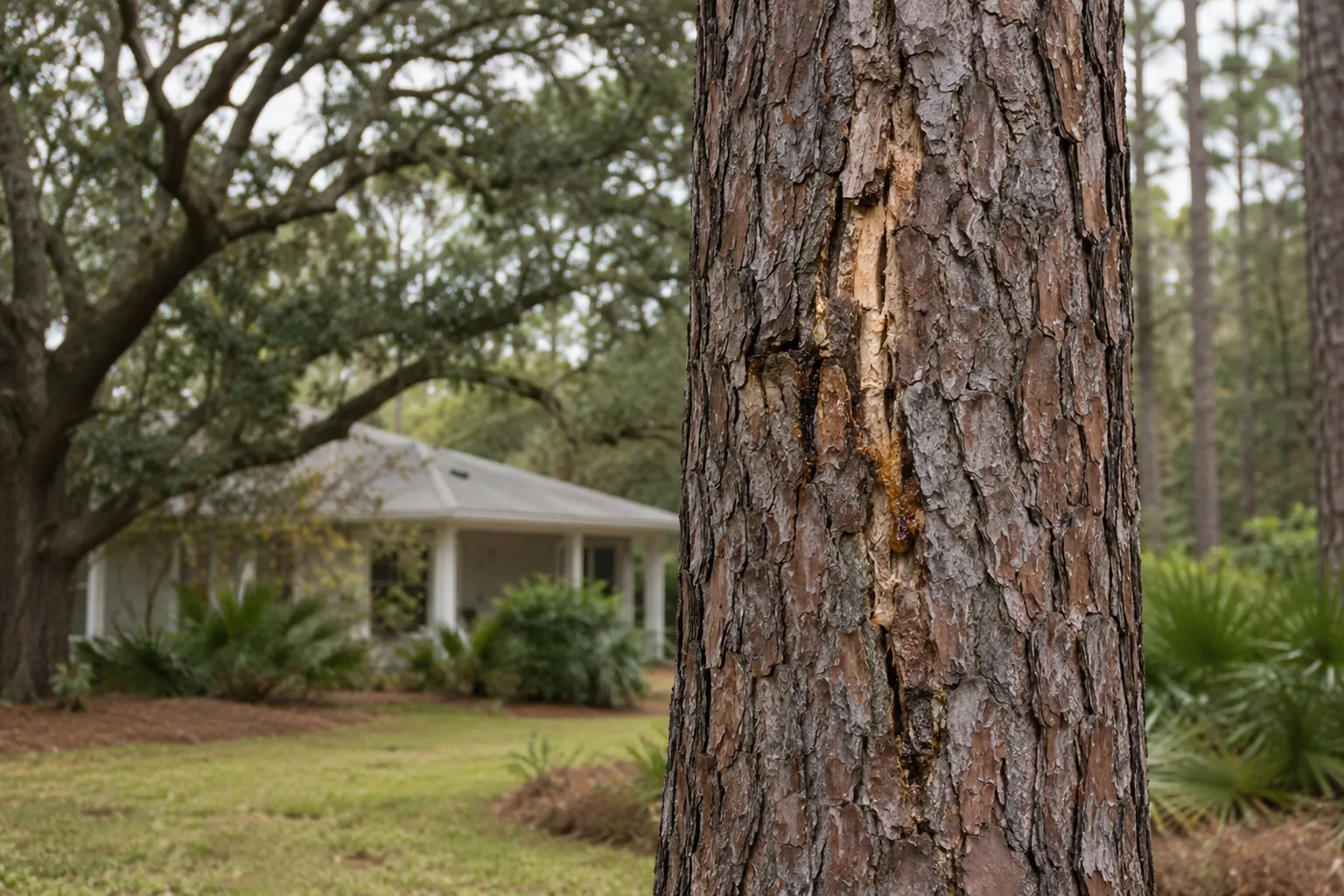
A pine with a changed outline can raise hard questions after a storm in Niceville or Crestview. This guide to possible storm cracks focuses on what to record and what to ask about next. Keep your description tied to the tree you can see, its location, and nearby buildings.
UF/IFAS makes tree structure central to recovery: “The structure of the tree should be intact, without any visible cracks or large wounds on the main trunk, limbs, or main roots.” That gives your notes a clear focus: describe visible damage before discussing how the tree might recover. UF tree guide.
What should you record about possible storm cracks?
Record the feature’s location, its visible outline, and which tree it belongs to before drawing conclusions. Use the Emerald Coast hurricane cleanup guide for related recovery topics. Use the storm damage tree removal page when planning questions about a damaged trunk or branch. Keep each view exact enough to discuss.
Give trunk damage clear attention when describing the concern. UF/IFAS states that “major trunk damage is often irreparable.” Its guide treats visible cracks and large wounds as key concerns when deciding which trees can be restored. Those points support reporting the feature rather than describing the pine only by its overall appearance. UF tree guide.
A useful note might read, “There is an open line below the lowest large branch.” Add whether wood is visible and whether the feature appears in older photographs. Use “newly noticed” when you do not know when it formed. That wording separates your observation from a claim about its cause.
- Name the pine: Describe its position beside the house, driveway, fence, or another fixed landmark.
- Locate the feature: State whether it appears on the lower trunk, upper stem, or a branch.
- Describe the view: Note visible edges, exposed wood, and any part hidden from your viewpoint.
- Date the record: Keep the photo’s date with your notes and any earlier comparison image.
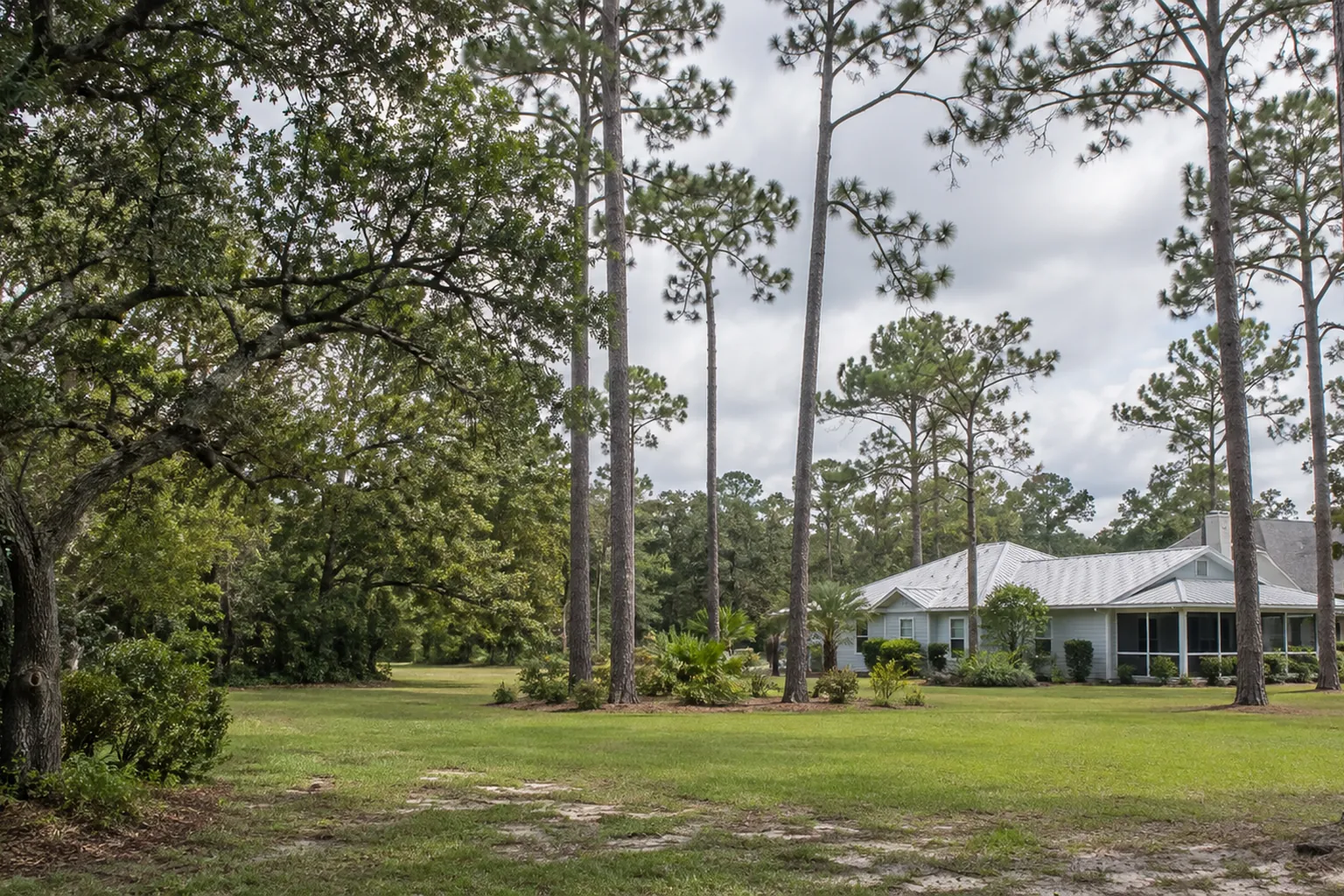
How should you describe resin near a suspected crack?
Describe where you noticed resin and what appears beside it, without assigning a cause from that detail alone. The regional storm cleanup guide offers related reading, while the storm damage removal page provides a service reference for questions about visible damage. Keep the resin note tied to the same tree and photo.
The UF/IFAS guide centers its restoration criteria on intact structure and visible damage. It calls for a tree “without any visible cracks or large wounds on the main trunk, limbs, or main roots.” Use that guidance to keep an apparent opening in the discussion, even when resin first caught your attention. UF tree guide.
Use a plain description such as, “A resin trail appears beside the line on the trunk.” If you first noticed it after the storm, say that rather than calling it storm-caused. Include an older image when one exists, and explain whether you can match the same part of the trunk.
- Show the pattern: Describe a single patch, several distinct spots, or a trail beside another feature.
- Keep the context: Pair the detail image with a wider photo that identifies the pine.
- Separate dates: Distinguish the day you noticed the resin from the day you photographed it.
These details create a clearer question: what does this feature mean alongside the visible damage? They avoid turning one newly noticed mark into a diagnosis.
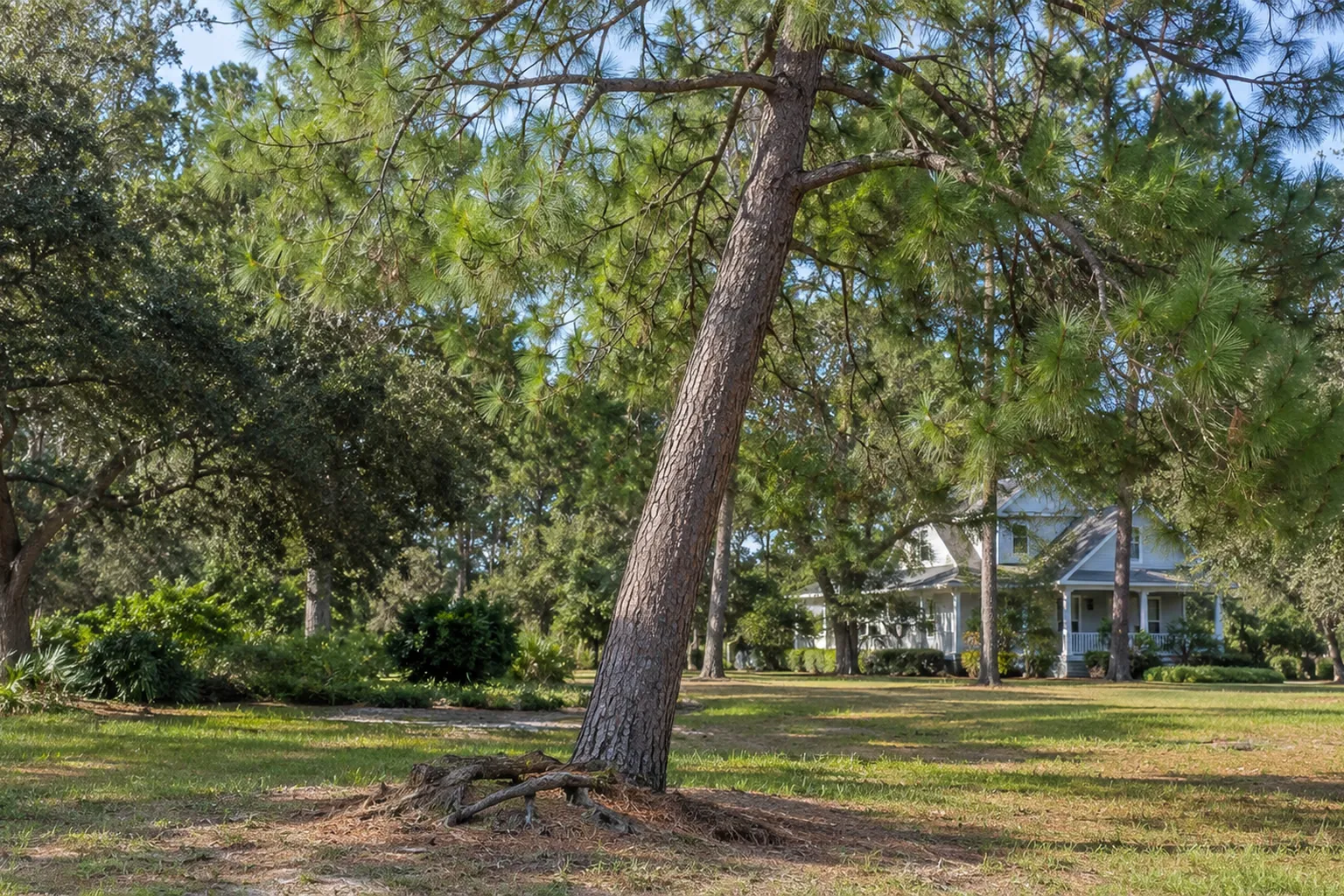
What matters when the crown or lean looks different?
Describe what appears different in the crown, trunk angle, and ground around the base as distinct views. The Milton and Pace uprooted tree guide covers a related topic, while the Gulf Breeze hurricane tree damage guide adds regional reading. Include nearby places where people spend time.
UF/IFAS identifies “large hanging limbs or leaning trees that could fall on a person, hit a house, or damage other potential targets if they go down.” It adds, “These situations should be taken care of by a professional before anything else.” That places the tree’s surroundings within the review. UF tree guide.
- When comparing photos, name the part that looks different instead of saying the whole tree shifted.
- For example, describe a changed upper outline, a missing branch, or a trunk that appears closer to a roof. Include the original images so the person reviewing them can see both views.
List ground changes apart: an opening in the soil, a raised area, or roots now visible. These are descriptions to report, rather than findings about root strength. State when water, debris, or another object blocks the view. The notes reflect what you could actually see.
Finish with the setting: a bedroom window, parking space, footpath, or neighboring building. Explain which areas are used regularly and which features you cannot show in photos.
Why do inland winds matter in Niceville and Crestview?
Include inland wind concerns in your planning, while keeping regional forecasts distinct from conditions at your address. The Emerald Coast hurricane recovery guide provides related reading. The tree risk assessment covers another storm topic. A forecast does not record damage to a single pine.
Use current official information before planning tree work. Check the National Hurricane Center advisory and NWS Mobile for current forecasts. Follow local officials for access and emergency instructions. Forecasts do not establish damage at a particular property.
Use current official information before planning tree work. Check the National Hurricane Center advisory and NWS Mobile for current forecasts. Follow local officials for access and emergency instructions. Forecasts do not establish damage at a particular property.
- For your own record, describe the pine’s setting: an open yard, roadside, or group of trees.
- Add the date of each photo and the date you first noticed a change. Keep weather reports with their issue times, so later talks distinguish forecast conditions from your actual views.
Which situations need professional help before cleanup?
Put hanging limbs, leaning trees near occupied areas, and limbs near power lines at the front of your request for help. The storm damage tree removal page and hurricane tree removal page are relevant service references. UF/IFAS says these potentially risky situations should be handled by an expert before other work. UF tree guide.
For a fallen limb near electrical lines, UF/IFAS gives a specific direction: “make sure that a qualified line-clearance arborist treats the situation.” The guide warns that working near electrical lines is dangerous and may result in fatality. Leave that work to the qualified professional described in the guidance. UF tree guide.
For hanging limbs or leaning trees that threaten people or buildings, keep people away while professional help is arranged. UF/IFAS states, “These situations should be taken care of by a professional before anything else.” Apply that priority to the damaged pine before trying to resume ordinary yard cleanup nearby. UF tree guide.
- In your request, name the concern first, then name the tree and nearby building or path.
- Explain whether a photo already shows the feature. A short, clear description keeps the main issue from getting buried beneath a long account of scattered debris or unrelated yard damage.
What should a storm inspection request include?
Send a clear tree location, dated photos, exact changes, and a description of nearby occupied spaces. The regional hurricane cleanup guide offers related recovery reading, while the Milton and Pace ground-change guide covers another concern you may need to describe. Keep your request focused on the pine in question.
Use one short heading for each pine when several trees need review. A label such as “pine beside the east driveway” can stay with every image and note. Keep the original photograph available alongside any marked copy, so arrows or circles do not obscure the feature you want reviewed.
- Name the tree: Give its position relative to a building or fixed landmark, with a wide photo when available.
- Describe the concern: Record the apparent crack, resin pattern, changed crown, lean, or ground feature in plain words.
- Add the timeline: State when you noticed each change and include earlier photos that show the same tree.
- Explain the surroundings: Name nearby rooms, driveways, paths, buildings, and any electrical lines visible in the scene.
- State the limits: List parts you could not see and questions that remain unanswered after reviewing your images.
UF/IFAS says to “use binoculars to get a closer look if needed” when checking main branches for cracks. Its guide places potentially risky storm work with professionals. Leave that work to them, and mark an unseen feature as unseen rather than trying to complete every photograph. UF tree guide.
What should follow a professional review of the pine?
Keep a written account of the finding, proposed work, and any follow-up suggested for that exact pine. The Emerald Coast recovery guide provides broader reading, while the hurricane tree removal page is a service reference. Make sure the tree label matches your photos and the advice you receive.
Recovery can involve more than one visit. UF/IFAS explains, “Restoration typically requires more than one pruning to develop strong tree structure.” Its guide names age, health, size, species, and extent of damage as factors affecting recovery. Ask how those factors apply to the pine being discussed. UF tree guide.
Keep the species question clear when discussing a restoration plan. UF/IFAS states, “Pines sprout very little or not at all.” That is a reason to request an explanation suited to the pine, rather than borrowing a recovery plan for another kind of tree. UF tree guide.
- Record the finding: Keep the tree’s location and the feature that prompted the proposed work together.
- Clarify the next step: Write down what work is suggested and which questions remain open.
- Keep follow-up details: Note any return visit, requested photos, or changes the expert wants reported.
- Preserve the timeline: Store later notes beside the first photos rather than replacing the original record.
Frequently Asked Questions
The questions below focus on visible cracks, resin, foliage, pruning, and incomplete views of a pine. Keep the storm damage removal guidance and Gulf Breeze hurricane damage guide with your related reading. Use the answers to make your notes and questions more precise before discussing the single tree.
Do green needles settle the question about a crack?
No. Green needles do not resolve a visible crack concern. UF/IFAS says a tree considered for restoration should be “without any visible cracks or large wounds on the main trunk, limbs, or main roots.” Record both the foliage and the damaged feature, rather than leaving the crack out of your request. UF tree guide.
How should I describe a line that might be a crack?
Describe its position, visible edges, and whether wood appears within the opening. Use “possible crack” when you are uncertain, and keep the original image with that description. UF/IFAS highlights “visible cracks or large wounds” in its restoration criteria. Your note should report the feature without assigning a depth or deciding the tree’s condition from the picture. UF tree guide.
Should resin be the main reason for my request?
Include resin alongside the apparent opening, crown change, or other feature you noticed. State where it appears and when you first saw it. UF/IFAS frames restoration around intact structure “without any visible cracks or large wounds.” Keep that structural question central, and present the resin as another observed detail rather than giving it a cause. UF tree guide.
Should I cut the top before the pine is reviewed?
Leave the pruning decision to the professional reviewing the damaged pine. UF/IFAS says, “Do not top your trees or cut the entire canopy back to stubs.” It also states that major pruning to alter tree structure should not be done immediately after a storm. Keep your request focused on the damage and the proposed response. UF tree guide.
What if I cannot see the upper branches clearly?
Mark the upper branches as unseen and describe which part of the tree your photograph covers. UF/IFAS suggests “use binoculars to get a closer look if needed” when looking for cracks along main branches. Include any available wider view, and keep the visibility limit in your notes so an unseen area is not described as inspected. UF tree guide.
Related Reading And Scope
See the Pensacola tree guide and tree risk assessment guide for related background.
Use the Pensacola storm cleanup checklist to organize the first steps. For nearby Alabama, read the coastal Alabama storm cleanup guide.
For related reading, see the Pensacola tree guide and tree removal guide. For a property outside Volusia or Flagler County, contact a local tree professional.
Florida Foliage is a Daytona Beach tree service that works with an ISA Certified Arborist consultant. For a property in Volusia or Flagler County, call (386) 481-7913 to request an estimate.
Drafting disclosure: This article was drafted with AI assistance using public sources. It does not independently verify live forecasts, site conditions, pickup notices, or insurance coverage. Check current details with the responsible agency or a qualified local professional.
Call (386) 481-7913 to talk through next steps.