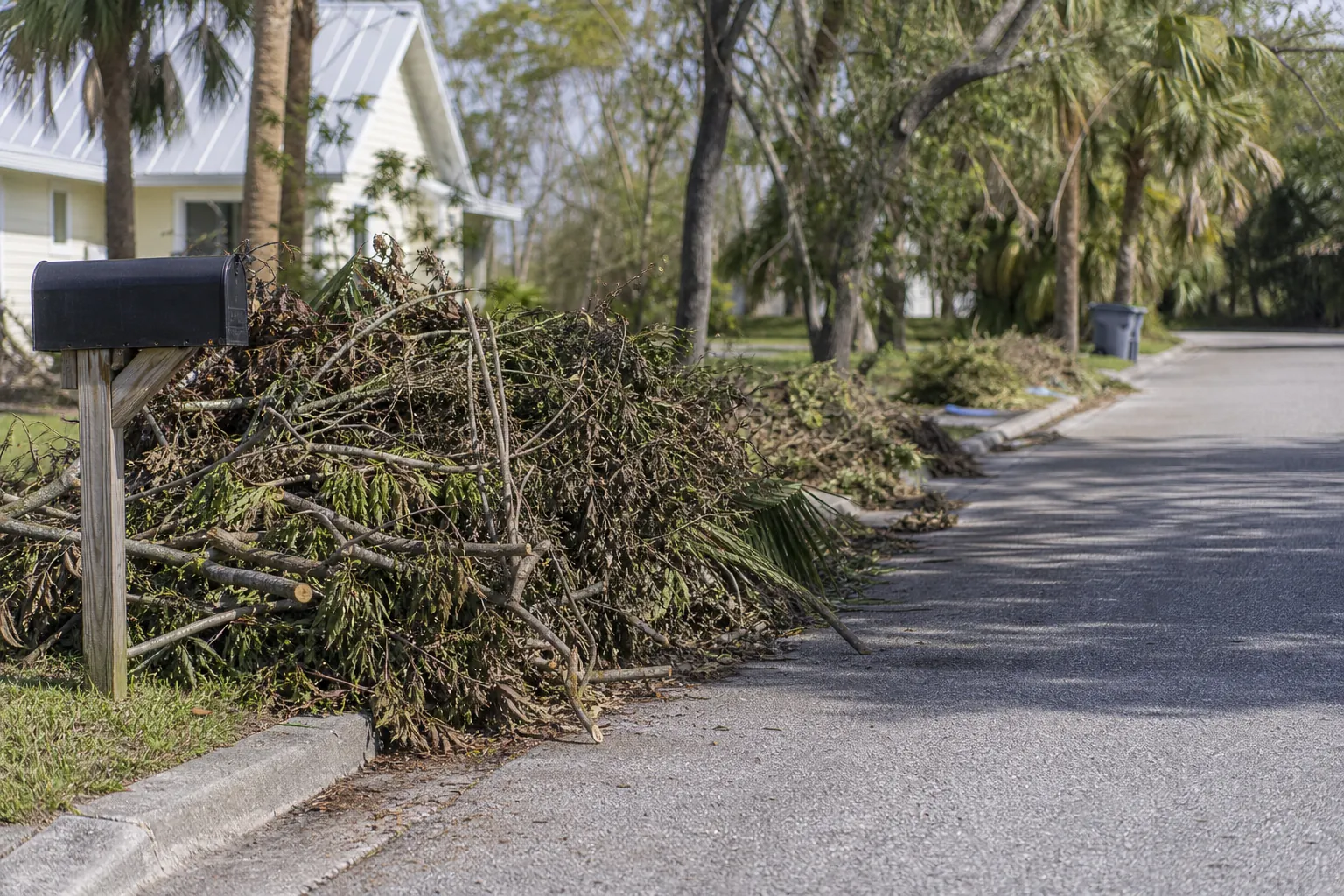
For Volusia County homeowners, the October 7–10, 2026 storm window calls for practical preparation around heavy rain, wet soil and loose tree limbs. A tidy curbside pile matters, but keeping people safe, protecting drainage and avoiding damage to stressed trees matter more. The best cleanup plan starts before anyone picks up a branch.
This guide offers storm debris curbside pile tips for Volusia County properties, including how to separate vegetation, choose a staging spot and recognize work that belongs with a tree professional. Collection rules can differ between municipalities and unincorporated areas, so always confirm current instructions with the city or county serving your address.
Understand the October 7–10 weather context
As of the National Hurricane Center's Intermediate Advisory 4A at 1 PM CDT on October 7, 2026, Tropical Storm Isaias had formed in the southern Gulf of Mexico. The NHC hurricane, tropical storm and storm surge watches covered only the northern Gulf Coast, including areas such as Bay St. Louis to Indian Pass. Those watches did not cover Florida's east coast.
For Volusia County, preparation during this window should focus on the local rainfall forecast and tree conditions, not assumptions about a hurricane arrival. The NWS Melbourne forecast discussion issued the morning of October 7 called for high coverage of showers and lightning storms through late week, with a marginal risk of excessive rainfall across east central Florida. Minor flooding was possible where heavy rain repeated.
The NWS Jacksonville discussion issued that morning also described saturated ground along the Northeast Florida I-95 corridor, strengthening onshore winds and additional periods of heavy rain Friday and Saturday. That regional context supports caution around wet root zones and wind-exposed trees, but it is not a site-specific prediction for every Volusia property.
Storm facts in this article are anchored to those dated updates. Consult the National Hurricane Center, NWS Melbourne and NWS Jacksonville for newer information before beginning outdoor work.
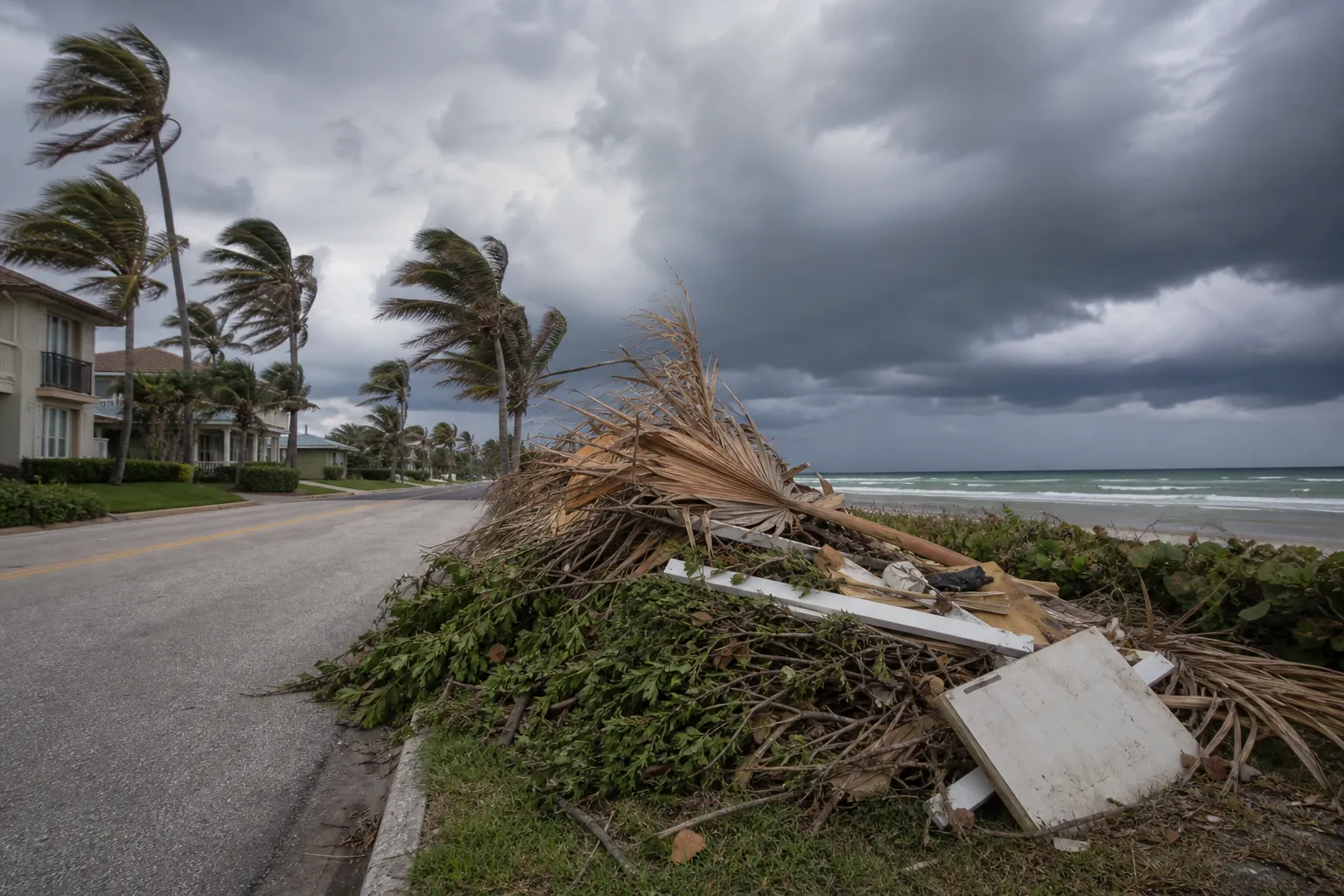
Prepare your property before the rain repeats
Start with a ground-level walk around the property while conditions are safe. Look for dead branches, limbs touching structures, fresh cracks and trees that appear newly tilted. Observe from a distance rather than standing beneath a suspicious canopy. A hanging branch can fall without much warning.
Repeated rain can soften soil and make existing root problems more consequential. It can also turn an ordinary cleanup route into a slippery path. Plan where people will walk, where small debris can be held temporarily and how a tree crew could access the property without crossing a saturated lawn unnecessarily.
- Move lightweight outdoor items away from trees and drainage paths so they do not complicate cleanup.
- Clear loose leaves from accessible ground-level drain openings only when conditions are safe and no electrical hazard is present.
- Photograph existing tree concerns from a safe location so you can describe them to a professional.
- Identify an on-property staging area that does not block exits, sidewalks, drainage or access to utility equipment.
- Check your local government's current collection guidance before deciding where material should go.
Do not rush into major pruning simply because a wet period is approaching. Indiscriminate branch removal can create wounds and poor structure. Tree inspections and arborist reports can help identify concerns, while appropriate tree trimming, canopy thinning or crown reduction should follow the needs of the individual tree.
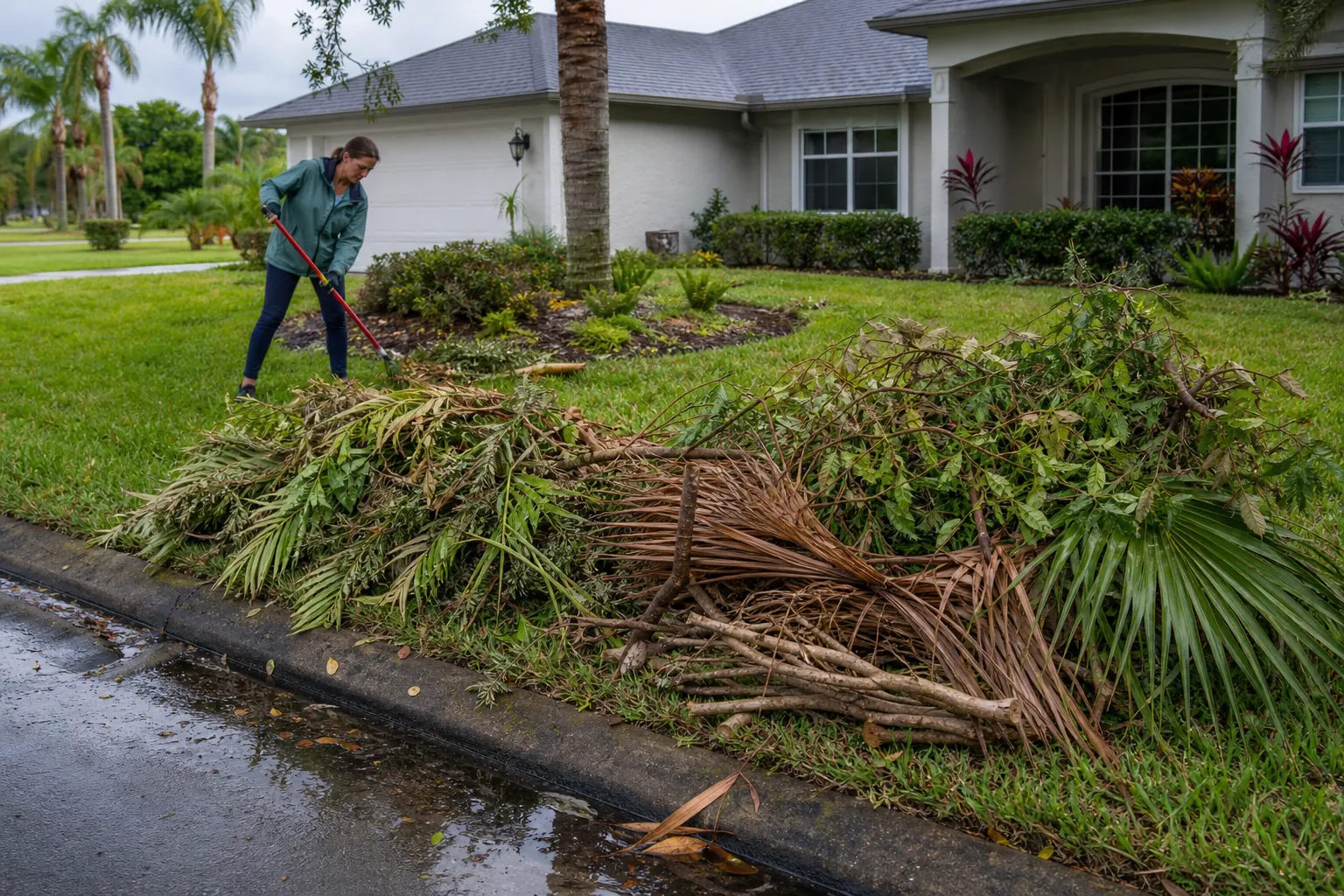
Make a safety check before touching debris
After a windy or rainy period, assess the whole scene before entering it. A branch on the ground may be connected to another branch overhead. A damaged tree may have shifted against a neighboring tree, fence or utility line. Water and dense foliage can make those connections difficult to see.
Stay away from downed power lines and anything touching them, including trees, branches, fences and standing water. Call your electric utility for any line contact. Do not try to move a branch off a wire, and do not assume a line is safe because it looks inactive.
Postpone cleanup during lightning, gusty conditions or heavy rainfall. Wet branches are harder to grip, and slippery footing makes lifting and carrying less predictable. Return only when conditions allow you to see hazards and work without exposing yourself to the weather.
- Keep children, pets and bystanders away from damaged trees and debris staging areas.
- Wear sturdy footwear, work gloves and eye protection when handling small, loose vegetation.
- Leave hanging limbs, partially uprooted trees and tensioned branches alone.
- Avoid ladders and climbing when inspecting or cleaning up storm-damaged trees.
- Stop if a task requires overhead cutting, handling a heavy trunk section or working near utilities.
A branch bent beneath a trunk can spring when released. A lodged limb can shift when a smaller piece is pulled away. Those situations call for professional assessment, not a trial-and-error approach with a saw.
Confirm the collection rules for your address
Volusia County properties do not all share one collection arrangement. A home within a municipality may receive different instructions from a property in an unincorporated area. An HOA or condominium community may also have a designated staging area or contractor arrangement that affects where residents should place vegetation.
Check the latest city or county notice rather than relying on a neighbor's experience from a previous event. Routine yard-waste pickup and any separately announced storm-debris collection may have different requirements. Do not assume a special collection program has been activated for the October 7–10 window.
- Ask whether loose vegetation, bundled branches or approved containers are required for your collection route.
- Confirm any limits on branch length, diameter, bundle size or container weight.
- Verify the approved placement area and when material may be set out.
- Ask whether debris generated by a private tree contractor follows a different disposal arrangement.
- Confirm whether large logs, stumps or root balls need separate handling.
Do not guess at a pile's acceptable dimensions. Local instructions should determine how small material needs to be prepared. If preparing a large limb to those dimensions would require unsafe cutting, leave it untouched and arrange professional help.
Any requirements involving public rights-of-way, tree work or disposal should be confirmed with the appropriate city or county. This guide does not replace local rules or authorize placement on public property.
Separate vegetation from other storm-related waste
Keep tree debris distinct from household trash and nonvegetative material. A pile containing branches, plastic bags, broken fencing and furniture is harder to evaluate and may not fit the collection method used for vegetation. Separation also helps you spot sharp or hazardous objects before lifting material.
As you work, establish clearly separated areas that comply with local guidance. Avoid placing small debris inside a larger pile where workers cannot see it. Do not hide household waste beneath leaves or assume everything displaced by weather belongs in the same collection stream.
- Place clean branches, leaves and other accepted vegetation together according to your provider's instructions.
- Keep lumber, fence panels, roofing pieces and other construction material separate from tree debris.
- Separate household garbage and bulky household items from vegetation.
- Keep batteries, chemicals, paint and other potentially hazardous materials out of the tree pile.
- Use bags or containers only if your collection provider specifically accepts them for that material.
Watch for wire, nails or landscape hardware tangled in branches. If material contains a possible utility line, do not sort it yourself. Stay back and contact the electric utility for line contact before any tree cleanup proceeds.
Choose a curbside location that protects drainage
A convenient spot beside the road is not automatically a safe collection location. Look for storm drains, swales, ditches, culvert entrances and low areas where runoff travels. Branches and leaves placed there can trap additional debris and interfere with water movement during repeated rain.
Keep piles out of streets, travel lanes, sidewalks and bicycle paths. Preserve visibility at intersections and driveway exits. Follow local instructions for the approved setback and collection area rather than placing vegetation directly against the curb by default.
- Keep vegetation away from storm-drain openings, ditch bottoms and culvert mouths.
- Leave hydrants, mailboxes, utility equipment and access gates visible and accessible.
- Do not pile branches beneath overhead wires or against utility poles.
- Keep the pile off neighboring property unless you have permission and the arrangement complies with collection guidance.
- Leave a clear walking route between the home, driveway and street.
If the approved collection location is flooded or too soft to use safely, hold manageable debris in a safe on-property location and ask the city or county for guidance. Do not enter moving water or reach into a submerged drainage opening to retrieve branches.
Recheck the area between showers from a safe position. Small leaves can wash toward drains even when larger branches stay put. Moving manageable loose vegetation away from a drainage path before the next rainfall can be more useful than building a bigger pile.
Build a stable pile without overhandling branches
Only handle loose pieces you can comfortably carry without straining or losing your footing. Make repeated small trips rather than dragging an oversized branch across a wet lawn. Keep your route free of tools and scattered sticks that could trip you.
Where loose piles are accepted, lay manageable branches in a generally consistent direction and keep the pile compact. Avoid a tall, precarious stack with ends projecting into walking areas. The goal is accessible, visible material, not tightly packed debris that conceals hazards.
- Place heavier manageable pieces low in the pile so smaller branches are not supporting them.
- Keep sharp branch ends from extending toward pedestrians or vehicles.
- Use only the ties or bundling methods allowed by your collection provider.
- Avoid climbing onto the pile to compress it or reach another branch.
- Stop adding material if the pile begins encroaching on drainage, access or public travel.
Do not cut a large trunk simply to make it easier to stack. Logs can roll, saw cuts can release pressure and waterlogged wood can be difficult to move. Large pieces and tangled debris may need a tree professional's equipment and handling plan.
Protect saturated soil and the trees that remain
Cleanup can damage a property even after the immediate weather hazard passes. Repeated foot traffic and heavy equipment on saturated soil can create ruts and compact root zones. Dragging branches across exposed roots or striking a standing tree with debris can cause additional injury.
Keep temporary piles away from the trunks of trees you intend to retain. Do not bury root flares under leaves or woody material. Avoid treating every open lawn area as an equipment route, especially where water is standing or the soil gives way underfoot.
Discuss access with a tree professional before work starts. Gates, driveways, underground utilities, drainage features and nearby structures all affect the approach. Crane tree removal may be considered for certain difficult removals, but equipment selection depends on the actual site and tree condition.
A new lean, soil cracking around the root plate or visible root movement deserves attention. Keep people out of the potential fall area and arrange a tree inspection. Do not attempt to straighten a mature leaning tree with a vehicle, rope or improvised anchor.
Know when tree work needs professional planning
Not every fallen twig requires an arborist, but some conditions should end homeowner cleanup immediately. Hanging limbs, split trunks, suspended trees and large branches over buildings require more than careful stacking. They need a plan for controlling movement and protecting the surrounding area.
Florida Foliage provides tree inspections and arborist reports, along with tree trimming and tree removal. Emergency and hurricane tree removal can address serious tree situations, but the service name does not imply that a hurricane is expected in Volusia County during this dated weather window.
Depending on the tree and property, appropriate work may involve crown reduction, canopy thinning or crane tree removal. These options are not interchangeable. A professional should explain what condition the proposed work addresses and why that approach fits the site.
If removal leaves a stump, stump grinding can be considered separately after access and ground conditions are evaluated. It should not be confused with curbside pickup of a large root ball. Ask how the remaining material will be handled before work begins.
Commercial tree services and HOA and condo tree services can help properties with shared access, multiple buildings or larger tree inventories plan their work. Land and lot clearing or brush hogging should be considered only where those services fit an actual property-management need, not as an automatic response to wet weather.
Coordinate cleanup and keep a simple record
Before hiring a tree professional, explain whether debris will remain on site or be removed as part of the work. Ask how that arrangement interacts with local collection rules. Do not assume publicly collected storm debris includes material produced by a private contractor.
Keep dated photos of tree conditions and completed work from safe viewpoints. Note which trees were inspected and any recommendations for follow-up. If another rainy period follows, those records can help you describe changes without approaching a damaged tree again.
For shared properties, designate one person to coordinate staging locations and communicate collection instructions. Residents should not independently create piles beside drains, building exits or parking spaces. A consistent plan reduces confusion and keeps access open.
A calm final checklist for the October 7–10 window
Safe cleanup starts with waiting for workable conditions, checking for electrical hazards and confirming collection instructions. Keep vegetation separate, preserve drainage and avoid turning a wet-weather cleanup into unnecessary tree cutting. A smaller, properly placed pile is better than a large pile that blocks runoff or hides dangerous material.
Continue checking the dated storm sources for updates, and evaluate your property's trees rather than assuming regional forecasts describe every yard. Heavy rain, saturated soil and gusty onshore wind warrant caution even without east-coast NHC watches in the October 7 advisory.
If you find a hanging limb, a newly leaning tree or debris too large to handle safely, call Florida Foliage at (386) 481-7913 to discuss tree inspections or appropriate tree care. For any contact with a power line, stay away and call your electric utility first.
Call (386) 481-7913 to talk through next steps.