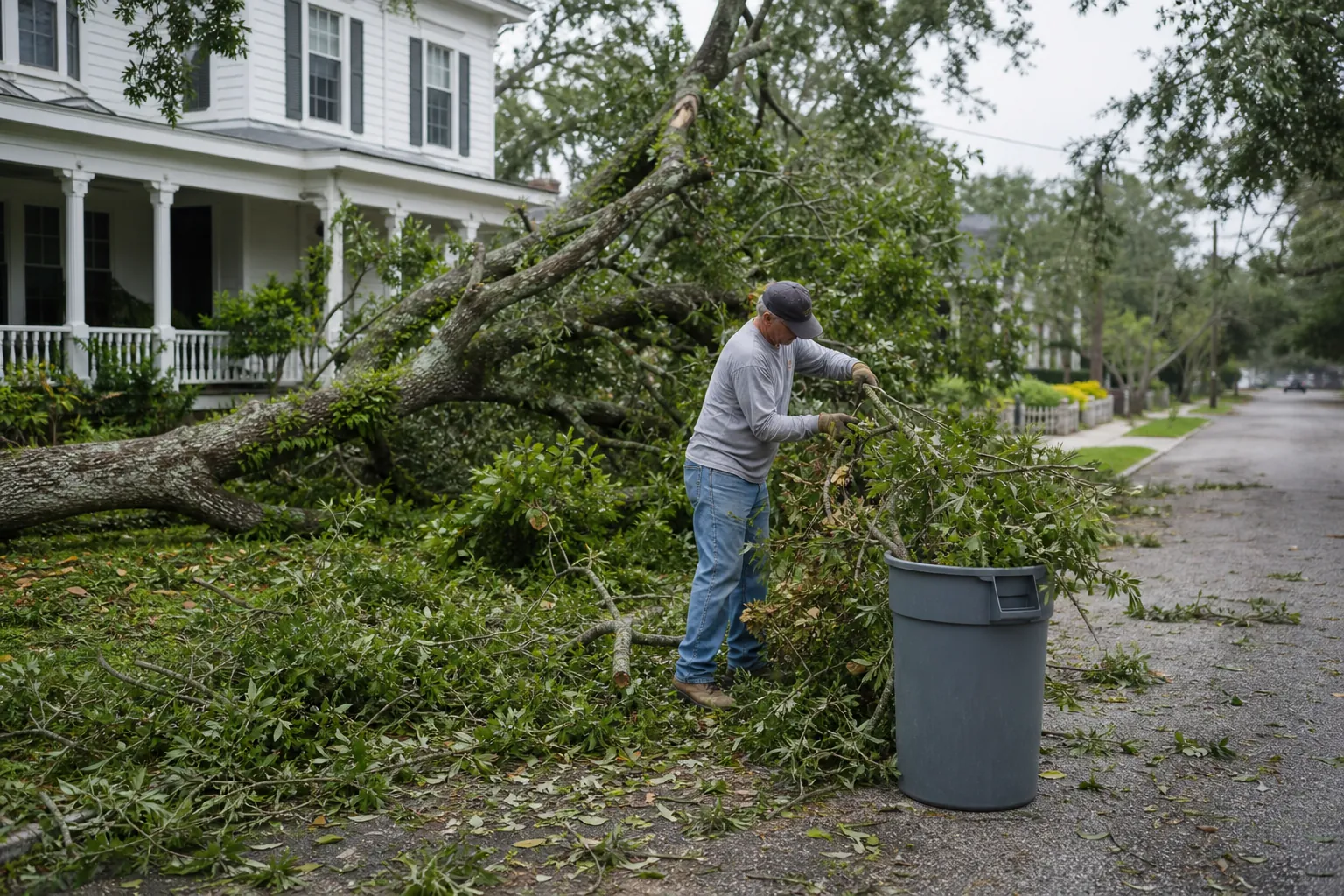
Heavy rain does not need to arrive with a hurricane to create tree hazards. In St. Augustine, saturated soil, gusty onshore wind and falling limbs deserve attention during the October 7-10, 2026 storm window. A tree that appeared stable during a dry week may behave differently when its root zone stays wet and wind pushes against a dense canopy.
For homeowners, property managers and community associations researching storm tree cleanup in St. Augustine, FL, the most useful approach is straightforward: identify concerns before conditions worsen, keep people away from unstable trees and plan cleanup around safety rather than appearance.
Florida Foliage provides tree inspections, arborist reports, tree trimming and tree removal, along with other tree care services suited to the property and the condition of the tree. This guide explains what to watch for, what to avoid and how to organize the next steps without assuming that every damaged tree must come down.
What The October 7-10 Weather Context Means For Trees
As of the National Hurricane Center's Intermediate Advisory 4A, issued at 1 p.m. CDT on October 7, 2026, Tropical Storm Isaias had formed in the southern Gulf of Mexico. The hurricane, tropical storm and storm surge watches described in that advisory covered only the northern Gulf Coast, including areas such as Bay St. Louis to Indian Pass, not Florida's east coast.
That distinction matters. This guidance does not describe a hurricane threat, direct hit or landfall in St. Augustine. It focuses on the tree-related effects of wet ground, additional rain and strengthening onshore winds identified in the supplied October 7 forecast discussions.
The morning October 7 discussion from NWS Jacksonville reported saturated ground along the Northeast Florida I-95 corridor, strengthening onshore winds and more periods of heavy rain Friday and Saturday, October 9 and 10. Those conditions make root stability and existing structural weaknesses especially relevant to Northeast Florida properties.
NWS Melbourne's morning October 7 discussion forecast high coverage of showers and lightning storms through late week, with a marginal risk of excessive rainfall across east central Florida. Minor flooding was possible where heavy rain repeated. That discussion concerns east central Florida, rather than serving as a property-specific forecast for St. Augustine.
Check updated information directly through the National Hurricane Center, NWS Jacksonville and NWS Melbourne. A dated storm snapshot should not replace current weather information when deciding whether it is safe to go outside.
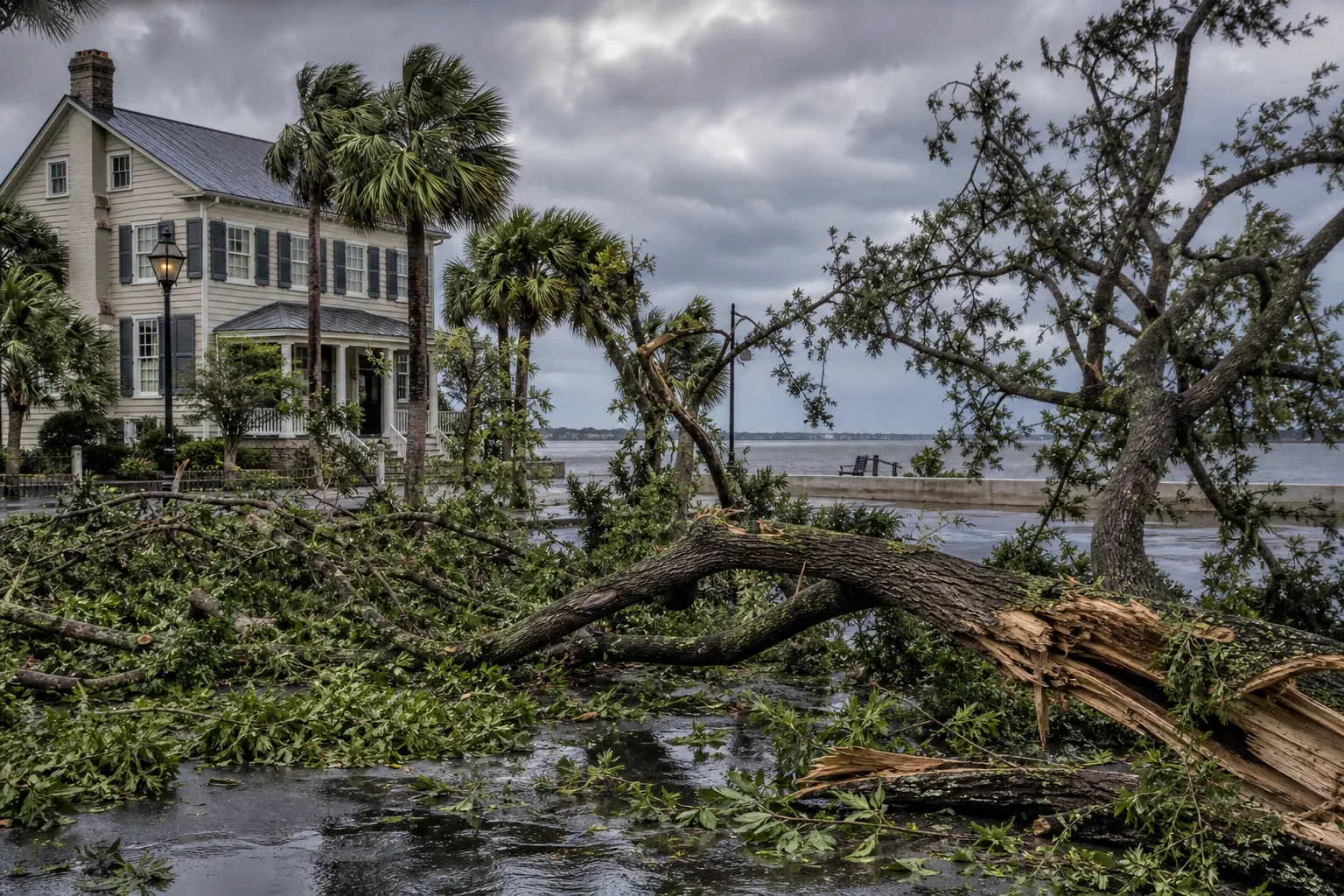
Why Saturated Soil And Onshore Wind Increase Concern
Roots anchor trees through their relationship with the surrounding soil. Prolonged wet conditions can reduce soil support, particularly where drainage is poor or roots have already been damaged. Wind loading can then expose weaknesses that were not obvious during calm weather.
Tree size alone does not determine risk. A smaller tree with compromised roots may be concerning, while a larger tree with sound structure may not need removal. Species, root condition, canopy shape, previous damage and nearby targets all influence the assessment.
Pay particular attention to trees near occupied rooms, parking spaces, walkways and access routes. A defect becomes more consequential when a falling limb or trunk could reach people or essential parts of the property.
- Look for a new lean or an obvious change from the tree's usual position, but observe from a safe distance.
- Notice soil lifting, cracking or mounding near the trunk, which may indicate movement in the root plate.
- Watch for split branch unions, hanging limbs and fresh cracks that were not present before the wet weather.
- Keep people away from trees with visible movement, especially while wind continues or the soil remains saturated.
These signs warrant professional evaluation. They are not instructions to approach the trunk, probe the roots or test whether a damaged tree can be pushed back into place.
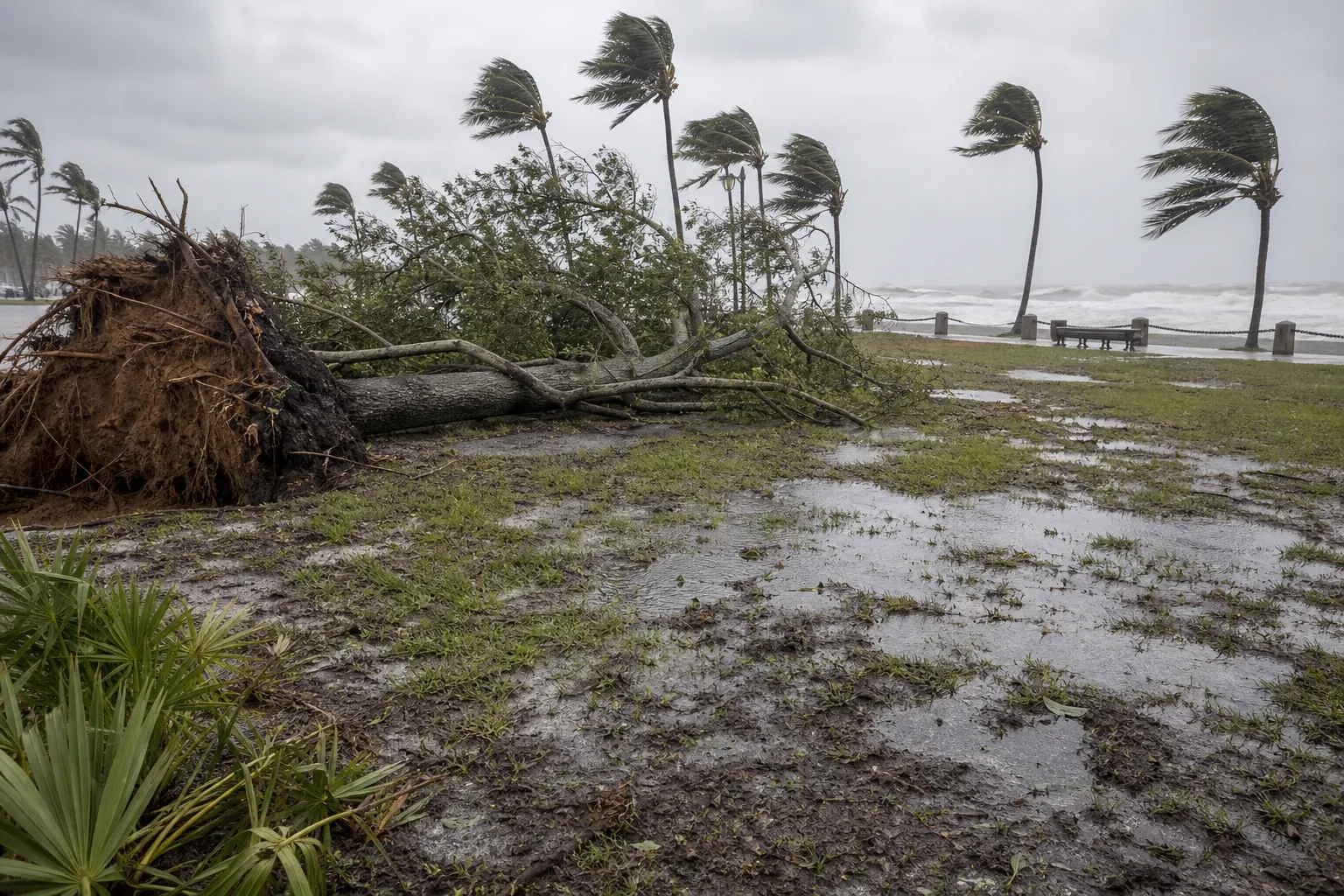
Prepare The Property Without Creating New Hazards
Preparation should happen while conditions are calm and safe. Start by identifying the trees that could affect your home, driveway or frequently used outdoor areas. From the ground, note dead branches, damaged limbs and changes in tree posture.
Move vehicles and portable belongings away from questionable trees when doing so does not expose you to danger. Clear ordinary loose items from access routes so they do not complicate movement after the rain. Keep children and pets away from areas beneath damaged canopies.
If a tree already shows structural concerns, ask about tree inspections before attempting any corrective work. An inspection can help determine whether tree trimming, crown reduction, tree removal or another appropriate option should be considered.
- Take ground-level photographs of existing tree conditions from a safe location.
- Identify an alternate route into the property if the main driveway runs beneath vulnerable limbs.
- Tell household members which outdoor areas should be avoided during wind and heavy rain.
- Keep your electric utility's contact information accessible in case a tree or limb contacts a line.
Avoid rushed, heavy pruning immediately before worsening weather. Removing large amounts of foliage without a clear objective can create unnecessary wounds and poor structure. Preparation should reduce an identified risk, not simply make a canopy look smaller.
Know When To Stop And Call For Help
The first cleanup decision is whether the area is safe to enter. A fallen branch on an open lawn is different from a suspended limb over a walkway or a tree resting against a building. If you cannot clearly identify what supports the damaged wood, do not disturb it.
Stay away from downed power lines and anything touching them, including branches, trees, fences and standing water. Treat every downed or damaged line as potentially energized. Call your electric utility for any line contact, and do not attempt to cut or move the tree material yourself.
Lightning, active wind and heavy rain are reasons to postpone outdoor assessment. Even after rain eases, branches can fall from damaged trees and saturated soil can continue to affect stability.
- Do not stand beneath a hanging limb to inspect where it broke.
- Do not climb a storm-damaged tree or use a ladder against it.
- Do not pull a lodged branch with a vehicle, rope or improvised equipment.
- Do not enter a blocked area if a trunk, limb or root plate appears unstable.
Emergency and hurricane tree removal may be appropriate for certain hazardous situations. The service name does not mean that a hurricane is affecting St. Augustine during this window. The relevant issue is the tree's condition, its surroundings and the safest method of addressing it.
Separate Simple Yard Debris From Structural Tree Damage
Once weather conditions allow a safe outdoor check, assess the property from areas that are not beneath damaged trees. Small, fully detached twigs on clear ground may be ordinary yard debris. Large limbs, split trunks and partially uprooted trees require a different level of caution.
Storm-damaged wood can store tension. A branch bent against the ground may spring when cut, and a trunk supported by another tree can shift unexpectedly. A partially raised root plate may move as connected wood is removed.
Do not assume a fallen tree is stable simply because it has stopped moving. Its weight may be resting on a fence, roof, another tree or a few uneven contact points. Changing one support can change the entire situation.
For a professional assessment, describe what you can see without approaching the hazard. Useful details include whether the tree is standing or down, whether limbs are suspended, what structures are nearby and whether access is blocked. Mention any possible utility involvement first.
Florida Foliage can discuss tree trimming or tree removal based on the damage described and evaluated. The appropriate work depends on actual site conditions, not just the amount of debris visible in a photograph.
Choose Tree Trimming Or Removal Based On Condition
A damaged tree does not automatically need removal. If the trunk, roots and remaining branch structure are sound, targeted tree trimming may address broken or compromised limbs while retaining the tree.
Where appropriate, crown reduction can reduce selected branch lengths and loading while preserving a suitable structure. Canopy thinning may be considered for a specific tree care objective, but it should not be presented as a universal storm-proofing measure.
Tree removal becomes a consideration when damage or instability makes retaining the tree unsuitable for the site. Root failure, major trunk damage and severe structural compromise require careful evaluation, particularly near buildings or occupied spaces.
Tree inspections and arborist reports can help explain the condition observed and the reasoning behind recommendations. An arborist report may also provide a useful record for owners or property managers making longer-term decisions.
No pruning method can guarantee that a tree will withstand future weather. A practical plan considers both the value of retaining the tree and the consequences if the remaining defects worsen. Ask what problem each proposed action addresses and whether follow-up evaluation is appropriate.
Plan Access Before Large Tree Work Begins
Access can influence how damaged trees are addressed. Narrow driveways, fences, nearby buildings and soft ground may limit where equipment can travel or be positioned. Saturated areas deserve particular attention because repeated traffic can damage soil and remaining roots.
Crane tree removal may be considered where a damaged tree's position or surrounding obstacles make other approaches unsuitable. It is not automatically required for a large tree, and its suitability depends on an on-site assessment.
Before work is planned, identify property boundaries, access restrictions and nearby features that may be difficult to see beneath vegetation. Do not clear a path by cutting lodged limbs or moving unstable wood yourself.
- Explain whether the driveway or another entrance is the only access route.
- Point out areas that stay wet or have standing water, without walking into unsafe ground.
- Identify nearby structures, fences and trees that should be considered in the work plan.
- Keep residents, visitors and pets outside the designated work area.
These details help the tree care team evaluate options. Avoid promising tenants or neighbors a particular completion time before the site and weather conditions have been assessed.
Organize Cleanup And Confirm Local Requirements
Cleanup is easier to manage when immediate hazards are separated from less urgent work. Addressing unstable trees and blocked essential access should take priority over improving the appearance of the lawn.
Where safe, keep ordinary small yard debris separate from areas requiring professional tree work. Do not stack material against standing trees, across drains or where it blocks visibility at a driveway. Leave hazardous wood undisturbed until it has been evaluated.
Confirm debris placement and collection requirements with your city or county. Accepted material, collection arrangements and placement instructions can vary. Do not assume that a nearby community's practices apply to your address.
Also confirm any applicable tree removal requirements with your city or county before non-emergency work. Requirements can depend on the property and the tree. If a dangerous condition is present, describe it clearly when seeking guidance rather than guessing which rules apply.
Take photographs before and after work when it is safe to do so. Keep notes about observed damage and retain any arborist reports. Documentation can help you track what changed and explain the work to other decision-makers.
Coordinate HOA, Condo And Commercial Properties
Shared properties need a clear communication plan because residents, staff and visitors may encounter the same tree hazard from different directions. A damaged tree near a parking area or common walkway should not be treated as an isolated landscaping issue.
For HOA and condo tree services, identify who is authorized to approve an inspection and subsequent work. Share the location of suspected hazards with the responsible property contact, and discourage residents from moving branches beneath damaged trees.
Commercial tree services may involve similar coordination around entrances, parking and routine site use. Keep people away from the hazard without directing them into another unsafe area. If access must change, communicate the change clearly to those using the property.
Prioritize trees according to condition and potential impact, rather than appearance alone. A small hanging limb over a busy entrance may deserve attention before a larger amount of harmless debris in an unused corner. Tree inspections can support that prioritization.
Reassess Trees After The Ground Begins To Dry
The first inspection after wet weather may not resolve every question. Some concerns become clearer as debris is removed or as the property can be viewed safely from additional angles. Continue watching for changes without entering a suspected fall zone.
Report a new lean, fresh soil movement or additional cracking promptly. Do not assume that a tree is sound because it remained standing through the heaviest rain. Likewise, avoid removing healthy trees solely because the yard looks untidy.
If a tree is removed, stump grinding can be considered as a separate next step. Discuss nearby roots, utilities and the intended use of the area before deciding how to proceed. Stump work should fit the property's longer-term plan.
For larger properties, land and lot clearing or brush hogging may address broader vegetation management needs after immediate tree hazards have been evaluated. These services are not substitutes for inspecting a damaged standing tree or safely handling suspended limbs.
Discuss Your St. Augustine Tree Concerns With Florida Foliage
During the October 7-10 window, focus on the conditions that matter locally: saturated soil, additional rain, gusty onshore wind and the possibility of falling limbs. Use current official weather information, keep your distance from unstable trees and never approach wood contacting a power line.
If you need help deciding what to do next, call Florida Foliage at (386) 481-7913. Describe the tree's location, visible damage, nearby structures and any access concerns. Tree inspections, tree trimming or tree removal can then be discussed according to the situation.
A measured cleanup plan protects people first, preserves suitable trees where practical and avoids turning uncertain damage into a preventable accident.
Call (386) 481-7913 to talk through next steps.