Reviewed by Clinton Funk
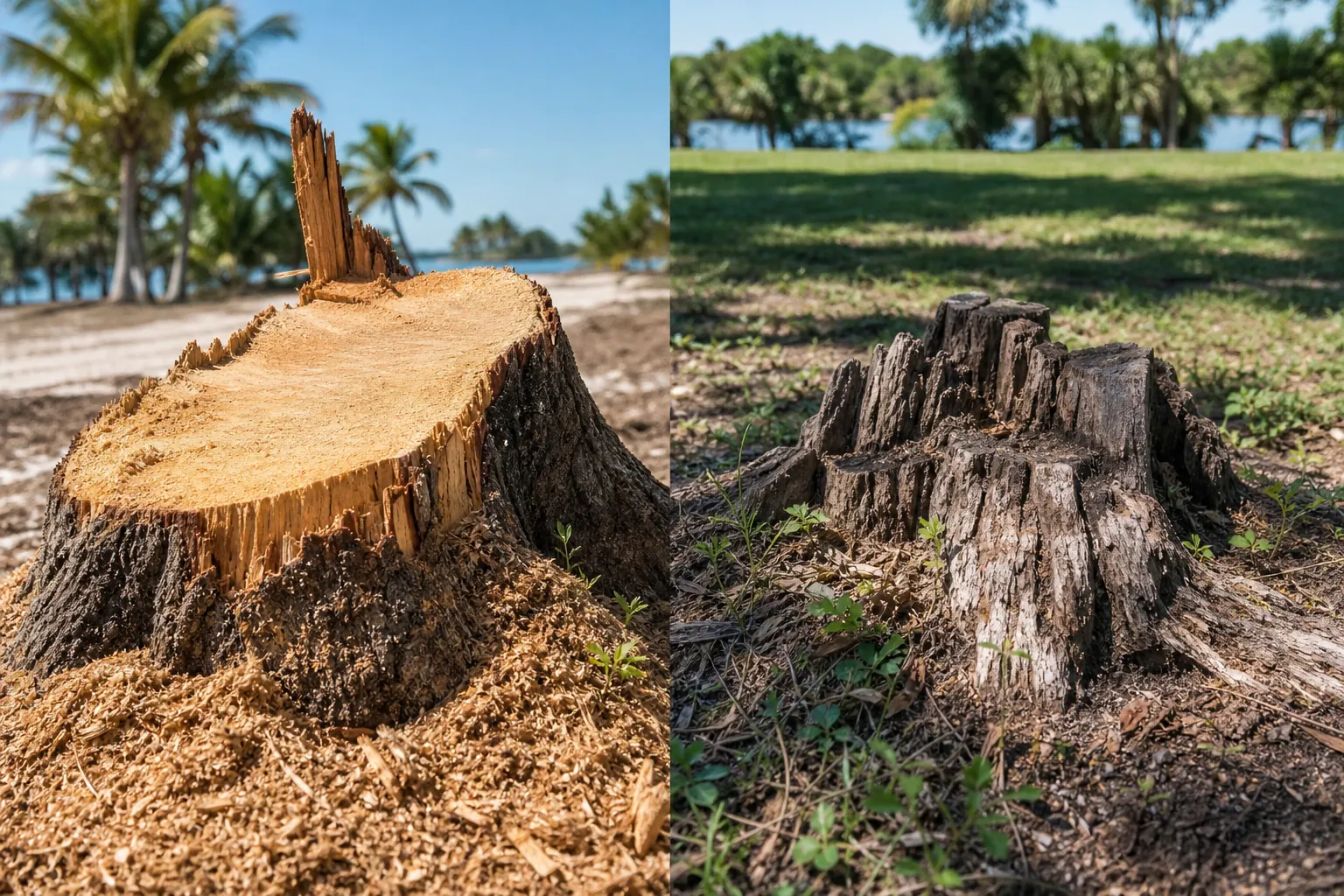
A newly cut stump and one that has weathered several Florida summers can look very different, but neither appearance tells the whole story. A fresh stump usually contains firm wood and clearly defined roots. An older stump may have a softened center, hidden cavities, or roots that remain surprisingly solid below ground.
For homeowners comparing stump grinding fresh vs old stumps in Florida, the practical question is not simply which one is easier. It is how the stump's condition, location, and surrounding landscape affect the work and what you want to do with the space afterward.
Florida Foliage helps property owners consider those details before stump grinding. Understanding the differences can help you plan tree removal, address a leftover obstacle, and avoid assuming that an old stump has already solved itself through decay.
How stump grinding works, regardless of stump age
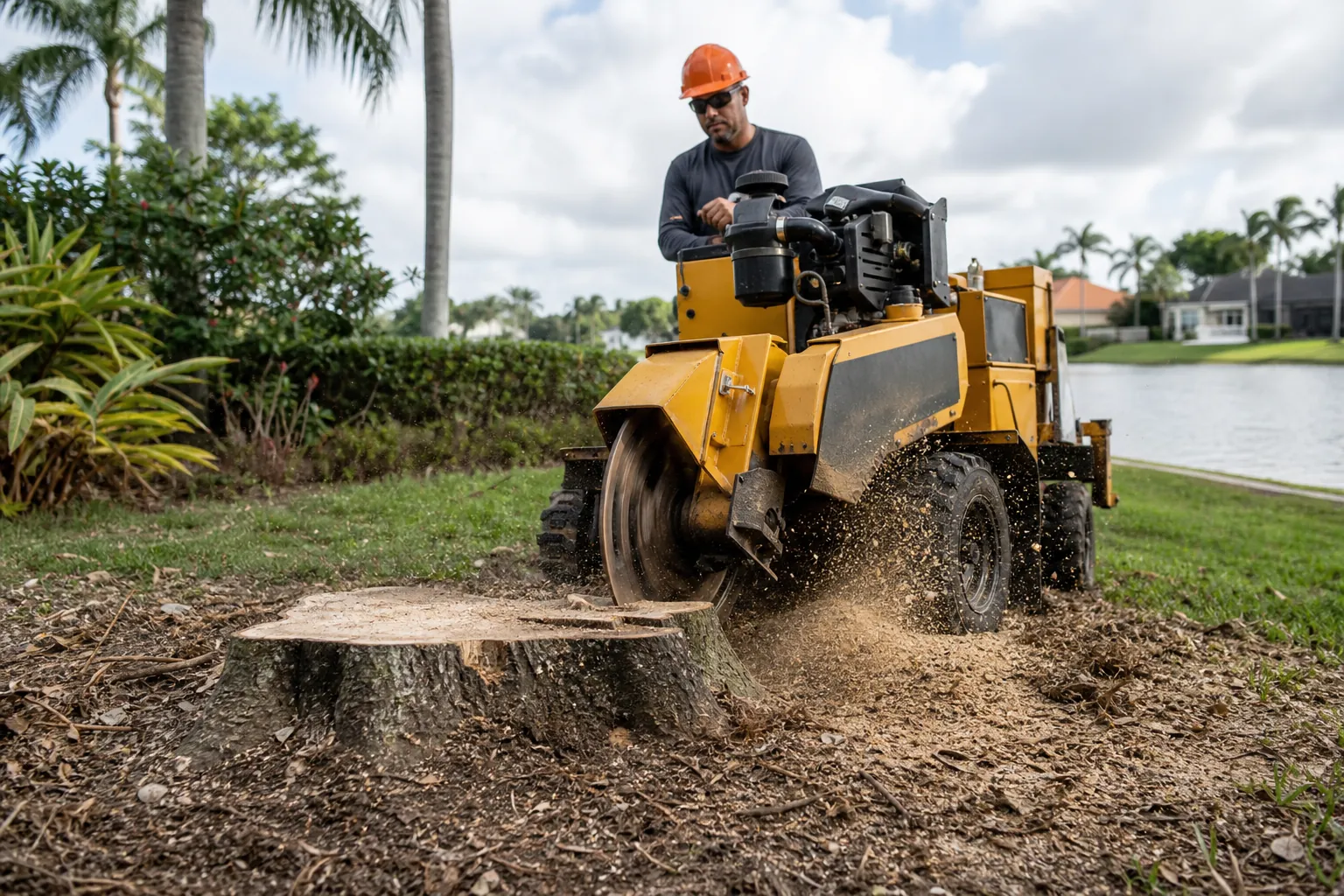
Stump grinding uses a rotating cutting wheel to reduce stump wood into small pieces. The equipment works progressively across the stump and into the ground to a depth selected for the site and intended use. The process produces a mixture of wood chips and soil.
Grinding is different from extracting the entire stump and root system. It typically addresses the visible stump and selected portions beneath or around it, while many roots remain in the soil. Those remaining roots gradually decompose.
This distinction matters whether your stump is fresh or old. A ground stump does not automatically leave a planting-ready bed or a foundation-ready area. The amount of wood left underground, the grinding depth, and the management of chips all affect what comes next.
Before work begins, explain whether your goal is easier mowing, a new lawn, a planting bed, or a future construction project. The right approach should reflect that goal rather than treating every stump as the same task.
What makes a fresh stump different?
A fresh stump is the remaining base of a recently removed tree. Its wood is generally intact, although a tree that had internal decay before removal may leave a stump with softened or hollow sections. Fresh does not necessarily mean healthy or uniformly hard.
Firm wood can require deliberate grinding passes. Species, diameter, root flare, and wood condition all influence the work. A broad stump with substantial surface roots may involve more area than its cut face suggests.
Fresh stumps are often easier to locate and evaluate visually. The cut surface is exposed, the tree's former position is obvious, and the surrounding ground may still show the access route used during tree removal.
Another consideration is regrowth. Some tree species can send up shoots from a stump or surviving roots after cutting. Grinding the stump can reduce the remaining stump tissue, but it does not remove every root or rule out shoots from the surviving root system.
- A recently cut stump may still contain dense, sound wood even when its surface looks small.
- A fresh stump from a declining tree may include decay that changes how it responds to grinding.
- Visible root flares should be considered when defining the area to be ground.
- Any shoots that appear afterward should be identified before choosing an appropriate response.
If tree removal is already planned, discussing stump grinding at the same time can clarify equipment access and the final condition of the yard. It also prevents confusion about whether the stump is included in the planned work.
What changes as an old stump decays?
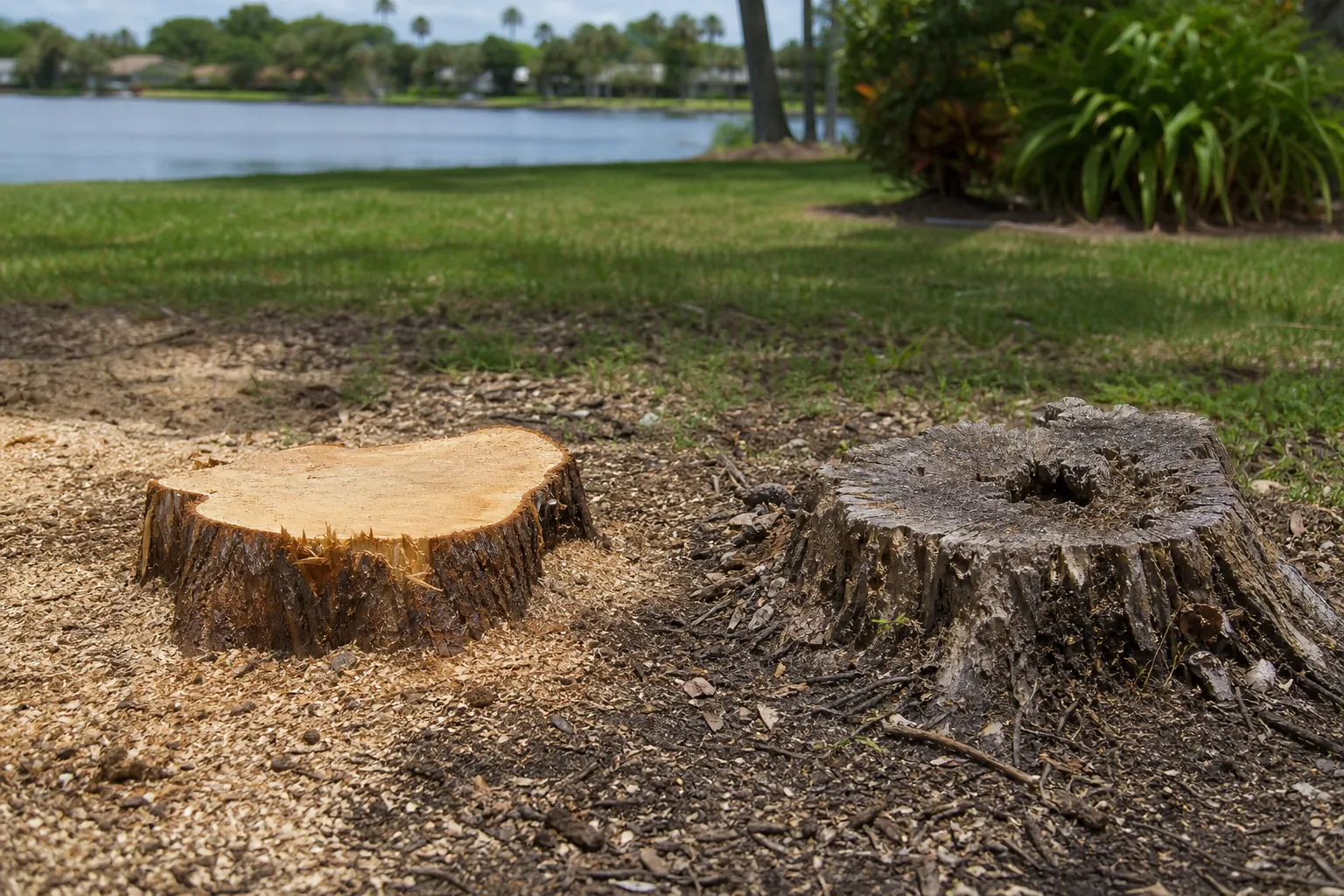
Older stumps experience repeated wetting, drying, fungal activity, and contact with soil organisms. In Florida, warm conditions and moisture can support decomposition, but the pace varies widely. Tree species, drainage, shade, and the original condition of the wood all matter.
A stump may become softer at the surface while its lower sections stay firm. Conversely, a hard-looking outer shell can surround a decayed center. Age alone is therefore an unreliable measure of the work required.
Old stumps can also become less visible. Grass, leaf litter, or ornamental plants may hide their edges. Soil can accumulate over exposed roots, and landscaping changes can make equipment access more difficult than it was when the tree came down.
As wood breaks down, voids may form beneath or beside the stump. These areas can settle, especially when people continue adding soil without addressing the remaining wood. A depression near an old stump deserves a closer look rather than an assumption that it is only a lawn issue.
Old stumps may also contain embedded objects from past yard use. Wire, nails, edging, or other debris can create equipment hazards. Let the crew know about anything attached to the former tree or buried nearby.
Is it better to grind immediately or wait?
There is no universal waiting period that makes stump grinding the better choice. Waiting for decay may soften some wood, but it can also leave a tripping obstacle, interfere with mowing, or delay your landscape plans.
Grinding soon after tree removal often makes sense when you want to restore a usable lawn or prevent the stump from becoming hidden by growth. Coordinating the work can also make it easier to discuss the stump while the site is already being assessed.
Waiting may be reasonable when the stump is out of the way and your plans are not settled. However, natural decay does not provide a predictable completion date, and a stump that looks nearly gone may still contain substantial wood underground.
Florida's wet-season conditions can influence scheduling more than stump age does. Saturated soil may limit equipment access or increase the likelihood of ruts. A drier working window may be preferable, depending on the property and equipment needed.
- Consider earlier grinding when the stump blocks mowing, walking routes, or planned landscape work.
- Discuss timing carefully when the ground is soft, drainage is poor, or equipment must cross a maintained lawn.
- Do not assume that waiting will eliminate the need to manage roots, chips, or settling.
- If you are unsure whether a nearby tree is safe, address that concern separately through tree inspections.
Florida site conditions can matter more than age
Two stumps of the same age can require different plans because their surroundings are different. Access width, slope, soil moisture, buried infrastructure, and nearby plants all influence how stump grinding should proceed.
Sandy ground can still be unsuitable for equipment when saturated or unstable. Properties with irrigation systems, landscape lighting, drainage pipes, or septic components require particular care because these features may be close to the stump.
Salt exposure, flooding history, and shaded conditions may affect the landscape around the stump, but they do not reliably establish how much decay exists inside it. The stump itself and the working area need assessment.
Stumps beside fences, patios, driveways, or buildings may have restricted access. Roots can extend beneath hard surfaces, and grinding close to those features requires a defined scope. Removing visible stump wood is not the same as correcting pavement displacement or structural damage.
For HOA and condo tree services or commercial tree services, the planning also involves shared access and pedestrian routes. The work area should be coordinated with the responsible property contact so residents, visitors, and maintenance crews know which areas to avoid.
How to prepare a fresh or old stump for assessment
You do not need to diagnose the stump yourself. Helpful preparation means making the site easier to understand without digging into unknown utilities or attempting to break apart the wood.
Photographs can show the stump, nearby structures, and the route from the street or driveway. Include a wider view instead of photographing only the cut surface. Mention gates, steps, narrow passages, and any known underground systems.
- Clear movable furniture, hoses, toys, and loose yard items from the surrounding area when it is safe to do so.
- Identify known irrigation lines, private wiring, drains, and septic features for the crew.
- Ask how applicable utility locating will be arranged, and remember that private underground features may need separate identification.
- Share any history of attached fencing, embedded metal, previous excavation, or storm damage near the stump.
- Explain whether you want grass, a planting bed, or another use in the finished area.
Keep children and pets away from the work zone. Stump grinding involves moving machinery and flying debris, so observing from close range is not appropriate. Let the operator establish the working boundary and access route.
If work connects with broader tree removal or land and lot clearing, confirm any applicable requirements with your city or county. Local rules can depend on the property, tree, and overall project.
What to expect from chips, roots, and settling
Grinding creates a substantial volume of material because solid wood becomes loose chips mixed with soil. The resulting pile may appear larger than expected. Before scheduling, clarify how that material will be handled and what condition the area will be left in.
Fresh stump chips may contain more recognizable, firm wood pieces. An old stump can produce a mix of sound wood, decomposed material, and soil. Neither mix should automatically be treated as suitable finished planting soil.
For a lawn, leaving a deep concentration of chips in the planting area can complicate establishment and contribute to settling as the wood decomposes. Preparing the site may involve reducing excess woody material and adding suitable soil before seeding or laying sod.
Remaining roots also break down over time. This can lead to gradual depressions even after the visible stump has been ground. The likelihood and extent depend on the amount of buried wood and the surrounding ground conditions.
Check the area periodically rather than expecting its initial level to remain unchanged. If low spots develop, restore a safe, even surface using an approach appropriate for the lawn or planting bed.
Woody material used as surface mulch behaves differently from chips mixed deeply into soil. If you reuse chips elsewhere, keep mulch away from trunks and avoid piling it against buildings. Do not assume freshly ground material is finished compost.
Can you plant a new tree where the stump was?
Planting directly in the old stump's footprint can be difficult even after grinding. Remaining wood, roots, loose material, and a changing soil level may interfere with the new tree's root development.
Whenever practical, consider a nearby planting position with adequate soil volume and appropriate clearance from structures and utilities. The best position depends on the species you want, its mature size, and the space available.
If the same location is important, discuss that before grinding. A standard mowing-focused grinding depth may not provide the conditions needed for a new root ball. The planting area needs evaluation beyond the disappearance of the visible stump.
The reason the original tree was removed also matters. If disease or a persistent site problem contributed to its decline, replacing it without understanding that issue can repeat the problem. Arborist reports and tree inspections can help inform decisions when tree health or site suitability is uncertain.
For vegetable beds or ornamental planting, consider soil quality, drainage, and remaining wood rather than relying only on the stump's age. An older stump may be softer, but that does not mean the ground is ready for immediate planting.
Questions to ask before scheduling stump grinding
A clear discussion helps align the work with your expectations. Describe the stump's approximate size and age, but put equal emphasis on its location and your plans for the area.
- Ask which visible roots and root flares are included in the proposed grinding area.
- Ask what grinding depth is appropriate for your intended use and what limitations apply.
- Confirm how equipment will reach the stump and whether soft ground may affect scheduling.
- Clarify how chips will be managed and what cleanup is included.
- Ask what underground wood is likely to remain and how that could affect future planting or settling.
- Discuss whether nearby trees or structures create concerns that need separate assessment.
If a storm left both a stump and damaged standing trees, prioritize the immediate hazards. Emergency and hurricane tree removal addresses a different concern from routine stump grinding. A leftover stump should not distract from unstable limbs or compromised trees nearby.
Choose based on the site, not just the stump's age
Fresh stumps usually offer more visible, intact wood. Old stumps may be partly decomposed, concealed by landscaping, or associated with settling ground. Both can be appropriate candidates for stump grinding, and both require attention to access, roots, utilities, and the finished use of the space.
The most useful plan starts with what is actually on your property. Stump age provides context, but it does not replace an assessment of wood condition and surrounding conditions.
To discuss a fresh or old stump in your Florida yard, call Florida Foliage at (386) 481-7913. Explain where the stump sits and what you want to do with the area afterward so the conversation can focus on a practical next step.
Call (386) 481-7913 to talk through next steps.