Reviewed by Clinton Funk
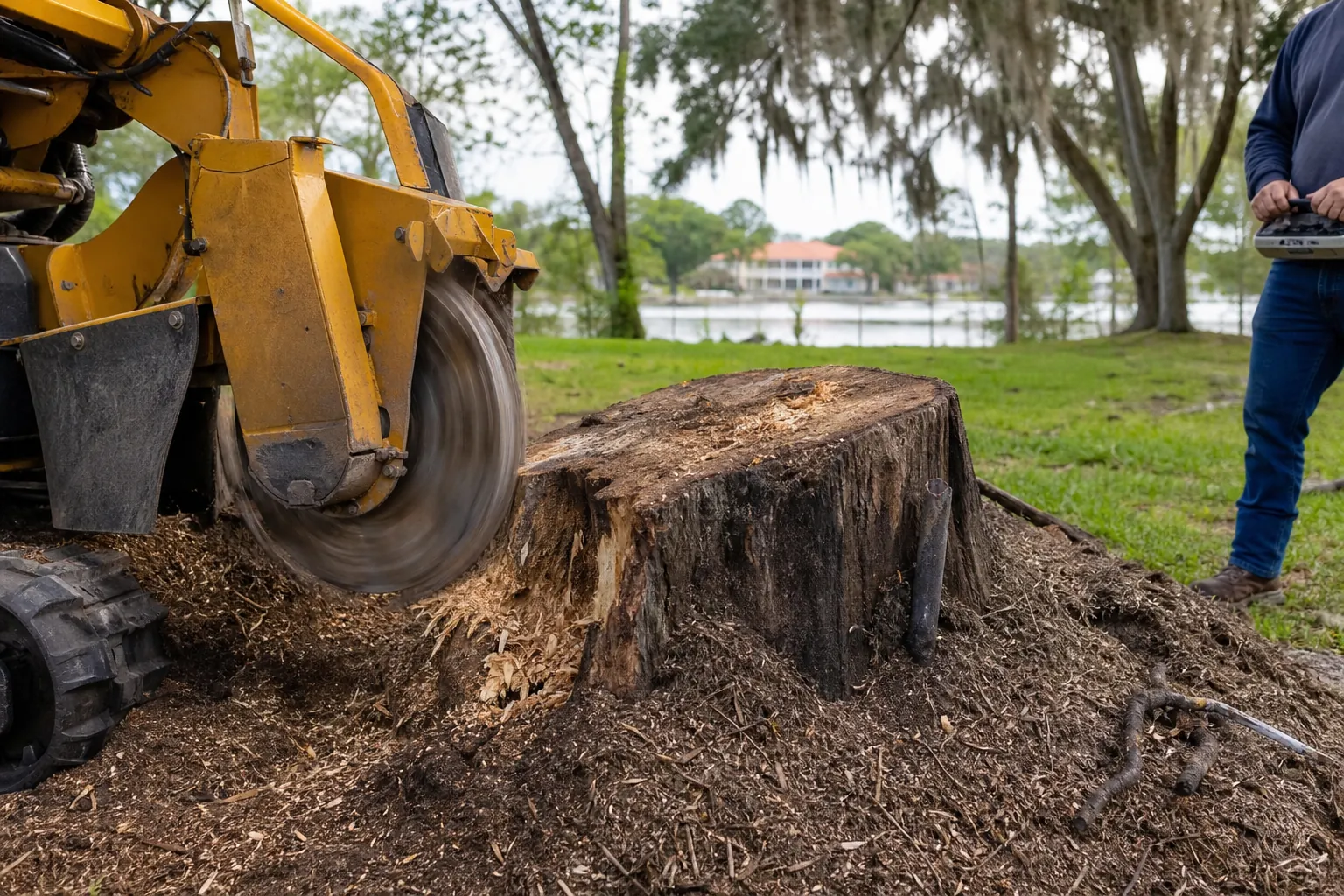
A stump can look like ordinary wood while holding nails, screws, fence wire, or other hardware beneath its surface. Trees grow around objects attached to their trunks, sometimes hiding them completely. When that tree comes down, the remaining stump may contain a piece of the property's history that nobody remembers.
For Florida homeowners, metal matters because stump grinding uses a rotating cutting wheel to break wood into small chips. Contact with a buried object can damage cutting teeth, produce unpredictable debris, or require the operator to stop and reassess the job. Metal does not automatically make grinding impossible, but it changes how the work should be evaluated.
If you are researching stump grinding with metal embedded in a trunk in Florida, start with what you know about the tree and surrounding property. Florida Foliage offers stump grinding and tree services, and a clear description of possible metal helps support an informed discussion before equipment arrives.
How Metal Becomes Embedded In A Tree
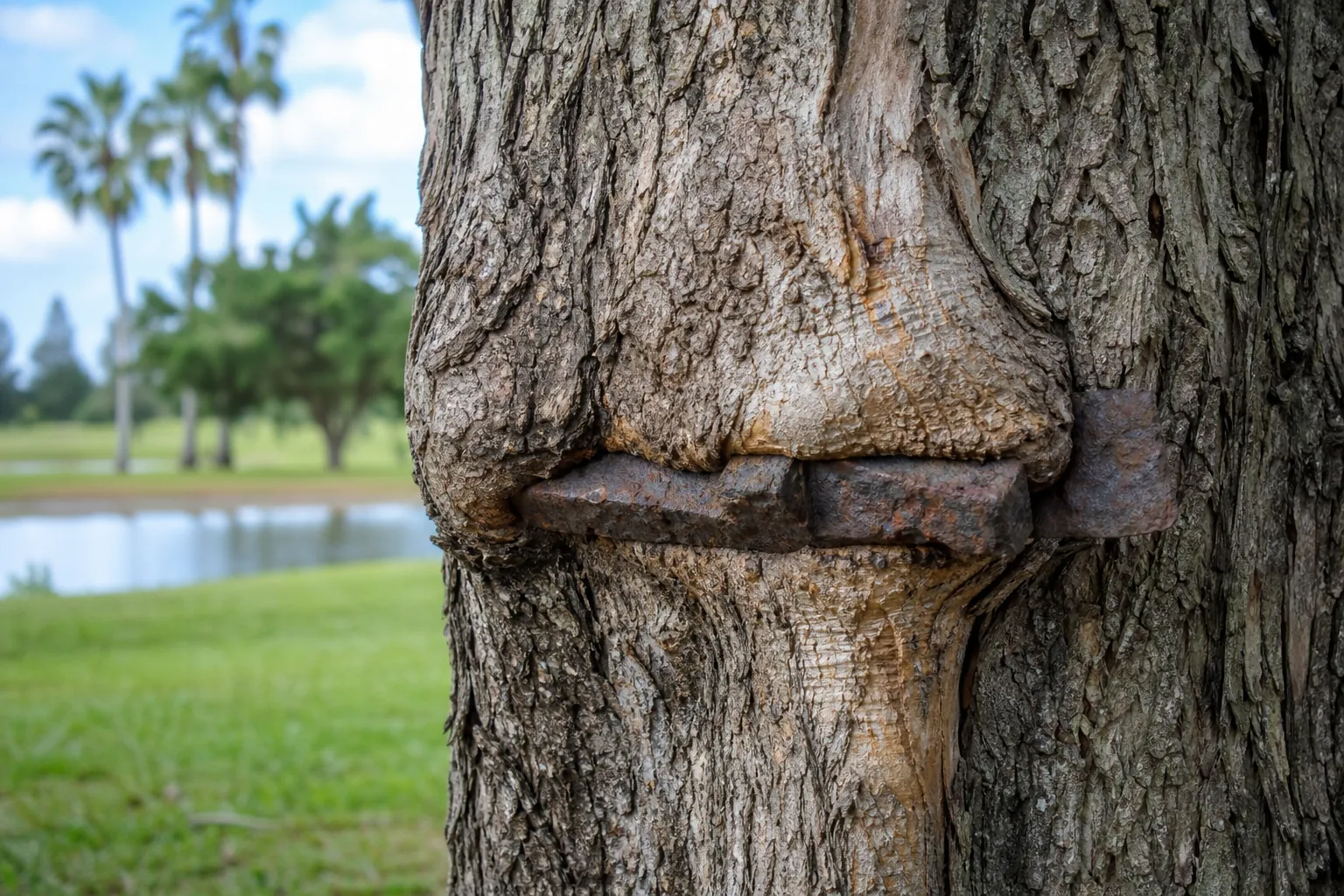
Many embedded objects begin as everyday attachments. Someone nails up a sign, anchors a clothesline, secures a fence, or installs a support bracket. As the trunk adds new growth around the attachment, bark and wood can gradually conceal it.
Old fence lines are particularly important. Wire may run through a trunk at one height while a separate staple or nail remains closer to ground level. Cutting off the visible wire does not necessarily remove the portion inside the wood. A fence that disappeared years ago can still affect today's stump grinding.
Tree removal may reveal metal in a cut surface, but a clean-looking surface does not establish that the entire stump is metal-free. Hardware can sit below the cut, off to one side, or near the root flare. The visible portion is only part of the remaining wood.
- Old nails or screws may remain from signs, decorations, or temporary attachments.
- Fence staples and wire may be hidden where a trunk once bordered an enclosure.
- Bolts, hooks, and brackets may remain from swings or support systems.
- Metal edging, stakes, or discarded hardware may sit in the soil beside the stump rather than inside it.
These situations call for different decisions. An exposed screw is not the same as a strand of wire crossing the planned work area. Tell the contractor whether metal is confirmed, suspected, or simply possible based on the property's history.
Why Hidden Metal Changes The Grinding Plan
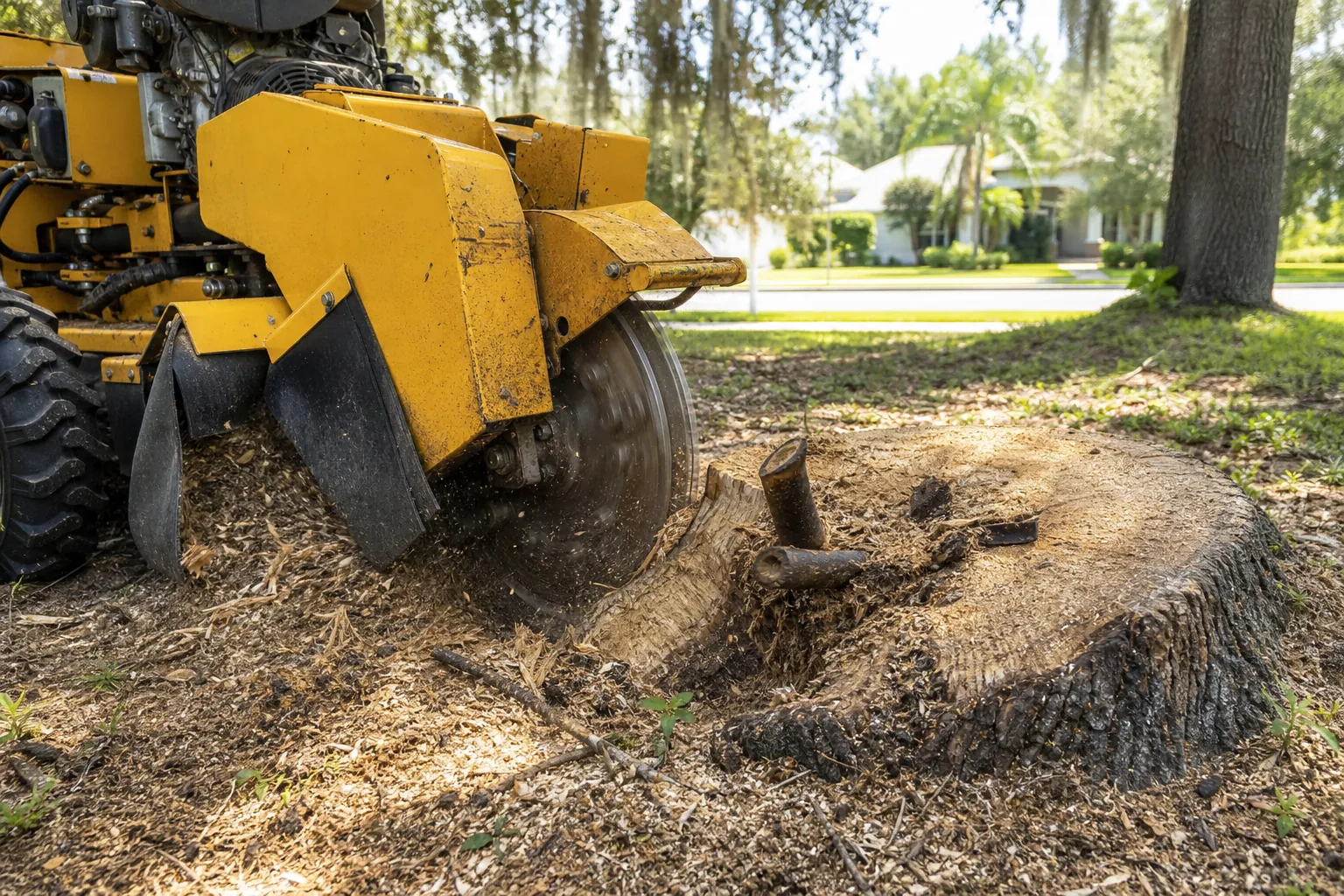
A stump grinder is designed to cut wood, not process miscellaneous metal. Its teeth work through the stump in controlled passes. An unexpected hard object can interrupt that process and create additional risks for the operator, nearby people, and surrounding property.
The concern is not limited to a broken cutting tooth. Wire can behave differently from a solid bolt, and an object partly anchored outside the stump may complicate the work. The size, position, and accessibility of the metal all matter.
A responsible approach allows the operator to pause when conditions change. Discovering metal may mean exposing more of the area, changing the cutting approach, or deciding that grinding should not continue at that location until the obstruction is addressed.
Do not assume that a larger machine solves the problem. More power does not turn a wood-cutting tool into a metal-cutting tool. Similarly, an agreed grinding depth does not justify continuing through an unknown obstruction.
The practical goal is to reduce uncertainty before cutting and maintain a clear stopping point during the job. No visual check can promise that every buried object will be found. Useful planning acknowledges that limitation instead of treating a quick inspection as proof that the stump is safe to grind.
What Homeowners Can Check Before The Visit
You do not need to excavate a stump to provide useful information. Begin with a walk around the area, keeping your hands away from sharp objects and unstable wood. Look at the cut surface, exposed bark, root flare, and nearby fence line.
Photographs are helpful when they include both close views and the surrounding space. A close-up can show a visible bolt, while a wider image shows whether the stump stands beside a fence, driveway, building, or narrow gate.
- Look for visible wire, nail heads, brackets, hooks, or unusual staining around an attachment point.
- Check whether an existing or former fence line appears to pass through the stump.
- Ask previous owners or long-term residents whether anything was fastened to the tree.
- Note nearby irrigation equipment, landscape lighting, drainage features, and electrical installations.
- Explain whether the stump is close to a property boundary or in a shared landscape area.
- Share the approximate stump width and photographs without presenting them as exact measurements.
Avoid pulling on embedded wire, hammering exposed hardware, or using a saw to search for metal. These actions can create sharp edges, move an object unpredictably, or bring a cutting tool into contact with concealed hardware.
Keep the area accessible without disturbing the stump. Move loose furniture, toys, and other portable items away from the work zone. Leave attached or partially buried materials alone until the contractor evaluates them. A clear site helps inspection; an altered site can hide the original clues.
Inspection Helps, But Detection Has Limits
A pre-work evaluation can include reviewing the property's history, examining visible wood, and checking the area around the stump. When metal is suspected, the contractor can explain what additional assessment is appropriate and whether the job can proceed as planned.
Metal-detection equipment may be useful in some circumstances, but it is not a universal answer. Detection depends on the equipment, the object, its depth and orientation, and nearby interference. Metal in a fence or surrounding landscape can also complicate interpretation.
A detector response does not necessarily identify the object's exact location or shape. A lack of response should not be treated as a guarantee that the stump contains no metal. The operator still needs to watch for changing conditions as wood is removed.
Ask how suspected metal will affect the scope of work. Useful questions include whether visible hardware needs to be addressed first, what would trigger a pause, and how changes will be discussed with you. Clear communication is more valuable than an unsupported assurance.
Florida Foliage also offers arborist reports and tree inspections. If the stump is part of a broader concern involving nearby living trees, discuss that concern separately. Evaluating tree health and evaluating grinder obstructions are related site questions, but they are not the same task.
Florida Site Conditions That Deserve Attention
Florida properties vary widely, from compact residential yards to larger lots and shared community landscapes. Access, drainage, nearby structures, and existing landscaping may influence a stump grinding plan just as much as the suspected metal.
After heavy rain, ground conditions can affect equipment access and the risk of disturbing the yard. Sandy soil does not mean the site is clear of utilities, and an apparently open lawn can still contain irrigation lines or other buried features.
Storm-damaged trees may add uncertainty. A stump left after emergency and hurricane tree removal can be surrounded by displaced fencing, broken landscape materials, or debris. Before grinding begins, explain what happened and identify any items that may have become buried or lodged near the roots.
Coastal exposure and rust should not be used to dismiss embedded hardware. A weathered object can still interfere with equipment. Whether the hardware looks new or corroded, its location and condition require assessment.
- Tell the contractor about recent heavy rain, standing water, or soft ground along the access route.
- Identify gates, tight turns, steps, and surfaces that equipment would need to cross.
- Point out nearby windows, vehicles, patios, and other features that affect work-zone planning.
- Describe storm debris or damaged fencing that may overlap the stump area.
- Confirm any applicable requirements with your city or county before work begins.
For HOA and condo tree services, also confirm who can authorize the work and whether association approval is needed. A stump near a shared walkway or boundary should not be treated as an individual homeowner's decision without checking responsibility.
Utilities And Work-Zone Safety Come First
Metal inside a stump and utilities near a stump are separate hazards. Resolving one does not resolve the other. Grinding below the soil surface requires attention to the surrounding underground infrastructure, even when the stump itself appears straightforward.
Before work, follow the appropriate utility-locating process and confirm responsibilities with the contractor. Private irrigation, landscape lighting, and other owner-installed lines may require separate identification because public utility marking may not cover them.
Do not assume that a utility follows a straight line or sits at a particular depth. Share plans or records if available, but recognize that old drawings may not reflect later changes. Tell the contractor about repairs, additions, or unexplained pipes near the tree.
During grinding, stay outside the operator's designated work zone. Keep children, pets, residents, and visitors away from the area. Watching from a nearby window or standing beside the machine is not a substitute for following the contractor's safety instructions.
If work stops unexpectedly, wait until the operator has shut down the equipment and says it is safe to approach. Do not step forward to point at an object while the machine is running. Questions and photographs can wait until the area is safe.
What Happens If Metal Is Found During Grinding?
Finding metal does not have one standard solution. The operator first needs to determine what is visible, whether it extends beyond the stump, and whether proceeding would introduce unacceptable risk. That assessment may require stopping the machine and inspecting the exposed area.
A small, accessible object may present a different situation from deeply embedded hardware or continuous fencing wire. Depending on the conditions, the next step may involve addressing the obstruction before continuing, adjusting the grinding scope, or postponing further work.
Homeowners should not pressure an operator to grind through metal simply to finish the stump. Equipment protection and work-zone safety are legitimate reasons to stop. A partially completed job with a clear explanation is preferable to continuing without understanding the obstruction.
Ask what has been completed and what remains. The contractor should clarify the affected area, any change in planned depth, and whether the stump is ready for your intended landscape use. If an obstruction prevents the original scope, discuss the revised plan before additional work proceeds.
Also ask how exposed sharp materials will be handled and whether the chips or surrounding soil need further attention. Wood chips from a stump with metal should not automatically be treated as clean mulch. The presence of fragments can change how you use or handle that material.
Plan For The Space After Grinding
Stump grinding removes wood within the agreed work area, but it does not necessarily remove every root. The finished surface and remaining below-ground material depend on the stump, access, surrounding features, and any obstructions encountered.
Explain your goal before the job starts. Restoring lawn, creating a planting bed, and preparing for a construction project have different requirements. Grinding alone may not meet the needs of a future slab, footing, utility trench, or other structural work.
Avoid choosing a grinding depth based only on a number you found online. The appropriate scope depends on the site and intended use. Where embedded metal limits the work, that limitation should be understood before you schedule follow-on projects.
- Confirm whether wood chips will remain in place or whether the agreed scope includes moving them.
- Ask whether suspected metal affects how the remaining material should be handled.
- Expect that decomposing wood and disturbed material may contribute to settling over time.
- Discuss new planting locations rather than assuming the exact former trunk location is suitable.
When the project involves several stumps or an overgrown area, discuss stump grinding alongside land and lot clearing or brush hogging as appropriate. These are distinct services, so specify which vegetation and stumps are included rather than assuming one service covers everything.
Give The Contractor A Clear Starting Point
The most useful request includes the stump's location, approximate size, access conditions, intended future use, and any reason to suspect metal. Mention whether the tree grew beside a fence or carried signs, swings, or attachments. Include photographs if available.
If tree removal has not happened yet, disclose suspected hardware before cutting begins. Metal can matter during removal as well as grinding. When access or tree position is difficult, the contractor can evaluate whether crane tree removal is relevant to the overall project.
For commercial tree services or shared properties, identify the person responsible for approvals and explain how the work area will be separated from normal activity. Good coordination helps keep residents, customers, and maintenance crews from entering an active work zone.
Florida Foliage can discuss your stump grinding needs and the information available about embedded metal. Call (386) 481-7913 to describe the stump, share your concerns, and ask about the next step. You do not need to diagnose the obstruction yourself. Accurate history and a careful site review are a practical place to start.
Call (386) 481-7913 to talk through next steps.