Reviewed by Clinton Funk
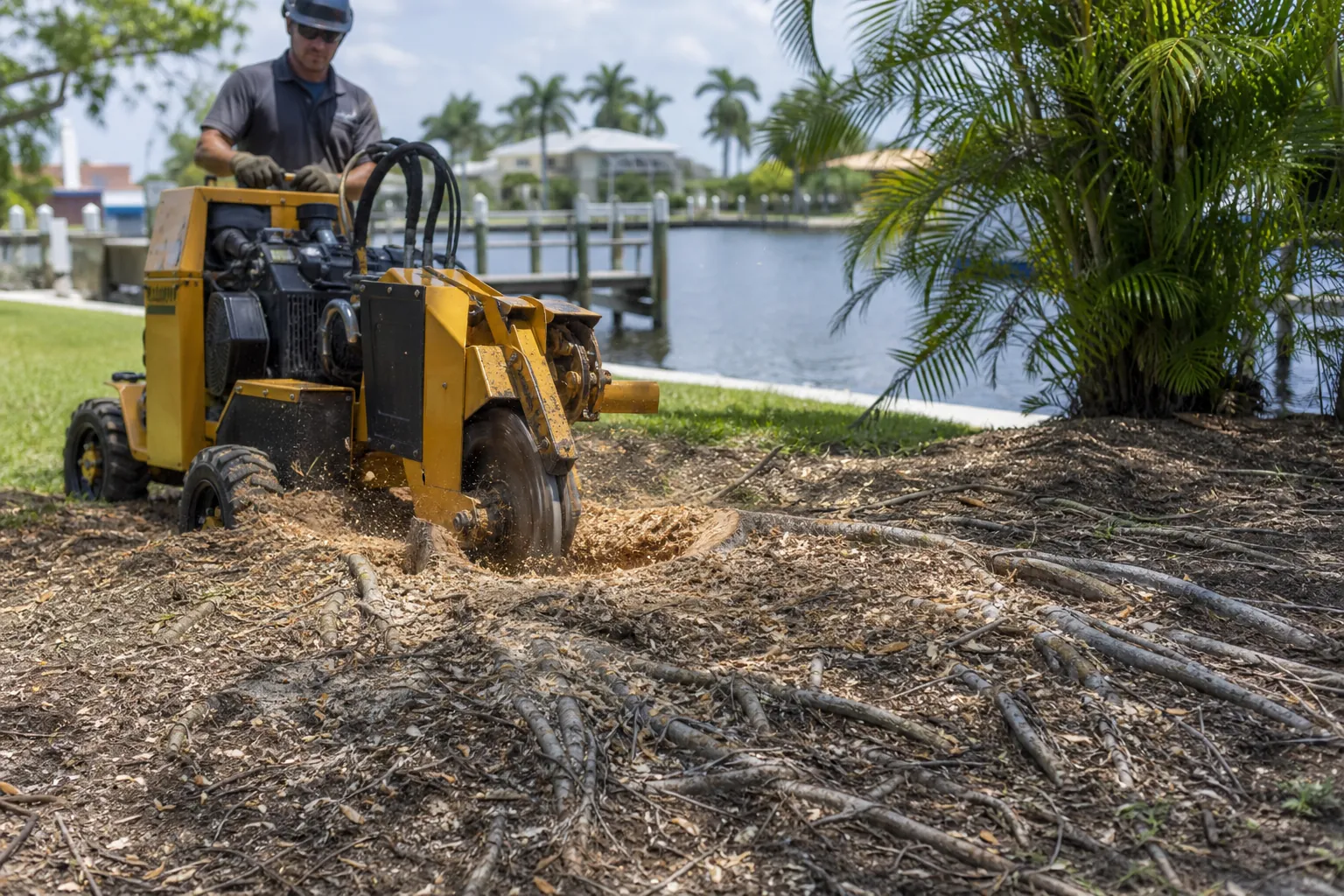
A stump is easy to notice after a tree comes down. The roots spreading across the lawn can be a less obvious part of the same project. They may catch a mower blade, interrupt a walkway, or occupy ground you want to plant. Removing the visible stump does not automatically remove those roots.
For homeowners researching stump grinding surface roots Edgewater, the important question is what needs to change above ground and what should remain below it. A useful plan considers the removed tree, nearby living trees, access, buried utilities, and the intended use of the space.
This guide explains what grinding can accomplish, why some roots need separate attention, and how to prepare an Edgewater property for practical, responsible work.
What Stump Grinding Actually Removes
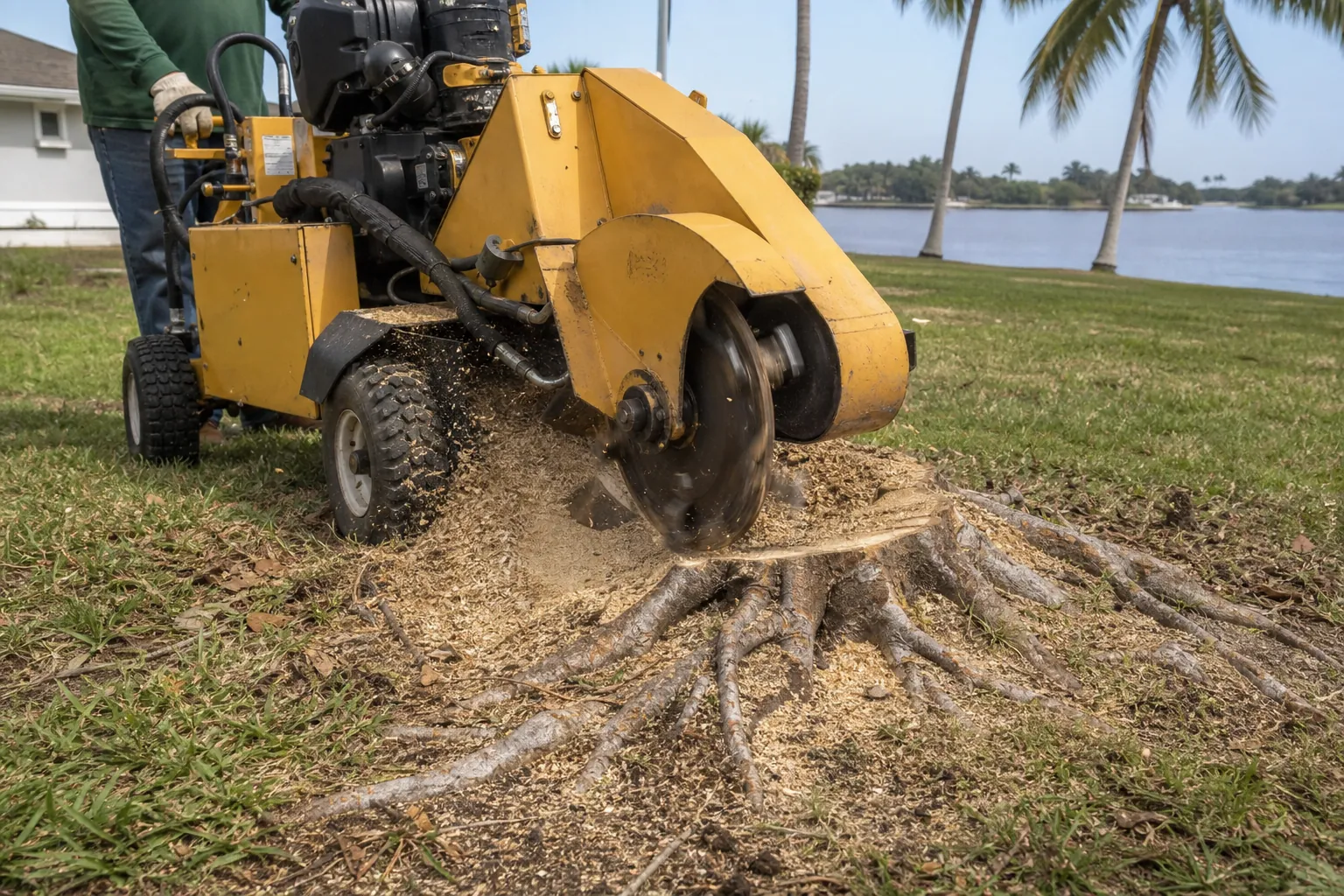
Stump grinding uses a rotating cutting wheel to reduce stump wood into chips. The operator works through the visible stump and into the portion below the surrounding ground level. The appropriate depth depends on the site, equipment access, and what you intend to do afterward.
Grinding is different from pulling out a stump and its root system. Much of the underground root network usually remains in place. Those remaining roots gradually decay, but they do not disappear on a predictable schedule.
Surface roots are the woody roots visible at or just beneath the soil. Some connect directly to the stump and can be addressed as part of a defined grinding area. Others extend well beyond it or belong to a nearby tree that is still alive.
Before work begins, ask whether the proposed scope covers only the central stump, the root flare around its base, or specific exposed roots. These are different tasks. Clear boundaries prevent the mistaken assumption that every root in the yard will be removed.
Also distinguish between grinding depth and the depth of finished soil. A hole filled with loose chips may appear level initially, then settle. The finished surface needs its own plan.
Why Surface Roots Need A Separate Assessment
Tree roots grow where moisture, oxygen, and suitable soil conditions are available. They do not always stay deep underground. Erosion, compacted soil, and changes in ground level can make existing roots more noticeable. A root exposed near a removed tree is not necessarily new growth.
In Edgewater, assess the actual property rather than relying on a general assumption about Florida soil. Low spots, drainage patterns, previous construction, and heavily traveled areas can all influence how roots interact with the landscape.
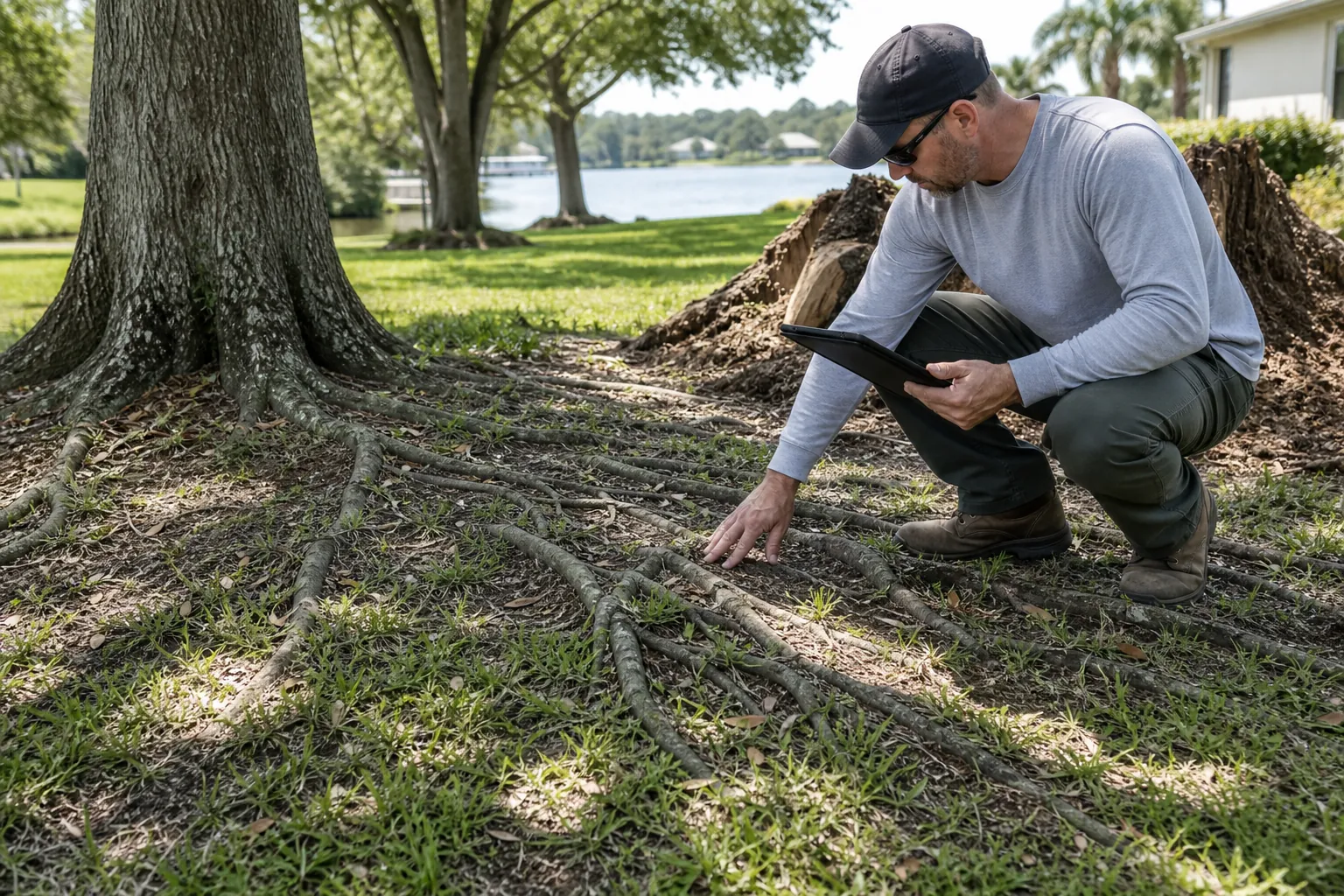
The first step is identifying which tree the roots belong to. That may be straightforward when a root visibly joins the stump. It can be more complicated where several mature trees have overlapping root zones.
Cutting roots from a living tree can affect its health and stability. Large structural roots deserve particular caution, especially near the trunk. There is no universal safe cutting distance that fits every species, tree condition, and site.
- Identify the stump and any nearby living trees before selecting roots for removal.
- Explain whether the concern is mowing access, a walking hazard, planting space, or planned construction.
- Point out roots near sidewalks, driveway edges, irrigation components, and fences.
- Request tree inspections when root ownership or the effect on a living tree is uncertain.
Arborist reports and tree inspections can help clarify a tree-related concern before irreversible work begins. Inspection is especially useful when exposed roots and visible tree decline occur together.
When Grinding Exposed Roots Makes Sense
Grinding selected surface roots can be reasonable when they clearly belong to a removed tree and interfere with the intended use of the area. For example, a root flare may prevent a mower from passing safely, or a woody ridge may obstruct a small area being returned to lawn.
Even then, grinding should follow the problem rather than chase every underground root. Extending the work unnecessarily can disturb more soil, create a larger cleanup area, and bring equipment closer to features that need protection.
A practical approach is to mark the exposed sections that matter. Discuss whether those sections can be reduced without damaging adjacent paving or affecting a living tree. Equipment may not be able to reach every root, particularly beside walls, narrow gates, or tightly spaced landscape features.
Some roots beneath hard surfaces cannot be addressed simply by grinding from the lawn side. If a root has lifted a walkway, removing nearby wood does not necessarily correct the pavement or restore its support. The hard surface needs a separate assessment.
Grinding can also leave smaller root pieces that become visible during grading or planting. The realistic goal is a usable surface and a suitable planting zone, not proof that all underground wood has vanished.
When Leaving Roots Alone Is The Better Choice
Not every surface root requires removal. A root that belongs to a healthy living tree may be better accommodated with a landscape adjustment. A root from a removed tree may also be left to decay if it does not interfere with walking, mowing, or another planned use.
For living trees, avoid treating root removal as a routine way to smooth the lawn. Repeated cuts can compound stress, and injuries can create entry points for decay. A qualified assessment can help weigh the inconvenience of a root against the consequences of cutting it.
Changing how an area is used may be less disruptive. A lightly mulched space can sometimes replace turf where roots make mowing difficult. Keep mulch away from the trunk, avoid burying the root flare, and do not assume that adding a thick soil layer is harmless.
Raising the ground level around a living tree can reduce oxygen available to roots. Likewise, repeatedly driving equipment over the root zone can compact soil. Protecting roots involves more than avoiding direct cuts.
If the concern is a walkway route, consider whether its alignment can change before deciding that roots must go. The best option depends on available space, accessibility needs, and the condition of the tree.
Prepare The Site Before Equipment Arrives
Good preparation reduces surprises. Walk the site and note the stump location, exposed roots, nearby structures, and the route equipment would need to take. Access matters as much as the size of the stump.
A narrow gate, soft ground, steep transition, or pool enclosure can limit equipment movement. Measure openings rather than estimating them. Let the crew evaluate whether the route and working area are suitable.
Buried lines need attention before any grinding or associated digging. Arrange appropriate utility locating and ask how privately owned irrigation, lighting, or other lines should be identified. Do not assume that a standard locate includes every private installation.
- Move portable furniture, hoses, planters, and other loose items away from the work area.
- Point out irrigation heads, shallow pipes, landscape lighting, and known underground features.
- Discuss how nearby windows, vehicles, fences, and planted beds will be protected.
- Keep children and pets away from the active work zone and equipment route.
- Explain any septic components, wells, or other site features that could affect access or grinding.
Do not remove protective markings before the work is finished. If a marked line conflicts with the proposed grinding area, pause and clarify the plan rather than assuming the cutting wheel can safely pass above it.
For shared properties, confirm who can authorize work. HOA and condo tree services may involve coordination with managers, boards, or residents. Commercial tree services can also require planning around customer access and occupied areas.
Set A Clear Scope For The Stump And Roots
A useful conversation starts with the result you want. Returning an area to grass is different from preparing a planting bed or creating space for a future structure. Each use can require a different approach to residual wood and backfill.
Describe your next step before agreeing on the work. If you intend to install a fence post or plant a replacement tree, identify the exact location. A surface that looks clear can still contain substantial roots underneath.
- Ask which stump sections, root flares, and exposed roots are included in the work area.
- Ask how the planned grinding depth relates to your intended use of the space.
- Clarify whether chips will remain on site and what cleanup is included.
- Ask whether restricted access could leave some wood unreachable.
- Discuss nearby living trees and any need for inspection before roots are cut.
It is also useful to discuss what would cause work to stop. Unexpected metal, masonry, buried lines, or uncertain root ownership can change the safest approach. A defined scope should leave room to reassess those conditions.
If tree removal has not happened yet, discuss stump grinding during the initial planning. Coordinating the two can help identify access needs and prevent landscaping from being installed before the stump is addressed.
Handle Grinding Chips And Restore The Ground
Grinding produces a mixture of wood chips and soil. That material often occupies more space than the original solid wood appeared to fill. Decide beforehand how it will be handled and where any retained material can go.
A pile of chips is not the same as finished planting soil. Wood continues to break down, and a chip-filled depression can settle. For lawn restoration, excess woody material may need to be removed and replaced with suitable soil.
Avoid burying a large concentration of fresh chips directly in the intended grass root zone. Decomposition can temporarily affect nitrogen availability, and loose material can make it difficult to establish a firm surface. Soil preparation should match the planting plan rather than simply hide the hole.
Backfill should be placed thoughtfully without damaging nearby roots or buried infrastructure. The finished grade should also respect existing drainage. Creating a mound or low basin can redirect water toward a building, walkway, or neighboring property.
If you retain some chips for mulch, place them where they serve a useful purpose. Keep them away from trunks and building contact points, and avoid spreading material that contains trash or unsuitable debris.
After restoration, watch for settling and refill depressions as needed. Remaining underground wood can decay unevenly. Check the area before mowing so that loose pieces, exposed roots, or soft spots do not catch you by surprise.
Replanting After Stump Grinding
Planting immediately in the exact center of a former stump can be challenging. Residual wood may interfere with the planting hole, and soil conditions can differ sharply from those in the surrounding yard. Grinding does not automatically create a good site for another tree.
Where space allows, moving a replacement tree away from the old stump footprint can simplify planting. The right location depends on mature tree size, building clearance, drainage, overhead lines, and underground utilities.
If the old location must be reused, confirm that enough woody material has been addressed for the proposed planting. Do not force a root ball into a shallow hole over remaining stump wood. Proper planting depth and usable surrounding soil matter more than matching the former trunk location.
For turf, prepare a consistent soil surface and select grass suited to the available light. Removing a tree changes sun exposure, but nearby canopies may still produce significant shade. Observe the area rather than assuming it has become full sun.
Water according to the needs of the new planting and local conditions. Check applicable watering guidance with the relevant local authority. Avoid saturating the area simply because it contains new soil.
Watch For Regrowth And Changes Near Living Trees
Some tree species can produce shoots from remaining roots or stump tissue after removal. Grinding reduces the central stump, but it does not guarantee that every part capable of sprouting has been eliminated.
If shoots appear, identify their source before acting. They may come from the removed tree, a nearby living tree, or an unrelated seedling. Repeated mowing can hide the pattern without resolving the underlying question.
Monitor nearby living trees when work has occurred around their roots. Changes such as canopy thinning, leaf discoloration, branch dieback, or new leaning deserve attention, although these signs can have several causes. Do not assume that one symptom proves root damage.
Tree trimming, canopy thinning, and crown reduction are not substitutes for evaluating a root problem. Removing branches without a clear reason may add stress rather than solve the concern. Tree inspections can help guide the next decision.
After a storm, newly exposed roots, shifted soil, or a changing lean call for caution. Keep people away from a potentially unstable tree and seek an assessment. Emergency and hurricane tree removal may be relevant when storm damage creates an immediate tree hazard.
Plan Stump Grinding Around Your Edgewater Property
Stumps in open lawns present different challenges from those beside buildings, shared sidewalks, or heavily used parking areas. On larger properties, land and lot clearing or brush hogging may be part of a broader project, but neither should be assumed to include detailed stump or surface-root work.
If a tree still needs removal in a confined setting, access may also affect the removal method. Crane tree removal is a separate planning consideration, not a reason to skip assessing the stump and roots afterward.
Confirm applicable requirements with the City of Edgewater or the relevant county office before tree removal or work involving protected areas. Property boundaries, shared ownership, and planned construction can also affect who needs to approve the project.
The most useful plan is specific: identify the stump, establish which roots can be addressed, protect nearby trees and infrastructure, and decide how the ground will be restored. That approach keeps the work focused on the actual problem.
To discuss stump grinding and exposed roots on your Edgewater property, call Florida Foliage at (386) 481-7913. Share your intended use of the area, access limitations, and concerns about nearby living trees so the conversation can start with the right questions.
Call (386) 481-7913 to talk through next steps.