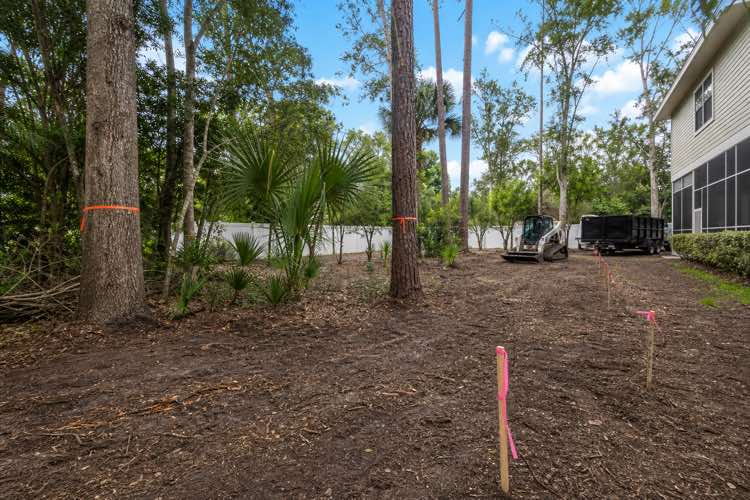
Planning tree and brush removal before a backyard project is different from general yard cleanup. The goal is to clear only what interferes with the next use, such as a fence line, shed pad, garden bed, or open play space. In Port Orange, sandy soil, tight access, and storm debris can change the scope fast.
- Mark what stays before any cutting starts.
- Match clearing depth to the next project.
- Ask how stumps and debris will be handled.
- Check access, utilities, and permit questions early.
- Use a written scope for apples-to-apples quotes.
Florida Foliage serves Volusia and Flagler counties, with Daytona Beach as the primary market. The team includes ISA Certified Arborists, and Florida Foliage is licensed and insured. If you are comparing a quote for a fence, shed, garden, or open yard area, you can request a free estimate and compare the scope before work begins.
For larger properties, a land clearing service may fit the plan better than a light trim or simple hauling job. For isolated trees that must come out before a build, a tree removal service can be the right fit. The right choice depends on what must stay, what must go, and how clean the site needs to be afterward.
For homeowners near the coast, the details matter. A backyard in Daytona Beach may have narrow side yards, patio screens, irrigation lines, or soft soil that shifts after rain. A project-first approach to Daytona Beach properties keeps the job tied to the next use, not to a broad scrape of the whole yard.
What Is Necessary to Completely Remove a Tree?
Completely removing a tree means more than cutting the trunk. Full tree and brush removal usually includes the trunk, limbs, stump, and leftover debris, plus cleanup of the work zone. If a fence, shed, or new bed is planned, the quote should say what remains, what is hauled away, and whether the stump stays.
Complete removal also depends on site goals. A stump can block grading, posts, irrigation, or a future slab. If the next project needs level ground, ask whether stump grinding or stump extraction is included. For some plans, a low stump is fine. For others, the root flare and surface roots can still interfere with layout.
One useful source from UF IFAS notes that tree roots are often widespread and extend well beyond the canopy edge in many cases, which is why stump and root decisions should match the planned use of the area. See UF IFAS guidance on tree root systems for that basic point.
Ask the contractor to define the finish condition. Will the space be rough cleared, or ready for a contractor to mark a fence line? In a full project scope, tree and brush removal should include haul-off, stump handling, and any final raking or blow-off needed for the next crew.
Does Landscaping Include Tree and Brush Removal?
Sometimes yes, but not always. Landscaping can include tree and brush removal when it is part of a defined improvement, such as a garden install, path expansion, or yard conversion. It usually does not mean unlimited clearing. A clear scope helps decide which plants stay and which are removed for the new design.
That distinction matters when comparing bids. A landscaping proposal may cover bed shaping, plant installation, and mulch, while a separate clearing scope handles larger vegetation, pile haul-off, or stump work. If your goal is a usable backyard rather than a full redesign, the quote should tie the clearing to the exact project area.
For example, a new fence line often needs a narrower cut than a shed pad. A garden may need careful removal around roots and irrigation. Florida Foliage can help define the right service shape so the work fits the end use. That keeps tree and brush removal from becoming more aggressive than needed.
| Project Goal | What Often Stays | What Usually Leaves | Cleanup Focus |
|---|---|---|---|
| Fence line | Shade trees away from line | Brush, saplings, encroaching limbs | Clear post path, haul debris |
| Shed pad | Healthy perimeter trees | Small trees, brush, stumps in footprint | Level, open work area |
| Garden bed | Useful shade and windbreaks | Rooty brush, unwanted volunteers | Fine cleanup and bed prep |
| Usable play space | Stable boundary trees | Dense brush, trip hazards | Open area, debris removal |
When the scope is tied to a backyard project, the decision is simpler. You are not buying vague cleanup. You are buying a workable site for the next contractor, planter, or builder. That is where tree and brush removal becomes a project service, more than yard work.
If the work involves tree cutting rather than only brush, it can help to choose the right tree cutting scope before approving the job. That article is useful when you need to sort out partial clearing, full removal, and debris handling for the same property.
What Is the Easiest Way to Remove Brush and Small Trees?
The easiest safe method is usually a professional cut-and-haul plan, especially when brush is thick or access is tight. For most homeowners, tree and brush removal is easier to manage when the crew cuts, stacks, loads, and clears in one visit instead of leaving a pile behind.
Small trees and brush may seem simple, but hidden issues can change the work. Roots can catch irrigation, vines can hide unstable stems, and sandy soil can make extraction messy. In Port Orange, narrow lot lines and fence gaps also affect how equipment reaches the site. A short walk-through helps confirm the real scope.
An ISA Certified Arborist on staff can help sort out what can stay near a project and what should go. That is useful when a homeowner wants to preserve shade trees but remove volunteer growth around a future shed or garden. It keeps tree and brush removal tied to structure and access, not guesswork.
For practical planning, use a short checklist before the appointment:
- Mark all trees that must remain.
- Flag sprinkler heads and utility lines.
- Clear gates and access paths.
- Note the project footprint precisely.
- Ask where debris will be staged.
Florida Foliage can review the site goals and provide a free estimate for the clearing phase. If you need to talk through the scope, call (386) 481-7913. A clear plan is the easiest way to keep the work aligned with the next build or planting phase.
Can Small Trees and Brush Be Forestry Mulched?
Yes, small trees and brush can sometimes be forestry mulched, but the method must fit the site and end use. Forestry mulching can be a good option for broad brush reduction, while tree and brush removal with haul-off may be better when a clean pad, fence line, or garden edge is needed.
Mulching is not a universal answer. It leaves material on site, which can be useful for erosion control or a rough buffer, but it may not suit a shed pad, paver base, or precise planting area. If the project needs bare, measured ground, ask whether the mulch will be removed or spread thinly.
Site conditions matter in coastal Florida. Wet periods, soft sand, and hidden debris can change how much material can be mulched in place. If the end use is a mower-friendly yard, you may want haul-off and final cleanup instead of a heavy mulch layer. That is why tree and brush removal should be matched to the next use.
One UF IFAS resource on selecting plants for property grounds needs reminds readers to match plant and site conditions, which is a good reminder for removal planning too: the finished space should match its intended use. The same thinking applies when deciding between mulch in place and full debris removal. See UF IFAS on site-appropriate plant selection for that general principle.
If you are unsure, ask for both options in the estimate. Florida Foliage can note where mulching works and where haul-off makes more sense. That way the quote compares one project goal against another, instead of treating tree and brush removal as a single loose category.
When Is the Best Time of Year for Brush Clearing?
The best time for brush clearing is when the site is accessible and the project schedule is ready, more than when the calendar looks convenient. For tree and brush removal in Port Orange, dry stretches can help with access, but the right timing also depends on the next contractor, local rules, and storm season.
Seasonal weather changes matter in coastal Volusia County. After heavy rain, sandy ground can rut easily and brush piles can get heavier. During storm season, homeowners may also be dealing with fallen limbs, blocked access, or utility concerns. If the property will soon host a fence or shed, line up the clearing before layout begins.
Permit questions may also affect timing. Volusia County publishes tree permitting information for certain work, and the governing jurisdiction is the place to confirm what applies to a specific property. See Volusia County tree permitting information for that reference point. Property-specific decisions still depend on the site and authority involved.
For many homeowners, the best timing is simply the window that keeps the project moving. When tree and brush removal happens too early, regrowth or storm debris can create extra work. When it happens too late, the next installer may have to wait. A coordinated schedule avoids both problems.
How Do Professionals Handle Large Piles of Brush?
Professionals handle large brush piles by sorting, loading, and hauling according to the job scope, or by processing material on site if that was agreed in advance. For tree and brush removal, the important question is more than how the pile disappears, but where the wood, limbs, and chips end up.
A large pile can hide mixed material. Some jobs include vines, broken limbs, small logs, and loose trash collected over time. A clean quote should say whether the crew will remove all of it, leave chips in place, or separate debris that is not part of the vegetation. That clarity matters before a fence or shed crew arrives.
Florida Foliage handles these decisions within a project scope, not as an open-ended yard sweep. If the pile sits near a gate, pool screen, or utility area, access may affect how the material is moved. In those cases, tree and brush removal may require more staging, more hand work, or a different cleanup plan.
Ask what “cleanup” means on the quote. Does it mean the pile is cut down and scattered, or fully removed from the property? Is stump grinding included, or is it a separate line? A defined answer keeps the job aligned with what comes next, especially when the yard must be ready for new construction or planting.
If the project is more than a simple haul, a tree removal service may need to work in tandem with clearing. That is common when a larger stem stands inside the future work zone. Florida Foliage can help define the right mix of removal and cleanup for the site.
How Should You Prepare for a Brush Removal Appointment?
Prepare for tree and brush removal by marking the area, clearing access, and naming the next use of the space. That lets the crew focus on what stays, what goes, and how much cleanup is needed. It also helps the estimate reflect the actual project instead of a general yard cleanout.
Start with boundaries. Flag the fence line, shed footprint, garden edge, or play area. Then note utilities, irrigation heads, septic parts, and any hardscape that should not be disturbed. In Port Orange, a little planning can avoid damage to narrow access points, sandy grades, and nearby structures. If you have questions, call Florida Foliage at (386) 481-7913.
It also helps to say what the finish should look like. Some homeowners want the area rough cleared for the next contractor. Others want roots, stumps, and debris dealt with so the area can be measured or planted. That final use should drive the level of tree and brush removal you request.
If permits may be involved, ask the right authority before work starts. Florida Foliage can help point out scope issues, but permit calls belong to the governing jurisdiction. Insurance questions belong to the policy and insurer. For service planning, a careful site review is still the best way to compare contractor quotes on equal terms.
When the yard is ready for a new project, Florida Foliage can help define the clearing scope and cleanup level. If you are comparing options for tree and brush removal, request a free estimate or call (386) 481-7913 to talk through the next step.
Should the quote mark every tree that stays?
Yes, the quote should identify which trees stay, especially when the work sits near a fence, shed, or garden plan. Marking retained trees helps prevent scope drift and reduces confusion on site. For tree and brush removal, this is one of the easiest ways to compare contractors fairly and avoid cutting beyond the project area.
Does brush removal include stump grinding?
Not always. Brush removal may cover cutting, piling, hauling, or mulching, while stump grinding is often a separate task. If the next project needs level ground for a pad, border, or walkway, ask for stump handling in writing. The right answer depends on how the backyard will be used after clearing.
Can access width change the removal plan?
Yes. Narrow gates, tight side yards, screen enclosures, and soft ground can change the equipment choice and the order of work. In some yards, crew access affects whether debris is carried out by hand or moved with machinery. For tree and brush removal, access width can shape both the method and the cleanup plan.
Who confirms permit requirements in Port Orange?
The governing jurisdiction confirms permit requirements, not the contractor. In Port Orange, that may involve city or county review depending on the property and the work. A contractor can flag a possible permit issue, but property-specific approval belongs to the authority in charge. That keeps the responsibility clear before any clearing starts.
Can Florida Foliage quote the cleanup before a backyard project?
Yes, Florida Foliage can quote the cleanup phase based on the project scope, site access, and what must remain in place. That helps homeowners compare a fence, shed, garden, or open-yard plan before approving work. A free estimate can cover tree and brush removal, debris handling, and stump-related needs if the site requires them.
For a backyard project in Port Orange, the smartest quote is the one that matches the next use of the space. Florida Foliage can help with tree and brush removal, debris handling, and project-specific cleanup across Volusia and Flagler counties. If you are ready to compare scopes, request a free estimate or call (386) 481-7913.