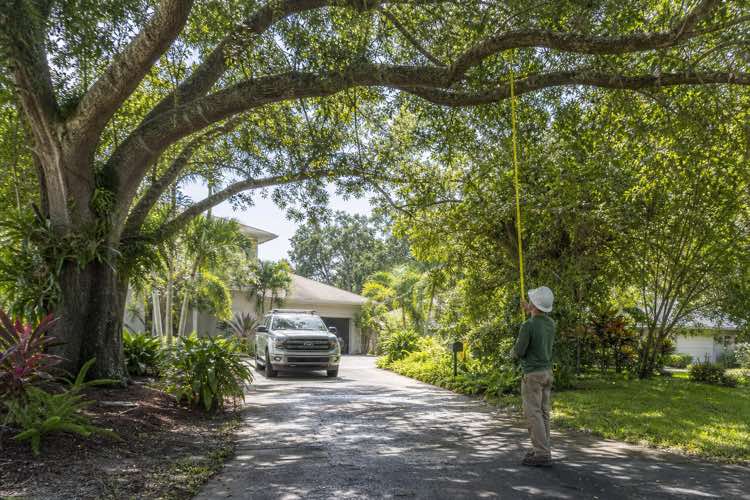
Tree branch removal over an active driveway is about more than cutting back limbs. It affects car clearance, delivery access, pavement protection, rigging paths, debris handling, and how the opening will still work as the tree grows. Florida Foliage helps property owners make those choices with practical field judgment, ISA Certified Arborists on staff, and service across Volusia and Flagler counties, with Daytona Beach as the primary market.
Before approving tree branch removal, define the driveway use, measure needed clearance, and confirm where cut limbs, chips, and trucks can safely go. Ask for scope details that cover vehicle movement, cleanup, and future regrowth. A clear plan is often more useful than a vague trim request.
If you are comparing contractors, ask for the work to be tied to access, more than appearance. That means the quote should explain where vehicles pass, where a delivery truck may need room, and how the crew will protect asphalt, concrete, edging, and nearby plantings. For a broader look at available tree services, Florida Foliage can help you compare options before work begins.
Coastal lots in Port Orange often have tight driveways, soft shoulders, and limited storage space for brush. That matters because tree branch removal over a driveway is more than a cut list. It is a site plan. If the tree sits near a garage apron or shared drive, the crew needs enough room to work without blocking traffic or creating a mess that lingers after they leave.
Can You Legally Cut Branches Overhanging Your Property?
Yes, tree branch removal may be allowed for branches that cross the property line, but the answer depends on ownership, local rules, and tree condition. In practice, the safest move is to confirm the exact property line and ask the contractor to trim only what belongs in scope. When needed, a legal or jurisdictional review may still be appropriate.
That point matters because overhanging limbs can belong to a neighbor’s tree even when they shade your driveway. A contractor should not guess at boundaries. Florida Foliage can review the site and explain what a Port Orange tree service can address as part of a driveway access plan. For broader work in nearby areas, the team also serves the Daytona Beach market.
For pruning methods, Florida homeowners often ask whether a cut is being made for clearance or for tree health. The University of Florida IFAS notes that pruning cuts should be made with care to support long-term tree structure and recovery. See UF IFAS pruning guidance for the limited fact that pruning should follow sound technique rather than random cutting. That is especially important when tree branch removal must still leave the tree usable over time.
How Much Clearance Should Tree Branches Have Over a Driveway?
For tree branch removal over a driveway, the needed clearance should match the vehicles that use the space, plus room for turning, unloading, and seasonal growth. A compact car may need less vertical space than a delivery van or service truck. The exact target should be measured on site, not guessed from a photo.
A good scope usually considers both height and side clearance. Low limbs near mirrors, ladders, trash bins, and package drop-offs can create daily friction even when a car technically fits. A contractor should say where the opening begins and ends, how wide the usable lane remains, and how far future growth may reduce that opening before the next visit.
In sandy coastal soils, fast growth after rainy seasons can change a driveway opening sooner than expected. That is why the useful answer is more than a trim today. It is a measured clearance that still works after normal regrowth. If you are comparing tree trimming service scopes, ask how the crew will define the working width and height.
Tree branch removal near a driveway also has to account for utility drops, porch roofs, mail access, and emergency vehicle access. A narrow opening may be fine for a sedan but not for a moving truck. Tell the estimator what enters the drive most often, and what must never be blocked. That changes the cut plan in a useful way.
| Driveway Use Factor | What It Changes in Scope |
|---|---|
| Passenger cars | Basic overhead and side clearance |
| Delivery vehicles | Higher opening and wider turning room |
| Garage access | Protection near doors and apron edges |
| Shared driveway | Traffic staging and neighbor coordination |
| Future growth | How long the opening should remain useful |
How Does the One-Two-Three Rule Guide Pruning?
The one-two-three rule can help frame tree branch removal by separating immediate clearance, safe access, and future regrowth into three planning layers. In driveway work, that means a contractor should show what is removed now, what is protected during the job, and what clearance will remain as the tree grows back.
That approach is more useful than a vague request to “cut it back.” It lets the arborist decide which branches are low priority, which are blocking vehicle movement, and which should stay to preserve structure. The result is often a cleaner, more durable opening over the drive without stripping the canopy too hard.
UF IFAS warns against topping, which is the practice of cutting branches back to arbitrary stubs. That guidance is relevant because bad cuts can create weak regrowth and future hazards. See UF IFAS guidance on not topping trees for the limited point that topping is not a sound pruning method. Good tree branch removal should preserve structure, not create a cycle of repeated damage.
If the canopy is large, the crew may need to stage work in phases so driveway access stays available. Florida Foliage can outline that on a site visit and explain how the plan affects cleanup, hauling, and the amount of material left at the curb or removed from the property. For a direct quote, you can request a free estimate or call (386) 481-7913.
What Should You Ask When Hiring a Tree Trimmer?
Ask whether tree branch removal includes driveway access planning, debris handling, and protection for pavement and vehicles. A good contractor should explain where equipment will park, where cut limbs will be lowered, and how the crew will keep the driveway usable if you need to leave during the job.
You should also ask who is on staff. Florida Foliage has ISA Certified Arborists on staff, which matters when a cut affects structure, clearance, and future growth. That is different from a quick visual trim. The right team should be able to say why a branch is being removed and how much opening will remain afterward.
Use this short checklist during the estimate visit:
- Show which vehicles must enter daily.
- Point out low limbs and turning conflicts.
- Mark pavement, fences, and roof edges.
- Ask where chips and debris will go.
- Confirm the access plan before cutting starts.
Ask for the scope in writing. It should say if the contractor will protect the drive surface, move brush offsite, and clean the apron and street edge. If you want to compare service options in your area, Florida Foliage can discuss a Port Orange tree service plan that fits the property and the route vehicles use every day.
Licensed and insured status also matters when work is near a driveway used by family, guests, or delivery drivers. That does not remove the need for a careful plan, but it does show the company is set up for professional service. If you want a site review, call (386) 481-7913 or request a free estimate.
How Does Line-Clearance Tree Trimming Differ?
Line-clearance work is different because tree branch removal near utility lines follows a separate safety framework and may involve utility rules or utility contractors. Driveway work is usually about access, clearance, and property function, while line-clearance trimming is about keeping a safe separation from wires and service conductors.
That difference matters for estimates. A driveway project may need rigging to protect pavement, but it should not be described the same way as electrical clearance work. If a branch sits close to lines, do not assume a driveway trim solves the hazard. The proper authority or utility process may need to be involved, and the scope should say that clearly.
For tree branch removal that is strictly about driveway use, the crew should focus on vehicle movement, delivery room, and cleanup logistics. For anything near energized lines, the work plan changes. Florida Foliage can help evaluate the site and separate access pruning from utility-related concerns, so the quote reflects the right task instead of a mixed one.
That distinction also affects scheduling and staging. A driveway job may need a chipper parked where it does not block exit routes, while a utility-adjacent job may require different traffic control. Keep the scope specific. If you are unsure which category your tree falls into, an on-site inspection is better than assumptions from a phone description.
What Affects Tree Branch Removal Cost?
Several site factors affect tree branch removal cost, including canopy size, access difficulty, rigging needs, cleanup volume, and how far debris must be carried. A narrow driveway, soft ground, parked cars, and tight turns can all increase the labor involved even when the tree itself seems straightforward from the street.
The most useful quote is one that explains the job conditions. If the crew has to protect a decorative driveway, work around delivery schedules, or hand-carry brush to the street, that should be reflected in the scope. In Port Orange, salt air, sandy soil, and storm-prone weather can also change how crews stage equipment and protect the site.
Tree branch removal can also cost more in time when the tree has weak attachments, awkward reach, or a dense structure that requires careful lowering of sections. The point is not to chase the cheapest number. It is to compare whether the plan protects the property and leaves the opening functional after the work is done.
If you are comparing quotes from Florida Foliage and others, ask each contractor how the driveway will be used during the workday and what cleanup is included. For a direct conversation, call (386) 481-7913. You can also request a free estimate if you want the site reviewed before you decide.
How Should a Large Volume of Branches Be Removed?
Large-volume tree branch removal should be planned around staging, chipper placement, hauling access, and where the driveway must stay open. The crew should decide where branches will be lowered, where chips will be collected, and how debris will move without scraping pavement or blocking vehicle exit.
That logistics plan matters as much as the cut list. If a driveway is active, the contractor may need to phase work so cars can leave, delivery drivers can approach, and the chipper can be positioned without trapping the property. The scope should also say who handles final sweep-up of the apron, sidewalk, and curb line.
Florida Foliage can discuss these details during a site visit, which is the best way to judge access on a real property. In many cases, the deciding factor is not branch size alone. It is whether the crew can remove material safely while keeping the drive usable and the pavement protected. For service across the region, the team also works in the Daytona Beach market.
Here is a simple comparison that helps separate good scopes from vague ones:
| Scope Item | Why It Matters |
|---|---|
| Vehicle access | Prevents blocked exits and missed departures |
| Pavement protection | Reduces scuffs, gouges, and debris damage |
| Rigging plan | Controls branch lowering over tight surfaces |
| Cleanup level | Shows what remains after the crew leaves |
| Future clearance | Measures how long the opening stays useful |
When a quote covers those items, you can compare it against another contractor with real confidence. That is especially helpful for tree branch removal over a driveway that gets daily use from family vehicles, service calls, or package delivery. It keeps the decision anchored to function, more than appearance.
Florida Foliage can help turn a rough request into measurable work. If you need tree branch removal that respects your driveway, ask for a site review, a clear scope, and a cleanup plan. Call (386) 481-7913 or request a free estimate with Florida Foliage today.
How is useful driveway clearance measured?
Useful driveway clearance is measured by the vehicles that actually use the drive, plus room for turning, mirror width, and future branch growth. A contractor should note the lowest limb height, side overhang, and any choke points near the garage, gate, or curb cut. For tree branch removal, the measure should fit real traffic, not a guess.
Can parked vehicles affect a branch removal quote?
Yes. Parked vehicles can change tree branch removal planning because crews may need extra staging room, more careful rigging, or a different work order to keep access open. If cars must be moved before trimming starts, that can affect labor and scheduling. A clear driveway access quote should say how vehicle storage on site will be handled.
Should pavement protection be listed in the scope?
Yes. Pavement protection should be listed in the scope when tree branch removal happens over a driveway, especially on decorative concrete, pavers, or older asphalt. The crew should state how it will reduce scraping, crushing, or debris staining. That detail helps you compare quotes fairly and shows the contractor has thought through access and cleanup.
Does the service include branch hauling?
It should be stated clearly either way. Some tree branch removal quotes include hauling, while others only include cutting and on-site stacking. Ask where limbs, chips, and brush will go, and whether the driveway, curb, and nearby walk are part of cleanup. A complete scope avoids surprise piles after the crew leaves.
Can Florida Foliage inspect driveway access before quoting?
Yes. Florida Foliage can inspect driveway access before preparing a quote so the scope reflects real site conditions. That visit helps define clearance, vehicle movement, protection needs, and debris handling. It also gives the crew a chance to see tight turns, soft shoulders, and any obstacles that could affect tree branch removal.