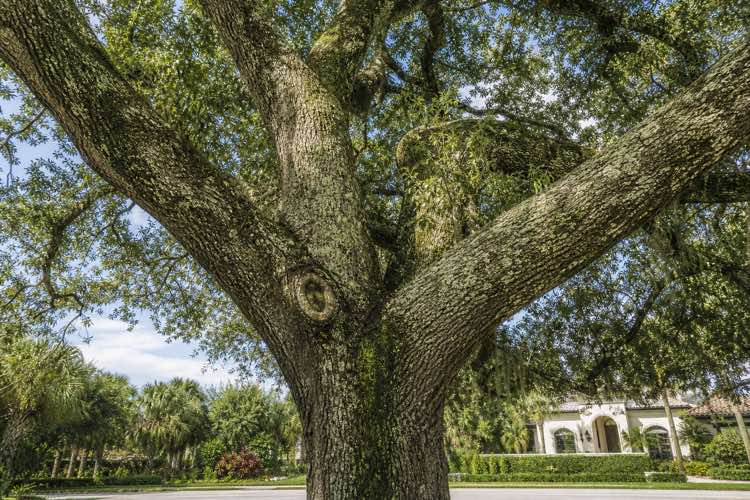
When a live oak splits, the question is practical: can tree cabling lower risk, or is removal the better call? In Daytona Beach, that answer depends on the defect, what sits below it, and how much sound wood remains. Support can manage some loads, but it does not heal wood or guarantee safety.
- Split size alone does not decide the outcome.
- Target exposure can outweigh tree size.
- tree cabling reduces load; it does not repair wood.
- Pruning and support should be planned together.
- Qualified inspection should come before hardware.
That limitation matters on the coast. Wind, sandy soil, storm cycles, and tight yards can all change how a split live oak behaves. Roofs, pools, driveways, and utilities also change the risk. Florida Foliage starts with a tree risk assessment because the tree and site have to be judged together.
For property owners in Daytona Beach, the real question is not whether the tree is valuable. It is whether the split still leaves enough stable structure to justify support. Florida Foliage serves Volusia and Flagler counties, with Daytona Beach as the primary market. ISA Certified Arborists are on staff. The company is licensed and insured, and free estimates are available. Call (386) 481-7913 to discuss the tree and the site.
Can a Split Tree Heal Itself?
Can a split tree heal itself? No, tree cabling cannot heal the wood, and the split does not truly knit back together. A tree may compartmentalize damage and keep growing, but the structural defect remains. The decision should rest on remaining wood, attachment quality, and exposure, not on hopes that the crack will close.
Live oaks can look vigorous while a split continues to weaken the union. Leaf color and canopy density are not enough. The University of Florida notes that structural issues can remain even when a tree is alive and growing. That is one reason a field inspection matters. See the limited background at UF IFAS structural issues.
The practical question is whether the tree still has enough sound tissue and enough stable form to support a real management plan. A crack over turf is very different from a crack over a garage, driveway, pool deck, or sidewalk. The same defect can be low concern in one setting and unacceptable in another.
That is why Florida Foliage does not treat a photo as a final answer. A split can hide included bark, decay, or a poor union shape that is hard to judge from the ground. In many cases, the next step is a written tree risk assessment, not a decision about hardware.
When a homeowner wants a straight answer, the question should stay focused on structure and target exposure. A split tree can remain standing for years and still be a poor candidate for support if the defect is too advanced or the area below is too busy. That is the limit of tree cabling, and it should be stated clearly.
Is Tree Cabling a Good Idea for a Split Live Oak?
Is tree cabling a good idea for a split live oak? Sometimes, but only when the split is still structurally manageable and the target below justifies the effort. If the union is badly compromised, decay is advanced, or the crown is too heavy, support may not be enough and removal may be the safer option.
Live oaks often benefit from support when they have heavy competing stems, broad canopies, or use points that move too much in wind. In those cases, tree cabling can reduce sway and spread load. It does not restore lost strength, so it should be treated as a load-management tool, not a cure.
Target exposure often decides the matter. A tree over a quiet lawn may be acceptable to monitor, while the same defect over a roof, parked cars, or a pedestrian route may be too risky. In Daytona Beach, that choice can shift quickly after a storm, a remodel, or a change in how the property is used.
Florida Foliage can compare support options through tree cabling and bracing when a live oak still has usable structure. If the canopy also needs reduction, oak tree trimming may be part of the plan. The goal is to match the method to the defect, not force a save on a tree that has lost too much support.
Support decisions should also account for soil and access. Sandy coastal soils may not hold a tree the same way as inland ground, and narrow yards can limit how crews work around a damaged oak. Those details do not make support impossible, but they can change the scope and the final recommendation.
| Decision factor | What it changes | Why it matters |
|---|---|---|
| Defect size | Support need | Larger splits need closer scrutiny |
| Target exposure | Risk tolerance | People and structures raise the stakes |
| Canopy load | Pruning scope | Heavy limbs may need reduction first |
| Site access | Work complexity | Yards and utilities affect setup |
| Wood condition | Support viability | Decay can rule out support |
How Do Professionals Cable a Split Tree?
How do professionals cable a split tree? Qualified crews use tree cabling as part of a larger plan that begins with inspection, then pruning, then hardware selection based on the tree’s structure. The support system should fit the defect. It should not be chosen first and fitted later.
That order matters because a cable can limit movement between stems or reduce weight shift, but it cannot correct a failed root plate or advanced decay in the union. Arborists look at stem angles, wood condition, attachment points, and the amount of load the tree will still carry after support is installed.
Work at height and around damaged wood is hazardous. OSHA’s tree-care guidance stresses proper inspection and safe work practices during tree care and tree removal operations. That limited point alone is enough reason to keep cabling with trained crews, not improvised tools. See the safety note at OSHA tree care inspection guidance.
On the property side, crews also have to consider drop zones, fences, pavement, nearby structures, and utility clearance. That is especially relevant in Daytona Beach, where storm prep and small lots can create tight working conditions. The installation is only one part of the job. The inspection and the follow-up matter just as much.
Florida Foliage can coordinate the assessment and, if support is justified, the pruning needed to make the system more effective. A cabling job done without structural pruning often leaves too much weight on the stems. If you want a professional opinion before choosing support or removal, call (386) 481-7913. Florida Foliage offers free estimates and serves Daytona Beach, Volusia County, and Flagler County.
A useful scope should explain what the arborist found, what is being supported, and what monitoring is expected later. That clarity helps owners compare proposals from different contractors without guessing at the real risk. It also keeps the conversation centered on the defect, not on vague promises.
Can You Install Tree Cabling Yourself?
Can you install tree cabling yourself? No, this is not a safe DIY task for a split live oak. The work can involve climbing, load judgment, and hardware placement in compromised wood, and mistakes can increase failure risk instead of reducing it. Qualified professionals should handle the installation.
The risk is not limited to falling branches. A poorly placed support may miss the load path, pinch bark, or give the owner false confidence. It can also interfere with future growth if the tree is not pruned to fit the support plan. That is why cabling and pruning should be coordinated from the start.
If the split threatens a roofline, driveway, or pedestrian area, the first priority is a professional look at the tree and the site. Florida Foliage can review the defect, the target, and the access before any work begins. A simple description is not enough to choose the correct response for a damaged live oak.
DIY work on a split oak also creates hidden costs in time and risk. The owner may not see decay, may not know how much movement is too much, and may not understand when a support system should not be used at all. That is where trained judgment matters more than hardware.
Florida Foliage serves property owners who want a clear scope before work starts. Call (386) 481-7913 if you need a live oak reviewed before support is approved. The answer may still be removal, but it should come from inspection, not guesswork.
How Long Does Tree Cabling Last?
How long does tree cabling last? It depends on the tree, the defect, the growth rate, and the inspection schedule, so there is no single lifespan. Some systems are checked and adjusted for years, while others are only a short bridge until pruning or removal becomes the better path.
Support hardware is not a set-and-forget fix. Live oaks keep growing, storm loads change, and a split can worsen or become more contained over time. A system that fit the tree on day one may become less useful if the canopy expands or if decay advances.
That is why follow-up inspections matter. The arborist should confirm that the hardware is still positioned correctly, the tree is still responding as expected, and the target below has not changed. If the tree now hangs over a renovated patio or a different use area, the risk picture has changed even if the hardware has not.
In coastal Florida, heavy rain and wind events can shorten the time between reviews. Salt air and saturated soils can also affect tree movement. Florida Foliage recommends professional review instead of assuming the first installation settles the issue for good.
Owners often ask for a firm timeline, but the honest answer is that a cabled tree needs periodic judgment, not a calendar promise. The support system may stay useful for a long time, or it may only serve as a bridge while the tree is reassessed. That is why monitoring is part of the service scope.
- Inspect after major storms or strong wind.
- Watch for new cracks or shifting stems.
- Keep pruning aligned with the support plan.
- Review the target area after property changes.
- Replace aging hardware only by qualified crews.
How Much Does Cabling a Tree Cost?
How much does tree cabling cost? The answer depends on defect severity, tree size, access, hardware needs, and whether pruning or inspection is included. Because each split live oak is different, a useful quote should come from an on-site visit, not from a broad guess.
What changes the scope most is not the hardware alone. Access around the trunk, the height of the split, nearby structures, and the amount of pruning or cleanup can all affect the work. In Daytona Beach, tight lot lines, storm damage, and coastal exposure can make the job more complex.
A clear proposal should say what the arborist found, what support is proposed, what pruning is part of the plan, and what follow-up is expected. If removal is the better option, the estimate should explain why in plain language. That helps owners compare service, scope, and risk with a fair standard.
Florida Foliage provides free estimates, and the estimate should be specific to the tree and the property. If you need help evaluating a split live oak, call (386) 481-7913. The right scope is more useful than a broad promise or a vague recommendation.
Because coastal properties can change fast, the estimate should also account for current access and target exposure. A pool enclosure, a new shed, or a parked vehicle zone can change the decision even if the tree itself has not changed much. That is why an on-site review matters so much.
| Scope item | What it changes | Why it matters |
|---|---|---|
| Defect size | Support need | Bigger splits need closer scrutiny |
| Target exposure | Risk tolerance | People and structures raise the stakes |
| Canopy load | Pruning scope | Heavy limbs may need reduction first |
| Site access | Work complexity | Yards and utilities affect setup |
| Wood condition | Support viability | Decay can rule out support |
Is Hiring an Arborist Worth It for Tree Cabling?
Is hiring an arborist worth it for tree cabling? Yes, because the decision depends on structural judgment more than hardware. An ISA Certified Arborist can tell you when support may reduce risk, when pruning should come first, and when the defect is too advanced for a reasonable save.
That matters because a split live oak can look similar from the outside even when the internal conditions are very different. One tree may have enough sound wood and low enough target exposure to justify support. Another may have advanced decay, imbalance, or root problems that make removal the practical option.
Hiring Florida Foliage also keeps the process organized. The company serves Volusia and Flagler counties, with Daytona Beach as the primary market, and the work can be coordinated around the tree’s structure, the site layout, and the owner’s concerns. A professional review is especially useful when the tree is near a pool, roof, fence, or utility line.
For homeowners comparing quotes, the arborist’s value is in the decision more than the installation. A thoughtful scope should explain why support is or is not appropriate, whether pruning will improve load distribution, and what monitoring is needed after the work. That helps owners compare service and risk more fairly than price alone.
Florida Foliage is licensed and insured, and free estimates are available. If you are weighing support against removal for a damaged oak, call (386) 481-7913 for an on-site review in Daytona Beach or nearby communities.
Hiring an arborist is also useful when the next step may include more than one service. A split can lead to support, pruning, or a removal recommendation, and the right call depends on the tree’s condition today. That kind of decision is hard to make without training and field judgment.
Does tree cabling heal a split live oak?
No, tree cabling does not heal a split live oak. It can help manage movement and reduce stress on the damaged union, but the wood itself does not regain its original strength. The defect still needs monitoring, and the tree may still fail if decay, load, or target exposure increases.
Can cabling guarantee that a tree will not fail?
No, cabling cannot guarantee that a tree will not fail. It may lower risk in the right situation, but it does not remove all hazards or fix hidden decay, root problems, or structural weakness. That is why arborists pair cabling decisions with defect assessment and site-specific risk review.
Does a cabled tree need follow-up inspections?
Yes, a cabled tree should have follow-up inspections. Hardware can shift, growth can change the load path, and the split can worsen over time. Regular review helps confirm that the support still matches the tree’s condition and that the tree has not developed new hazards.
Can pruning be part of a cabling plan?
Yes, pruning can be part of a cabling plan. In many cases, reducing heavy limbs or correcting imbalance improves the support system’s effectiveness. Pruning should be coordinated by a qualified arborist so the tree keeps enough canopy while shedding load where it is most helpful.
When might removal remain the practical option?
Removal may remain the practical option when the split is too severe, decay is advanced, roots are compromised, or the target below is too valuable to risk. If a support system cannot reasonably control the remaining hazard, removal is often the more defensible decision for the property owner.
If you need a clear answer on tree cabling for a split live oak, Florida Foliage can provide a free estimate and help compare support to removal. Visit request a free estimate or call (386) 481-7913 today.