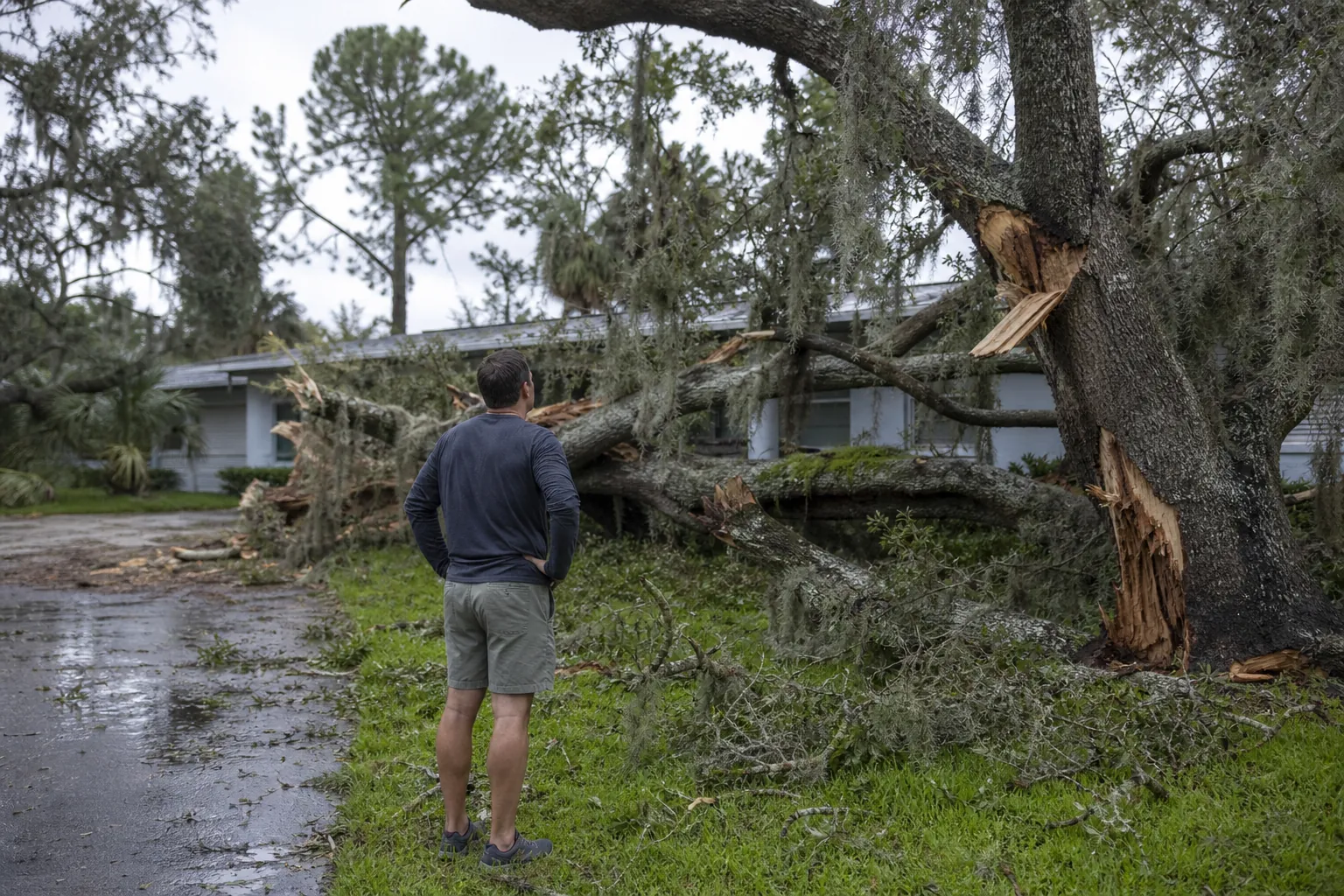
Heavy tropical rain can change a tree's stability without leaving an obvious broken trunk. Soil softens, roots lose support, and gusty onshore wind adds pressure to wet canopies. For Titusville property owners, the safest response is to prepare before conditions deteriorate, observe trees from a protected location, and delay hands-on cleanup until hazards have been assessed.
This guide addresses tree damage after tropical rain in Titusville, FL, during the October 7 through 10, 2026 storm window. It explains what the dated forecasts mean for tree care, which warning signs deserve attention, and how to organize debris cleanup without creating another injury or damaging a recoverable tree.
What the October 7 Forecasts Mean for Titusville Trees
As of NHC Intermediate Advisory 4A, issued at 1 PM CDT on October 7, 2026, Tropical Storm Isaias had formed in the southern Gulf of Mexico. The hurricane, tropical storm, and storm surge watches described in that advisory covered portions of the northern Gulf Coast, including areas between Bay St. Louis and Indian Pass, not Florida's east coast.
For Titusville, the relevant local concern in the morning October 7 forecast discussion from NWS Melbourne was high coverage of showers and lightning storms through late week. The discussion included a marginal risk of excessive rainfall across east central Florida, with minor flooding possible where heavy rain repeats.
The morning October 7 NWS Jacksonville discussion reported saturated ground along the Northeast Florida I-95 corridor, strengthening onshore winds, and additional periods of heavy rain Friday and Saturday. That is regional context, not a Titusville-specific ground assessment. Local drainage, previous rainfall, soil conditions, and tree condition determine what happens on an individual property.
These forecasts support a practical focus on saturated soil, gusty onshore wind, falling limbs, and safe preparation. They do not establish a hurricane threat or an east-coast watch for Titusville. Check updated information during the storm window rather than treating this dated snapshot as a current forecast.
Storm information sources: National Hurricane Center, NWS Melbourne, and NWS Jacksonville.
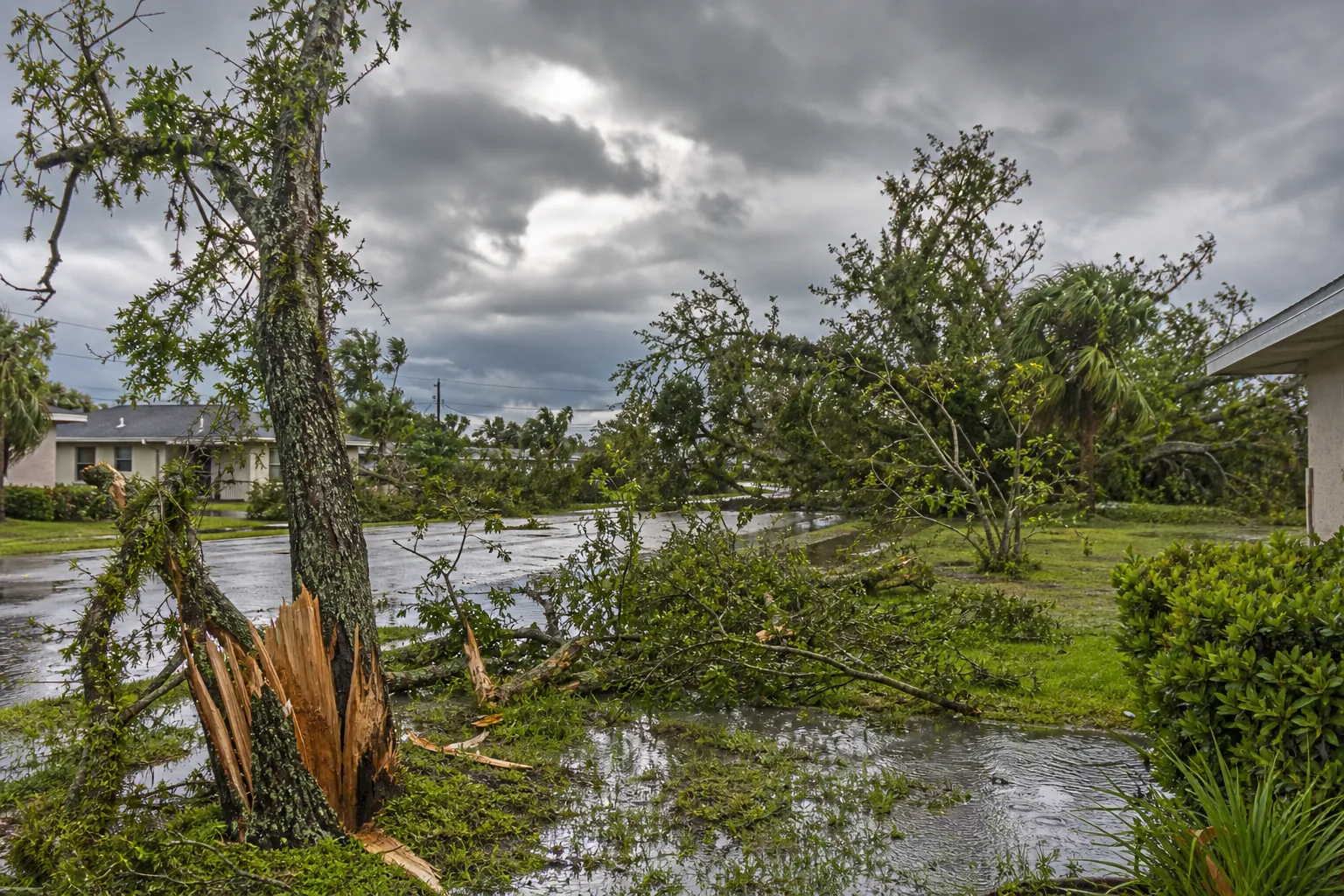
Why Heavy Rain Can Make a Tree Less Stable
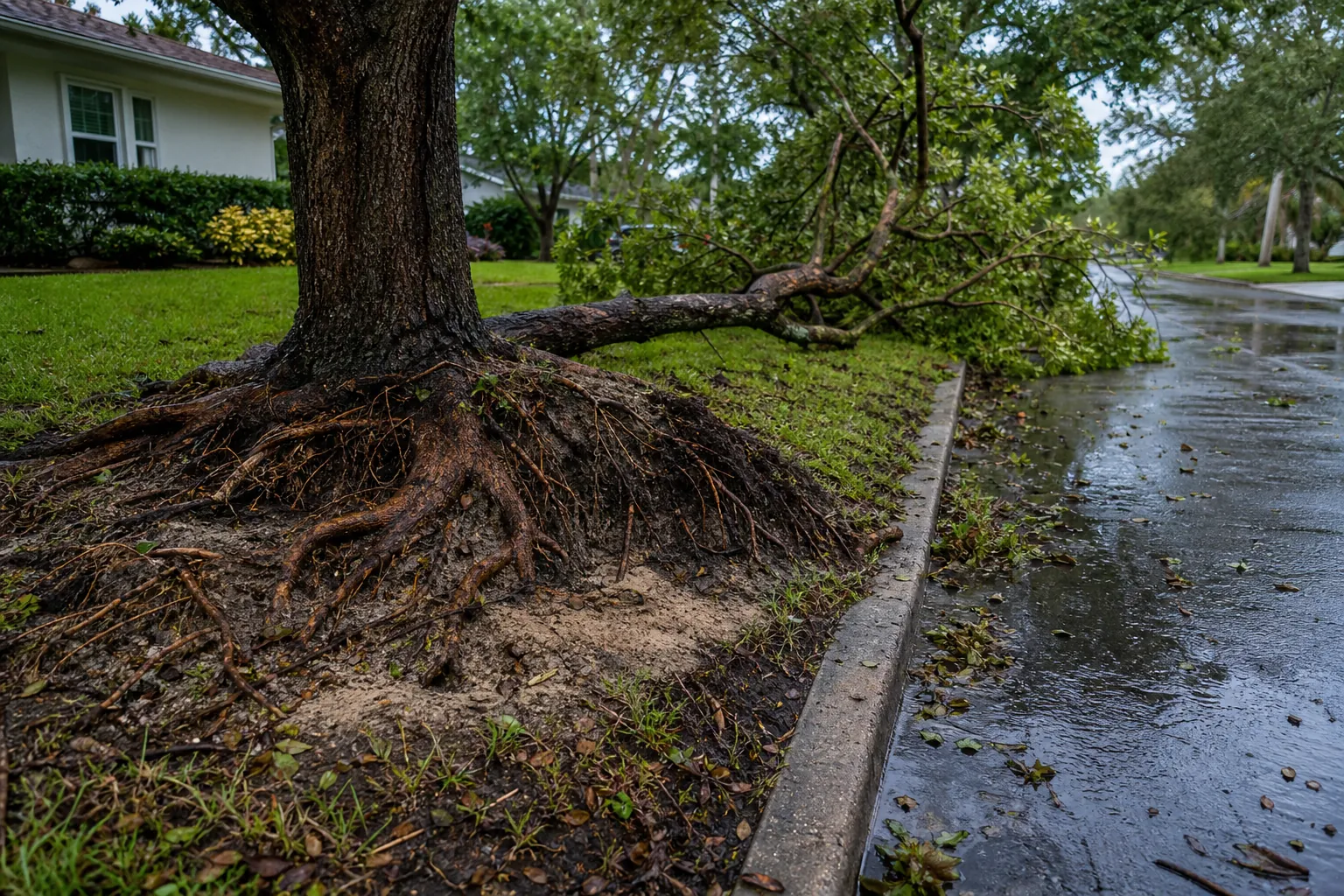
A tree depends on its root system and the surrounding soil for anchorage. When soil becomes saturated, some trees have less resistance to movement. A large canopy then acts as a wind-catching surface, transferring force into branches, the trunk, and the roots.
Rain does not make every tree dangerous. Risk depends on factors such as root condition, decay, canopy structure, drainage, and previous disturbance. A tree with compromised roots or an existing split may respond differently from a healthy tree growing in well-drained soil.
Construction damage, trenching, soil compaction, and changes in grade can reduce root function long before a rainy period. These problems may remain unnoticed until wind and saturated soil expose them. Recently planted trees also deserve attention because their roots may not yet extend far into surrounding soil.
Branches can fail even when the trunk remains upright. Dead limbs, poorly attached branch unions, and cracks can become more consequential when gusts move the canopy. A limb caught overhead after breaking can remain suspended and fall later, including after the weather appears calmer.
Standing water alone does not prove that removal is necessary. It does mean that conditions around the tree need closer evaluation once observation can be done safely.
Prepare Before Rain and Wind Intensify
Preparation should reduce exposure, not send you into the canopy while conditions are worsening. Walk the property only when weather is safe, and view trees from open ground without standing beneath questionable branches.
Prioritize trees near bedrooms, entrances, driveways, sidewalks, and regularly occupied outdoor areas. Look for visible changes rather than trying to diagnose every defect yourself. If a tree already has a significant lean, crack, or dead overhead limb, arrange a professional assessment instead of attempting a last-minute cut.
- Move vehicles and portable equipment away from trees with visible defects when doing so does not require entering a hazardous area.
- Bring loose outdoor items indoors so they do not become windblown obstacles or block access after rain.
- Keep established drainage routes free of loose yard debris, but do not excavate around roots to create a new channel.
- Identify an indoor location away from windows beside a visibly compromised tree, and follow official instructions if conditions require a different safety response.
- Take ground-level photographs of existing tree defects from a safe distance so later changes are easier to recognize.
- Keep children and pets away from suspect trees before the weather arrives, rather than waiting for a branch to fall.
Tree trimming may address specific dead or damaged limbs when there is enough time and conditions are suitable. Broad, rushed cutting is not a substitute for assessment. Avoid topping trees or stripping away large amounts of foliage in an attempt to make them stormproof.
Inspect From a Distance During and After the Rain
During lightning, strong gusts, or active branch movement, stay indoors. Do not walk outside to check whether a tree is still standing. Once conditions allow observation, start from a window, doorway, or other protected position.
Compare what you see with the tree's earlier appearance. A longstanding lean and a newly developing lean are not the same situation, but neither should be evaluated by pushing on the trunk or approaching an unstable root plate.
- A new lean or a visibly increasing lean can indicate a change in root support or trunk integrity.
- Fresh cracks in soil, lifted ground, or a raised root plate near the trunk can indicate movement of the root system.
- A new trunk split or widening branch union deserves professional evaluation, especially near an occupied structure.
- Broken branches hanging in the canopy create an overhead hazard even if they appear caught securely.
- Freshly exposed wood, fallen large limbs, or an abrupt change in canopy shape can identify areas that need inspection.
- Unusual cracking sounds or visible movement at the tree's base are reasons to retreat, not move closer for a photograph.
Do not assume a tree is safe because it survived the first round of rain. Additional showers and gusts can act on an already weakened root system or damaged branch. Continue restricting access around concerning trees until they have been evaluated.
Know When to Stop and Seek Help
A tree resting on a building, blocking an essential entrance, or showing active root movement is not an ordinary yard-cleanup task. Keep people away from the potential fall area and contact a qualified tree service. If someone is injured or there is an immediate threat to life, contact emergency services.
Stay away from downed power lines and anything touching them. A wire can be energized even when it is quiet or appears insulated. Trees, fences, standing water, and equipment may also become dangerous when they contact electrical infrastructure.
Call your electric utility for any tree or limb contact with a power line. Do not attempt to cut the tree free, move the wire, or use a pole tool near it. Tree work involving electrical contact must wait for the utility's direction and appropriate clearance.
Emergency and hurricane tree removal may be appropriate for certain urgent tree hazards, but the service name does not mean a hurricane is forecast for Titusville. The decision should be based on the actual tree condition and site hazards. Safe access, electrical issues, ground conditions, and weather all affect what work can proceed.
Choose Tree Care Based on the Damage, Not Appearance Alone
A damaged tree does not automatically require removal. A professional tree inspection can evaluate the trunk, roots, branch attachments, remaining canopy, and potential targets. It can also identify conditions that are not obvious from a driveway or window.
Tree trimming may be suitable when damage is limited to specific branches and the remaining structure is sound. Canopy thinning or crown reduction may be considered for particular structural needs, but neither is a universal response to rain or wind. Cutting decisions should preserve useful foliage and avoid creating unnecessary wounds.
Tree removal may be appropriate when a tree has severe structural damage, unstable roots, or an unacceptable risk that cannot reasonably be addressed through pruning. In confined areas or where a damaged tree cannot be handled safely with conventional methods, crane tree removal may be considered after a site assessment.
Arborist reports and tree inspections can help document observed defects and explain the reasoning behind a recommended action. Ask what the inspection covers, what limitations remain, and whether additional evaluation is needed.
- Ask which specific defect supports the recommendation and how it affects the tree's stability.
- Ask whether pruning is a reasonable alternative to removal and what risk would remain afterward.
- Ask how work will avoid additional damage to nearby trees, structures, and saturated ground.
- Confirm any applicable tree-work requirements with your city or county before work begins.
Florida Foliage can discuss tree inspections, tree trimming, and tree removal options based on the conditions present at your Titusville property.
Clean Up Debris Without Creating a Second Hazard
Begin cleanup only after the weather permits and overhead hazards have been addressed. Small branches on open ground may look manageable, but check the canopy above them first. Do not work beneath suspended limbs or beside a tree with fresh root movement.
Wear sturdy footwear, gloves, and eye protection for light ground-level cleanup. Avoid flooded areas where holes, sharp debris, or electrical hazards may be hidden. Keep a clear route back to the house and stop if another round of lightning or gusts approaches.
- Collect only small, loose debris that can be moved without cutting, climbing, or pulling against another object.
- Leave branches under tension in place because they can spring or roll when disturbed.
- Do not pull a lodged limb from the canopy with a rope, vehicle, or ladder.
- Keep debris piles away from utility equipment, drainage openings, entrances, and remaining tree trunks.
- Check local collection instructions before placing vegetative debris near a road or property boundary.
- Keep children, pets, and bystanders outside the work area throughout cleanup.
Large fallen trunks, partially uprooted trees, and limbs resting on structures require professional handling. Chainsaw use on storm-damaged wood is especially hazardous because compression and tension can change as cuts are made. A log that appears settled may shift unexpectedly.
Do not pile soil or storm debris over exposed roots as a quick repair. Covering the root zone can change drainage and soil aeration. If roots have lifted or become exposed, have the tree assessed before attempting to restore the area.
Protect Wet Ground During Tree Work
Saturated lawns and landscaped areas can be damaged by repeated foot traffic and heavy equipment. Deep ruts and compaction may affect drainage and the roots of trees that were not initially damaged.
Discuss access before work begins. A tree service should consider the condition of the ground, nearby structures, utilities, and the space needed to handle debris. Delaying nonurgent work until the soil is firmer may reduce additional disturbance, provided the tree does not present an immediate hazard.
After tree removal, stump grinding is a separate decision. It may help prepare an area for later use, but the timing should account for site access, buried utilities, and soil condition. Confirm utility-location procedures before any work that disturbs the ground.
Do not use brush hogging or land and lot clearing as a substitute for evaluating damaged standing trees. Those services serve different property-management needs and should be planned around identified hazards, not used to rush through storm debris.
Plan for Shared Properties and Follow-Up Checks
For commercial properties, HOAs, and condos, prioritize areas where people gather or pass beneath trees. Entrances, parking spaces, walkways, and shared outdoor amenities deserve coordinated checks before normal use resumes.
Commercial tree services and HOA and condo tree services can support a site-wide approach rather than isolated decisions about individual branches. Designate a contact person, document restricted areas, and tell residents or occupants where access has changed. Do not reopen a walkway simply because ground debris has been removed if damaged limbs remain overhead.
For both homes and shared properties, continue observing affected trees after the October 7 through 10 window. Soil may remain wet after skies clear, and damage may become easier to see once standing water recedes. Watch for a changing lean, additional branch loss, or new cracks without approaching the tree.
Record dated photographs from the same safe viewpoint and keep any inspection notes. If new symptoms appear, request another evaluation rather than relying on an earlier assessment of different conditions.
A Calm Next Step for Titusville Property Owners
The useful response to tropical rain is not to remove every large tree. It is to reduce exposure, recognize meaningful changes, protect utility clearances, and match the work to the actual damage. Good decisions begin with safe observation and a clear understanding of what cannot be assessed from a distance.
If your Titusville property has a new tree lean, broken limbs, root movement, or storm debris that is unsafe to handle, call Florida Foliage at (386) 481-7913 to discuss tree inspections and appropriate tree care. Describe what you can see from a safe location. For any power-line contact, stay away and call your electric utility first.
Call (386) 481-7913 to talk through next steps.