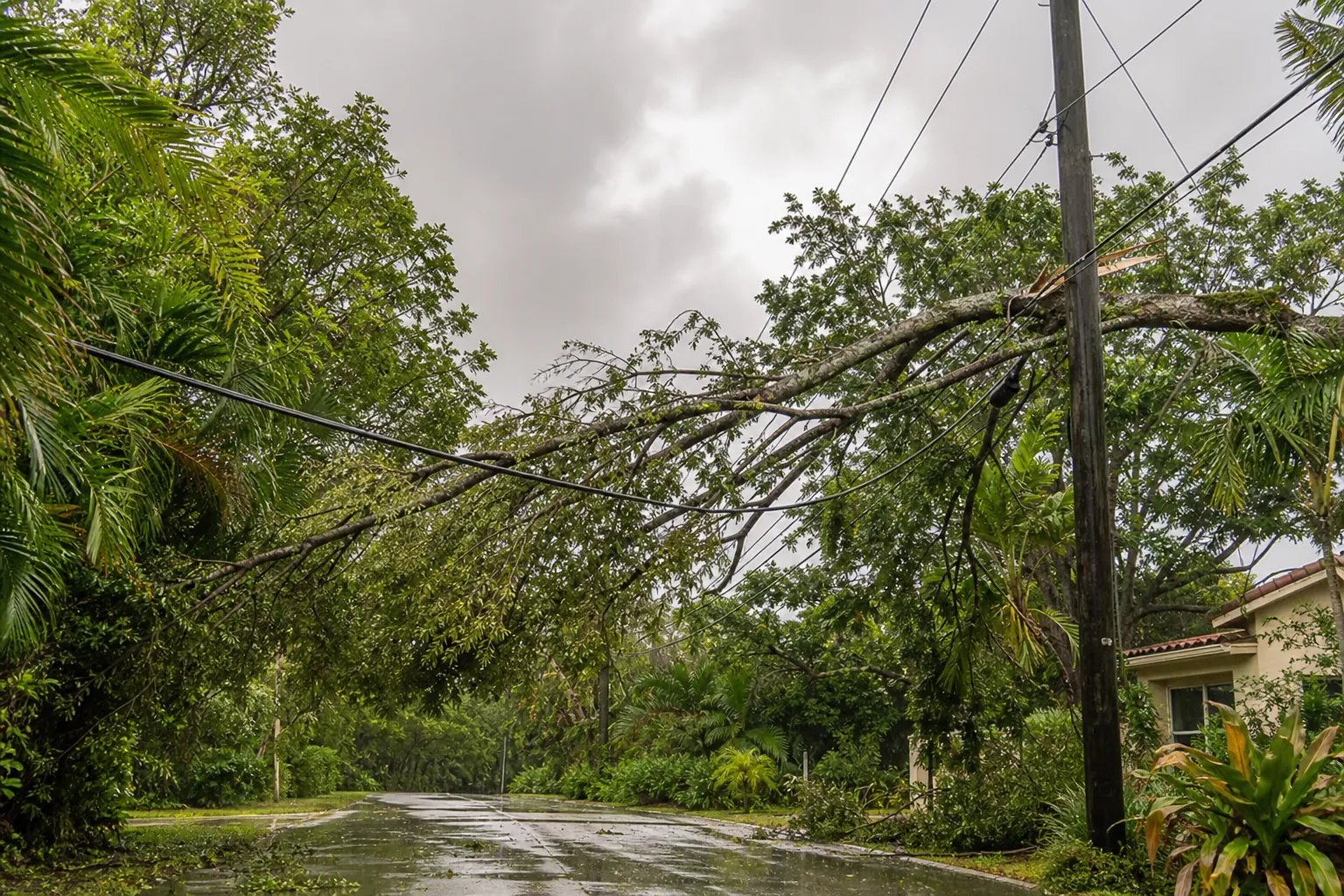
A branch resting on an overhead wire can look like a straightforward cleanup job. It is not. When a tree limb contacts a power line, the first priority is keeping people away and notifying the electric utility. A limb, the tree supporting it, nearby fences, and wet ground may present electrical hazards that are not obvious from a distance.
For Florida residents preparing for the October 7-10, 2026 storm window, heavy rain, saturated soil, and gusty onshore wind make careful tree assessment especially important. This guide explains what to do when you discover a tree limb on a power line after a storm in Florida, what to leave to the utility, and how to approach tree care and debris cleanup afterward.
The October 7-10 Weather Context For Florida Trees
As of NHC Intermediate Advisory 4A, issued at 1 PM CDT on October 7, 2026, Tropical Storm Isaias had formed in the southern Gulf of Mexico. The NHC hurricane, tropical storm, and storm surge watches covered only the northern Gulf Coast, with locations such as Bay St. Louis to Indian Pass, not Florida's east coast.
The NWS Melbourne forecast discussion issued the morning of October 7 called for high coverage of showers and lightning storms through late week. It also identified a marginal risk of excessive rainfall across east central Florida, with minor flooding possible where heavy rain repeats.
The NWS Jacksonville forecast discussion issued that morning described saturated ground along the Northeast Florida I-95 corridor, strengthening onshore winds, and more periods of heavy rain Friday and Saturday. That later outlook matters for cleanup planning, even though Saturday falls beyond the October 7-10 window.
These dated forecasts support practical preparation for rain, wet soil, and wind-related tree stress. They do not establish a hurricane threat, direct hit, landfall, storm surge threat, or watch or warning for Daytona Beach, Volusia County, Flagler County, or another east coast community. Check those official sources for updates rather than relying on an older forecast.
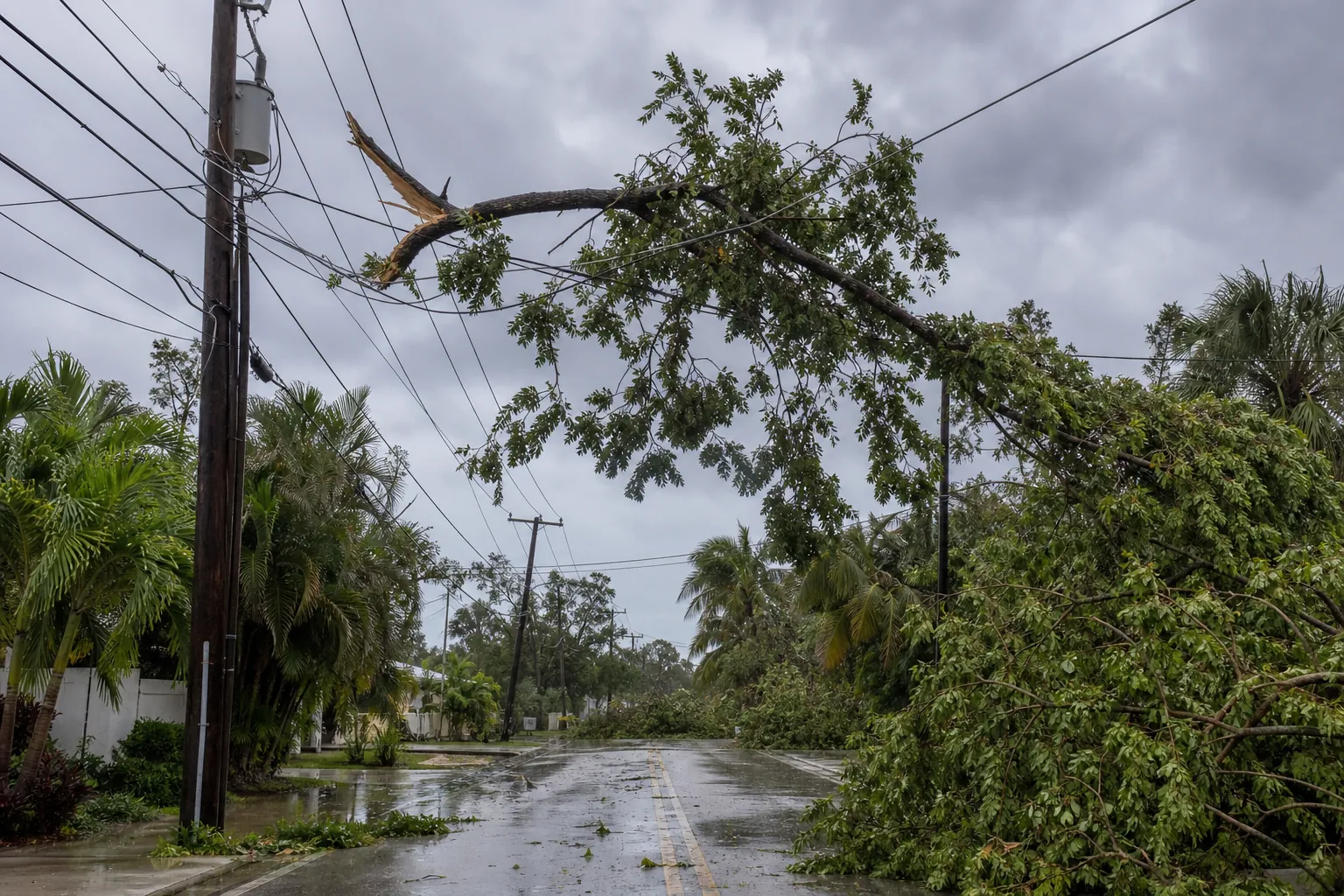
First Steps When A Limb Touches A Power Line
Treat every downed, sagging, or tree-contacted power line as energized. A line does not need to spark, hum, or visibly move to be dangerous. An outage at your home does not prove that a nearby wire is safe, and electricity can return without warning.
Stay away from downed power lines and any tree or debris touching them. Keep children, pets, visitors, and cleanup workers out of the area. Do not approach to identify the wire, photograph the contact point, or check whether the branch is loose.
- Call your electric utility for any line contact, including a branch resting on a wire that is still overhead.
- Call emergency services if there is a fire, an injury, or another immediate threat to life.
- Describe the location from a safe place, using an address and visible landmarks rather than approaching the hazard.
- Tell the utility if the limb or wire blocks a driveway, sidewalk, road, or building entrance.
- Warn others from a safe location without putting yourself near the tree, wire, standing water, or connected objects.
Do not try to move the limb with a rake, pole, rope, ladder, or vehicle. Do not cut the branch or climb the tree. Wood, tools, and ropes should never be treated as protection against electricity, particularly in wet conditions.
If a fallen wire is touching your vehicle, remain inside unless fire or another immediate danger requires you to leave. Contact emergency services and follow their instructions. Keep bystanders away, since touching the vehicle and the ground can create a dangerous electrical path.
Who Handles The Line And Who Handles The Tree?
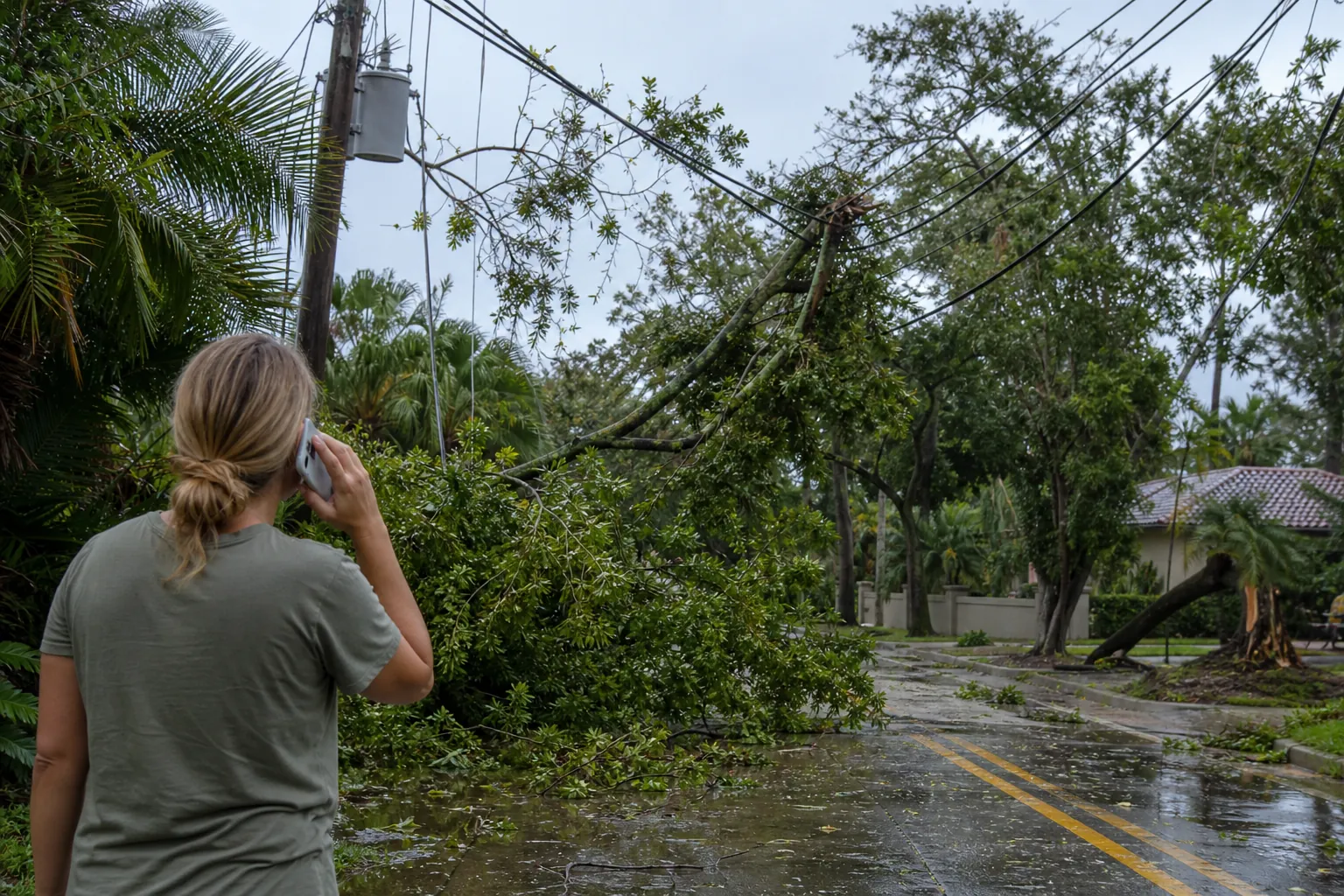
The electric utility should be the first call whenever a tree or limb contacts a power line. Utility personnel assess the electrical hazard and determine the necessary steps around the line. A general tree-service visit is not a substitute for utility coordination.
Do not assume that a residential tree crew can safely remove a branch from an energized line. Work near energized conductors requires specialized qualifications and procedures. The utility must address the electrical conditions before ordinary property cleanup can proceed in the affected area.
After the utility has addressed the hazard and explained what can happen next, a tree service can assess the remaining tree work. That may involve tree trimming to remove damaged limbs or tree removal if the tree cannot reasonably be retained. Responsibility for cutting and removing debris can vary with the circumstances and utility practices.
- Ask the utility whether electrical hazards remain and what areas you should continue to avoid.
- Ask whether any remaining branch or trunk work requires further utility coordination.
- Confirm who will handle debris rather than assuming the utility will complete all property cleanup.
- Tell the tree service about the original line contact and any instructions the utility provided.
Florida Foliage can discuss tree inspections, tree trimming, tree removal, and other listed tree-care services after the electrical issue is addressed. Utility involvement comes first, even when the remaining limb appears easy to reach.
Why Wet Soil And Repeated Rain Matter
Storm-related tree problems are not limited to dramatic wind events. Saturated soil can reduce root anchorage, and wind acting on a leafy canopy can increase the load on a stressed tree. Previously damaged roots, decay, poor branch attachments, and existing cracks can complicate that situation.
Repeated showers also make cleanup harder. Soft lawns can limit equipment access, standing water can hide obstacles, and wet branches can be difficult to handle. Lightning adds a separate reason to postpone outdoor inspection and debris work.
The October 7 Melbourne and Jacksonville discussions make these ordinary precautions particularly relevant. Where rain repeats or the ground is already saturated, a tree that looked stable earlier may warrant another assessment after conditions improve.
Look only from a safe location. Warning signs can include a newly leaning trunk, lifted soil near the base, fresh cracks, hanging limbs, or a change in the position of the root plate. None of these signs should prompt a close inspection during active weather.
A visible lean does not automatically mean removal is necessary, and a green canopy does not prove a tree is structurally sound. Tree inspections and arborist reports can help identify concerns and explain appropriate options without relying on appearance alone.
Prepare Trees Before Outdoor Conditions Deteriorate
Preparation should happen before rain, lightning, and wind make outdoor work unsafe. If a branch is already contacting a line, skip the pruning plan and call the utility. If a tree is merely near a line, tell the tree service about that proximity before arranging an assessment.
From the ground and away from electrical equipment, look for dead branches, broken attachments, and limbs extending over frequently used areas. Pay attention to trees near roofs, driveways, entrances, and shared walkways. Do not climb a ladder to inspect the canopy.
- Request a tree inspection if you notice new cracking, hanging branches, root disturbance, or a recent change in lean.
- Discuss tree trimming for damaged or structurally problematic branches before conditions worsen.
- Ask whether selective canopy thinning or crown reduction is appropriate for the species and tree condition.
- Move portable outdoor items out of the anticipated work area while conditions remain safe.
- Keep a clear indoor plan for where people and pets will stay if a hazardous tree affects an exit.
Heavy pruning is not automatically better storm preparation. Removing excessive foliage or making inappropriate cuts can stress a tree and create future problems. The goal is a considered pruning plan, not stripping the canopy in response to a forecast.
For an already weakened tree, tree removal may be an option following assessment. Crane tree removal may be considered where tree size, nearby structures, or limited access makes conventional handling difficult. The appropriate method depends on site conditions, electrical clearance, and a safe work plan.
Make A Clear Report Without Approaching The Hazard
A useful report helps the utility understand the situation without requiring you to take risks. Start with the property address, where the affected tree is located, and whether the wire appears down, sagging, or supporting a branch. Describe only what you can see safely.
Mention visible fire, sparking, a blocked public route, or a tree resting against a building. If you cannot determine whether the wire is electrical, say that. Do not attempt to distinguish power and communications lines by touching, lifting, or closely inspecting them.
Photos may help document the situation, but they are optional and should be taken only from a safe location. Do not step into water, walk under a hanging branch, or move closer to obtain a clearer image. A wide view from indoors may be more useful than a dangerous close-up.
Keep notes about whom you contacted and the instructions you received. Share relevant information with household members and, where appropriate, the property manager. Avoid giving a cleanup crew secondhand assurances that a line is safe unless the utility has actually addressed the electrical hazard and provided direction.
Assess The Remaining Tree After Utility Clearance
Once the utility has addressed the electrical issue, the tree may still have structural hazards. A limb can remain caught in another branch, a split trunk can shift, or a partly uprooted tree can move as conditions change. Electrical clearance is not the same as a complete tree-safety assessment.
A tree inspection should consider the remaining canopy, trunk, visible root area, nearby targets, and access for work. Tell the assessor about any changes you observed during the storm, including a new lean or a branch that suddenly dropped.
- Tree trimming may address broken limbs when the remaining tree can reasonably be retained.
- Tree removal may be appropriate when damage or instability makes retention unsuitable.
- Crane tree removal may be considered where controlled lifting is appropriate for the site.
- An arborist report can document observed conditions and recommendations for a homeowner, property manager, or association.
Emergency and hurricane tree removal describes a service category, not a claim that a hurricane affected your property during this window. The actual response should be based on the observed tree hazard and current site conditions.
Before work begins, discuss access, remaining overhead hazards, nearby structures, and the intended handling of branches and trunk sections. Do not stand beneath the tree or enter the work area to point out damage.
Plan Debris Cleanup Around Safe Access
Debris cleanup should begin only when electrical hazards have been addressed and unstable overhead material has been assessed. A pile of branches may look manageable while a broken limb above it remains ready to fall. Start by identifying what must stay untouched.
Wet ground may require changes to equipment access or the order of work. Avoid driving over exposed roots or repeatedly crossing saturated areas without discussing the potential impact. Protecting the remaining landscape is part of planning, but safety takes priority.
- Keep branches and logs away from utility equipment and any area the utility has restricted.
- Do not place debris where it blocks sidewalks, drainage paths, driveways, or emergency access.
- Ask your city or county about current debris placement and collection requirements.
- Confirm any applicable local requirements before removal or larger clearing work, especially for protected trees or sensitive sites.
- Keep people and pets away from stacked wood, sharp branch ends, and active equipment.
Stump grinding can be considered after tree removal when the site is accessible and underground utilities have been appropriately identified. It is separate from addressing an overhead line hazard and should not distract from immediate safety needs.
Land and lot clearing or brush hogging may suit broader vegetation management needs, but neither replaces an inspection of damaged trees. For a storm-affected property, distinguish routine vegetation cleanup from work involving unstable trunks, hanging limbs, or electrical contact.
Coordinate Shared And Commercial Properties Carefully
On a commercial property or within an HOA or condo community, a damaged tree can affect multiple entrances, parking spaces, and pedestrian routes. Notify the responsible manager promptly, but do not delay contacting the utility about line contact while waiting for internal approval.
Managers should communicate the restricted area clearly and provide a safe alternative route where possible. Do not send maintenance staff to move branches from wires or inspect a downed line. Keep routine landscaping activity away from the affected area.
Commercial tree services and HOA and condo tree services can support assessment and tree-work planning after utility coordination. A clear scope should identify affected trees, access constraints, shared-use areas, and whether an arborist report is needed.
For communities with several damaged trees, prioritize hazards rather than appearance. A hanging limb over an entrance or a newly unstable tree near occupied space deserves attention before scattered small branches in an open area. Any electrical contact still goes to the utility first.
Arrange The Next Step With Florida Foliage
If a tree limb is touching a power line, stay away and call your electric utility. Do not cut it, pull it loose, or ask someone without the necessary qualifications to handle it. Continue avoiding the area until the electrical hazard has been addressed.
For preparation or follow-up tree care during the October 7-10, 2026 window, Florida Foliage can discuss tree inspections, arborist reports, tree trimming, and tree removal. Recommendations should reflect the tree's condition, utility instructions, wet-ground access, and the safety of nearby people and structures.
Call Florida Foliage at (386) 481-7913 to discuss the remaining tree-care needs. Explain whether a power line was involved and what the utility has told you. That simple distinction helps keep electrical response, tree assessment, and debris cleanup in the right order.
Call (386) 481-7913 to talk through next steps.