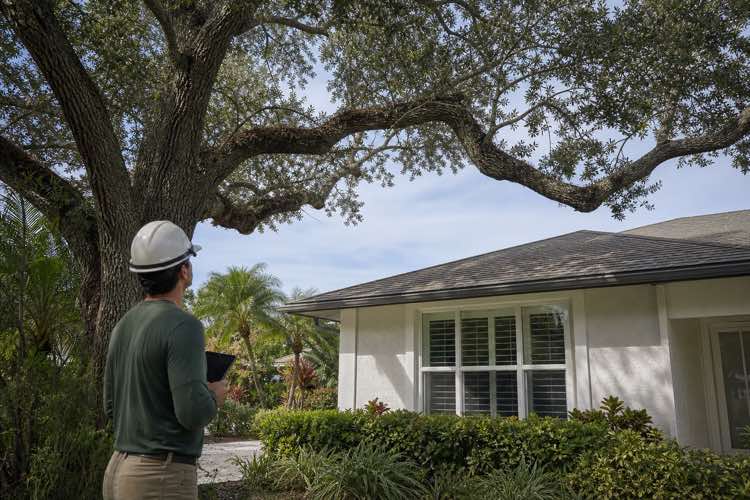
When a roof and the remaining canopy both limit access, tree limb removal becomes a scope question before it becomes a cutting question. In Daytona Beach, the same over-roof branch can call for different work depending on roof height, yard access, and how much of the tree must remain balanced after each cut. Compare proposals by the details, not the label.
Scope Snapshot
Ask for separate notes on contact clearance, rigging space, roof protection, landing zones, debris routes, and canopy impact. Florida Foliage serves Volusia and Flagler counties, with Daytona Beach as the primary market. ISA Certified Arborist staff, licensed and insured service, and a request a free estimate option can help you compare a written scope with real site limits.
In coastal Florida, roof work often meets extra limits. Wind can move long limbs farther than a still photo suggests. Sandy soil can affect footing and root support. Salt exposure can weaken growth on some trees. When you review a quote from Florida Foliage, ask what part of the job is about clearance and what part is about access.
That distinction matters because tree limb removal near a roof is rarely just one cut. A branch may need to be shortened, sectioned, lowered, or left partly in place to protect the tree’s structure. If a contractor treats every over-roof limb as the same job, the proposal is too vague to compare fairly.
For more complete help with property care, see our tree services and related tree trimming options. If you are comparing bids in the city, the local page for Daytona Beach can also help frame the service area and conditions.
Is It Bad for Tree Branches to Touch Your Roof?
Yes, tree limb removal is often needed when branches touch a roof because contact can rub shingles, trap moisture, and move with the wind. In Daytona Beach, frequent rain and tropical weather can turn light contact into repeated wear, so a branch that only grazes the roof can still justify a careful inspection.
That does not mean the answer is always a full prune. One limb may only need roof clearance, while another may need reduction to keep the canopy stable. Florida Foliage can inspect the site and give a written scope that separates the roof issue from the tree structure issue.
UF/IFAS pruning guidance notes that pruning affects future growth, so the cut choice should fit the tree’s structure, more than the roof contact. See the limited pruning point in the UF/IFAS pruning guidance. When the branch is large or the tree seems stressed, an ISA Certified Arborist review is useful before any work starts.
If you are comparing estimates, ask whether the branch is merely close to the roof or actually abrading it. Those are different conditions. A clear scope for tree limb removal should say which contact points matter, which parts of the roof are at risk, and which branches remain after the work is finished.
How Far Should Tree Branches Be From the Roof?
Tree limb removal should create enough separation that branches do not rub the roof during normal wind movement. There is no single distance that fits every tree, because height, growth habit, and roof shape all change the answer. The useful target is practical clearance for the site, not a copied number.
For a two-story roofline or a narrow side yard, the real question is how much movement the branch has in wind, more than in still air. A good quote should state the clearance goal and note where the canopy limits that goal. That makes proposals easier to compare on the same terms.
In Daytona Beach, roof access can be tight around pools, screens, solar panels, and fences. Those details can change the amount of room available for safe work. Florida Foliage can include the access limits in the estimate so you know whether the proposed tree limb removal is a light clearance job or a more involved canopy cut.
Ask for the target distance in writing if you are unsure. The right answer may depend on the limb size, the roof material, and how the branch moves under load. A site visit gives the contractor a better view than a photo, especially when the remaining canopy still crowds the roofline.
How Do Professionals Remove Tree Limbs Over a House?
Professionals handle tree limb removal over a house by planning the cut, the rigging space, the roof protection, and the landing zone before any wood comes down. That order matters because each piece must have a controlled path. A roof, fence, or small yard can change the work plan quickly.
The written scope should say whether the branch will be reduced in sections, lowered with ropes, or approached from a different side after protection is set. OSHA’s tree care guidance points to controlled work practices around hazards, which is one reason roof work belongs with trained crews. See the limited safety point in the OSHA tree care guidance.
| Scope element | What the quote should say | Why it matters |
|---|---|---|
| Contact clearance | Which branches will be separated from the roofline | Shows the actual pruning target |
| Rigging space | Where crews can control the limb safely | Signals whether lowering is practical |
| Roof protection | How shingles, gutters, and vents will be shielded | Clarifies how roof risk is handled |
| Landing zone | Where wood will be placed or lowered | Shows if the yard can receive the debris |
| Debris route | How limbs and brush will leave the work area | Reveals access limits and cleanup effort |
| Canopy effect | How each cut changes balance and remaining growth | Helps compare pruning quality |
That kind of detail is what Florida Foliage can include in a quote-ready scope. It helps separate simple trimming from tree limb removal that requires careful control over a roof. If the branch crosses a chimney, dormer, or screen enclosure, the route for each piece may change the whole plan.
When the remaining canopy still carries most of the tree’s weight, one cut can shift balance more than the owner expects. That is why the proposal should say what will be removed and what will remain. If you need that review in Daytona Beach, call (386) 481-7913 and ask Florida Foliage to assess the site.
For homeowners who want broader support after the inspection, Florida Foliage can also discuss follow-up tree trimming if the roof issue is part of a larger canopy plan. A clear scope helps you see whether the job is removal, pruning, or both.
What Questions Should You Ask a Tree Removal Service?
Tree limb removal estimates are easier to compare when you ask the same questions every time. Ask which exact limb or limbs are included, whether roof protection is part of the work, where the pieces will be lowered, and how the remaining canopy will be affected after each cut.
Ask whether the quote is based on simple clearance or on a more selective pruning approach. If the branch is near shingles, ask who will protect gutters, vents, skylights, and any other roof features. A careful contractor should explain the difference between a short overhang, a live lateral, and a larger section that needs more control.
- Ask which limbs are included.
- Ask how the roof will be protected.
- Ask where debris will land.
- Ask how cuts affect the canopy.
- Ask who will remove all wood.
Florida Foliage can help you compare those points on a site visit. Use request a free estimate or call (386) 481-7913 to discuss the roof, access, and cleanup needs. If you want a broader service review, start with the company’s tree services page.
If a contractor says every over-roof cut is the same, ask for more detail. A dead stub, a small live branch, and a large limb over a house are not the same task. The proposal should describe the work in site terms, more than say that tree limb removal will happen.
What Affects Tree Limb Removal Cost?
Tree limb removal cost is driven by access, hazard, and scope more than by the number of limbs. A roof close to the tree can require more setup. A crowded side yard can narrow the rigging options. Limb size, reach, and the cleanup path also affect how the job is planned.
In Daytona Beach, cost can also shift when utilities, fences, screens, storm damage, or wet ground limit the crew’s movement. A quote should separate roof protection, work-area setup, and debris handling so you can see what part of the job adds complexity. That keeps you from comparing a light trim with a more technical over-roof cut.
Tree trimming and structural pruning are related but not identical. If the tree needs shaping for future growth, the work can involve different cuts than a simple clearance task. You can review broader tree trimming options, but the written scope should still say what happens to each limb and why.
Florida Foliage serves Volusia and Flagler counties with licensed and insured service, and that matters when the job requires careful work near a roof. Ask for the access assumptions, the debris plan, and the canopy impact so you can compare tree limb removal proposals fairly. The estimate should fit the site, more than the branch count.
If the quote does not explain how the roof and remaining canopy affect the work, ask for a clearer version. That helps you decide whether the proposal reflects simple clearance or a more involved branch reduction near a house.
Does Hauling Away Tree Limbs Change the Scope?
Yes, hauling away limbs can change tree limb removal because it adds handling, loading, and disposal steps after the cut. If the yard is tight, hauling can also change the landing zone and the route out of the property. The scope should say whether brush, trunk wood, chips, or all debris are included.
That distinction matters near a roof because the debris path may be limited by fences, wet ground, or narrow access. If pieces must be carried farther, the job is different from a simple drop and clear. A contractor should say how cleanup will happen and what material stays onsite.
For property owners comparing bids, this is an easy place to miss a difference. One estimate may include complete haul-away, while another may only cut and stack. Florida Foliage can explain the options during a visit, and you can confirm details by calling (386) 481-7913.
Hauling also affects the order of work. If the roof is exposed to falling debris or the ground cannot support a heavy landing area, the crew may need a different cut sequence. That is why the written scope should describe debris routes, more than the final cleanup result. Clear wording makes tree limb removal easier to compare.
If the scope includes hauling, ask whether the estimate still separates the cutting work from the removal work. That extra line can help you see what part of the price reflects access, and what part reflects disposal effort.
Who Pays for Cutting Overhanging Branches?
Who pays for tree limb removal over a roof depends on property rights, local rules, and any insurance issue involved. Often the owner who wants the work done pays for it, but overhanging branch disputes can involve a neighbor or the governing jurisdiction. There is no one answer that fits every property.
If a limb crosses a fence line or sits near a shared boundary, the legal and permit questions may need property-specific review. Florida Foliage can provide the estimate for the work itself, but payment disputes, permit authority, and insurer decisions belong to the proper outside decision maker. That keeps the contractor role clear.
For the practical side, document the branch location, the roof contact points, and the access limits before asking for bids. Then ask Florida Foliage for a written scope. If you are ready to compare options in Daytona Beach, call (386) 481-7913 or request a free estimate.
Property-specific answers may still require an inspection, permit review, or insurer review. That is especially true when a branch sits close to a roof edge or when the remaining canopy would change a lot after the cut. A clear site visit gives you better information than a rough description alone.
Can a limb near a roof be evaluated from a photo?
A photo can help a contractor give a rough opinion, but it cannot replace an on-site evaluation for tree limb removal near a roof. The picture may hide slope, wiring, gutter condition, drop zones, or how much of the canopy is carrying load. Florida Foliage can review photos first, then confirm details during an inspection.
Should roof protection appear in the written scope?
Yes, roof protection should appear in the written scope for tree limb removal when the work is close to shingles, gutters, vents, or skylights. The note should say what will be protected and how. That makes it easier to compare proposals and reduces confusion about what the crew is responsible for during the job.
Does limb removal include hauling the wood?
Not always. Tree limb removal may include cutting only, cutting plus stacking, or complete haul-away with debris cleanup. The written estimate should state exactly what leaves the property and what remains. If hauling matters to you, ask Florida Foliage to spell it out before work begins.
Will removing one limb affect the remaining canopy?
Yes, one limb can affect the remaining canopy because each cut changes weight, light, and balance. A good tree limb removal plan should note how the tree may respond and whether a nearby branch should stay in place for structure. That is one reason to use an ISA Certified Arborist.
How can I request a tree limb removal estimate?
You can request a free estimate from Florida Foliage for tree limb removal in Daytona Beach, Volusia County, or Flagler County. Include the roof area involved, access limits, and any debris concerns when you call (386) 481-7913. That helps the estimate match the real scope.
If you need a clear, quote-ready tree limb removal scope near a roof, Florida Foliage can review contact points, access, and canopy impact and prepare a free estimate. Start with request a free estimate or call (386) 481-7913 to discuss the job in Daytona Beach.