Reviewed by Clinton Funk
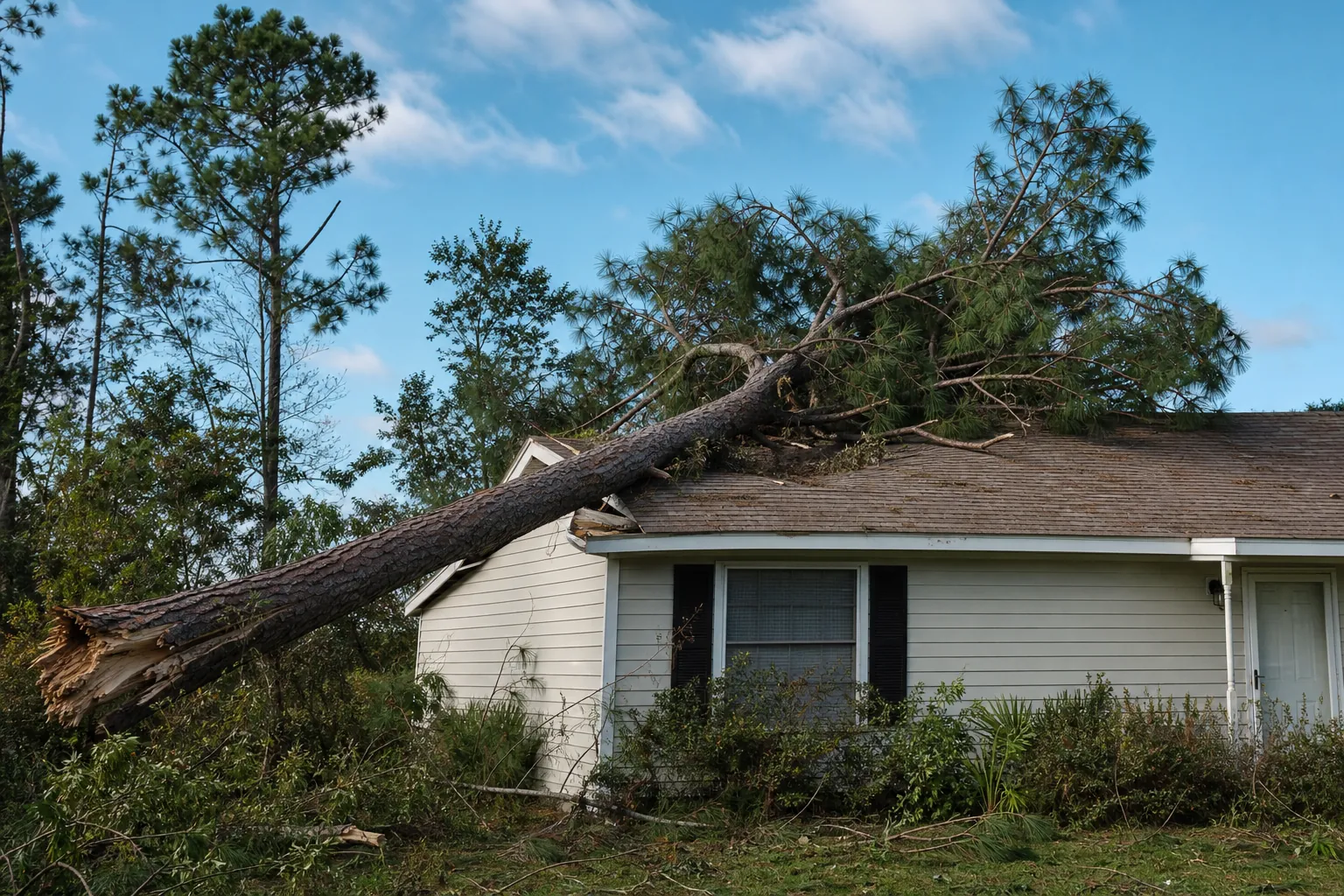
A tree on your house can leave you unsure what comes next. Start with the needs of people and local storm instructions. Then sort your calls, notes, and questions for help. You can plan these steps without a ladder or saw. This guide focuses on what to ask, rather than how to cut or lift the tree.
At 7 p.m. CDT on October 8, 2026, the National Hurricane Center reported Isaias had sustained winds near 100 mph and forecast landfall within the warning area late Friday or early Saturday. Read the storm advisory.
What comes first with a tree on your house?
Start with local instructions and the needs of people, and the weather service says to heed local orders. Read its guidance, and use the Pensacola tree risk guide to organize next steps. Keep questions about Pensacola tree risk guide separate from questions about where your family should stay. For related tree-care background, read the Pensacola tree risk guide and Pensacola root recovery guide.
The local statement directs residents to Escambia County for shelter and evacuation details, and use county updates for those instructions, rather than a tree service page. NWS Mobile lists this local resource.
When seeking emergency help, state the human need first, and say if someone is hurt or cannot leave, and give the address and explain any blocked door, and state what you know, then let the responder ask questions.
Use this short order to organize your calls:
- People: Note who is there and who needs help.
- Location: Give the street address and your current location.
- Access: Describe a blocked exit without guessing at another route.
- Visible concerns: Mention wires or branches you can already see.
- Next contact: Write down whom you were told to call.
A door-to-door repair offer is not a building inspection. FEMA advises having an engineer, architect, or building official inspect a home when a contractor claims it is unsafe. Read FEMA's advice.
Ask who can answer questions about entry and staying inside, and write down the person's name and their exact advice, and share that answer with family members to avoid mixed messages.
What should you report when wires are near the tree?
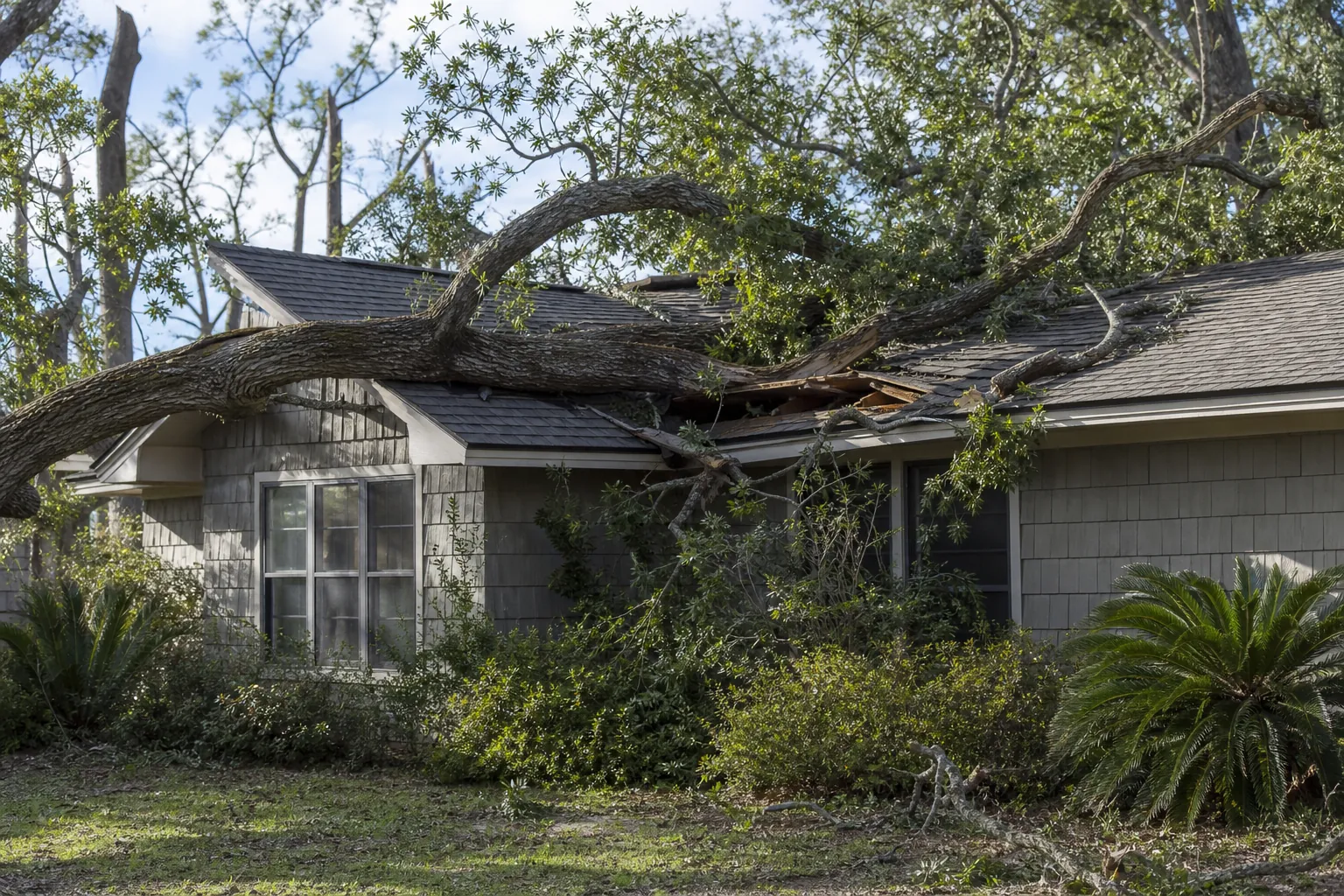
Report visible wires when you seek help or discuss the job. UF/IFAS says fallen limbs near power lines need a qualified line-clearance arborist. Read the guidance, and include that concern in calls about Pensacola tree risk guide, and the Pensacola tree risk guide offers related tree-care background. For related tree-care background, read the Pensacola tree risk guide and Pensacola root recovery guide.
UF/IFAS warns that work near electrical lines can be fatal when proper safety steps are not followed. Its guidance also puts large hanging limbs and leaning trees in the group needing expert help first. Read the risk guidance.
Your call notes can help describe the scene, and they do not need to identify the type of line, and use plain words such as “a wire is near the trunk.” If your view is poor, say you cannot tell more.
- Which side of the house has the visible wire?
- Can you see it from your current location?
- Does your existing photo show the same area?
- Who has received your report so far?
- What follow-up did that person request?
Contact the utility through a known contact route, and ask what information it needs and who handles the report, and keep any reference number with the rest of your notes.
Verify anyone who arrives claiming to represent the utility, and the FTC warns that imposters may seek money for repairs after bad weather. It advises asking for identification and checking whom you are dealing with. Read the utility scam alert.
Tell the tree contractor which calls you have made, and ask whom it will contact about the line concern, and record the answer without treating it as proof of completed work.
What can you put in notes without a close inspection?
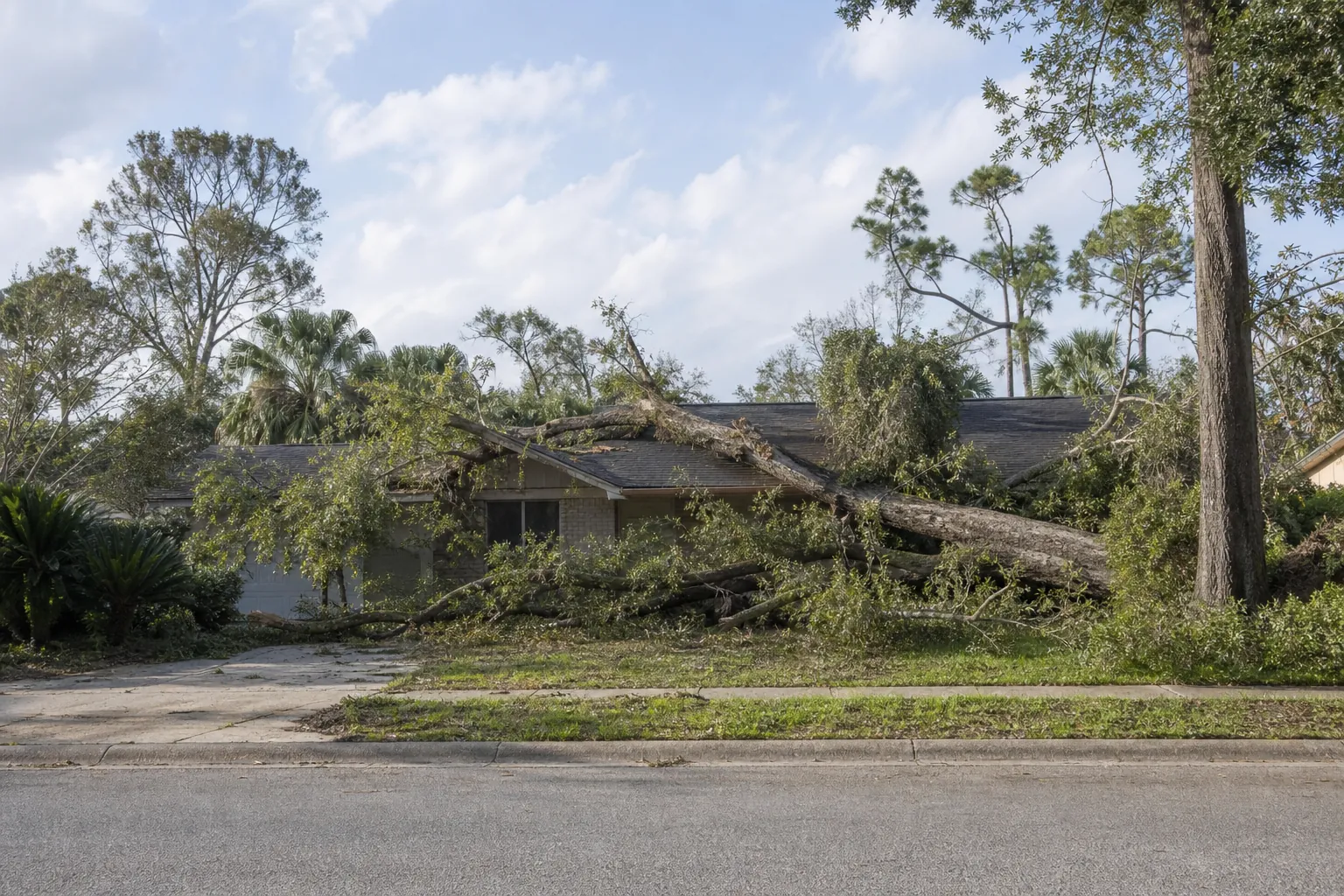
Record only what is visible from a safe indoor or distant location, and keep facts separate from guesses, and use the Pensacola tree risk guide to sort existing views. Add questions from the Pensacola tree risk guide to your call notes, and your notes can describe the scene without naming its cause. For related tree-care background, read the Pensacola tree risk guide and Pensacola root recovery guide.
A useful note starts with a place and an object, and for example, write “trunk across the front roof” if that is visible, and add the date and time of the view, and if you cannot see a section, mark it “not visible.”
Leave conclusions about the building to the appropriate inspection. FEMA names an engineer, architect, or building official for that role when responding to an unsolicited safety claim. Read its inspection advice.
- Name the side of the house in each note.
- Give each existing photo a simple matching label.
- Note which views came from someone else.
- List gaps that you want an inspector to address.
Keep the original photo files with your notes, and make a separate list of questions rather than adding guesses to captions. A contractor can then tell you which questions need a site visit.
ISA's owner resources include tree risk and storm damage topics, and use them to prepare questions about tree care. Read the owner resources.
If two people describe the same scene differently, keep both accounts, and note who saw what and when they saw it. Do not force them into one version before you know more. This gives the person receiving your notes a clearer starting point.
How should you discuss a tarp and tree removal?
Ask for a written plan that names each task and its owner, and use the Pensacola tree risk guide for tree questions and the Pensacola tree risk guide for the wider plan. The FTC says written estimates should describe the work, materials, price, and completion date. Read its estimate advice. For related tree-care background, read the Pensacola tree risk guide and Pensacola root recovery guide.
Describe the request in two parts: the tree and the roof, and ask each company what it proposes to do, and have it explain where its work begins and ends. Include any roof cover in that discussion rather than assuming it is part of tree removal.
The guidance cited here does not set a tarp-first or crane-first rule, and ask the contractors to explain their proposed order in writing. If a crane is proposed, ask why it is included and what the quoted work covers.
- Who will inspect the house before planning roof work?
- Who proposes the order of the two jobs?
- Does the tree quote include a roof cover?
- Who tells the next company when to attend?
- Which parts of the plan remain undecided?
Ask for a plain description of the handoff, and for instance, who will call you after the tree work? Who will receive the roof questions you have listed? Keep both contacts on the same page.
Make sure spoken promises appear in the agreement, and the FTC advises including promises about scope and cost in a written contract. Read its contract guidance.
Compare the written plan with your request before signing, and ask about each missing task while the scope is still being discussed.
What should you tell your insurer and keep on file?
Notify your insurer and describe the damage you can already see. FEMA advises contacting your insurance company after a disaster. Read its advice, and use the Pensacola tree risk guide to organize records. Include questions about Pensacola tree risk guide when explaining the work you are considering. For related tree-care background, read the Pensacola tree risk guide and Pensacola root recovery guide.
Give a short account in your own words, and state the address, your current contact details, and what is visible. Explain which questions about entry or access remain open, and ask how to send notes and existing photos.
Check coverage with the insurer itself, and the FTC says not to rely on a contractor to tell you what is covered. Read the coverage advice.
- What claim or reference number should you use?
- Who is your contact for questions about proposed work?
- Which records does that person want to receive?
- How should you submit each written estimate?
- What should you ask before agreeing to a roof cover?
Keep estimates, agreements, invoices, and receipts in one folder, and the FTC specifically advises getting invoices and receipts and keeping them for your records. Read its record advice.
Add a call log with names, dates, and next steps, and if an answer is unclear, ask for a plain explanation, and read it back to check that you understood it.
If the tree appears to come from a neighbor's yard, describe only what you can see, and ask the insurer which details it needs. Leave ownership and responsibility questions open rather than making a claim about who must pay.
How can you check a crew and compare its quote?
Check the company and read its written scope before agreeing, and the FTC advises confirming insurance and checking contractor licenses with state or county government. Read the hiring advice. Discuss Pensacola tree risk guide and mention visible concerns from the Pensacola tree risk guide when seeking estimates. For related tree-care background, read the Pensacola tree risk guide and Pensacola root recovery guide.
Ask for the company name and proof of insurance, and ask which license, if any, applies to the proposed work. Florida's DBPR search covers professions and businesses that department regulates. Use the license search.
Do not treat a search result as a description of the job, and compare the company details with the estimate you received, and ask about any name or address that does not match.
- Does the quote name the tree work you requested?
- Does it say what debris work is included?
- Are roof tasks listed or assigned to someone else?
- Are start and completion dates included?
- Are spoken promises also written down?
The FTC recommends getting estimates from more than one contractor, and it advises asking for an explanation of large price differences rather than simply choosing the lowest bid. Read the comparison advice.
Compare the tasks as well as the total, and one quote may list work that another leaves out, and ask each company to explain the gap in plain words.
Pressure to sign at once and requests for full payment upfront are scam warnings identified by the FTC. Read the warning signs. Keep those checks separate from questions about how soon work might start.
What questions remain after the fallen section is gone?
Ask what work was completed and what questions remain open, and return to the Pensacola tree risk guide for your task list, and use the Pensacola tree risk guide to sort new records. For the remaining tree, UF/IFAS says recovery depends on several factors, including health and damage. Read the recovery guidance. For related tree-care background, read the Pensacola tree risk guide and Pensacola root recovery guide.
Keep the building questions and tree questions in separate notes, and ask the relevant person to answer each one, and use names and dates so you know whom to contact later.
- Which items in the agreed scope are complete?
- Which tasks still need another company?
- Who will answer the remaining building questions?
- Has anyone proposed follow-up care for the tree?
- Which records are still due from the crew?
UF/IFAS says major trunk damage is often beyond repair, and it also explains that some trees can recover from leaf loss or broken limbs. Those points support asking about the extent of damage rather than judging by leaves alone. Read the restoration guidance.
Ask the tree specialist to explain the basis for any keep-or-remove recommendation, and request a plain account of what was found. If follow-up visits are proposed, ask what each visit is meant to address.
Restoration may involve more than one pruning visit, according to UF/IFAS. Read about recovery time, and ask for a schedule rather than expecting one visit to answer every future care question.
Close your task list with named contacts and open items, and that gives you a useful record for the next call, without adding conclusions you cannot support.
Frequently asked questions
Use these answers to prepare your next calls, and keep the Pensacola tree risk guide with your task list and the Pensacola tree risk guide with your records. Ask the person responsible for each part of the job to answer the questions that depend on your house and tree.
Can we sleep inside if only one corner was hit?
Ask about occupancy as a separate building question, and the visible corner does not answer your request for an inspection. FEMA advises using an engineer, architect, or building official when a contractor claims a house is unsafe. Read FEMA's advice. Record who answers your question and what they tell you about staying there.
Should I cut a branch to make room for a tarp?
Do not cut the branch yourself. Ask qualified tree and roof professionals to include that request in their work discussion. UF/IFAS assigns large hanging limbs and leaning trees to expert help before other tree care. Read its guidance, and describe the branch from your existing view. Ask who will handle the tree task and who will plan the roof work.
Should removal wait for the insurance adjuster?
Ask your insurer how to handle the proposed work and records, and the supplied guidance does not set one waiting rule. FEMA advises notifying your insurance company after a disaster. Read that advice. Give the insurer your written estimate and explain any instructions you have received from responders or the utility.
Does every tree on a roof need a crane?
Ask the contractor why its quote includes that method, and the supplied sources do not establish a rule for crane use. Compare written descriptions of the proposed work rather than equipment names alone, and the FTC advises asking about large differences between estimates. Read its estimate guidance, and request a clear explanation of the scope.
Can the rest of the tree be saved?
Ask for a tree-specific review of the remaining damage. UF/IFAS says some trees recover from canopy damage, while major trunk damage is often beyond repair. Read its guidance. Ask what findings support the recommendation and what follow-up care would involve, and keep that decision separate from the completed removal work.
Read the Pensacola tree risk guide and Pensacola root recovery guide for related tree-care background. Ask qualified local providers to assess your own site.
Florida Foliage is based in Daytona Beach and serves Volusia and Flagler counties. For a Panhandle or Alabama site, ask qualified local providers about your own project.
About this article: AI helped draft this article.
Florida Foliage is a Daytona Beach tree service that works with an ISA Certified Arborist consultant. For tree work in Volusia or Flagler County, call (386) 481-7913 to discuss your project.
For tree work in Volusia or Flagler County, call (386) 481-7913 to request a free on-site estimate.