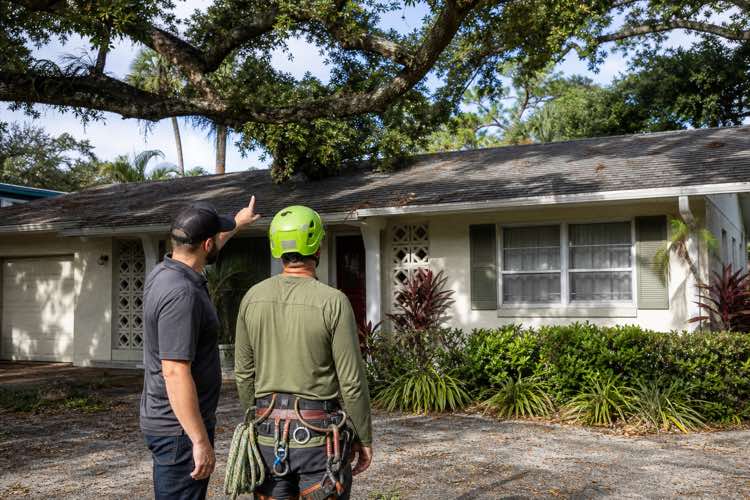
A tree pruning service is easier to schedule before a roof replacement when the roofing crew, arborist, and homeowner agree on access, branch conflicts, and cleanup. In Daytona Beach, salt air, strong wind, sandy soil, and tight lots can make that planning more important. Florida Foliage helps owners compare scopes without mixing construction convenience with sound pruning choices.
Scope Snapshot
- Define roofer access and staging areas before any cuts.
- List only the branches that interfere with roof work.
- Keep pruning decisions tied to tree structure and health.
- Separate roofing debris from limb debris and loading paths.
- Do not use roof convenience as a reason to top.
When a roof replacement is on the calendar, start with a site review. A tree pruning service can open space for ladders, shingles, and tear-off work, but the pruning scope should still follow tree biology. Florida Foliage offers request a free estimate for homeowners who want the tree and roof plans aligned early.
The best plan treats the roof project and the tree work as related, but separate. The roofer needs safe movement and a workable drop zone. The tree needs cuts that fit species, branch structure, and expected growth. That distinction matters in coastal Florida, where a limb can move farther in wind than it looks on a calm morning.
Property owners in Volusia and Flagler counties often have limited side-yard space, pool cages, utility lines, or narrow drive lanes. Those details shape the work zone. A careful tree pruning service looks at those constraints first, then trims only what actually conflicts with the roofing job.
For owners comparing contractors, it helps to ask who is defining access and who is defining pruning. Florida Foliage has ISA Certified Arborist staff, licensed and insured service, and a focus on pruning decisions that remain separate from roofing convenience.
| Planning item | Roofer’s need | Arborist’s decision |
|---|---|---|
| Ladder access | Clear roof edges and stable setup | Prune only the branches blocking entry points |
| Material staging | Open ground area for deliveries | Keep canopy work limited to the actual conflict |
| Gutter and eave lines | Prevent snagging during tear-off | Trim selected limbs, not the whole side |
| Roof vents and skylights | Allow clean movement around openings | Reduce only if a branch will strike or rub |
| Debris handling | Separate waste streams and pickup paths | Stage limbs so roofing debris stays separate |
How Far Should Tree Branches Be From the Roof?
Tree branches should be far enough from the roof that they do not touch shingles, gutters, vents, or workers during normal movement. A tree pruning service should create practical clearance for the roof project while still making cuts that fit the branch’s health, angle, and future growth.
There is no single number that works for every property. Coastal wind, branch sway, and tree species all change the answer. A limb that seems clear in still air may drift into the roof line when gusts pick up. Florida Foliage can inspect the property and recommend a pruning target that fits the site.
UF IFAS pruning guidance at https://hort.ifas.ufl.edu/woody/pruning.shtml supports the basic point that pruning should be purposeful and should respect plant structure. That matters when a roof replacement is planned, because the goal is not to clear every branch near the house.
If a branch rubs on the roof, the movement can wear down shingles or leave debris in gutters. If limbs hang over a work lane, roofers may need to slow down or reposition ladders. A tree pruning service should address the exact conflict, then stop when the tree has enough clearance for the job.
Homeowners should also think about future growth. A cut that solves today’s access issue but creates a weak or lopsided canopy can create a new problem later. Florida Foliage can help compare the short-term roofing need with the longer-term tree structure.
How Does the One-Two-Three Rule Guide Pruning?
The one-two-three rule helps a tree pruning service stay modest before roof replacement. In practical terms, it means making only the cuts needed, avoiding heavy live-crown removal, and keeping the tree balanced enough to recover well. That approach helps when the roofing project needs access but the tree still needs its foliage.
This rule is useful when a homeowner wants more room for the roofer without turning the tree into a bare frame. It keeps the conversation tied to the smallest change that solves the access issue. In Daytona Beach, where storms and salt can already stress trees, that restraint matters.
An arborist should look at branch unions, canopy weight, and the likely direction of future growth. A tree pruning service from Florida Foliage can point out which limbs truly interfere and which ones only seem inconvenient. That comparison helps owners judge whether a quote is focused or broad.
The rule also protects the tree from being reduced for convenience alone. If a branch does not block access, it should not come off just because it would make the roofer’s job easier. Roof work is a planning factor, not a pruning reason by itself.
For trees close to a house, the one-two-three idea helps keep scope tight. It supports decision-making that is easier to compare across contractors, because the same actual conflict should lead to similar pruning choices even if the roofing plans differ.
Which Months May Be Poor Choices for Tree Trimming?
Some months may be poor choices for tree trimming when the species is under stress, actively growing, or better left alone until a different season. A tree pruning service should think about timing because the right month can reduce strain, while the wrong month can lengthen recovery.
In coastal Florida, summer heat, heavy rain, and storm season can change the timing conversation. A roof replacement schedule may be fixed, but the tree work still needs a species-specific look. Florida Foliage serves Daytona Beach and nearby counties and can help owners weigh that timing before work is booked.
Late winter or another dormant period may work better for some trees, while others have different timing needs. That is why pruning should begin with identification and purpose, not with a roof date alone. The tree pruning service should fit the tree’s condition first.
UF IFAS also explains in https://hort.ifas.ufl.edu/woody/do-not-top.shtml that topping is harmful and not a proper shortcut for reducing size. That point matters when someone wants more room for roofing crews. Roof convenience is not a valid reason for topping.
If the roof schedule and the tree’s best pruning window do not match, an arborist may suggest a narrower scope or a different sequence. That kind of call should come from a site inspection, not from a guess over the phone or from the roofing date alone.
How Does a Tree Pruning Service Work Near a House?
A tree pruning service near a house starts with an on-site review of the roof edge, the trunk, and the access routes around the structure. The crew should identify where ladders, materials, and debris will move, then decide which limbs truly interfere. The goal is targeted pruning, not broad clearing.
Near a house, each side of the tree may create a different issue. A branch over the driveway can affect staging. A limb above the eave can affect tear-off. A branch near a porch roof can change where workers move. Florida Foliage uses tree trimming and pruning work to address those conflicts in a limited way.
The plan should also include debris removal. Roofing tear-off creates shingles, nails, and underlayment scraps. Tree work creates limbs, leaves, and sawdust. If both crews use the same side yard at the same time, the job can become cramped fast. Separate staging areas help keep the work organized.
When a house sits close to the canopy, a tree pruning service may remove deadwood, thin a crowded edge, or shorten selected limbs. It should not create large openings just to make the roof look clear from every angle. The home may be close, but the tree still needs a workable shape.
If you are comparing scopes, Florida Foliage can review the tree and roof plans together. Call (386) 481-7913 to talk through access, staging, and branch conflicts, or request a free estimate while the roofing date is still flexible.
What Should You Do When a Tree Is Close to Your House?
When a tree is close to your house, ask for a site review before the roof replacement starts. A tree pruning service can often make room for roofers, but the tree may also need special handling because of branch spread, wind loading, or nearby structures. The right scope depends on the site.
Begin by marking the paths the roofer will need. Then identify which limbs actually block those paths. If branches hang over the ridge, gutter line, or material staging area, note them separately. That helps the arborist keep the pruning focused on real conflicts rather than on general appearance.
- Mark ladder, loading, and drop-zone routes.
- List branches that touch roof edges.
- Separate deadwood from live growth conflicts.
- Plan debris paths for each contractor.
- Confirm the sequence before anyone starts.
If the tree is close enough that a cut could change the canopy’s shape, the work should be directed by someone who understands how trees respond. Florida Foliage serves Volusia and Flagler counties, with Daytona Beach as the primary market, and can help separate the tree scope from the roofing scope.
Do not assume the roofer should decide which limbs come off. The roofer can identify access needs, but the pruning decision belongs with tree knowledge. A quick call to Florida Foliage at (386) 481-7913 can help you compare both scopes before schedules harden.
What Questions Should You Ask an Arborist?
Ask an arborist which branches truly conflict with roof access, which limbs are weak or dead, and which cuts would alter the tree’s long-term shape. A tree pruning service should come with clear answers about scope, timing, debris handling, and whether any work should wait for a better season.
You should also ask how the pruning will stay limited. If the answer sounds broad or vague, slow down and ask for more detail. Florida Foliage has ISA Certified Arborist staff, which helps when comparing a tree quote with a roofing quote and deciding what belongs in each job.
Ask who handles the debris from pruning and where it will be staged. Ask whether utility lines, sidewalks, fences, or pool cages affect the setup. Ask if the proposed cuts follow accepted pruning standards. Those questions help separate true tree care from convenience-based requests.
When the discussion turns to reducing the crown, ask for a reason tied to tree needs. If the only reason is to help the roofer work faster, that is not enough. A tree pruning service should preserve structure and respond to the site, not to a shortcut.
Florida Foliage can also help homeowners decide whether a request should be handled as pruning, trimming, or a more limited cleanup. The right label is less important than the right scope, but the scope needs to be explained clearly before anyone starts.
How Do the Three C's Guide Pruning?
The three C's can guide a tree pruning service by keeping the work centered on clearance, condition, and consequence. Clearance addresses the roof conflict. Condition covers dead, weak, or crossing limbs. Consequence asks how the tree will respond after the cut and what shape it will keep.
This framework works well when a roof replacement is already planned. It helps the homeowner, roofer, and arborist talk about the real issue. If a limb blocks the roof line, that is a clearance question. If a limb is declining, that is a condition question. If a cut would leave the tree lopsided, that is a consequence question.
The three C's also help prevent overpruning. A tree pruning service should not empty a canopy just because a roofing crew would like more headroom. In a windy Daytona Beach area, that kind of change can leave the tree exposed and more stressed after the job.
Florida Foliage can review those three points on site and explain a practical scope that fits the property. If you are comparing contractors, ask for a clear reason behind each cut. Then compare that explanation with the roofer’s access plan before you schedule either crew.
Roof replacement and pruning often happen close together, but the work should still be handled as two separate decisions. One protects the building. The other protects the tree. When a tree pruning service is planned well, both jobs can move ahead without extra damage, extra delay, or needless canopy loss.
For homeowners in Daytona Beach and nearby communities, that planning should happen before shingles come off the roof. Florida Foliage can help align the pruning scope with the roof schedule, give a written estimate, and explain what belongs in the tree job and what belongs in the roofing job. Call (386) 481-7913 to get started.
Florida Foliage is licensed and insured, and free estimates are available. If you are lining up a Daytona Beach property for roof replacement, ask for a tree pruning service review, then compare the plan with the roofer’s access needs. A careful estimate now can keep the project simpler later.
Should the roofer identify branches that block access?
Yes. The roofer should point out which branches block ladders, material staging, or safe movement on and off the roof. That helps the arborist build a focused tree pruning service scope. The roofer should not decide how much of the tree to remove, but access conflicts are useful planning input.
How much roof clearance should pruning create?
Pruning should create enough clearance to keep branches from rubbing the roof, snagging materials, or forcing awkward work positions. The exact amount depends on branch movement, roof slope, and the tree’s growth pattern. A tree pruning service should aim for practical space, not a one-size-fits-all number.
Can branches be topped for roofing convenience?
No. Branches should not be topped just to make roofing easier. UF IFAS warns against topping because it harms tree structure and future health. A tree pruning service should use proper cuts that solve the access problem while preserving form and reducing stress on the tree.
Which contractor should work first?
Usually the tree professional should inspect first, then the roofer can confirm access needs before scheduling. If branches are unsafe or likely to interfere, pruning may need to happen before roofing begins. The exact sequence should be set after both contractors review the property and compare scopes.
How early should I request a pruning estimate?
Request the pruning estimate as soon as the roof replacement date is being discussed. Early planning gives time to compare access needs, seasonal timing, and debris removal. A tree pruning service estimate from Florida Foliage can help you coordinate the work before either crew is locked in.
Need a tree pruning service before roof replacement? Contact Florida Foliage to request a free estimate or call (386) 481-7913 to coordinate the tree and roofing scopes before work begins.