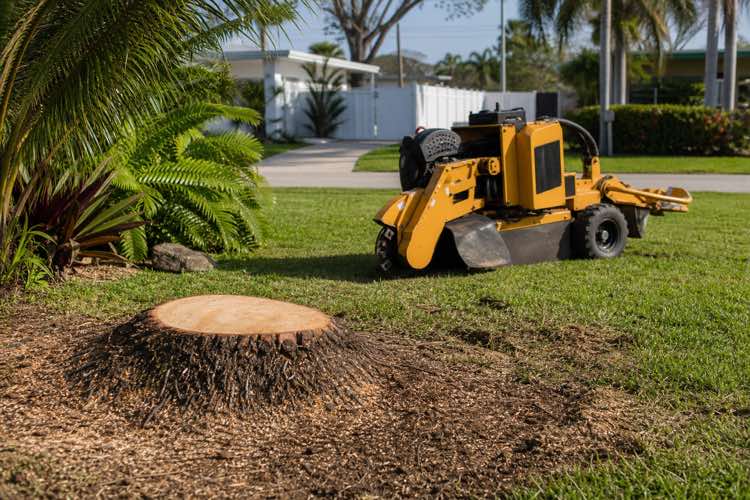
When people compare stump grinding after tree removal, the real question is what the quote covers below grade. A tree can be cut, hauled, and cleaned up while the stump stays put. If the next use is sod, planting, fencing, paving, or construction, the written scope matters more than a broad label.
Scope Snapshot
- Tree cutting and stump work are often separate tasks.
- Grinding lowers the stump; it does not erase every root.
- Chip handling and backfill should be written into the quote.
- Future use should guide the stump scope.
- Daytona Beach soil, access, and utilities can change the plan.
Florida Foliage serves Volusia and Flagler counties, with Daytona Beach as the primary market. ISA Certified Arborists are on staff, and the company is licensed and insured. Free estimates are available. If you need a tree removal service paired with stump work, ask for the exact written scope before the crew starts.
In coastal Florida, the next project often decides the right approach. Sandy soil can change how a stump is ground and backfilled. Storm-damaged yards can hide access limits. A quote that works for lawn repair may fail if you later need a fence line, a patio base, or a building pad. That is why the scope should be read closely.
For property owners in Daytona Beach, the issue is practical. Narrow side yards, wet ground after rain, and buried utility concerns can affect how far the work can go. The right answer is usually site-specific, so a careful estimate is better than a quick assumption.
Does Tree Removal Include Stump Grinding?
No, tree removal usually does not include stump grinding after tree removal unless the quote says it does. Cutting the tree, hauling debris, and grinding the stump are often separate tasks. If you want the stump addressed, make sure the estimate spells out exactly what is included.
That matters because a removal job can end at grade and still leave a stump in the way. If the area will become turf, a planting bed, or a path, the stump can delay the next phase. Ask whether the stump is being cut flush, ground below grade, or removed more completely.
Florida Foliage can pair a stump grinding service with tree cutting when the project calls for both. The useful question is more than “is it included?” It is “included to what depth, with what cleanup, and for what final use?”
In Volusia County, tree-related work can also intersect with local rules or permitting questions. For jurisdiction-specific guidance, the county’s tree page at https://www.volusia.org/services/growth-and-resource-management/environmental-management/permitting/trees/ can help point you to the right authority. Property-specific decisions still depend on the site and the governing office.
For safety, tree removal and stump work should be handled by qualified crews. OSHA’s tree-care guidance at https://www.osha.gov/memos/2021-06-30/inspection-guidance-for-tree-care-and-tree-removal-operations supports using trained workers for this type of operation.
Is It Cheaper to Grind or Remove a Stump?
Usually, stump grinding after tree removal is the lighter scope, while full stump removal is the more complete one. Grinding focuses on reducing the visible stump below grade. Full removal takes a broader approach to the stump mass and may be better when the site needs deeper excavation.
The cheaper choice depends on the final use. If you want lawn space back, grinding may fit the job. If you plan to set fence posts, pour concrete, or build a structure, full stump removal can be the better long-term fit because buried wood and roots may interfere later.
| Scope | What it usually means | Best fit |
|---|---|---|
| Tree removal only | Tree is cut and cleared; stump remains | When stump can stay for now |
| Stump grinding after tree removal | Visible stump is ground down below grade | Sod, planting, and basic recovery |
| Full stump removal | Stump and more root mass are taken out | Paving, fencing, and construction plans |
That table helps because quote comparisons mean little if the scopes are different. One offer may include only a shallow grind, while another includes chip handling and backfill. Those are not equal offers, even if the line item names sound similar.
Florida Foliage can explain those differences during an estimate and help tie the scope to the next use of the yard. If the area will support new sod or hardscape, the stump plan should match that end use rather than stop at the easiest task.
When you compare quotes, ask what the contractor assumes about access, stump size, and cleanup. Narrow driveways, soft sandy soil, and nearby irrigation can change how the job is approached in Daytona Beach and nearby coastal neighborhoods. A careful estimate is more useful than a broad promise.
Do Tree Roots Still Grow After Stump Grinding?
Yes, roots can remain after stump grinding after tree removal, but grinding does not make the whole root system vanish. The visible stump is reduced, yet underground roots may stay in place and slowly break down. That is why site use matters more than the surface opening alone.
If the tree is already dead, the roots do not keep expanding the way a live tree would. Even so, the underground structure can remain for some time. In sandy Florida soil, that hidden spread may be wider than the surface area suggests.
For lawn use, a standard grind and fill may be enough. For planting, fencing, or any project that needs a cleaner subsurface, ask how far the work reaches beyond the trunk. Stump grinding after tree removal is often suited to surface recovery, but not every future plan.
If the site has buried utilities, irrigation, or a pool deck nearby, the remaining roots may matter more than they first appear. Florida Foliage can review the layout during a free estimate and discuss whether the requested finish is practical for the next project. In a coastal market, that kind of detail saves time later.
One important point is that grinding is not the same as excavating the entire root system. The contractor may grind the stump, leave some roots in place, and backfill the opening. That may be fine for turf. It may not be enough for a new post hole or a slab edge.
Will a Tree Grow Back After Stump Grinding?
Sometimes, yes. Stump grinding after tree removal can leave living tissue that may sprout again on some species. That does not mean the original tree returns in full, but it can create new shoots that need follow-up attention. Species, root health, and grinding depth all affect the result.
Because of that, grinding is not the same as total eradication. The visible stump is removed, but living material below grade may still respond. If the tree tended to sucker, ask whether a more complete scope makes sense before work begins.
If regrowth would interfere with a driveway edge, fence line, or bed layout, mention that during the estimate. Florida Foliage can compare stump grinding after tree removal with full stump removal so the written scope fits the final use. The right choice depends on what the space must support later.
When you want to talk through the plan, call (386) 481-7913. Florida Foliage serves Daytona Beach and the surrounding counties, and a free estimate can clarify whether simple grinding or a deeper scope is a better match.
What Are Common Stump Grinding Mistakes After Tree Removal?
The most common mistakes are assuming stump grinding after tree removal includes every root, every chip, and every cleanup task. Another frequent miss is failing to match the stump scope to the next project. A job meant for turf is different from one meant for paving, posts, or a foundation edge.
People also forget to ask about depth. A shallow grind may be enough for mulch and grass, but not for a fence line or hardscape. Others assume chips will be hauled away when the quote was meant to leave them on site. Those details should be written down before work starts.
In Daytona Beach, access can create another issue. Tight side yards, soft ground after rain, and nearby irrigation lines can affect how crews approach the work. Florida Foliage can explain those limits during an estimate so the plan fits the site instead of a guess.
Another mistake is ignoring the finish grade. If the area will hold turf, ask how the hole will be backfilled and leveled. If the area will support construction, ask whether the remaining root structure will cause trouble. Stump grinding after tree removal should solve one problem without creating another.
- State the final use of the area first.
- Ask for grinding depth in writing.
- Confirm chip removal or on-site spreading.
- Check whether backfill is included.
- Match the scope to future construction.
For a clear estimate, Florida Foliage can review the site and explain the difference between cutting, grinding, root limits, chip handling, backfill, and full removal. If you want to talk it over, call (386) 481-7913 or request a free estimate.
How Should Stump Grinding After Tree Removal Appear in a Quote?
It should appear as a written line item that names the stump, the depth, the cleanup, and the finish. Stump grinding after tree removal is not fully described if the quote only says “stump work.” A clear quote explains what is being ground, how low, and what happens to the chips and fill.
Look for stump diameter limits, root limits, and access assumptions. If the crew is only grinding the visible stump, that should be plain. If the work includes chip haul-away, soil backfill, or grading for sod, those items should be listed too. Clear wording protects both sides.
A useful quote usually answers these questions: What stump or stumps are included? How deep will the grind go? Will surface roots be addressed? Are chips left, hauled, or spread? Is backfill included? Will the area be rough grade or ready for turf? If a quote skips these points, ask for revision.
Florida Foliage provides free estimates and serves Volusia and Flagler counties, with Daytona Beach as the primary market. That local focus helps when the site has sandy soil, narrow access, or storm-damaged growth that changed the layout. The estimate should reflect the actual work needed, not a vague line item.
When the site will be paved, fenced, or built on, the quote should also say whether the scope is simple grinding or a deeper removal plan. If the answer changes the next job, it should change the document now. That is the best way to avoid surprises after the crew leaves.
How Many Stump Grinding Quotes Should You Compare?
Compare at least two stump grinding after tree removal quotes, and often three if the site is complex. More than one quote helps you spot missing cleanup, shallow grinding, or vague wording. A lower number is not useful if the scope leaves out the work you actually need.
The goal is not to shop on price alone. It is to compare scope, access assumptions, depth, chips, and backfill. If one quote includes a finish for sod and another leaves a hole and chips, those are not equal offers. Make sure the wording matches the future use of the area.
Ask each contractor to confirm the same facts so the comparison is fair. That should include stump size, the number of stumps, whether roots are addressed, and whether haul-away is part of the plan. If the project is near a fence, foundation, or buried lines, the quote may need an onsite review.
For a local option, Florida Foliage can review the job in Daytona Beach and nearby areas and provide a free estimate. If you want a scope built around your next project, call (386) 481-7913 and ask for the stump work to be written clearly.
How deep should the written stump grinding scope go?
The written scope should state the grind depth in plain terms and tie it to the future use of the area. For lawn recovery, a standard depth may be enough. For paving, fencing, or construction, ask whether deeper grinding or full stump removal is needed. The quote should not leave depth implied.
Are surface roots included with stump grinding?
Not always. Surface roots are often outside the basic stump grinding after tree removal scope unless the quote says they are included. If the roots affect turf, edging, or a new path, ask how far the work extends from the stump and whether the finish grade will account for them.
Who removes the chips after a stump is ground?
That depends on the quote. Some crews leave chips on site for mulch or backfill, while others haul them away. If you want the area ready for sod or construction, ask for the chip plan in writing. The quote should say whether cleanup, spreading, or removal is included.
When is full stump removal a better scope?
Full stump removal is often the better scope when the site will support a slab, fence posts, or other construction that needs deeper excavation. It may also help when root regrowth or buried wood would create a problem later. If the future use is strict, ask for that scope up front.
Can Florida Foliage quote tree removal and stump work together?
Yes. Florida Foliage can review tree removal and stump work together so the written scope fits the site and the next project. That is useful when you want one plan for cutting, grinding, chip handling, and backfill. Call (386) 481-7913 for a free estimate.
When you compare stump grinding after tree removal in Daytona Beach, the right quote is the one that matches the next use of the property. A lawn repair, a planting bed, a fence line, and a construction pad all need different answers.
Use the written scope to decide, not guesswork. If the job must end ready for sod, ask about backfill and grade. If the space will support a fence or slab, ask whether grinding is enough or if full stump removal fits better. Florida Foliage can help you sort that out before work begins.
For a commercial next step, request stump grinding after tree removal through request a free estimate or call (386) 481-7913 with Florida Foliage today.