Reviewed by Clinton Funk
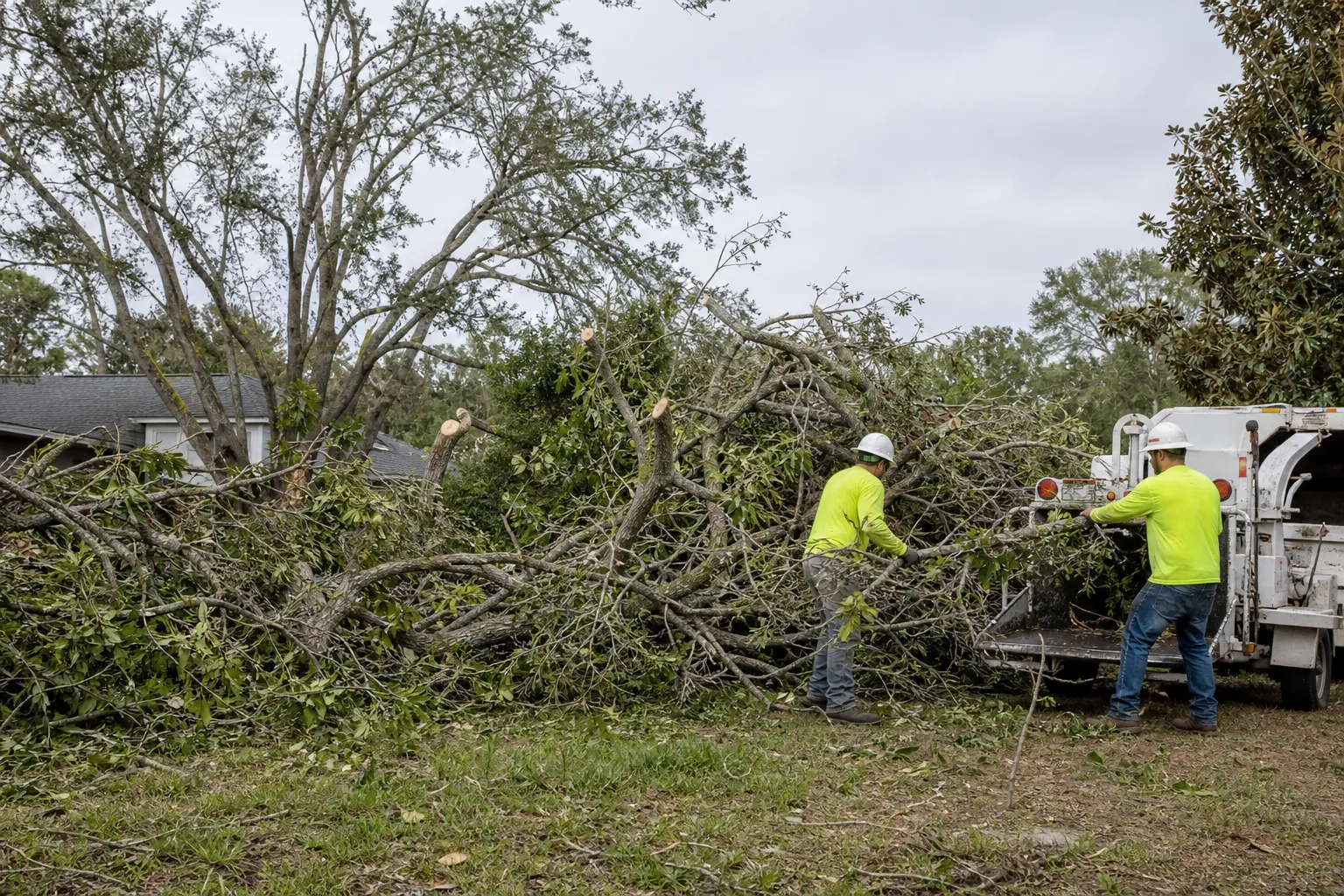
When two trees grow into one another, the problem is not always obvious from the ground. Branches may simply overlap, or one tree may be leaning against another and relying on it for support. After a Florida storm, broken limbs can also become lodged high in a neighboring canopy. Each situation calls for a different approach.
For homeowners researching tree removal for tangled trees in DeLand, the first step is understanding what is connected, what is damaged, and what could move when a branch or trunk is cut. Removing the most visibly damaged tree first is not necessarily the safest sequence.
This guide explains how tangled trees are assessed, when trimming may be enough, and what to consider before removal. Florida Foliage can discuss tree inspections, tree trimming, and tree removal options for residential, commercial, HOA, and condo properties.
What Makes Tangled Trees Different From Ordinary Overgrowth?
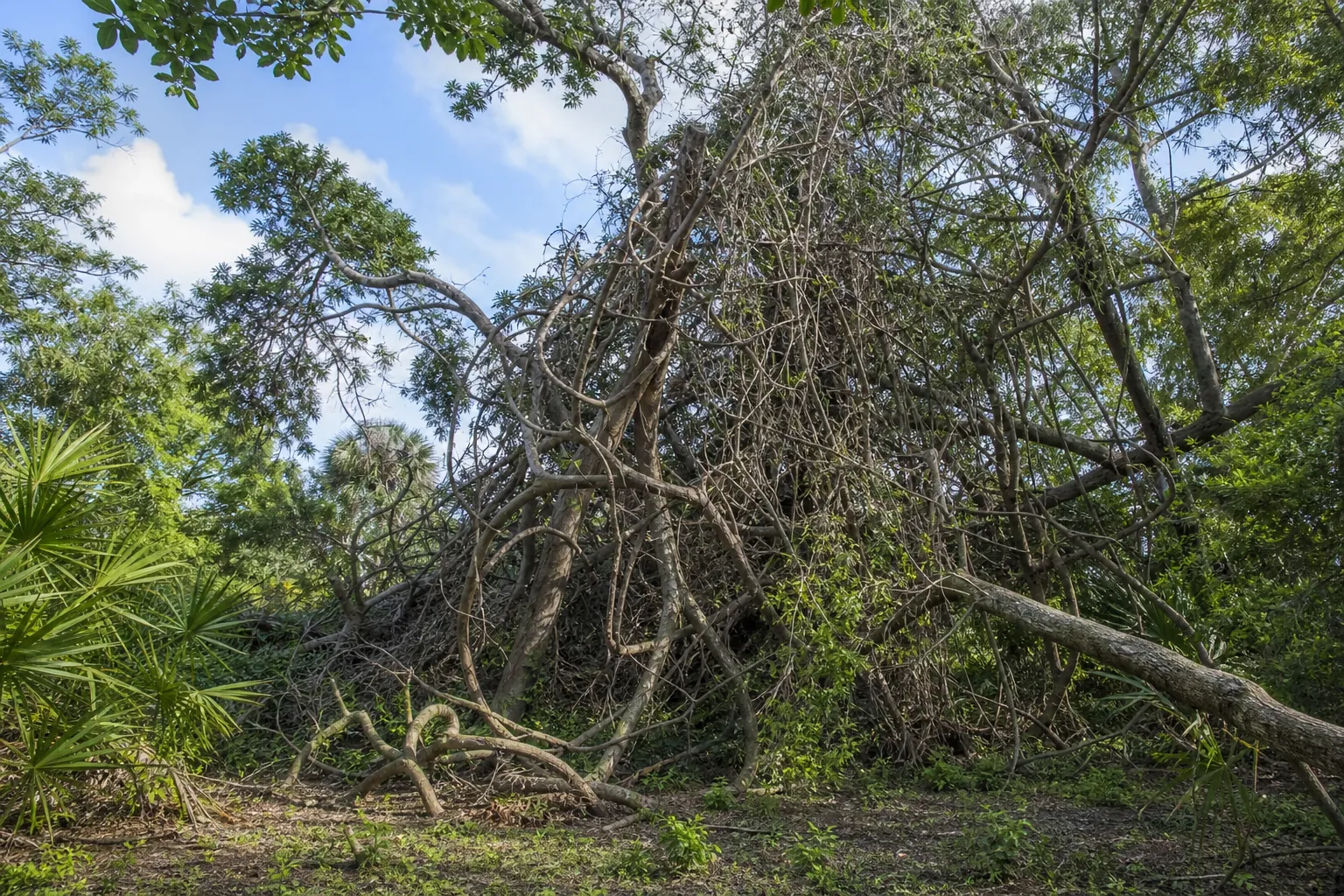
Tangled trees are not a single condition. The term can describe crowded crowns, crossing limbs, vines concealing branches, or storm-damaged trees that have fallen partly into surrounding vegetation. The important distinction is whether the trees are merely touching or physically supporting and loading one another.
Two healthy crowns can overlap without requiring removal. However, repeated rubbing may damage bark, and crowded growth can make inspection more difficult. A split limb resting in another tree presents a different concern because it may shift without warning.
Several patterns deserve closer attention:
- Branches from neighboring trees cross and rub, leaving worn bark or visible wounds.
- A leaning trunk rests against another tree rather than standing independently.
- A broken limb remains suspended in the canopy instead of falling to the ground.
- Dense growth hides cracks, dead branches, or the points where trees contact one another.
- Several trees occupy a narrow space beside a roof, fence, driveway, or shared property boundary.
In DeLand, mature landscaping and closely spaced trees can create these conditions over time. Hurricanes and other strong storms may turn ordinary canopy overlap into a structural problem. A ground-level impression alone cannot establish whether a tree is stable or suitable for retention.
Warning Signs That Call For Prompt Attention
Start with an observation from a safe distance. Do not walk beneath hanging branches or enter the space between a leaning tree and the tree supporting it. Keep children, pets, and vehicles away from the affected area while arranging an assessment.
A fresh change matters more than a familiar appearance. A tree that has leaned for years is different from one that suddenly leans after heavy rain or wind. Neither should be judged solely by appearance, but a recent change can indicate movement that needs prompt evaluation.
- Fresh soil cracking or lifting near the trunk may indicate root movement.
- A new split in a trunk or major branch may indicate that the tree's structure has changed.
- Hanging limbs over a walkway, parking area, or entrance create exposure for people using those spaces.
- A tree pressed against a roof or another tree may shift as its contact points change.
- Broken branches caught overhead can remain hazardous even after the weather clears.
If a tree or limb contacts a power line, stay away and contact the utility. Do not touch the tree, attempt to free a branch, or assume a line is safe because it appears insulated. Tree work near electrical facilities requires coordination and appropriate clearance procedures.
Emergency and hurricane tree removal may be relevant when storm damage creates an immediate concern. Explain what changed, where the tree is located, and whether it affects access or an occupied structure. Photos taken from a safe location can help communicate the situation, but they do not replace an on-site assessment.
How A Tree Inspection Guides The Decision
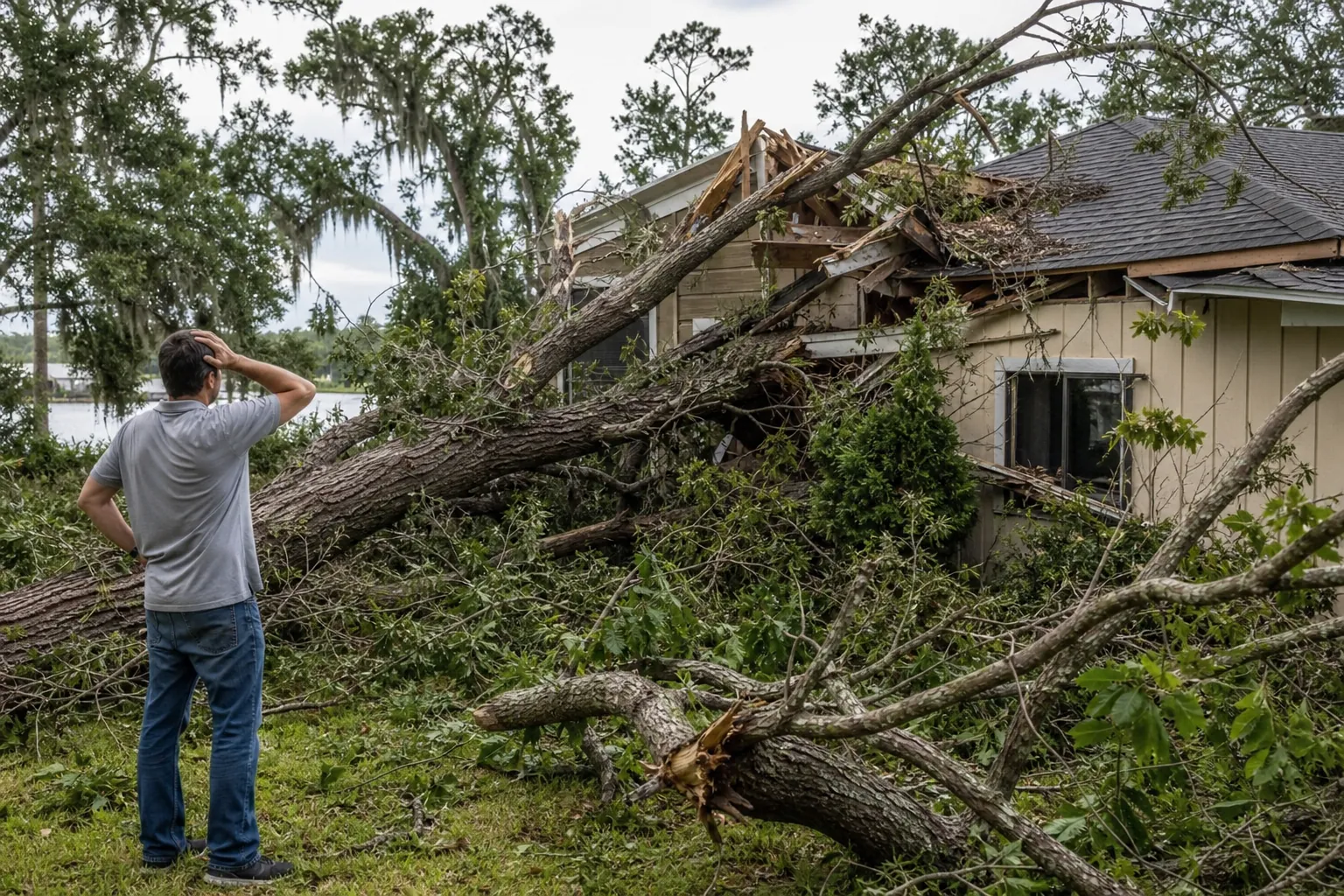
An inspection should consider the entire group of trees, not just the tree an owner wants removed. A neighboring tree may be supporting a damaged crown, carrying extra load, or concealing another defect. The assessment also needs to account for the people and property beneath the canopy.
Relevant observations include trunk condition, branch attachments, visible decay, root-zone disturbance, and the locations of contact between trees. Access, overhead utilities, nearby buildings, and potential equipment positions also influence the work plan.
Arborist reports and tree inspections can help document observed conditions and explain management options. Ask what the inspection covers and whether a written report is appropriate for your situation. Some concealed defects or root conditions may require further evaluation rather than a definite conclusion from a visual inspection.
Useful questions to ask include:
- Are the trees merely overlapping, or is one carrying weight from another?
- Which branches or trunk sections could move when a connection is released?
- Can selective trimming address the concern while retaining the trees?
- Would removing one tree expose defects or change the condition of the remaining trees?
- What limitations or uncertainties remain after the inspection?
The result should be an understandable recommendation, not simply a label of safe or unsafe. Tree condition, site use, and the consequences of a failure all affect the decision. A tree beside a busy entrance may require a different management approach from a similar tree in an unused corner of a lot.
When Trimming May Be Enough And When Removal Makes Sense
Tree trimming may be appropriate when the issue is limited to crossing branches, dead limbs, or crowding that can be addressed without excessive cutting. The goal is to reduce the specific conflict while preserving a workable tree structure.
Canopy thinning selectively removes branches within the crown. It may help address certain crowded conditions, but indiscriminate thinning is not a solution for every tangled canopy. Removing too much foliage or leaving poorly distributed branches can create new problems.
Crown reduction decreases selected branch lengths using suitable remaining growth. It differs from cutting all branches back to arbitrary points. Where appropriate, it may reduce a particular clearance conflict or shorten branches extending into a neighboring crown.
Removal becomes a stronger consideration when a tree has substantial structural damage, is lodged against another tree, or cannot be reasonably retained within the available space. A severely compromised tree should not be kept simply because surrounding branches appear to hold it in place.
Keeping the neighboring tree also requires thought. It may have damaged limbs, bark wounds, or an altered crown after the tangled tree is removed. Its condition should be reviewed rather than assuming it will remain unchanged.
Ask for the reasoning behind each option. A useful discussion explains which issue the proposed work addresses, what will remain afterward, and whether additional inspection or trimming may be needed. Not every crowded group needs wholesale removal.
Why The Removal Sequence Matters
Tangled trees can contain forces that are difficult to see. A bent branch may spring when released. A leaning stem may settle when a supporting limb is cut. A suspended section may roll or swing rather than drop straight down.
For these reasons, cutting the easiest accessible branch first can be a poor choice. The work sequence should account for how each cut changes the support and loading of the remaining material.
Depending on the site, tree removal may involve taking down the crown and trunk in controlled sections. The plan may also require clearing a workable access route, identifying exclusion areas, and choosing where material can be placed without creating additional hazards.
Crane tree removal may be considered when large sections must be handled over structures or where other approaches have significant limitations. It is not automatically the right choice for every tangled tree. Equipment access, setup space, ground conditions, overhead obstructions, and the characteristics of the tree all matter.
Property owners can ask how the proposed approach accounts for neighboring trees and nearby structures. A clear explanation should identify the main constraints without suggesting that any method eliminates every risk. Weather or newly discovered damage can also require changes to the plan.
Do not attempt to untangle loaded branches with a ladder, rope, vehicle, or improvised cutting sequence. A small-looking connection can be holding substantial weight. Stay outside the work area and allow the crew to control access during removal.
Preparing Your DeLand Property Before Tree Work
Preparation helps the assessment and the work proceed with fewer avoidable obstacles. Start by sharing accurate information about access, property boundaries, and anything beneath or near the trees that may not be obvious.
- Move vehicles, outdoor furniture, grills, and other portable belongings away from the agreed work area.
- Tell the team about irrigation components, septic areas, underground utilities, and other known site features.
- Identify narrow gates, soft ground, steep areas, or driveways with access limitations.
- Keep pets indoors or securely separated from equipment and falling-material zones.
- Explain any shared driveway, tenant access, or neighbor coordination concerns before scheduling.
Do not remove fences, clear vegetation, or drive equipment onto uncertain ground just to create access without discussing the plan. An inspection may identify a different route or a need for additional preparation.
For trees near a boundary, confirm ownership rather than relying on the position of the canopy. If work requires access to a neighboring property, address permission before the work date. Shared tree concerns are easier to resolve when the scope and access needs are clear.
Confirm applicable tree-removal requirements with the City of DeLand or the appropriate county office for your property. Requirements can depend on jurisdiction and site circumstances. HOA or condo approval may also be relevant, but association approval does not replace any applicable governmental requirement.
What To Discuss About Stumps And The Remaining Landscape
Tree removal and stump grinding are separate parts of the planning conversation. Removing the trunk does not automatically mean the stump will be ground or that all roots will be removed. Confirm the intended scope before work begins.
Stump grinding can reduce the remaining stump below the surface to an agreed extent. Access, adjacent hard surfaces, utilities, and the position of nearby trees can affect what is practical. Discuss the handling of grindings and the condition in which the area will be left.
When tangled trees grew close together, their root zones may overlap. Grinding beside a retained tree deserves care because its roots can occupy the same area. The best approach depends on the site rather than a standard assumption that every stump should be treated identically.
Review the remaining trees after removal. Previously hidden wounds, dead branches, or uneven crown growth may become easier to see. Tree trimming or a follow-up inspection may be appropriate, but additional work should address an identified need.
If the longer-term goal is to open a larger area, discuss land and lot clearing separately from an individual tree removal. Brush hogging may be relevant for suitable areas of brush and vegetation, but it is not a substitute for assessing damaged trees or suspended limbs. Defining the intended end condition helps keep the scope focused.
Planning For Commercial, HOA, And Condo Properties
Tangled trees on shared properties require attention to how people use the site. A canopy over a parking space, pool route, delivery area, or building entrance can affect several users at once. The assessment should consider those activities as well as tree condition.
Commercial tree services and HOA and condo tree services may involve coordinating work zones with managers, residents, tenants, or vendors. Identify who can approve the scope, who will notify occupants, and how temporary access changes will be communicated.
- Choose a contact person who can answer access questions and authorize agreed changes.
- Identify entrances and travel routes that need to remain available where practicable.
- Arrange clear notice about parking restrictions and areas that must stay unoccupied.
- Keep inspection findings and the approved scope with the property's maintenance records.
Do not let routine use of a walkway continue beneath a visibly suspended limb while waiting for a convenient work date. Restrict the affected area and seek an assessment. The urgency of a particular situation depends on its condition and exposure, not simply on the property's scheduling preferences.
Common Questions About Tangled Tree Removal
Does canopy overlap mean both trees need removal?
No. Overlapping foliage alone does not establish a need for removal. Inspection can help distinguish ordinary crowding from damaged attachments, harmful rubbing, or physical dependence between trees. Selective trimming may be sufficient in some cases.
Can a storm-damaged tree be left because another tree supports it?
Support from a neighboring canopy should not be treated as evidence of stability. The damaged tree can move, and the supporting tree can be affected by the added load. Keep the area clear and arrange an assessment.
Should every nearby tree be trimmed after removal?
Not automatically. Remaining trees should be checked for damage and specific clearance needs. Unnecessary cutting can remove useful foliage without solving a problem. Any follow-up trimming should have a clear purpose.
What information helps when calling?
Describe the location, recent changes, nearby structures, and whether branches or trunks are resting on other trees. Mention limited access and electrical lines. Share photos only if you can take them without entering a hazardous area.
Take The Next Step With A Clear Assessment
The best starting point for tangled trees in DeLand is a careful assessment of the whole situation. Identify the actual connections, consider the condition of each tree, and compare retention with removal before deciding on the scope.
To discuss tree inspections, tree trimming, or tree removal with Florida Foliage, call (386) 481-7913. Explain what you are seeing and what you want to protect so the conversation can focus on practical next steps for your property.
Call (386) 481-7913 to talk through next steps.