Reviewed by Clinton Funk
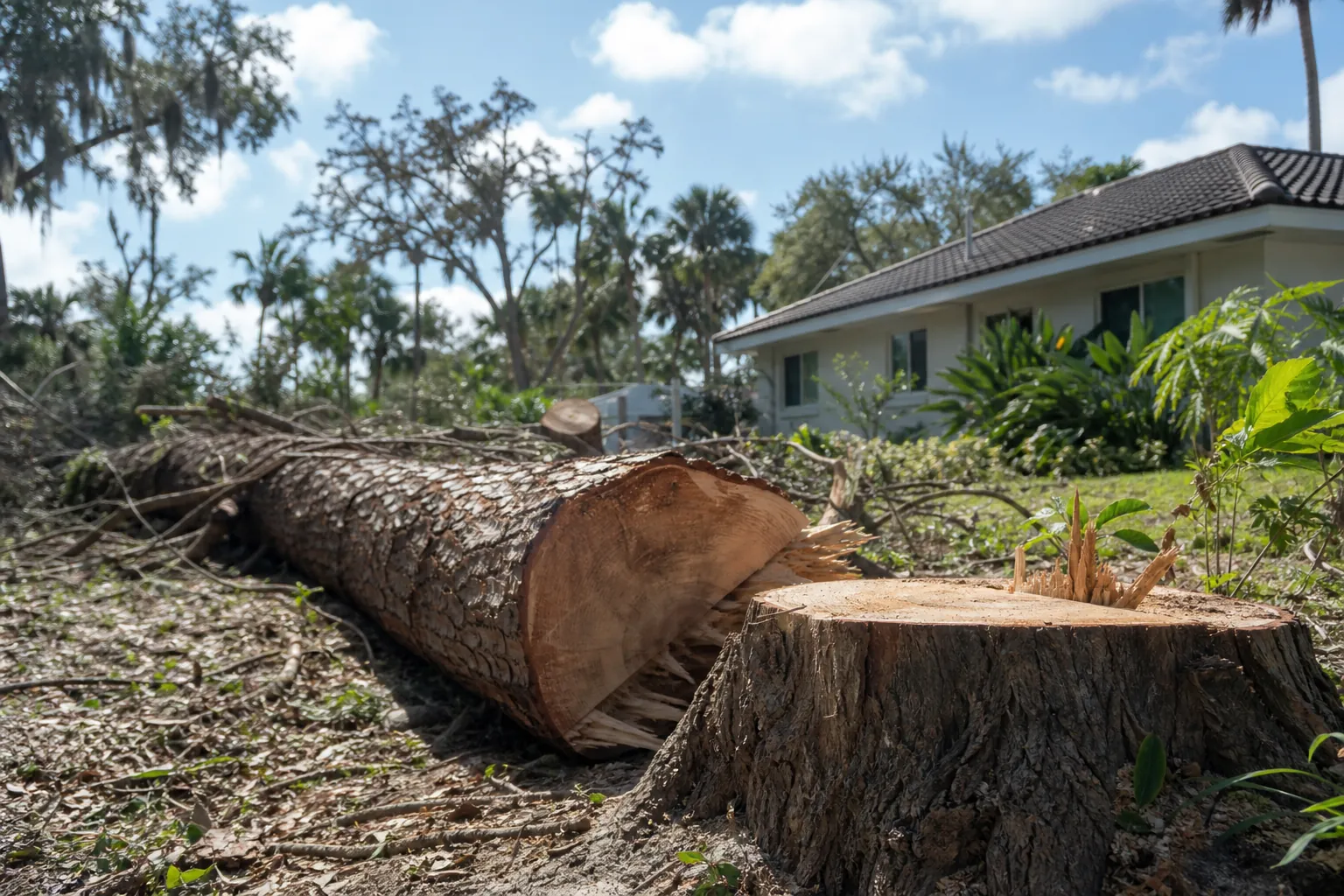
An unfinished tree removal can leave you with more than an inconvenient pile of wood. A partly cut trunk, suspended branch, blocked driveway, or damaged neighboring tree can create problems that need careful assessment. Before anyone resumes work, it helps to understand what remains, what the original agreement covered, and whether the site is safe to approach.
If you are searching for help with a tree removal unfinished job in Volusia County, start by separating immediate hazards from routine completion tasks. A stump left for later grinding is different from a leaning trunk that has already been cut. Florida Foliage can discuss the remaining work and the appropriate next step, whether that involves tree removal, stump grinding, or a tree inspection.
First, determine whether the unfinished tree is a hazard
Look at the site from a safe distance. Do not walk beneath remaining limbs, climb the tree, or pull on wood that appears stuck. Cutting changes how a tree carries its weight, and a section that looked stable before work began may no longer behave predictably.
A tree that has been partially dismantled can also be harder to evaluate from the ground. Missing branches may expose cracks, change the balance of the trunk, or leave another branch carrying weight it previously did not support. Photographs are useful, but they do not replace an on-site assessment.
- Keep people and pets away from a partly cut trunk, hanging limb, or unstable section of wood.
- Do not move logs if they are supporting another piece or resting against a fence, structure, or remaining tree.
- Avoid entering an area where ropes, cables, or tree sections remain suspended.
- Contact the utility provider if a tree or equipment is touching, leaning toward, or entangled with electrical lines.
- Call emergency services if the situation presents an immediate threat to people.
Do not assume a rope left behind makes the tree secure. It may have been part of a temporary rigging arrangement, and removing or tightening it could shift the load. Leave equipment and attached lines alone until a qualified professional evaluates the setup.
Identify what was actually left unfinished
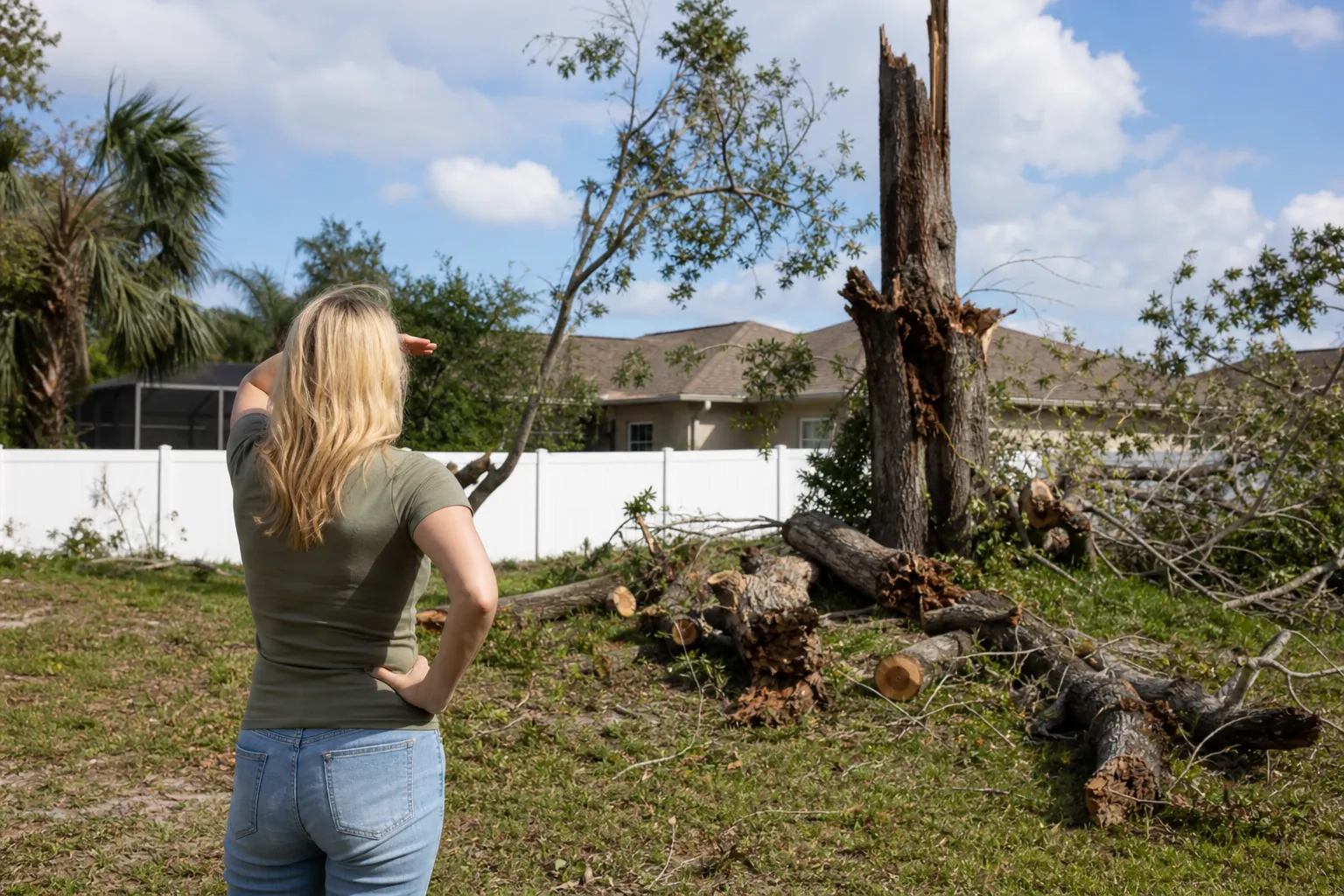
The phrase “unfinished job” can describe several different conditions. Some are safety concerns, while others are disagreements about the scope of work. Making a simple inventory helps you explain the situation clearly and compare proposed completion plans.
Separate standing tree material from material already on the ground. Then note the stump, remaining roots, access problems, and any nearby features that could affect the work. Include sheds, screened enclosures, pools, fences, drainage areas, and neighboring properties.
- Record whether the main trunk is still standing and whether visible cuts have already been made.
- Note any limbs that remain attached, hung up, or resting on another tree.
- Describe the location and approximate size of logs and branch piles without moving them.
- Check whether the driveway, sidewalk, gate, or building entrance is blocked.
- Identify whether stump grinding was included, excluded, or left unclear in the original agreement.
Do not treat every remaining root as evidence that removal was incomplete. Tree removal and stump grinding are different services, and grinding does not necessarily mean excavating the entire root system. The written scope should explain what outcome was agreed upon.
Review the agreement before arranging more work
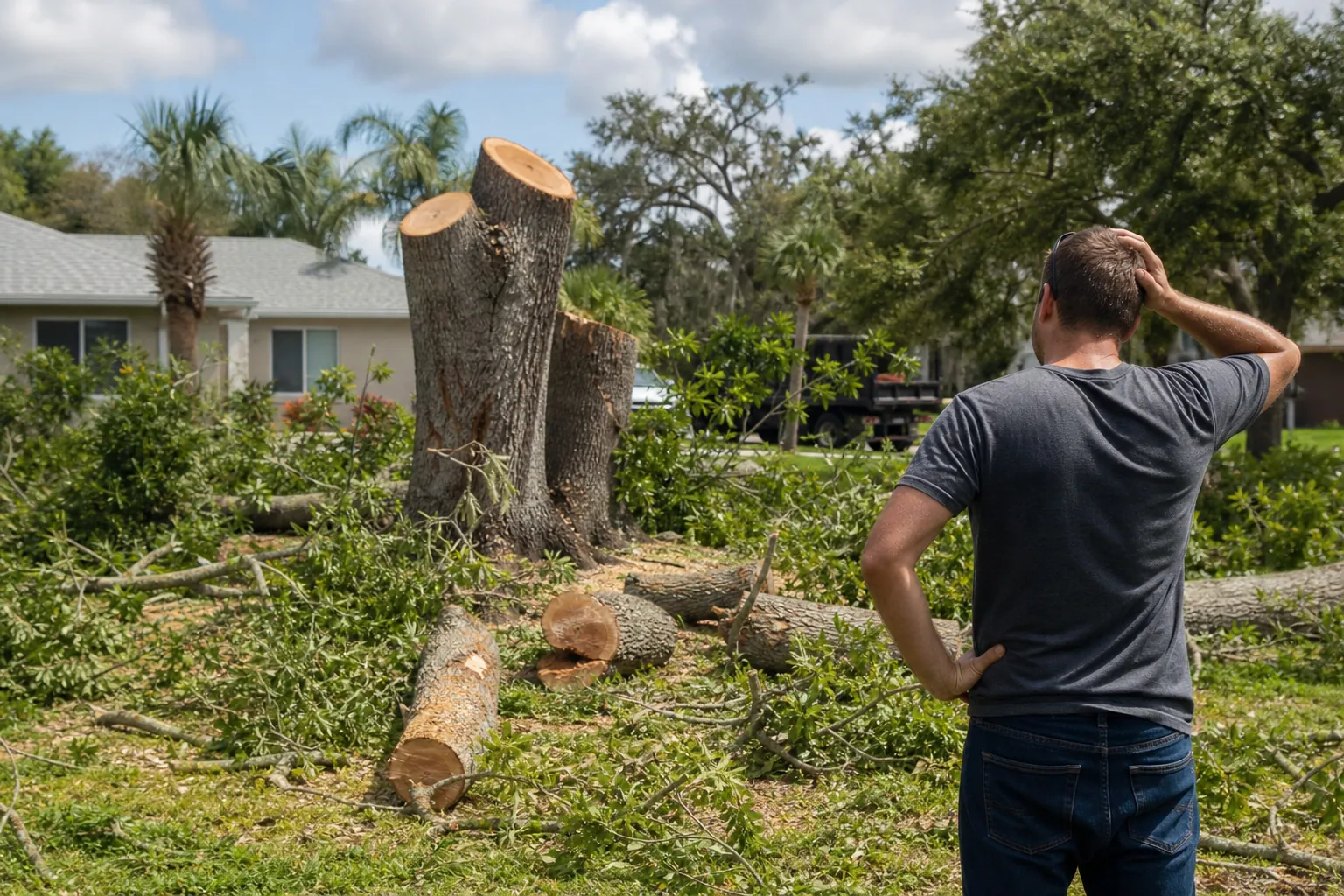
Gather the original estimate, contract, messages, invoices, and any photographs taken before the job began. Look for language describing which tree was to be removed, how low the stump would be cut, whether stump grinding was included, and what would happen to the cut material.
Also check whether the agreement addressed access, equipment limitations, scheduling, or weather interruptions. A crew may pause because conditions became unsafe, because equipment access changed, or because the tree presented an unexpected problem. A pause is not automatically abandonment, but it should be explained.
Ask the original contractor for a written account of the remaining work and any proposed return date. Keep the conversation factual. For example, describe a trunk section still standing beside the garage rather than simply saying that the entire job was done badly.
If payment or responsibility is disputed, preserve the records and consider appropriate consumer or legal guidance. A replacement tree service can assess the physical work, but it cannot resolve the original contract dispute. If an immediate hazard requires intervention, document conditions from a safe location before work begins when practical.
Document the site without putting yourself at risk
A useful photo set shows both close details and the broader setting. Take wide views from safe positions to show the tree in relation to buildings, overhead lines, access points, and property boundaries. Use your camera's zoom rather than stepping closer to a questionable limb.
Include images of visible cuts, remaining branches, stumps, log piles, and any apparent damage. Date the records and keep the original files. Written notes can capture information that photographs miss, such as when the crew stopped and what explanation was given.
- Photograph the same area from several safe angles so the layout is easier to understand.
- Save messages that explain changes to the original plan or reasons for stopping.
- Write down whether equipment, ropes, or other materials were left on the property.
- Record changes after wind or rain, including newly shifted wood or additional leaning.
Avoid climbing onto log piles to get a better picture. Round wood can roll, and branches underneath may shift under your weight. If the best view is unsafe to reach, tell the inspecting professional what you cannot see rather than trying to investigate it yourself.
Why finishing another crew's removal takes a fresh assessment
A new crew should not simply continue where the previous crew stopped. It needs to evaluate the tree's current condition, including existing cuts and any changes in stability. The original plan may no longer be suitable after some of the canopy or trunk has been removed.
Access also matters. Logs may now occupy the area needed for equipment, or the original crew may have worked through a neighboring property that is no longer available. Wet soil can limit equipment movement, and tight residential lots can restrict where tree sections may be lowered.
Ask how the remaining work will be approached and which site conditions influence that approach. Depending on the tree and location, completing the removal may require a different method. Crane tree removal may be considered where lifting sections offers a suitable approach, but a crane is not automatically necessary or feasible.
Arborist reports and tree inspections can be useful when the condition of a remaining tree, nearby tree, or shared canopy is uncertain. A tree inspection may clarify whether the concern is confined to the unfinished removal or whether adjacent trees also need attention. Request an explanation that connects the findings to practical next steps.
Confirm local requirements and property permissions
Before completing an unfinished removal, confirm applicable requirements with your city or Volusia County, depending on the property's jurisdiction. Do not assume the first contractor obtained every approval that might apply, and do not assume that a partly removed tree is exempt from local requirements.
Ask whether any authorization, documentation, or inspection is needed for the remaining work. Requirements can depend on the property's location and circumstances. If you have paperwork from the original job, make it available for review rather than relying on a verbal statement that everything was handled.
Property boundaries deserve equal attention. A tree near a fence may not belong entirely to the property where the crew entered. Equipment access across a neighbor's driveway or yard should be discussed and authorized before work resumes.
For HOA and condo properties, confirm who can approve the work and whether the tree is on individual or common property. HOA and condo tree services should be coordinated with the responsible manager or board. Clear permission helps avoid a second interruption after a replacement crew arrives.
Build a clear scope for completing the job
The replacement agreement should describe the current site, not just repeat the original proposal. Identify the tree and each remaining task so both parties understand what completion means. Broad wording such as “finish removal” can leave important details unresolved.
Discuss where equipment can enter, what areas must remain accessible, and which nearby features require special care. Tell the contractor about septic components, irrigation lines, underground utilities, and other known site limitations. Do not assume these can be identified by looking at the surface.
- Specify which standing trunk sections and branches are included in the remaining tree removal.
- State how existing logs and cut branches will be handled under the agreed scope.
- Clarify whether stump grinding is included and what area it will address.
- Describe the expected condition of the work area when the agreed tasks are complete.
- Identify any work on neighboring trees separately from the unfinished removal.
- Confirm who is responsible for arranging necessary access and approvals.
If a neighboring tree needs tree trimming, canopy thinning, or crown reduction, that should be evaluated on its own merits. These services should not be added automatically because a removal was interrupted. Each tree needs an appropriate plan based on its condition, structure, and surroundings.
Understand the difference between a stump and an unfinished removal
A tree can be fully removed above ground while leaving a stump behind. Whether that counts as an unfinished job depends on the agreement. If stump grinding was not part of the scope, it may be a separate next step rather than a failure to complete tree removal.
Before scheduling grinding, explain how you intend to use the area. A planting bed, lawn, walkway, or future structure can have different preparation needs. Ask what grinding will accomplish and what material will remain afterward. Do not assume grinding alone prepares the location for construction.
Underground conditions must also be considered. Utilities, irrigation, and other buried features can affect where equipment operates and how the work is planned. Confirm the appropriate utility locating process and discuss privately installed lines that may need separate identification.
If the property contains several remaining stumps or a larger overgrown area, distinguish individual stump grinding from land and lot clearing. Brush hogging addresses vegetation in suitable conditions, but it is not a substitute for removing unstable tree sections or grinding substantial stumps.
Account for Florida weather and storm-related urgency
In Volusia County, wind, rain, and saturated ground can change the condition of an unfinished tree removal. A weakened section may move after a storm, while wet access routes may affect equipment placement. Reassess the situation from a safe distance after weather changes.
Do not wait beneath the tree or attempt temporary cuts because severe weather is approaching. If there is a hazardous partially removed tree, explain the condition clearly when requesting emergency and hurricane tree removal. Tell the service whether cuts already exist and whether the tree is near occupied buildings or utility lines.
Emergency work may focus first on reducing an immediate danger rather than completing every remaining task. Ask what the initial work includes and what, if anything, will need a later visit. That distinction helps prevent another misunderstanding about whether the site is finished.
For commercial tree services, coordinate access and affected entrances with the property manager. Businesses may need to keep customers away from the work zone and redirect deliveries. Safety decisions should come before reopening a blocked area simply because the business is busy.
Check the completed work against the new agreement
Once the crew says the work is complete, review the site with reference to the written scope. Stay out of active work areas until the crew confirms you can approach. Check the agreed tree sections, remaining material, access routes, and stump work rather than relying on a general impression.
If something appears incomplete, ask about it before making assumptions. A remaining stump, shallow surface roots, or material retained at your request may be consistent with the agreement. Conversely, an omitted task should be identified specifically and discussed promptly.
Keep the completion records with the original job documentation. Photos of the final condition can be useful for property management, future landscape planning, or resolving questions about what work occurred. If nearby trees were affected, ask whether a tree inspection is appropriate.
Discuss your unfinished removal with Florida Foliage
An unfinished job is easier to address when the next conversation starts with clear facts. Explain what is still standing, what has already been cut, whether access is blocked, and what the original agreement included. Mention overhead lines, property boundaries, and any change after recent weather.
Florida Foliage can discuss tree removal, stump grinding, arborist reports and tree inspections, or other appropriate tree services based on the remaining work. For an unfinished tree removal in Volusia County, call (386) 481-7913 to explain the situation and discuss the next step. Keep a safe distance from questionable tree sections while arranging an assessment.
Call (386) 481-7913 to talk through next steps.