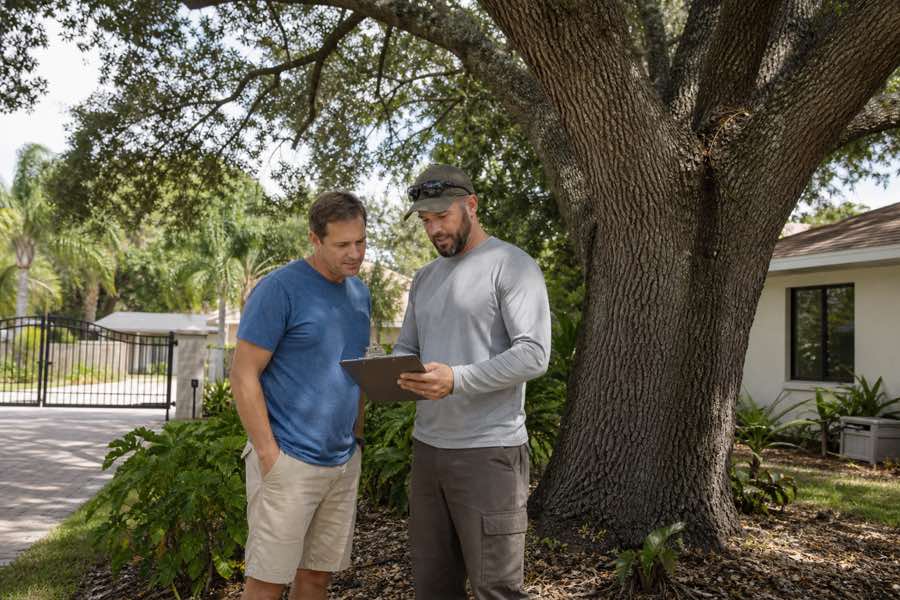
Hiring tree trimming contractors in Daytona Beach starts with one simple question: what result do you need from the cut, and how will you prove it was done right? A clear scope helps you compare bids, protect the property, and avoid vague promises. It also keeps the work tied to the tree objective, not guesswork.
- Define the tree objective before asking for numbers.
- Set cut limits for canopy, clearance, and deadwood.
- Confirm access, utilities, and protected areas in writing.
- Verify credentials, insurance, and the crew who will work.
- Require debris removal, change approval, and final review.
For commercial sites, HOA common areas, and retail properties in Daytona Beach, the cheapest quote can become the hardest to manage if the scope is fuzzy. Florida Foliage serves Volusia and Flagler counties, with Daytona Beach as the primary market, and provides Daytona Beach property owners a practical way to compare work plans. A written scope keeps tree trimming contractors accountable from the first visit to the final cleanup.
Start by asking for the tree objective in plain words. Do you want clearance from a roofline, reduction near signs, deadwood removal for safety, or a cleaner form after storm season? The answer should drive the work plan. If the contractor cannot describe the objective clearly, the rest of the quote is hard to trust.
Ask tree trimming contractors who will decide cut limits on site. The answer should identify the crown areas, branch size limits, and any limbs that must stay untouched. In coastal Florida, sandy soils, salt exposure, and frequent wind make overcutting more costly than it looks. Florida Foliage has ISA Certified Arborists on staff, so the plan can be reviewed by a trained eye when the tree needs more than a basic trim.
Be specific about access. Confirm where trucks may enter, where the crew may stage equipment, and what surfaces need protection. Narrow drives, tenant parking, sprinkler heads, signage, and overhead utilities can change the crew plan. Good tree trimming contractors should note these limits before the first cut, not after the property is disturbed.
For background on why trained oversight matters, the International Society of Arboriculture notes that arborists are trained in proper tree care and tree biology in its Why Hire an Arborist resource. That matters when the work affects structure, clearance, or tree health, more than appearance.
Use a simple comparison sheet before you approve any proposal:
| Scope Item | What to Confirm | Why It Matters |
|---|---|---|
| Tree objective | Clearance, reduction, deadwood, shape | Sets the actual purpose of the cut |
| Cut limits | What stays, what gets removed | Prevents overcutting and misunderstandings |
| Access plan | Entry points, staging, surface limits | Protects pavement, turf, and tenants |
| Debris handling | Haul away, pile, chip, or leave | Determines cleanup and site readiness |
| Final review | Who signs off on completion | Creates a clear closeout point |
What Questions Should You Ask Tree Trimming Contractors?
Tree trimming contractors should answer questions about the tree objective, cut limits, site access, and cleanup before you compare bids. Ask who will supervise the work, what credentials the crew holds, and how changes will be approved. Straight answers make it easier to compare scope, not sales talk.
Ask how the crew will protect buildings, glass, lighting, fencing, and planted areas. Ask where debris will go and who handles haul away. Ask whether the quote includes a final walk-through. If the contractor avoids details, the scope may not be ready for a commercial site or a multi-tenant property.
Florida Foliage offers a tree trimming service that can be reviewed against written project terms, not vague promises. For a closer look at service scope, see the tree trimming service page and compare it with your own checklist before you sign.
In storm-prone Daytona Beach, ask about utility clearance and site coordination, but do not assume the contractor can speak for the utility company or the permit office. Those decisions belong to the proper authority. Your job is to get the plan in writing and confirm who is responsible for each part.
What Issues Can Occur During Professional Tree Trimming?
Professional tree trimming can run into access problems, hidden defects, utility conflicts, and property protection issues that tree trimming contractors should address in advance. Coastal Florida weather, sandy ground, and tight urban lots can make staging harder than expected. Written scope terms help reduce surprise and keep the job tied to the original objective.
One common issue is overcutting. Another is debris placed where customers, tenants, or vehicles still need access. Branches can also reveal decay, broken unions, or storm damage that was not visible from the ground. Those findings may change the plan, so the contract should explain how new work gets approved before it starts.
OSHA guidance for tree care and tree removal operations is a useful reminder that these jobs involve recognized hazards and need proper work practices. That is one reason commercial sites should use qualified tree trimming contractors instead of treating the job like routine maintenance. See the OSHA tree care guidance for the agency’s focus on safety hazards in this work.
Tree trimming contractors should also explain what happens if weather interrupts the job. In Daytona Beach, wind, lightning, and saturated ground can change site access and safety quickly. A good plan does not promise what cannot be controlled. It states how the crew will pause, secure the site, and return under acceptable conditions.
How Should You Negotiate Tree Trimming?
You should negotiate tree trimming by refining the scope, not by pushing for the lowest headline number from tree trimming contractors. Ask them to narrow the work to the exact trees, exact cuts, and exact cleanup terms. That way, each quote reflects the same project and can be compared fairly.
Begin with the objective and remove vague wording. If a proposal says “trim as needed,” ask for branch limits, clearance targets, and which limbs are excluded. If a tree leans near a structure, ask for the boundary between maintenance trimming and a separate evaluation. The point is to make the work measurable.
When you need a broader review of what affects the scope, Florida Foliage explains several tree trimming estimate factors that can change the work plan, such as access and tree condition. Use that kind of detail to compare proposals on the same terms, not by a single line item.
Negotiation should also cover property protection and debris. If the contractor proposes to leave chips onsite, confirm where. If hauling is included, identify what counts as debris. Ask for a written change process so that any extra work receives approval before execution. That protects both the budget and the schedule.
What Should You Know Before Hiring a Tree Trimmer?
Before hiring tree trimming contractors, know who is responsible for scope approval, site access, and closeout on your property. Verify that the company is licensed and insured, ask who will be on the crew, and confirm whether the work plan matches the tree objective. Those details matter more than a polished sales pitch.
Florida Foliage is licensed and insured, and ISA Certified Arborists are on staff. That combination helps when a project needs more than a basic trim, especially near structures, parking lots, or utility lines. For a credentialed review, consider a certified arborist service when the tree condition or the site layout is uncertain.
Commercial buyers should also ask whether the estimate covers debris removal, access protection, and a final review with the property contact. If the estimate leaves out any of those items, the job can grow beyond the original plan. A clear answer now is easier than a dispute after the crew leaves.
Florida Foliage offers free estimates, which can help you compare written scopes before committing. If you want the conversation to start with your property terms, request a free estimate and prepare your site notes ahead of time. You can also call (386) 481-7913 to discuss the project details.
How Do You Pick a Tree Trimming Service?
You pick a tree trimming service by checking how well tree trimming contractors define the work, protect the site, and document completion. A strong proposal names the trees, the cut limits, the debris plan, and the approval process. If those basics are missing, the service is hard to compare or control.
Use a short checklist when reviewing bids: confirm credentials, ask for insurance proof, identify the supervisor, review access notes, and verify cleanup terms. If the company can explain each item without changing the story, that is a useful sign. If the answers shift from call to call, keep comparing options.
- Confirm the tree objective in writing.
- List every tree and exact work area.
- Verify credentials, insurance, and crew supervision.
- Define access, protection, debris, and cleanup.
- Require written approval for changes.
Commercial properties in Daytona Beach may also need work timed around customers, tenants, or deliveries. Tree trimming contractors should factor in access windows and site restrictions. If they do not ask about those details, the job may be harder to stage and easier to disrupt. That is a scope problem, not a scheduling surprise.
Florida Foliage serves Volusia and Flagler counties and can review your project terms before work begins. If you are comparing multiple proposals, use a written standard and ask each contractor to respond to the same questions. That makes the choice clearer and reduces confusion later.
Which Month Is Best to Trim a Tree?
The best month for tree trimming contractors depends on the tree species, the objective, and the site conditions, not a single calendar rule. In Daytona Beach, storm season, nesting concerns, and active growth can all affect timing. Ask for a property-specific recommendation before you set the schedule.
Some work is best done when the goal is clearance or deadwood removal, while other work may be better timed around a tree’s growth cycle. The point is to match the job to the tree, not to force every property into one season. A qualified review is more useful than a generic calendar answer.
If timing is part of a larger quote review, ask tree trimming contractors to note any seasonal factors that could affect access, cleanup, or tree response. That keeps the discussion focused on your site conditions. It also helps you decide whether to proceed now or after a different planning window.
When a tree is near a structure, a utility line, or a hard-to-reach area, the question may be less about month and more about coordination. In those cases, the property owner should rely on an inspection and a written plan. Florida Foliage can help with that review through a free estimate.
How Should a Contract for Tree Work Be Written?
A contract for tree work should name each tree, describe the exact scope, define cut limits, and state how tree trimming contractors will protect the property. It should also cover debris removal, change approval, completion review, and who signs off. Clear terms reduce confusion and make the job easier to verify.
The contract should identify the location of each tree, the type of work on each one, and any exclusions. It should spell out access routes, utility precautions, equipment staging, and cleanup expectations. If the work changes after the initial visit, the contract should require written approval before the new scope starts.
Use plain language. Avoid phrases like “as needed” or “full service” unless they are defined. If the property includes tenant spaces or public walkways, the contract should state how the crew will protect them. A good contract helps tree trimming contractors finish the project the way the owner expects.
Florida Foliage can provide a written estimate after reviewing the site and the project terms. If you want a clear starting point for a commercial or HOA project, call (386) 481-7913 or request a free estimate. That gives you a basis for comparing tree trimming contractors on the same terms.
Final recommendations vary depending on tree condition, access, nearby targets, and findings from a ground-based inspection.
Should the contract identify every tree?
Yes. The contract should identify every tree or clearly group trees by location and work type. That makes it easier to confirm the scope, prevent disputes, and verify completion. If the property has many trees, use a site map, tag numbers, or another written method that the contractor and owner both understand.
What credentials can a customer verify?
A customer can verify licensing, insurance, and whether ISA Certified Arborists are on staff. It also helps to ask who will supervise the crew and what experience the crew has with the specific type of work. Florida Foliage is licensed and insured, and ISA Certified Arborists are on staff for projects that need a trained review.
Should tree topping appear in a trimming plan?
Tree topping should not be treated as a routine trimming method in a written plan. If a proposal uses that term, ask what it means and why it is being suggested. Florida’s IFAS extension warns against topping because it can create long-term problems for tree structure and health. See Do Not Top Trees for the extension’s guidance.
How should change approval work?
Change approval should be written so any added work, removed work, or revised method is approved before the crew continues. The contract should name who can authorize changes and whether that approval must be in writing. That protects the owner, the contractor, and the project record when field conditions differ from the original scope.
Can Florida Foliage provide a written estimate?
Yes. Florida Foliage offers free estimates and can provide a written estimate after reviewing the property and the work scope. That helps commercial buyers compare tree trimming contractors on the same terms. If your site is in Volusia or Flagler County, including Daytona Beach, you can start by calling (386) 481-7913 or using the estimate request form.
If you are comparing tree trimming contractors for a Daytona Beach property, focus on scope, proof, and closeout terms before you choose. Florida Foliage can review the tree trimming contractors, the tree trimming contractors, and the written terms with you through a free estimate or by phone at (386) 481-7913.