Reviewed by Clinton Funk
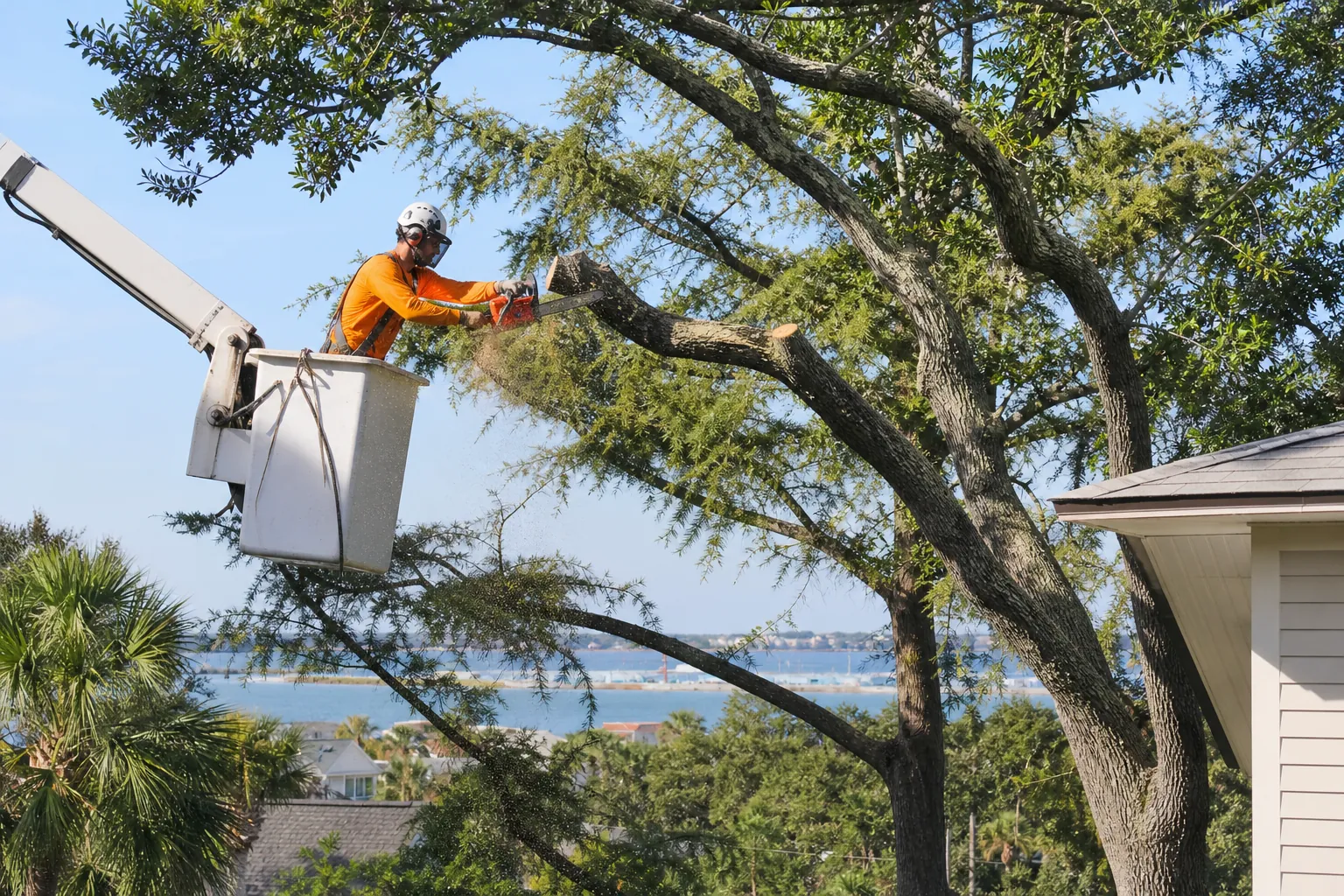
Tree trimming hurricane season plans should start with a close look at each tree. In Pensacola, focus on weak limbs, old wounds, and branches near your home. Careful pruning can address some defects. It cannot make a tree storm-proof or remove every risk from strong winds.
The best plan separates routine tree care from urgent storm tasks. Start with a ground-level check, then seek help for hard-to-read defects. Once a storm approaches, follow official weather guidance rather than rushing into tree work. Ready.gov’s hurricane guide explains how to prepare and follow local instructions.
When should hurricane-season tree trimming begin?
Begin hurricane-season tree trimming well before a storm threatens Pensacola. Early checks leave time to assess weak branches and choose sound cuts. Avoid treating a storm forecast as a pruning deadline. Your first goal is to find defects, then decide which work deserves prompt attention.
Atlantic hurricane season runs from June 1 through November 30. Storm planning should begin before that window, with checks throughout the season. The National Weather Service hurricane planning guide explains the season and why early preparation matters.
A useful first step is a slow walk around your yard. Look from several spots without standing beneath suspect limbs. Compare trees near the house with trees farther from daily activity. A defect above a patio deserves closer attention than an isolated twig.
Write down what you see instead of deciding how to cut. A brief note might read, “Split where two large stems meet.” Another might say, “Dead branch above the back porch.” These details help guide a tree inspection without guessing at the cause.
- Check trees near bedrooms, porches, driveways, and the paths your household uses each day.
- Note dead limbs, fresh cracks, loose bark, and branches caught within the crown.
- Take ground-level photos that show the whole tree and the area beneath it.
- Review past storm damage and mark changes that seem new or more pronounced.
- Arrange a tree inspection before deciding that heavy pruning is the right response.
Keep this record simple enough to update after wind or rain. Photos from the same spot can reveal changes over time. They do not show hidden decay or prove that roots are sound. Use them to support a closer assessment, rather than replace one.
Ahead of a storm, your household plan takes priority over yard work. Keep track of official alerts and local instructions. Ready.gov recommends preparing supplies and planning how your household will stay in touch. Follow its hurricane readiness steps alongside your tree-care plan.
Which tree defects deserve closer attention before a hurricane?
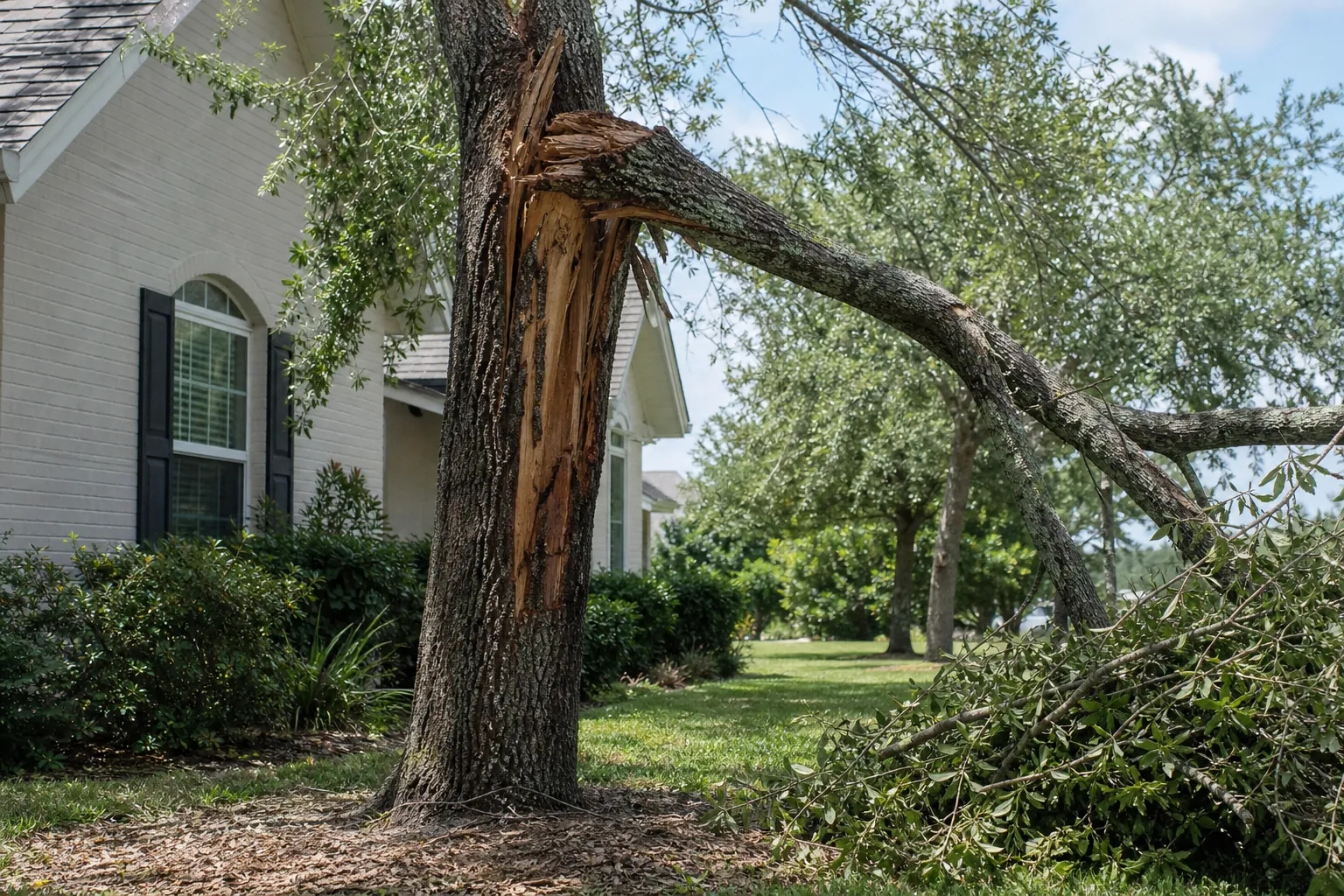
Look for dead branches, cracked limbs, split unions, and recent changes in lean. Soil lifting near the trunk also calls for attention. These signs need assessment, especially near places people use. A healthy-looking canopy does not tell the full story about the trunk or roots.
Some defects are easy to see from the ground. Others hide beneath bark, inside wood, or below soil. A tree inspection should look beyond leaf color and branch length. Arborist reports can document visible conditions and explain the recommended next steps.
Start with the tree’s surroundings. Has digging occurred near its roots? Has a large limb broken in an earlier storm? Does water now collect where the ground once drained? Share these facts during the inspection, without assuming they prove a specific problem.
Next, consider what sits beneath the tree. A branch over a seldom-used corner has a different setting from one over your entry. That distinction helps set priorities. It does not turn a visible defect into a precise forecast of failure.
Large stems that meet in a narrow fork deserve careful review. A crack at that joint may be hard to judge. Cavities, fungal growth, and missing bark can also warrant a closer look. None should be dismissed solely because the tree still has green leaves.
Storm damage can change conditions quickly. After a hurricane, keep clear of hanging limbs and trees with visible damage. The National Weather Service’s after-hurricane guidance warns about damaged trees and other hazards during recovery.
A useful report should make the next step clear. It may recommend tree trimming, further checks, or tree removal. Ask which observed defect supports that recommendation. Also ask what remains uncertain and what changes should prompt another assessment.
Do not ask for a simple “safe” label as the whole answer. Trees are living structures, and storm forces vary. A clear explanation of the tree’s condition is more useful. It helps you plan care while keeping the limits of that assessment in view.
How much should you trim before hurricane season?
Trim to address specific defects, rather than remove as much foliage as possible. Sound pruning keeps useful branches and avoids needless wounds. Canopy thinning or crown reduction may suit some trees. The choice depends on the tree’s structure, condition, growth, and nearby buildings.
Removing dead or broken branches is different from reshaping an entire crown. Each cut should serve a clear purpose. Ask which branch needs work and why. A broad request to “cut everything back” gives little guidance and may lead to excess pruning.
Canopy thinning removes selected branches within the crown. Crown reduction shortens selected limbs using suitable remaining branches. These services are not interchangeable. Neither should be presented as a way to make every tree withstand hurricane winds.
Heavy cuts can leave large wounds and remove too much foliage. Topping also changes the tree’s form without resolving every structural concern. Avoid choosing a cut based only on a desired height. Ask how the proposed work fits the tree’s existing structure.
- Ask which branches will be removed and what defect each cut will address.
- Discuss canopy thinning only when selected branch removal serves a clear tree-care goal.
- Consider crown reduction when shortening suitable limbs supports the tree’s structure and setting.
- Keep useful foliage instead of stripping inner branches to create a bare crown.
- Request a clear explanation when tree removal is recommended instead of further trimming.
A tree near your roof needs more than a distance check. Review branch attachment, trunk condition, and room for future growth. Removing one overhanging limb may address a specific concern. It does not resolve decay elsewhere in the same tree.
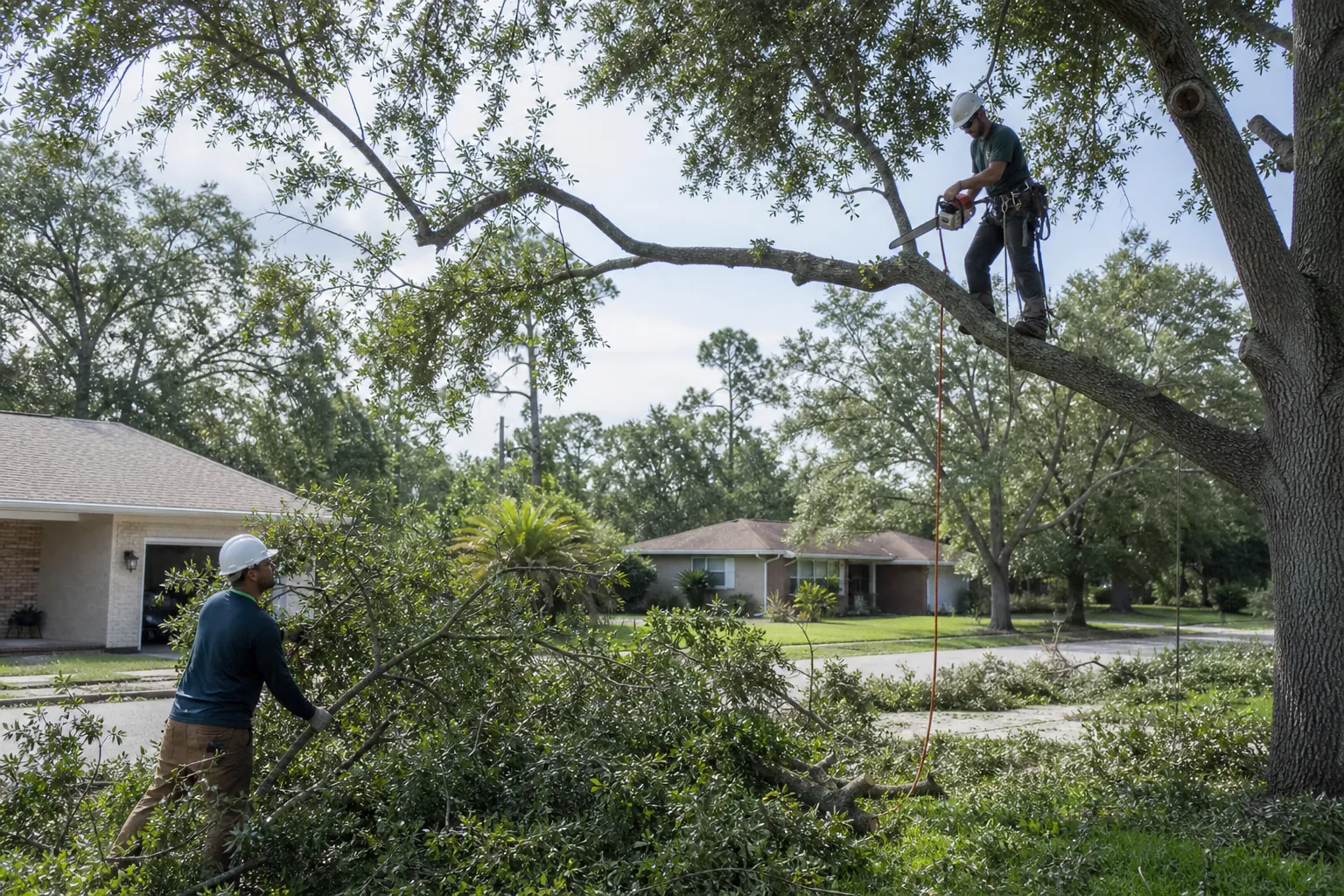
Tree removal may be considered when defects cannot be addressed through pruning. Crane tree removal may be assessed for difficult access or large sections. The equipment choice follows the tree and site conditions. It should not be decided from a single photo alone.
Leave elevated cutting and complex removal to trained tree workers. OSHA identifies falls, falling objects, and power lines as tree-care hazards. Its tree-care safety guidance explains why this work needs suitable training and safe work methods.
How should you prepare your yard before a storm?
Prepare the yard by reviewing trees, access routes, and loose outdoor items. Finish planned tree work before storm conditions arrive. Keep household storm tasks separate from pruning decisions. When officials issue urgent instructions, follow them rather than trying to complete last-minute cutting.
Map the main routes through your property. Note the front walk, driveway, side gate, and rear access. This helps explain where tree work or cleanup may need space. It also gives your household a shared picture of the yard’s layout.
Discuss how completed trimming will leave the site. Branches should not remain scattered across the paths you use. Confirm which material will be removed and which areas will be cleared. This keeps the tree-care task focused and easy to review.
Land and lot clearing or brush hogging may address dense growth. Those services should have a defined purpose within your storm-care plan. They do not replace inspection of mature trees. Clearing low vegetation does not reveal every defect in trunks or roots.
Keep outdoor preparation practical. Ready.gov advises securing loose items that strong winds could move. Use its hurricane preparation checklist for household steps. Tree care belongs alongside those steps, not in place of them.
- Record tree concerns early so inspection and pruning decisions are not rushed.
- Identify gates and paths that need to remain clear after planned tree work.
- Confirm where cut branches will be placed before they are removed.
- Secure loose outdoor items using the steps in official hurricane preparation guidance.
- Keep your household storm plan available when weather alerts change your priorities.
For shared spaces, coordinate observations before work begins. HOA and condo tree services can assess trees around common paths. Commercial tree services can review trees near building entries and work areas. The same basic goal applies: define tree concerns and the needed work.
Do not let a tidy yard create false confidence. Hidden tree defects can remain after trimming and brush removal. Keep watching official forecasts as conditions change. The National Weather Service planning page provides guidance for preparing before a hurricane threatens.
What should you do about damaged trees after a hurricane?
Start with distance and observation, not cutting. Look for hanging branches, shifted trees, and damaged lines from a clear location. Follow official instructions about travel and returning home. Storm cleanup should begin only when conditions allow safe access and the work area has been assessed.
Downed lines may be hidden among branches or debris. Never assume a wire is harmless because it looks inactive. Keep away and report it to the utility or emergency services. The National Weather Service’s recovery guidance warns people to avoid fallen power lines.
Look beyond the branches already on the ground. Broken limbs can remain lodged in the crown. A leaning trunk may have shifted at its base. Keep clear of damaged trees while arranging assessment, as advised in the same NWS recovery guidance.
A photograph can help describe damage without moving closer. Use a distant view that shows the tree and nearby structures. Do not walk under a broken limb for a better angle. Clear descriptions are more useful than close images taken from a hazardous spot.
Storm-bent wood may move suddenly during cutting. Large limbs can hold forces that are hard to judge. OSHA’s tree-care guidance describes cutting hazards and protective work practices. Homeowners should leave complex storm-damaged tree work to trained workers.
Emergency and hurricane tree removal begins with the tree’s condition and setting. A partly uprooted tree needs a different approach from loose branches. Crane tree removal may be assessed where access or controlled lifting presents challenges. Avoid choosing a method before the site is reviewed.
Some damaged trees may need selective trimming instead of full removal. Others require a closer look before any decision. Ask what damage is visible and what remains unclear. A storm cleanup plan should explain those differences rather than treat all affected trees alike.
Cleanup is not the final tree check. Once debris is removed, review remaining trunks and crowns from the ground. New cracks or changes in lean deserve attention. Keep notes so a later inspection can compare the tree’s condition with earlier observations.
What should a hurricane tree cleanup plan include?
A useful cleanup plan names each affected tree, the work proposed, and the areas involved. It separates branch removal from whole-tree removal and stump grinding. It should also explain what remains afterward. Clear scope helps you understand the work without assuming every yard task is included.
Begin with a simple list of affected areas. Describe the front oak, the rear fence line, or the driveway edge. Use photos taken from safe locations. These labels make discussions easier when several trees have similar damage.
Tree trimming addresses selected branches on trees that remain. Tree removal addresses the whole tree identified for removal. Stump grinding is a separate task that reduces the remaining stump. Ask how each service fits the proposed cleanup sequence.
Brush hogging and land and lot clearing serve different purposes from tree removal. They may be relevant where storm debris overlaps dense growth. Define those areas clearly before work begins. Avoid treating a broad phrase like “clean everything” as a detailed plan.
- Identify each tree or yard area that needs assessment or storm cleanup.
- Separate selective tree trimming from complete tree removal in the work description.
- State which branches, logs, and loose debris will be removed from the site.
- Discuss stump grinding separately when a removed tree leaves a stump behind.
- Record which remaining trees need another inspection after the main cleanup ends.
Also ask how access will be handled. Gates, narrow side yards, and nearby structures can affect the work approach. Share those details before an estimate is prepared. An on-site assessment may be needed to understand conditions fully.
Florida Foliage’s headquarters remains in Daytona Beach. This Pensacola guide does not state local crew presence or availability. Call (386) 481-7913 to discuss your tree-care needs and request an estimate. Confirm service-area fit and scheduling before making plans.
Frequently asked questions about hurricane tree care
Will trimming stop a tree from falling during a hurricane?
No. Trimming can address selected branch defects, but it cannot prevent every failure. Roots, trunk condition, soil, and storm forces all matter. Ask for a clear explanation of observed defects and proposed work. Keep following official hurricane instructions even after planned tree care is complete.
Should I cut trees as soon as a storm is forecast?
A forecast should prompt a review of your household storm plan. It should not trigger rushed climbing or cutting. Early tree inspections leave more time for sound decisions. Follow Ready.gov’s hurricane guidance and local instructions when a storm approaches your area.
Can a green tree still need a storm-readiness inspection?
Yes. Green leaves do not reveal every defect in a tree. Cracked unions, trunk wounds, and root concerns need separate attention. Note visible changes from the ground and share the tree’s history. An inspection can help decide if trimming, monitoring, or removal deserves consideration.
Can I cut a branch touching a power line?
Do not approach or cut a branch touching a power line. Keep clear and contact the utility about the situation. OSHA identifies electrical contact as a serious tree-work hazard. Its tree-care safety guidance explains why work near lines needs special precautions.
Does hurricane tree removal include stump grinding?
Do not assume stump grinding is part of tree removal. Ask for each task to be described in the cleanup scope. Branch removal, trunk removal, and stump grinding address different parts of the site. Also discuss which remaining trees need follow-up inspection after storm debris is cleared.
For a neutral estimate discussion, call Florida Foliage at (386) 481-7913. Share your Pensacola location, visible tree concerns, and storm-cleanup needs. Confirm service-area fit and current scheduling directly.
Call (386) 481-7913 to talk through next steps.