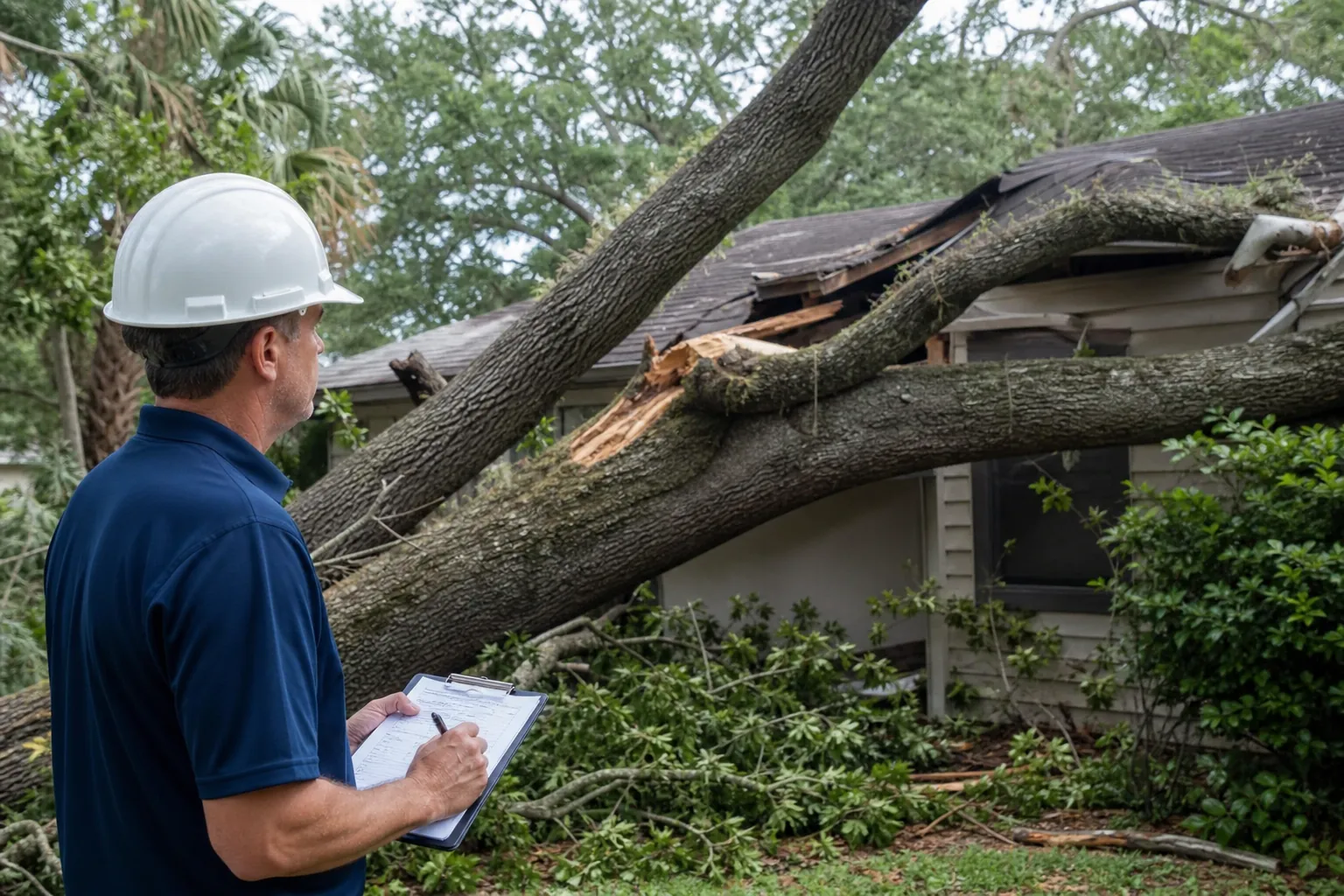
After a tree falls, the first priorities are personal safety and preventing additional damage. Once immediate hazards are addressed, careful documentation can help property owners explain what happened to an insurance company, property manager, HOA, or contractor. An arborist report provides a professional record of observable tree and site conditions at the time of inspection. It does not determine insurance coverage, but it may give an insurer useful information when reviewing a claim. In Daytona Beach, where storms, wind, saturated soil, and existing tree defects may all be relevant, arranging a timely inspection can preserve details that might otherwise disappear during cleanup.
What an Arborist Can Observe After a Tree Falls
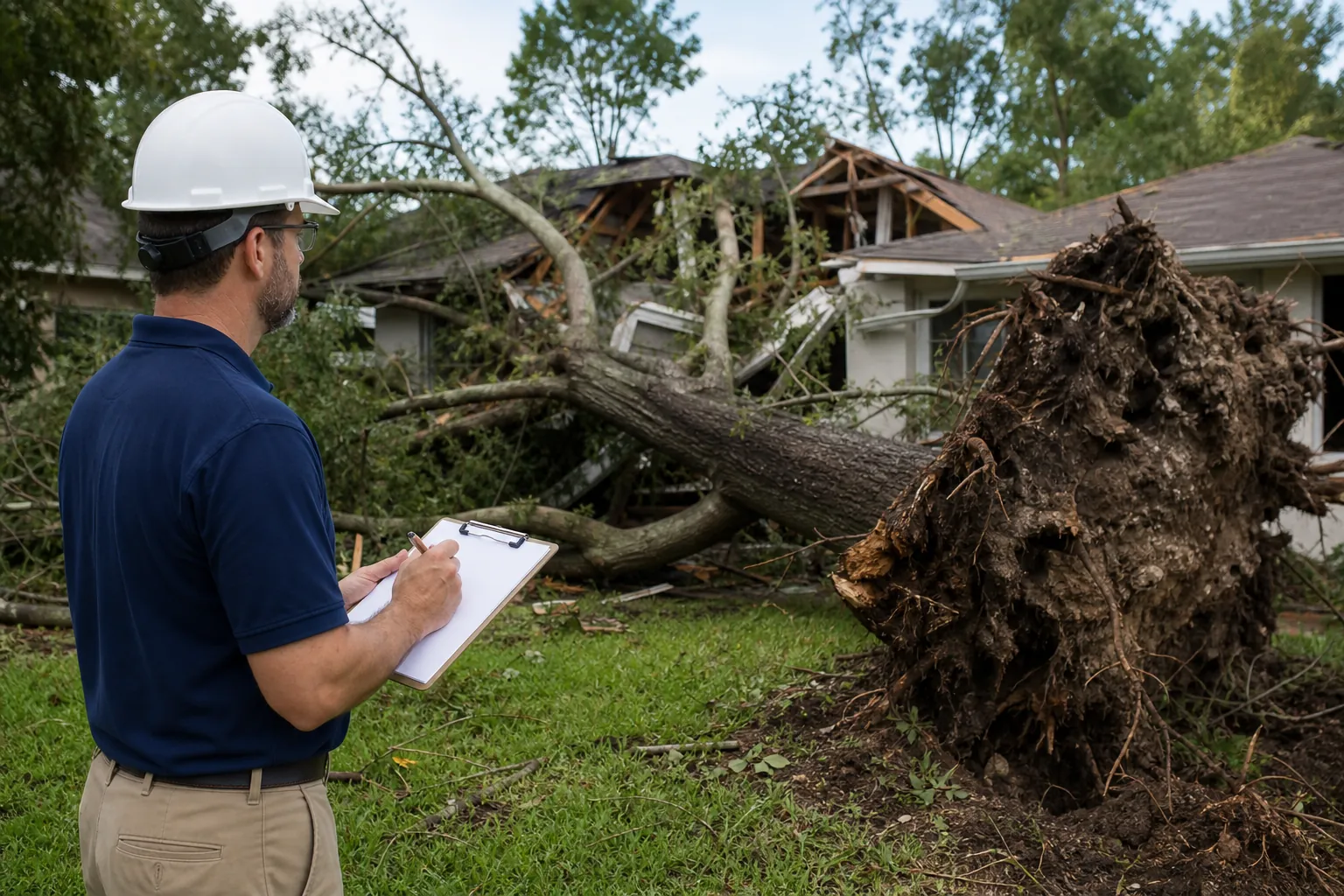
An arborist report can document the physical evidence available after a tree failure. That evidence may include the tree species, approximate size, remaining trunk or stump, root plate, broken limbs, decay, cavities, cracks, included bark, damaged roots, and the direction of the fall. The report may also describe the tree's location in relation to buildings, driveways, fences, utility areas, neighboring property, or other site features.
The usefulness of each observation depends on what remains accessible. A tree that has already been cut into sections, moved, or ground may offer less evidence than one inspected before cleanup. Photos taken immediately after the event can help preserve the original scene when emergency work cannot wait. An arborist may also note limitations, such as hidden roots, disturbed soil, inaccessible debris, or prior removal of tree parts. Clear limits matter because a report should distinguish direct observations from information supplied by the property owner or other witnesses.
How the Report May Support an Insurance Review
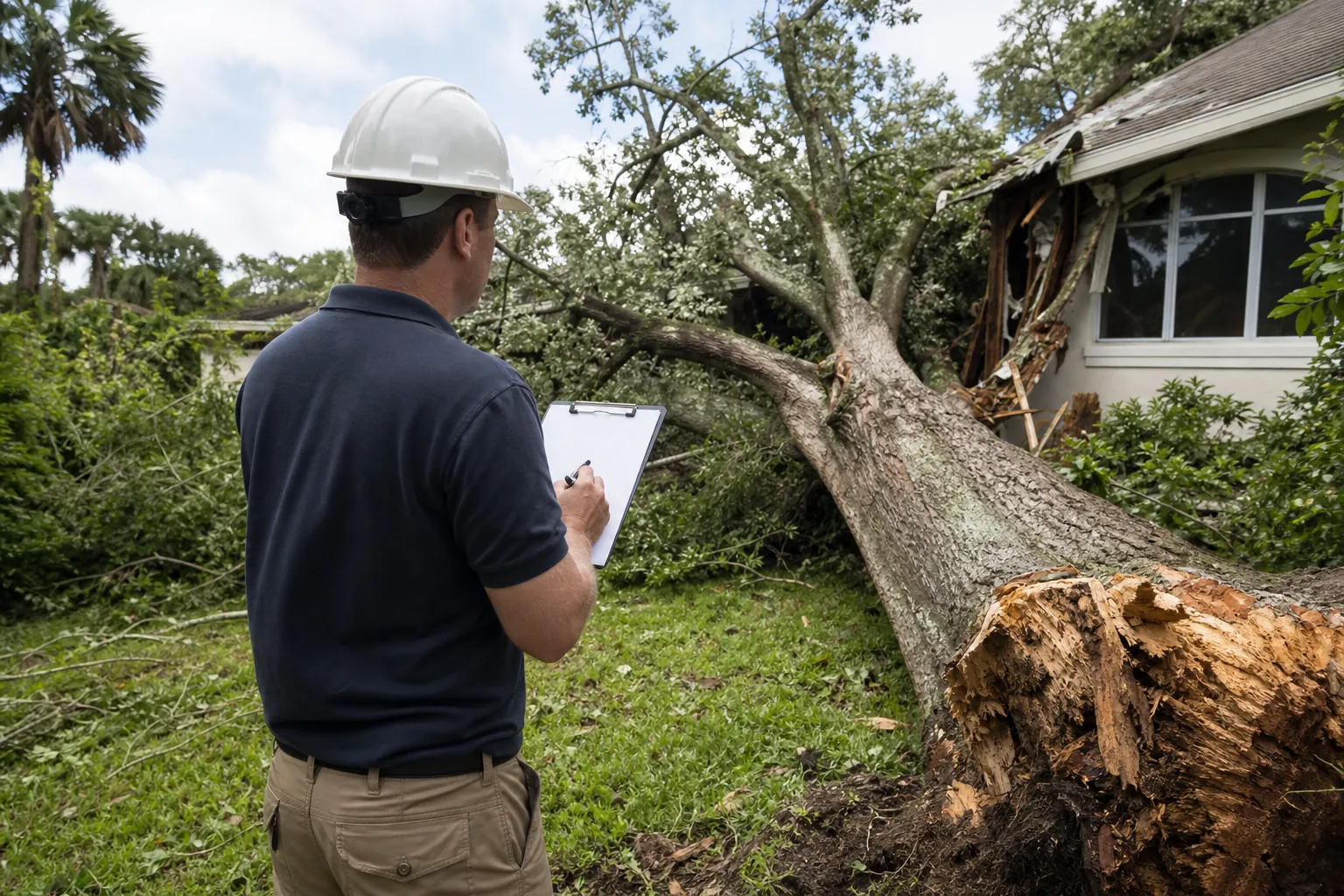
An insurance adjuster generally needs a clear account of the event, the damaged property, and the steps taken afterward. An arborist report may support that process by organizing tree-related observations in a written format. Depending on available evidence, it may describe visible defects, recent breakage, uprooting, soil conditions, nearby site changes, or indications that the tree had been altered before it fell.
The report should not be treated as a promise that a claim will be approved. Policy terms, exclusions, deductibles, ownership questions, and the insurer's investigation all affect coverage decisions. Property owners should ask their insurance company what documents it requires and whether the tree or debris must remain available for inspection. If emergency and hurricane tree removal is necessary to make the area safer, photograph the scene first when it is safe to do so. Keep invoices, written communications, claim numbers, and records of temporary protective measures together. A complete timeline can make later conversations more efficient.
Steps to Take Before Tree Debris Is Removed
Do not approach a fallen tree if it is touching utility lines, resting under tension, leaning against a structure, or shifting in unstable soil. Contact the appropriate utility or emergency service when those hazards are present. From a safe location, preserve broad views and close details before removal begins.
- Photograph the entire tree, the point of failure, the root area, and every damaged structure or surface.
- Capture multiple angles, including the tree's position relative to property boundaries and nearby features.
- Record the date, approximate time, recent weather, and when the damage was discovered.
- Save older photographs that show the tree before it fell, including visible canopy or trunk conditions.
- Ask the insurer whether an adjuster or arborist inspection is needed before debris is moved.
- Retain relevant trimming, inspection, correspondence, and cleanup records.
If immediate removal is required, ask whether key sections can be photographed and identified before disposal. Crane tree removal or other specialized work may be appropriate when heavy material is suspended over a building or difficult-to-access area, but the appropriate method depends on site conditions.
Questions About Ownership, Permits, and Neighboring Trees
A fallen tree can create questions about who owned it, where it stood, and which property sustained damage. An arborist can document the tree's apparent location and surrounding conditions, but boundary disputes may require a survey or other qualified guidance. Insurance companies and property owners may also evaluate notice, maintenance history, and policy language. An arborist report records tree evidence rather than deciding legal responsibility.
Cleanup or removal requirements may vary by city, county, property type, and site conditions. Before removing a standing remnant or another protected tree, confirm current requirements directly with the applicable city or county. Readers comparing documentation and removal steps can review this overview of protected tree removal permit requirements in DeLand, while recognizing that Daytona Beach requirements may differ.
HOA and condo properties may also have internal approval or notification procedures. A commercial property may require coordination among ownership, management, tenants, and insurers. Confirm those responsibilities before authorizing nonemergency work, while taking prompt action around immediate hazards.
How to Request a Useful Arborist Report
When scheduling an inspection, explain when the tree fell, whether anyone has moved or cut it, what property was affected, and whether an insurance claim has been opened. Mention urgent conditions such as a trunk resting on a roof, hanging limbs, blocked access, or an unstable remaining stem. This information helps clarify the inspection context without replacing an on-site assessment.
Provide available photographs, prior tree records, relevant messages, and the insurer's documentation request. Ask what the report will cover and when additional specialists may be needed. For example, an arborist can assess observable tree conditions, while structural damage, utility hazards, property boundaries, or insurance coverage may require other professionals.
Florida Foliage provides arborist reports and tree inspections, along with tree removal, tree trimming, stump grinding, emergency and hurricane tree removal, crane tree removal, canopy thinning, crown reduction, and related tree services. Keeping the inspection, photographs, cleanup records, and insurance correspondence organized can help everyone work from the same factual timeline.
Discuss the Fallen Tree and Next Steps
If a tree has fallen in the Daytona Beach area, calmly secure the area and preserve photographs before cleanup when it is safe. Call Florida Foliage at (386) 481-7913 to discuss an arborist report, tree inspection, or necessary removal work.
Call (386) 481-7913 to talk through next steps.