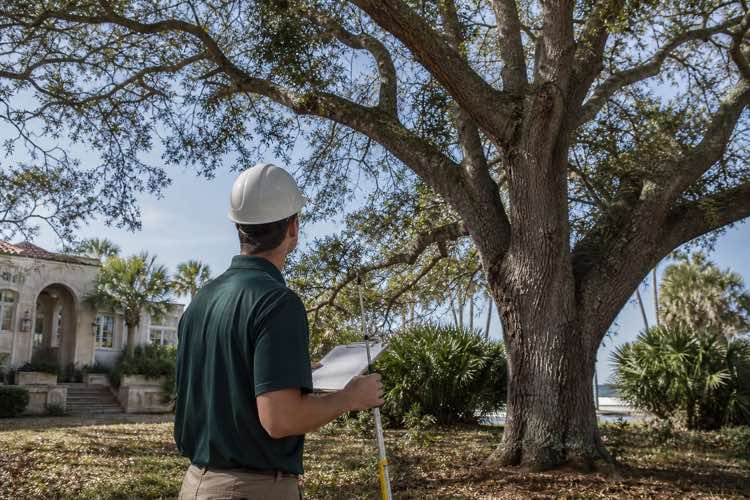
When people compare arborist tree trimming in Daytona Beach, the real decision is often not how much to cut. It is whether an inspection changes the scope from routine clearance to condition-led judgment. That matters on coastal lots where sandier soils, wind exposure, storm history, utilities, and tight targets can change the right plan.
Scope Snapshot: Start with tree condition, then check nearby targets, species response, structural defects, and timing. Routine clearance may stay simple. An arborist inspection can also narrow the cut list, defer the job, or replace pruning with another recommendation.
Florida Foliage serves Volusia and Flagler counties, with Daytona Beach as the primary market. If you are comparing a quote, an arborist tree inspection, or a tree trimming service, the best scope is the one that matches the tree and the site. Florida Foliage has ISA Certified Arborists on staff and is licensed and insured. Free estimates are available, and you can reach the office at (386) 481-7913.
Should You Use an Arborist to Trim Trees?
You should use arborist tree trimming when the tree’s condition, location, or structure could change what should be cut. Routine clearance is one thing. Trees near roofs, pools, driveways, sidewalks, utilities, or storm-prone exposure often need judgment beyond a basic trim list. That is where arborist tree trimming helps set safer limits.
For a healthy ornamental in open space, a standard trim may be enough. For a mature pine near a home, a leaning oak, or a tree with dead wood and decay, the scope may shift. An arborist can separate simple shaping from work that should be reduced, deferred, or referred for another recommendation.
The right decision also depends on access and site risk in Daytona Beach. Narrow side yards, soft sandy soils, salt stress, and overhead lines can change how crews approach the job. Florida Foliage can review those conditions during an arborist tree inspection before finalizing the plan. If you want to discuss the site, call (386) 481-7913.
What Is the Difference Between an Arborist and a Tree Trimmer?
An arborist makes condition-based decisions, while a tree trimmer may focus on removing selected branches for clearance or appearance. In arborist tree trimming, the decision starts with tree health, structure, species response, and targets. That matters when the scope needs judgment rather than a standard cut list.
A tree trimmer may be the right fit for straightforward pruning around a driveway, fence, or roof line. An arborist is more useful when the tree has defects, recent decline, storm injury, included bark, or a form that may respond poorly to heavy cutting. That distinction keeps the scope from becoming guesswork.
For certain structural issues, the University of Florida notes that pruning cannot fix every defect, and some problems need a different approach entirely; see the UF resource on structural issues. Florida Foliage can explain where arborist tree trimming fits and where it does not. If you need a local market review, start at Daytona Beach or call (386) 481-7913.
| Decision factor | Routine trim | Arborist-led scope change |
|---|---|---|
| Tree condition | Healthy, stable | Decline, decay, dieback, storm injury |
| Targets | Simple clearance | Home, people, vehicles, utilities |
| Species response | Predictable | Risk of stress or poor regrowth |
| Structure | No major defects | Leans, codominant stems, cracks |
| Outcome | Standard pruning | Reduce, defer, or change recommendation |
What Changes the Cost of Arborist Tree Trimming?
Cost changes in arborist tree trimming when the scope changes, more than when the tree is taller. Condition, access, target risk, and cut limits all affect the amount of labor and judgment involved. A tree with structural defects or limited access may require a different crew plan than a simple clearance job.
In coastal Florida, sandy soil and tight lot lines can make equipment placement harder. Trees near pools, screen enclosures, fences, and service meters often need more care around the work area. If the arborist recommends a reduced cut or a different treatment, the scope may shift away from standard trimming and into a more protective plan.
Species matters too. Some trees tolerate thinning or reduction better than others, while some react poorly to heavy cuts. For pine-specific decision help in Daytona Beach, see the pine tree pruning quote page. Florida Foliage can discuss the site, the tree, and the likely scope before work begins. For a quote, call (386) 481-7913.
Is It Better to Trim a Tree or Prune a Tree?
It is better to use arborist tree trimming when the goal is general clearance or size management, and to prune when the goal is health, structure, or targeted branch removal. The words overlap in everyday use, but the scope should match the purpose. That is what changes after an inspection.
Pruning is more specific. It may mean removing deadwood, correcting branch placement, or reducing a defect-related load on a limb. Trimming is often broader and may focus on keeping a tree away from buildings or walk paths. In practice, arborist tree trimming can include pruning objectives, but the cut plan should stay tied to the tree’s condition.
The TreesAreGood resource explains that an arborist is trained to evaluate tree biology, risk, and proper care choices. That matters when a quote needs to spell out exactly what is being addressed. Florida Foliage can provide a certified arborist service review before the crew starts. You can also ask questions at (386) 481-7913.
Which Months May Be Poor Choices for Tree Trimming?
Some months may be poor choices for arborist tree trimming when the tree is under extra stress, actively flowering, or recovering from weather damage. Timing depends on species, site exposure, and the purpose of the cut. In Daytona Beach, storm season and heat can change how much stress a tree can handle.
A calendar alone does not decide the scope. If a tree has dead wood over a roof, or a branch is failing near a target, the risk may outweigh timing concerns. On the other hand, a discretionary trim may wait for a better season if the arborist wants to limit stress or avoid unnecessary cut volume. That is a judgment call, not a blanket rule.
Species response matters here as well. Some trees shed more sap, some bloom on old wood, and some respond poorly to cuts made at the wrong time. Florida Foliage can review timing during an arborist tree inspection and explain whether the scope should move now, wait, or change. For scheduling questions, call (386) 481-7913.
Is There a Wrong Time to Prune Trees?
Yes. There is a wrong time for arborist tree trimming when the work would add stress or clash with the tree’s biology. Heavy cuts should also stay away from topping, which the University of Florida warns can create weak regrowth and structure problems; see the UF page on not topping trees.
That warning matters because poor timing can turn a small scope into a larger problem. A tree already weakened by root disturbance, drought stress, storm injury, or disease may need less pruning, not more. In those cases, an arborist may recommend deferring the job, limiting cuts, or shifting to monitoring and other care.
Timing also depends on the property. Trees near foundations, utility corridors, and public sidewalks in Daytona Beach may carry more target pressure than trees in open areas. Florida Foliage can assess whether arborist tree trimming should proceed now or wait for a better window. For a local review, call (386) 481-7913.
What Happens If You Do Not Trim a Tree?
If you do not trim a tree, the result may be harmless for a while, or it may become a bigger issue if branches grow into targets, defects worsen, or dead wood accumulates. Arborist tree trimming is often about reducing foreseeable conflicts, not making every tree smaller. The right choice depends on condition and location.
Some trees can go longer between cuts than others. But when branches rub roofs, block sight lines, hang over parking areas, or show dead tips and decline, inaction can create avoidable exposure. A branch failure near a home, vehicle, or walkway may also push the scope from optional trimming to urgent corrective work. That does not guarantee a problem will occur, but it can raise the chance of one.
In some cases, the better answer is not more cutting. A tree may need removal planning, root-zone protection, or another recommendation instead of more arborist tree trimming. Florida Foliage can review those options, including the limits of the work, during a arborist tree inspection. If you are comparing options in Volusia or Flagler counties, call (386) 481-7913.
Use this simple checklist when comparing a scope or quote:
- Identify the tree’s condition before any cut list.
- List targets near the canopy and drop zone.
- Ask which branches are included and excluded.
- Confirm timing against species and stress factors.
- Ask what would defer or change the recommendation.
That checklist helps separate routine clearance from condition-led arborist tree trimming. It also keeps the discussion focused on the tree, not on a generic service label. When a contractor cannot explain the decision gate, the quote may be too broad or too thin for the site.
For a comparison point, ask whether the scope is based on clearance only, or on defects, decline, and target risk. If the answer changes after inspection, that is a sign the tree needed more than a standard trim estimate. Florida Foliage can review the tree, the site, and the likely cut limits before work begins. For a local quote, call (386) 481-7913.
Arborist tree trimming should also respect what pruning cannot fix. A cracked stem, severe lean, major root disturbance, or advanced decay may call for a different recommendation rather than more cutting. That is why a property-specific inspection matters more than a general promise. It gives the owner a clearer scope and a more honest decision.
Florida Foliage serves Daytona Beach and nearby communities with licensed and insured service, ISA Certified Arborists on staff, and free estimates for tree care questions. If your quote needs a scope review, ask for arborist tree trimming through the lens of condition, targets, and timing. Start with request a free estimate and call (386) 481-7913.
Final recommendations vary depending on tree condition, access, nearby targets, and findings from a ground-based inspection.
Can an arborist guarantee a tree is safe?
No arborist can guarantee a tree is safe from a brief look or even after an inspection. Arborist tree trimming and inspection can reduce risk and improve decision-making, but trees are living systems and conditions change. A sound recommendation still depends on site factors, weather, defects, and future growth.
Does every inspection lead to trimming?
No. An arborist tree inspection may lead to trimming, but it may also lead to deferral, monitoring, reduction of the scope, or another recommendation. Some trees do not need work right away. Others need different care because the condition, timing, or structural defects make trimming the wrong choice.
Should the scope identify branches and objectives?
Yes. A good arborist tree trimming scope should identify the branches to be addressed and the objective for the work, such as clearance, deadwood removal, or reduction of a target conflict. Clear scope language helps the owner compare quotes and reduces confusion about what the crew is expected to do.
Can timing change after an arborist inspection?
Yes. Timing can change after an arborist inspection if the tree is stressed, the species is sensitive, or the site risk makes another season better. The inspection may also show that pruning should wait, or that only limited work should happen now. That decision should be tied to the tree’s condition.
Does Florida Foliage have ISA Certified Arborists on staff?
Yes. Florida Foliage has ISA Certified Arborists on staff and serves Volusia and Flagler counties, with Daytona Beach as the primary market. The company is licensed and insured, and free estimates are available. If you want a scope review tied to arborist tree trimming, call (386) 481-7913.
If you want arborist tree trimming that matches the tree’s condition and the site’s targets, request a free estimate from Florida Foliage at request a free estimate or call (386) 481-7913.