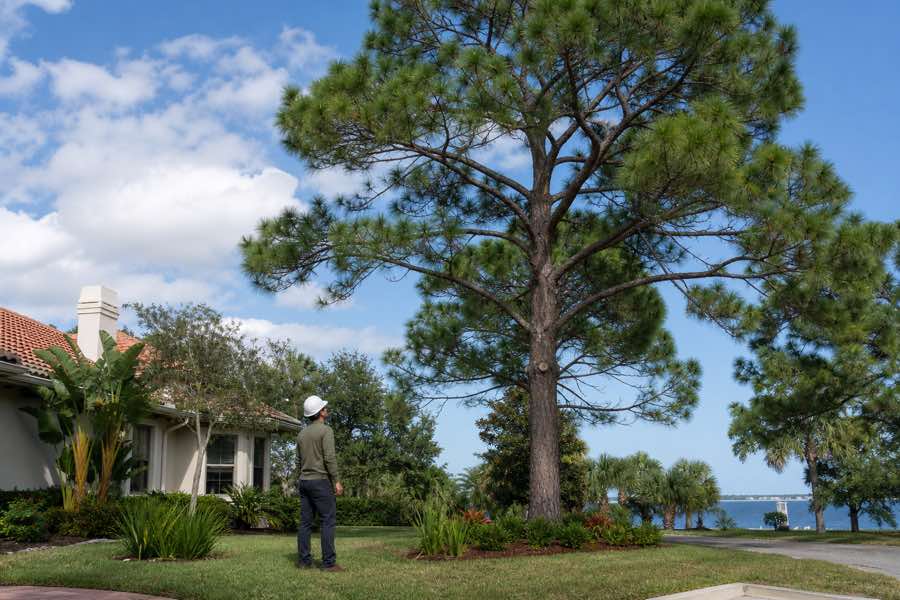
When you compare pine tree pruning quotes in Daytona Beach, the real question is what the scope covers and what it leaves out. A written proposal should separate deadwood, clearance, lower-limb decisions, structural concerns, topping, timing, and follow-up inspection. Florida Foliage serves Volusia and Flagler counties, with Daytona Beach as the primary market, and ISA Certified Arborists are on staff.
Scope Snapshot
- Ask what problem the pruning is meant to solve.
- Separate deadwood from live canopy cuts.
- Watch for topping language hidden in broad terms.
- Check how the quote treats lower branches.
- Look for timing notes and follow-up inspection.
A good proposal should read like a work plan, not a guess. It should say what the crew will remove, what stays, and what conditions could change the job. If you want a practical starting point, Florida Foliage can prepare a request a free estimate so the written scope can be matched to the tree on site. For broader care, see the tree pruning service and the related tree trimming service.
In Daytona Beach, site details matter. Coastal wind, sandy soil, tight setbacks, pool cages, sidewalks, and overhead lines can all shape the scope. A good estimate should not treat every low limb or tall crown as a reason for aggressive cutting. It should connect the work to the actual property, and a local Daytona Beach review helps with that.
Before you approve pine tree pruning, compare the scope to the tree’s condition and your goals. A narrow lot may need clearance. A storm-exposed corner may need deadwood removal. A crowded view may still need restraint. Florida Foliage can help sort those differences, and you can call (386) 481-7913 to talk through the proposal.
| Quote item | What it should say | Why that matters |
|---|---|---|
| Deadwood | Remove dead, broken, hanging material | Addresses obvious hazard without broad live cutting |
| Clearance | State the target area or height | Prevents unnecessary over-lifting |
| Lower limbs | List which branches remain and why | Protects balance and useful shade |
| Follow-up | Note any later inspection or check | Helps confirm how the tree responds |
How Far Can Pine Tree Pruning Raise the Canopy?
Pine tree pruning can raise the canopy for clearance, but the quote should define how far up the work stops and why. The first sentence in the proposal should tell you the objective. That keeps the job tied to pedestrian, driveway, roof, or access needs instead of a vague desire to lift it more.
In coastal Florida, a trim-up request can sound simple even when the site is not. A pine near a sidewalk may need a different lift than one near a pool enclosure or driveway. A good scope should name the target clearance, identify the branches selected for removal, and avoid leaving the impression that every lower limb is open for cutting.
That is why a strong estimate should read like an arborist tree trimming scope, not a sales pitch. It should list what stays, what comes out, and whether the crew expects to revisit the tree after the first pass. If the quote says only raise canopy, ask for a more exact description.
Florida Foliage can explain why some lower limbs are functional, more than crowded. That matters when a quote seems to chase a clean look instead of a useful outcome. If the scope feels too broad, call (386) 481-7913 and ask for a tighter written plan.
Is It Okay to Cut the Top Off a Pine Tree?
Pine tree pruning should not be written as topping, and a quote should not suggest cutting the top off unless a qualified arborist is describing a very limited correction. UF/IFAS explains that topping causes weak regrowth and decay concerns here: do not top. That is the basic factual point buyers should remember.
In Daytona Beach, a tall pine may look like too much tree after storm season or fast summer growth. Even so, topping is not a routine answer. A proper proposal should use better terms, such as deadwood removal, selective reduction, or structural review. If the quote leans on a top cut, ask why and what problem it is meant to solve.
That request matters because a quote should distinguish between a visual concern and a tree health concern. One is about appearance and clearance. The other is about how the crown is built. A well-written proposal keeps those ideas separate, and Florida Foliage can review that distinction before any work begins.
For trees with weak form, the issue may be structure rather than height. UF/IFAS notes that structural issues should be addressed early in tree development: structural issues. That is another reason a quote should describe structure, more than size.
If you are comparing pine tree pruning proposals, look for plain language. A good estimate does not promise that topping will keep the tree small and healthy. It explains limits, notes risks, and avoids a cut that could create more maintenance later.
Can You Trim a Pine Tree to Keep It Small?
Pine tree pruning can control size only within biological limits, so a quote should not promise a permanently small pine. Pruning can help with clearance and shape, but it does not turn a pine into a hedge. A useful proposal explains what reduction is realistic and what growth will continue after the cut.
That point matters around Daytona Beach where lots can be tight and trees may sit close to roofs or property lines. A buyer may want less height, more sun, or an easier view. Still, the scope should say what the work will achieve now, not what the tree will never do again. If the wording sounds absolute, ask for a softer and more accurate description.
A thoughtful quote may also mention what is being protected. In many cases, the goal is to preserve enough live crown for the tree to function well while addressing a space issue. That is a different plan from repeated heavy reduction. Florida Foliage can help weigh those choices, and the office can prepare a written estimate tied to the site.
Look for phrasing that separates maintenance from control. Maintenance deals with deadwood, hazards, and clearance. Control suggests a promise that the tree will stay a certain size. Those are not the same. A careful pine tree pruning proposal will be honest about that limit.
For practical comparison, think in terms of what the scope solves today. Does it open a walkway, keep limbs off a structure, or reduce a problem branch? Or does it try to force a long-term size that the species will not respect? That difference should be obvious in the quote.
Do Pine Trees Grow Back After Being Trimmed?
Pine tree pruning does not restore the tree in the same way after every cut, so a quote should not assume full regrowth where foliage was removed. Pines may produce new growth during the right season, but the result depends on cut placement, timing, and how much live canopy remains. That is a major scope issue.
Because of that, a proposal should describe the expected look after the work. If the plan is selective, the tree may still look natural. If the cuts are heavy, gaps can remain visible for a long time. Buyers should ask the contractor to explain what follow-up, if any, may be needed if the response is uneven.
That question is especially useful near the coast. Wind exposure, salt stress, and prior drought can slow recovery. A tree that is already sparse may not refill in the way a healthy one would. A good written scope should acknowledge that uncertainty instead of making an easy promise.
If a quote suggests a later inspection, ask what it is checking. It may be looking for dieback, weak shoots, or storm damage after the work. Florida Foliage can discuss that part of the plan so the proposal reflects the tree’s condition, more than a calendar date.
When comparing pine tree pruning services, remember that regrowth is not a guarantee of a good result. The best proposal explains the tradeoff between immediate clearance and later canopy response. That honest line helps a buyer judge the scope more clearly.
When Should You Avoid Trimming Pine Trees?
Pine tree pruning should be avoided or delayed when the tree is stressed, recently damaged, or clearly in need of inspection first. A quote should flag those limits. If the tree has storm injury, drought stress, construction wounds, or visible decline, cutting more before an assessment may be the wrong call.
Daytona Beach weather can make timing tricky. Salt exposure, saturated sand, and wind can all affect how a pine reacts after work. If the proposal pushes broad cutting during an active stress period, ask why the timing is being chosen. A careful estimate may recommend waiting until the tree can be evaluated on site.
Use this checklist when comparing scope language:
- Ask the goal behind each cut.
- Confirm which branches stay untouched.
- Separate deadwood from live canopy work.
- Check for inspection notes before cutting.
- Ask what cleanup the quote includes.
For some properties, outside rules may also matter. Property-specific permit decisions belong to the governing jurisdiction, not the contractor. Insurance decisions depend on the policy and insurer. Florida Foliage can discuss the tree work itself, but those other calls remain separate from the quote.
If the tree appears stressed, a written scope should show restraint. That is one reason pine tree pruning quotes should be read carefully. The best proposal explains what will not be done as clearly as what will be done.
Should You Cut the Bottom Branches of a Pine Tree?
Pine tree pruning can remove some bottom branches, but the quote should explain which lower limbs are for clearance and which should remain for form and function. Lower branches are not automatically a problem. They may help the tree hold balance, protect the trunk, and keep useful shade or screening.
A broad instruction to remove every low limb is often too simple. A better scope says why each branch is targeted. Maybe it blocks a walkway. Maybe it interferes with a driveway. Maybe it reaches a roof edge. The proposal should name that need instead of treating the whole lower canopy as unwanted.
That is where a Florida tree can differ from a tree farther inland. In coastal wind, some lower foliage can help the crown respond more smoothly. UF/IFAS discusses storm-related tree management here: hurricanes. The factual point is simple: storm planning should be part of the conversation, not an excuse to strip every low branch.
Florida Foliage can review whether the low branches are truly in the way or just visually heavy. That distinction is useful in front yards, near pool enclosures, and along shared drives. If the estimate does not say why the lower limbs are being removed, ask for a clearer written explanation.
That is the kind of decision help buyers need when reviewing pine tree pruning proposals. A lower branch can be a nuisance, but it can also be part of the tree’s working structure. The quote should reflect that.
Can You Trim a Pine Tree Without Killing It?
Pine tree pruning can be done without killing the tree when the cuts are limited, well placed, and matched to the tree’s condition. The quote should show that the crew understands deadwood work, clearance needs, and the amount of live canopy that should remain. That is what separates care from overcutting.
Ask whether the estimate is written as a health-first plan or as a quick visual reduction. If the scope is thin on detail, keep asking. A strong proposal names the objective, the cut limits, the cleanup plan, and any follow-up inspection. Florida Foliage has ISA Certified Arborists on staff to help with that level of review.
It is also fair to ask what the quote does not include. Some trees need more than pruning. Others may need monitoring after a storm or stress event. A good scope admits those limits instead of promising a one-size-fits-all result. That honesty matters more than dramatic language.
If you need a written estimate for pine tree pruning in Daytona Beach, call (386) 481-7913. Florida Foliage serves Volusia and Flagler counties, and a property-specific review can help you judge whether the proposed cuts fit the tree.
Final recommendations vary depending on tree condition, access, nearby targets, and findings from a ground-based inspection.
Should a pine pruning quote identify the objective?
Yes. A good quote should state why the pine tree pruning is being done, such as deadwood removal, clearance, or a structural concern. That keeps the work focused and makes it easier to compare proposals. If the objective is vague, ask for a written revision before approving the job.
Does pine tree pruning include debris hauling?
It can, but the quote should say so clearly. Debris hauling, chip removal, and cleanup are often separate parts of the job. Do not assume they are included. Ask what will stay on site, what will be hauled away, and whether the cleanup area is part of the finished scope.
Can a quote guarantee the tree will remain safe?
No. A quote cannot guarantee future safety because trees change with weather, soil, pests, and site conditions. It can only describe the work proposed and the condition seen at inspection. If a tree has structural concerns, the estimate should say that a follow-up review may still be needed.
Should every lower branch be removed?
No. Lower branches should be removed only when they interfere with a real target like walking space, vehicle clearance, or access to a structure. Some low limbs help the tree keep balance and useful foliage. A careful pine tree pruning quote should identify which lower branches stay and why they stay.
Can Florida Foliage inspect a pine before quoting?
Yes. Florida Foliage can inspect a pine before preparing a proposal so the scope matches the tree and the site. That is often the best way to sort out deadwood, clearance needs, lower-limb choices, and any structural concern. You can call (386) 481-7913 to start the estimate process.
If you want a written pine tree pruning plan that fits your Daytona Beach property, request a free estimate from Florida Foliage or call (386) 481-7913. A clear scope helps you choose the right cut limits before work begins.