Reviewed by Clinton Funk
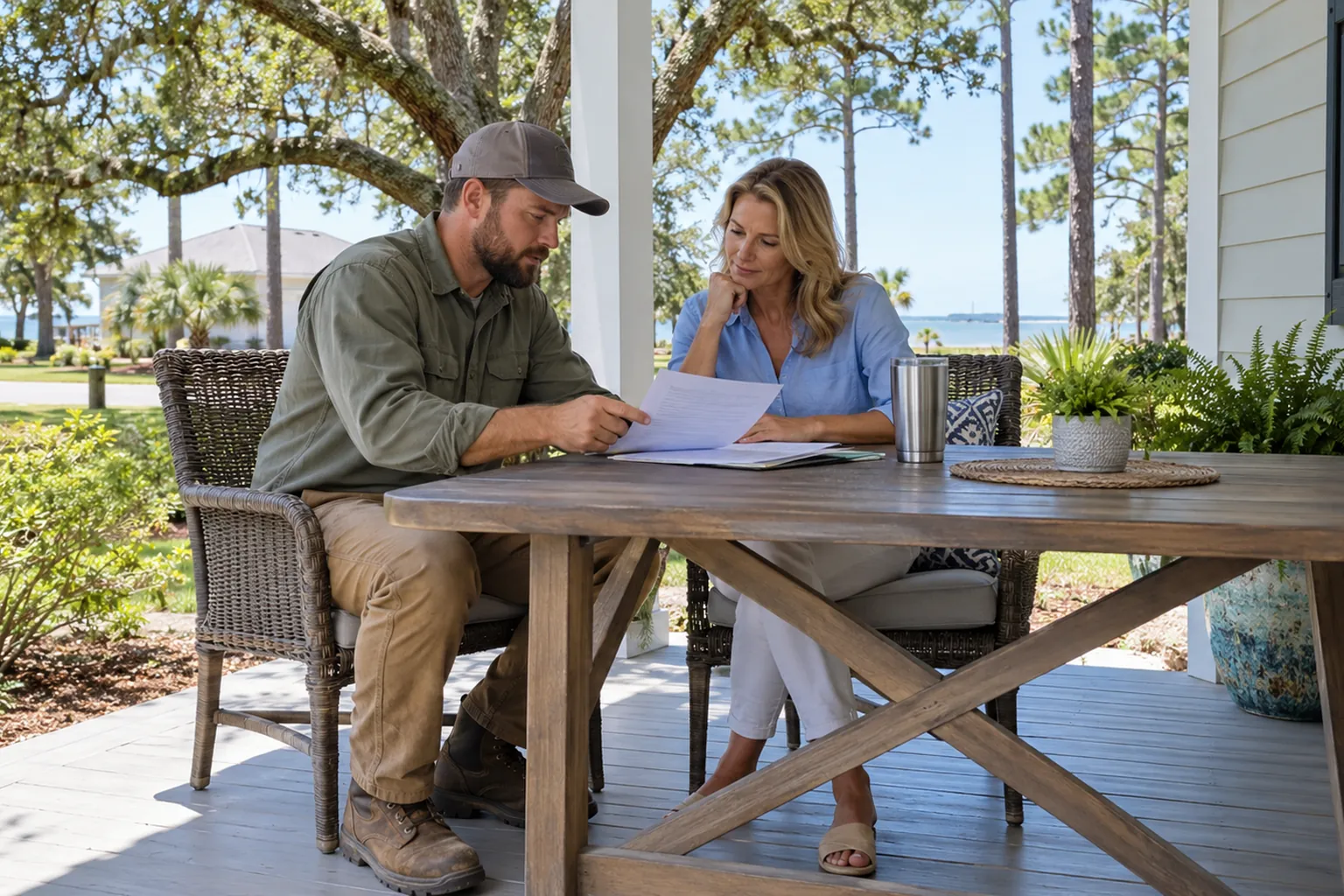
To avoid tree service scams after a storm in Pensacola, start with a written estimate. Check who is offering the work, what the price includes, and when pay is due. If trees need help after the storm, use the checklist below to compare offers and record each answer.
At 7:00 p.m. CDT on October 8, 2026, the National Hurricane Center reported Hurricane Isaias had maximum sustained winds of 100 mph and forecast a northern Gulf Coast approach on Friday. That forecast does not establish damage in Pensacola. NHC Intermediate Advisory Number 9A.
How can you check a business before risking tree service scams?
Start with the name on the estimate and the person offering it. The regional hurricane cleanup guide and Pensacola root recovery guide offer related tree-care background. They do not decide insurance, contract, or permit questions for your property.
The FTC suggests checking contractors before you commit. Ask for identity, proof of insurance, and references. Search the business name with words such as complaint or scam. Read reviews from several sources rather than relying on a single rating. FTC scam tips.
- Business name: Record the name used on the offer and agreement.
- Contact person: Ask who will answer questions during and after work.
- Insurance paperwork: Keep the proof supplied with the estimate.
- References: Ask about the work completed and any unresolved concerns.
- Name differences: Ask why documents use different names, if they do.
For licensing questions, the FTC directs consumers to state or county government. Ask which rules apply to the proposed work. Do not assume that a broad claim of being licensed answers that question. FTC scam tips.
Florida's DBPR portal covers professions and businesses regulated by that department. It does not establish a license rule for every tree service. Use it to examine a claimed DBPR license, within its stated scope. DBPR license search.
What should a written tree-work estimate actually include?
A useful estimate lets both sides name the job and its endpoint. The Pensacola tree risk questions guide and Pensacola root recovery guide offer related tree-care background. They do not decide insurance, contract, or permit questions for your property.
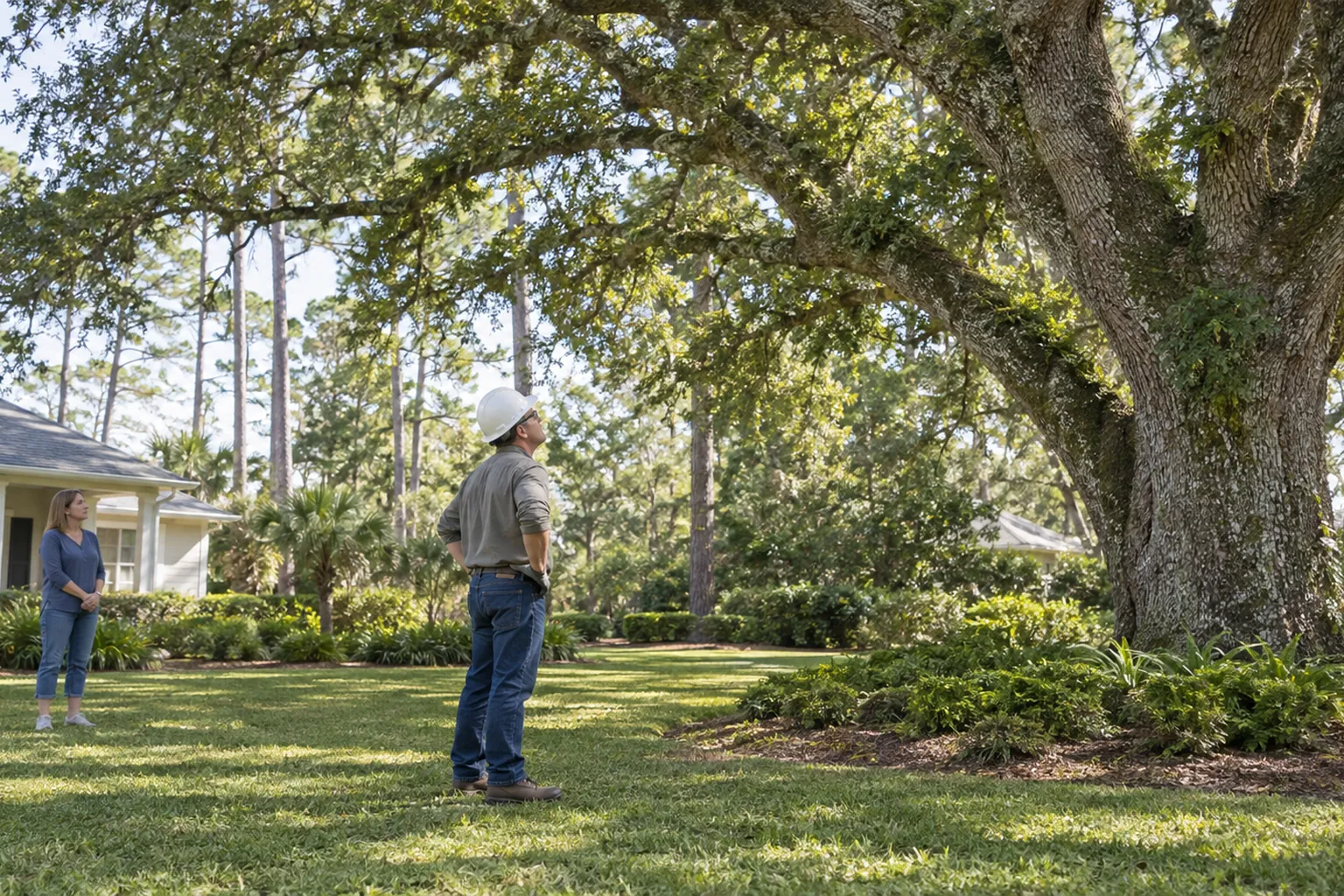
The FTC suggests estimates from more than one contractor. Written estimates should state the work, materials, end date, price, and contact details. Its home-repair guidance suggests three written estimates. Ask about large price differences before choosing. FTC scam tips; FTC scam tips.
Use these questions to turn a broad description into a clear task list:
- Which tree? Name it by location, such as beside the rear gate.
- Which work? Ask whether the offer covers review, limb work, or removal.
- Which debris? Ask whether hauling includes material already on the ground.
- Which stump tasks? Ask whether stump work is included, excluded, or priced separately.
- Which visits? Ask whether cutting and hauling have distinct proposed dates.
- Which exclusions? Ask the business to list what will remain unfinished.
For example, ask whether a removal price includes hauling the resulting wood. If hauling has its own price, place it beside the removal charge on your comparison sheet. Leave unknown items marked as questions. Do not fill gaps with assumptions about what the salesperson meant.
Before work begins, the FTC suggests reviewing and signing a written contract. Its disaster guidance calls for estimated dates, pay terms, spoken promises, and no blank spaces. Keep a full copy. FTC scam tips; FTC scam tips.
- Place the estimates side by side, using the same task list.
- Circle missing answers about trees, debris, dates, and exclusions.
- Ask each business to clarify those points in writing.
- Compare the revised scope before comparing the final totals.
- Save the chosen estimate with the agreement and later changes.
How should an estimate explain removal or future tree care?
Ask what the proposed work is meant to accomplish before discussing extras. The Pensacola tree risk questions guide and Pensacola root recovery guide offer related tree-care background. They do not decide insurance, contract, or permit questions for your property.
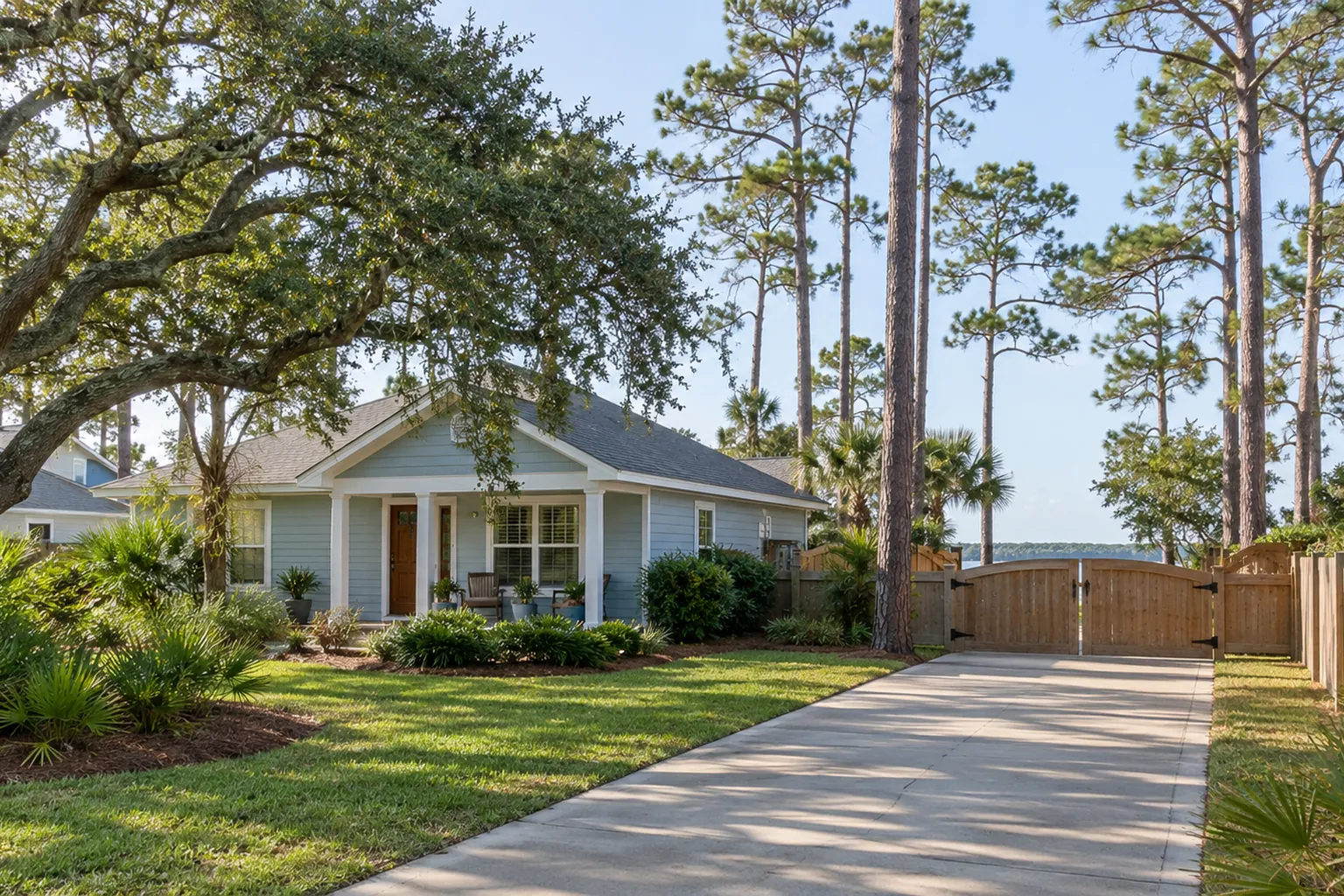
- UF/IFAS explains that some storm-damaged trees can recover, while major trunk damage is often beyond repair. Repair can involve more than one pruning visit. Ask what condition supports the advice and whether later care is part of the quoted price. UF tree guide.
- If a contractor proposes removing several trees, ask for an explanation for each. Write down which tree the answer concerns. If two estimates recommend different work, record that difference before treating their prices as comparable. Ask each person to explain the reason for their proposal in plain words.
Hazards need their own attention. UF/IFAS says fallen limbs near power lines need a qualified line-clearance arborist. It also suggests expert attention first for large hanging limbs or leaning trees that could strike people or structures. UF tree guide.
For a broader outline, see the Pensacola tree risk questions guide. Ask the business to describe the work it is offering, who will assess the tree, and which tasks that person will perform. Keep those answers with the estimate.
Which payment terms and sales tactics deserve a pause?
Read the pay terms alongside the work promised, rather than on their own. The Pensacola tree risk questions guide and Pensacola root recovery guide offer related tree-care background. They do not decide insurance, contract, or permit questions for your property.
The FTC flags demands for full pay upfront, blank contracts, and discounts tied to signing at once. It also warns about pressure to sign over an insurance check or borrow through a lender the contractor knows. FTC scam tips.
For each offer, record these pay questions:
- What deposit is requested, and when would it be due?
- What work is tied to each later pay?
- How will extra work be priced and approved?
- Does the balance include a hauling visit still to come?
- Who will provide the invoice and receipt?
The FTC advises negotiating a reasonable deposit and paying by credit card or check. It warns against cash, wire transfers, gift cards, pay apps, and cryptocurrency. It also says to hold final pay until work is done and you are satisfied. FTC scam tips.
Do not choose a deposit percentage from this checklist. The FTC notes that some states limit deposits and directs consumers to their state consumer protection agency for applicable rules. FTC scam tips.
Check insurance coverage yourself rather than relying on the contractor's account. The FTC also says never to sign your insurance check over to a contractor. Keep your insurer's answer distinct from the tree-work estimate. FTC scam tips.
What if a cleanup offer claims government backing?
Keep a private tree-work offer distinct from any claim about public help. The Pensacola tree risk questions guide and Pensacola root recovery guide offer related tree-care background. They do not decide insurance, contract, or permit questions for your property.
- FEMA says federal agencies do not charge for disaster help applications or help filling them out. FEMA inspections are also free. The FTC identifies requests for money to help qualify for FEMA funds as a scam. FEMA fraud guide; FTC scam tips.
- FEMA's fraud FAQ says it does not send building or repair contractors or endorse exact contractors to fix homes. If a salesperson claims FEMA sent them, check that claim through FEMA rather than treating it as approval. FEMA fraud guide.
A FEMA housing inspector should show an official government badge. FEMA says inspectors already have your registration number and do not ask for banking details. Use the agency's published guidance to check a claimed check visit. FEMA fraud guide.
What records should you keep, and where can you report concerns?
Keep one folder for the offer, agreement, changes, and work still in question. The Pensacola tree risk questions guide and Pensacola root recovery guide offer related tree-care background. They do not decide insurance, contract, or permit questions for your property.
- The FTC suggests keeping invoices and receipts. For a service problem, it suggests trying the contractor first. Follow phone conversations with a letter sent by certified mail, request a return receipt, and keep your copy. FTC scam tips.
- Save the original estimate, signed agreement, messages, written changes, and pay records together. In your notes, distinguish what you were told from what you observed. List each unfinished task using the wording in the agreement. Avoid guessing at motives or adding details you cannot recall.
For price concerns, Florida's Attorney General describes comparisons during a declared emergency with average prices over the prior 30 days. Its guidance also allows for justified increases based on supply costs or market trends. Do not label a quote unlawful from its size alone. State consumer tips.
Save the quoted price, date, business name, and exact work offered. Keep other estimates you got, with differences in scope clearly noted. Use the State consumer tips for its complaint option, or the State consumer tips for its consumer complaint route.
The FTC directs suspected scam reports to ReportFraud.ftc.gov. For help-related fraud, use the reporting routes listed on FEMA fraud guide. FTC scam tips.
Frequently asked questions
Use these answers when a sales conversation leaves a key point unclear. The Pensacola tree risk questions guide and Pensacola root recovery guide offer related tree-care background. They do not decide insurance, contract, or permit questions for your property.
Is a door-to-door tree service always a scam?
No. A knock at the door alone is not enough to judge an offer. Check the business before agreeing to work. Ask for identity, insurance proof, references, and written terms. The FTC warns about pressure to act quickly and demands for advance pay. FTC scam tips.
Does an ISA credential guarantee good work?
No. Keep a claimed credential distinct from the promises about your job. Ask who holds it and what that person will do. Put the proposed tasks, dates, and cost in writing. The FTC suggests checking contractors and recording spoken promises in the agreement. FTC scam tips.
Can a contractor guarantee my insurance will pay?
Do not rely on that promise. Check your coverage with your insurer yourself. The FTC says not to rely on contractors to explain what insurance covers and never to sign your insurance check over to them. Keep the coverage question distinct from the proposed work and its price. FTC scam tips.
Should I accept the first available crew?
Availability alone should not decide the choice. The FTC suggests checking contractors, getting multiple estimates, and reading a written contract. Ask what work the crew is offering and what remains outside its scope. UF/IFAS suggests expert attention first for specified tree hazards. FTC scam tips; UF tree guide.
What if cutting is finished but debris remains?
Check whether hauling is included in your agreement. If it is, ask the contractor about the unfinished task and keep the answer with your records. The FTC advises withholding final pay until work is finished and you are satisfied. For unresolved problems, it suggests contacting the contractor first. FTC scam tips. Keep the dated reply with the records for your property.
Drafting disclosure: This article was drafted with AI assistance. It provides general education, not an individual tree assessment, legal opinion, or insurance coverage decision.
Use the Pensacola storm cleanup checklist to organize the first steps. The Pensacola tree risk questions guide and Pensacola root recovery guide offer related tree-care background. They do not decide insurance, contract, or permit questions for your property.
Florida Foliage is based in Daytona Beach and serves Volusia and Flagler counties. The Pensacola tree risk questions guide and Pensacola root recovery guide offer related tree-care background. They do not decide insurance, contract, or permit questions for your property.
Florida Foliage is a Daytona Beach tree service that works with an ISA Certified Arborist consultant. For tree work in Volusia or Flagler County, call (386) 481-7913 to request a free on-site estimate.
Call (386) 481-7913 to talk through next steps.