Reviewed by Clinton Funk
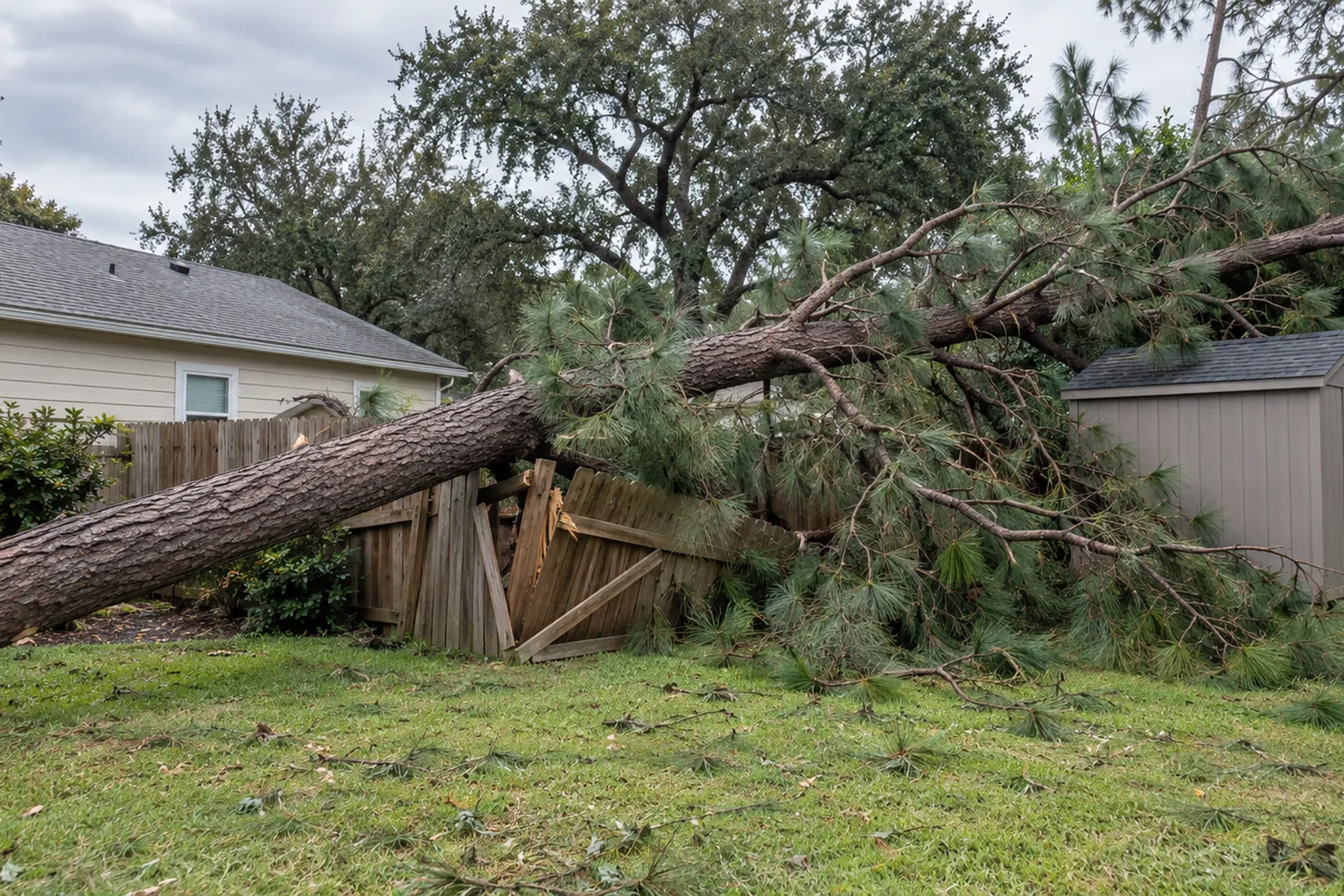
For fallen pine cleanup in Foley, start with expert help for tree hazards, clear photos where available, and a written plan for removal and repairs. UF/IFAS identifies hanging limbs and leaning trees as risks and states: These situations should be taken care of by a professional before anything else.
UF tree guide.
On October 8, 2026, the National Hurricane Center's 7 p.m. CDT advisory reported Hurricane Isaias: Maximum sustained winds are near 100 mph (155 km/h) with higher gusts.
Dated NHC advisory. Its landfall outlook remained a forecast; this article plans for possible cleanup rather than reporting damage in Foley. Check Baldwin County emergency information when planning your next steps.
Where Should Fallen Pine Cleanup in Foley Begin?
Begin with a clear account of where the pine lies and which parts of your property need attention. The coastal Alabama hurricane cleanup guide and Pensacola root recovery guide offer related tree-care background. They do not decide insurance, contract, or permit questions for your property.
Electrical concerns belong with the right specialist. UF/IFAS states: If a limb has fallen near power lines, make sure that a qualified line-clearance arborist treats the situation.
UF tree guide. Report possible line involvement when requesting help, without trying to check or handle the wire yourself.
Write a short description using familiar landmarks, such as the rear fence, detached shed, or side gate. Include what you already know and mark what remains unclear. A useful request might describe a pine across two fence sections, with the shed roof partly out of view.
- Give the property address and a phone number where you can receive questions.
- Describe whether the tree appears to contact the fence, shed, or both.
- Name photos already available and any parts of the scene they do not show.
- Explain whether your request covers tree work, debris hauling, repairs, or several distinct tasks.
Keep this first account factual. A visible broken board belongs in your notes; a guess about the whole fence does not.
What Removal and Repair Sequence Should You Discuss?
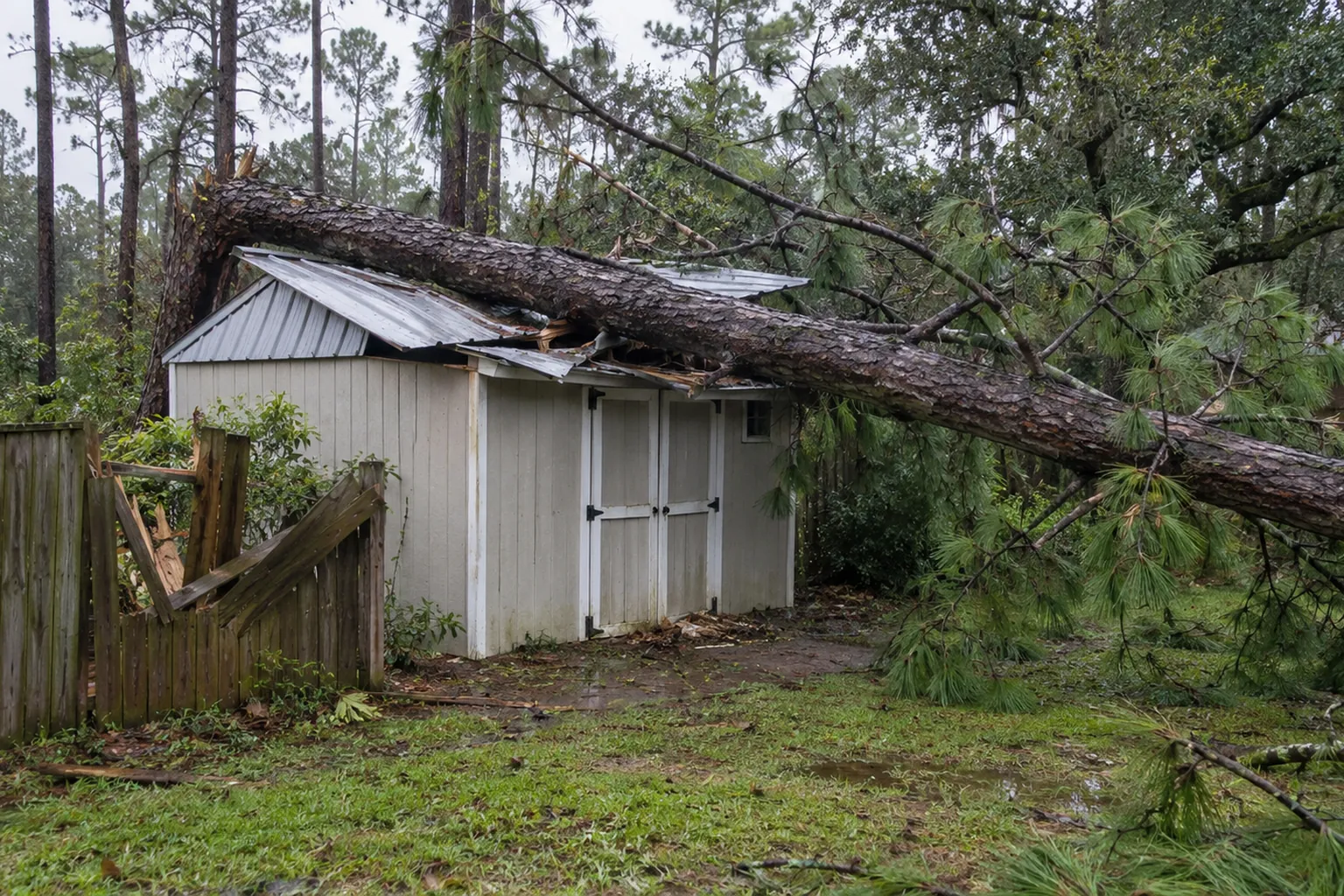
Discuss the job in stages: expert tree help, a written work scope, removal, and distinct fence or shed repairs. The Pensacola tree risk questions guide and Pensacola root recovery guide offer related tree-care background. They do not decide insurance, contract, or permit questions for your property.
Hazard work comes first in the supplied guidance. UF/IFAS introduces its response plan with: Get help with removing potential tree risks.
UF tree guide. Ask the expert handling the tree to explain the proposed sequence; do not turn a general planning list into cutting instructions.
- Describe the scene. Share your existing photos and explain which fence sections or shed areas appear involved.
- Define the tree work. Ask for a written description covering removal, hauling, and any proposed later visit.
- Separate the repair tasks. Name who will discuss the fence and who will address the shed.
- Confirm each handoff. Ask how one contractor will tell the next that their planned work can begin.
- Record each stage. Keep dated photos, work descriptions, and messages together as the job progresses.
- Review remaining items. List any agreed work still outstanding before considering the entire project complete.
Put the agreed scope in writing. The FTC advises: Get a written contract and read it carefully.
FTC scam tips. Include who handles each stage and what marks its end.
A clear stopping point helps everyone understand the next appointment. Ask whether the first visit ends with tree removal, hauling, or another agreed result.
Which Fence Details Should You Record?
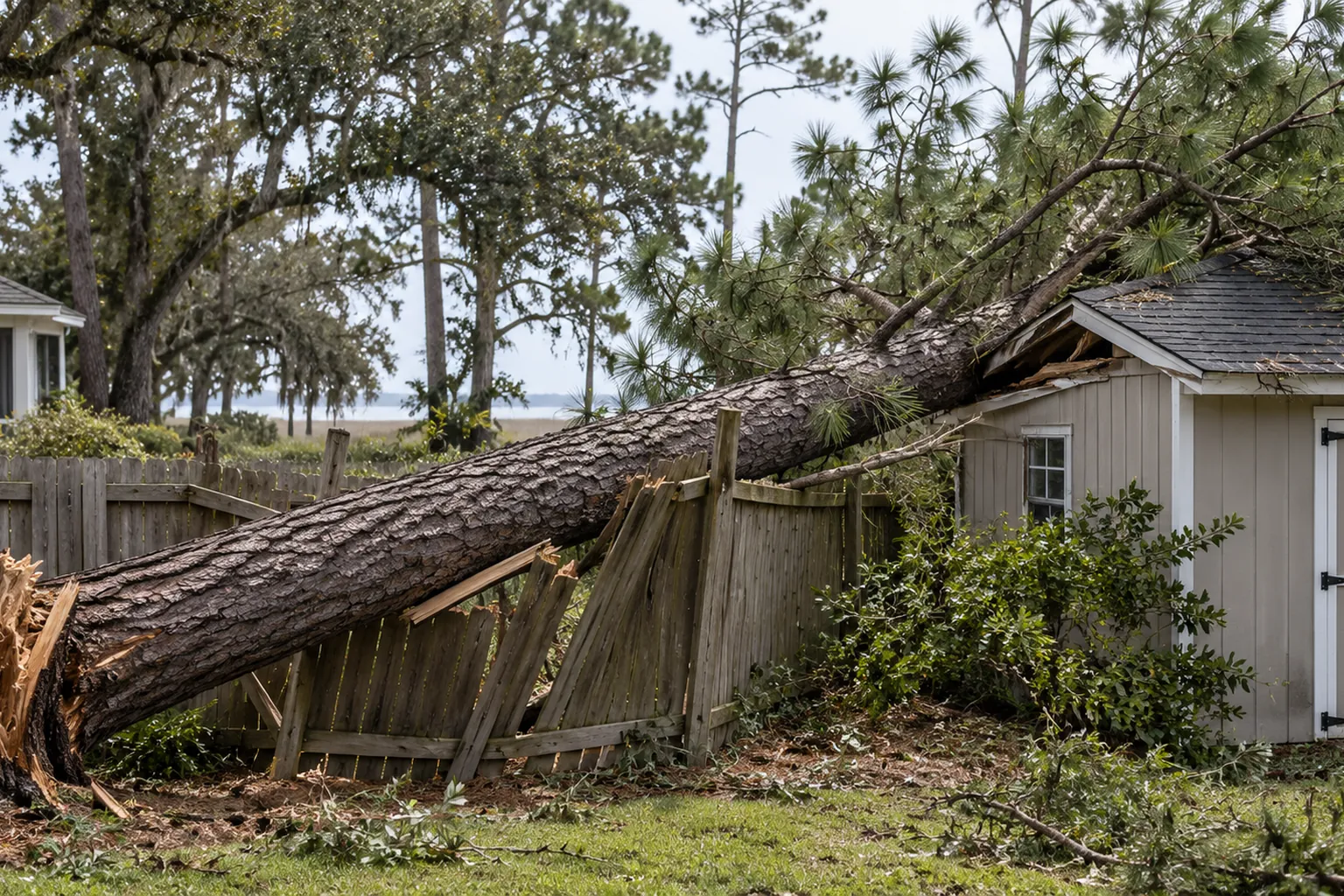
Record the fence sections you can see, the parts blocked from view, and the questions you want answered during repair planning. The Pensacola tree risk questions guide and Pensacola root recovery guide offer related tree-care background. They do not decide insurance, contract, or permit questions for your property.
Use plain descriptions rather than repair conclusions. Write that a rail looks broken, a post appears tilted, or a gate opening is partly obscured. Label each detail by location so that another person can match your notes to the photos without visiting first.
For a long fence, name sections consistently: rear left, rear center, and side gate, for example. Keep the same names in later messages and estimates. This gives the tree contractor and fence contractor a shared way to discuss the affected area.
- Ask which visible sections the proposed fence repair covers and which it leaves out.
- Ask whether the contractor needs another view after the tree work is complete.
- Ask who will collect the old fence materials if that task is included.
- Ask how the finished fence will be described in the written work agreement.
The FTC says a written estimate should include a description of the work to be done, materials, completion date, the price, and the contractor’s contact information.
FTC scam tips. Use those items when reviewing the fence proposal.
If a neighbor is involved, share the same labeled views and discuss the proposed work without assigning blame.
What Should You Ask About a Pine on a Shed?
Ask for distinct explanations of the tree work and the proposed shed check or repair. The Pensacola tree risk questions guide and Pensacola root recovery guide offer related tree-care background. They do not decide insurance, contract, or permit questions for your property.
- A claim about building safety needs more than a sales visit. FEMA advises homeowners faced with such a claim:
Have an engineer, architect or building official inspect it.
FEMA fraud guide. Ask who will address your shed concerns and what their check will cover. - Describe only the exterior details already visible in your records: a roof panel out of place, an uneven door opening, or a wall partly hidden by the pine. Leave uncertain areas marked as uninspected rather than filling gaps with a guessed repair scope.
For the contents, begin with older photographs, receipts, or a list you already have. Separate confirmed items from things you cannot yet account for. A note such as “garden tools normally stored inside; current condition unknown” gives a clear starting point without claiming a loss.
Ask the shed expert to explain whether their proposal covers check, repair, replacement, or several options. Request a description of each option before choosing one.
Keep tree work and shed work in distinct entries, even if one contractor proposes both. Make shared tasks clear, including cleanup and any later visit.
Which Photos Help Explain the Cleanup Request?
Build a simple photo record showing the overall scene, visible fence and shed details, and changes between work stages. The Pensacola tree risk questions guide and Pensacola root recovery guide offer related tree-care background. They do not decide insurance, contract, or permit questions for your property.
Start with images you already have. Group them by location and date, then mark views that are missing. Ask the experts handling the work to provide photos of areas your initial set does not show, rather than trying to capture every angle yourself.
- Overall scene: Include a view showing the pine, fence, and shed together when one is available.
- Fence details: Label visible boards, posts, rails, and gates by their place along the fence.
- Shed details: Name the roof, walls, and door openings shown in each exterior photo.
- Later views: Request matching photos after removal and again after the agreed repairs are complete.
Keep original files alongside a separate set with labels. Use captions in your personal records such as “rear fence before removal” or “shed wall after tree work.” Record what changed without guessing when unseen damage occurred or what caused it.
Ask your insurer what details it needs for the particular request. The FTC advises: Verify your insurance coverage.
It adds: Don’t rely on a contractor to tell you what’s covered
. FTC scam tips.
Keep a short list of missing views and open questions with the photos. This makes each later conversation easier to follow and reduces repeated requests.
How Should You Compare Contractors and Written Estimates?
Compare clearly described tasks, written terms, and verified contractor details before agreeing to the work. The Pensacola tree risk questions guide helps frame the removal scope, while Pensacola root recovery guide keeps storm work questions focused. Give each bidder the same description of the pine and affected property.
- Check the contractor's details through the appropriate state or county source. The FTC advises:
Check with your state or county government to confirm a contractor’s license, and ask the contractor for proof of insurance.
FTC scam tips. - For a Foley job, follow that state or county approach rather than treating a Florida license search as proof of Alabama rules. Ask which authority applies to the proposed work; avoid assuming that every task has the same rules.
Review each estimate against the same list: tree removal, wood hauling, stump work, fence materials, shed work, and cleanup. Mark each item as included, excluded, or unanswered. Then ask the bidder to resolve gaps in writing before you compare the full proposals.
The FTC advises: Don’t automatically choose the lowest bidder. Ask for an explanation if there’s a big difference in price.
FTC scam tips. A useful comparison starts with the actual tasks each bid describes.
Avoid signing under pressure. The FTC identifies offers where you’ll get a discount, but only if you sign a contract right away
as a scam warning. FTC scam tips. Read the full agreement before deciding.
Frequently asked questions
Review what was completed, what remains in the agreed scope, and which fence or shed questions still need answers. The Pensacola tree risk questions guide and Pensacola root recovery guide offer related tree-care background. They do not decide insurance, contract, or permit questions for your property.
Request a short written account of completed work and photos of the cleared area. Match these to the original scope. Mark distinct tasks that remain open, including any agreed hauling, stump visit, fence repair, or shed check.
Keep repair photos in the same order as your first set. This lets you compare the same fence sections and shed sides without searching through scattered messages. Ask each contractor to explain any proposed change before it becomes part of the job.
Retain the bills and receipts. The FTC states: Make sure you get invoices and receipts. Keep them for your records.
FTC scam tips.
Finish with a shared list of completed items and outstanding questions. Send it to the people handling the next stage. This gives the repair appointment a clear purpose.
Who Should Choose the Actual Tree Removal Order?
The expert handling the tree should explain the proposed order before work begins. Your role is to describe the property and agree on the scope, rather than select cuts or equipment. UF/IFAS puts expert help first for tree risks: These situations should be taken care of by a professional before anything else.
UF tree guide.
Does the Shed Need Repair or Replacement?
Request a building check and a written explanation of the options before choosing repair or replacement. List the roof, wall, and door details shown in your photos, along with areas still uninspected. For concerns about building safety, FEMA advises: Have an engineer, architect or building official inspect it.
FEMA fraud guide.
Should Fence Repair Be Scheduled Before Stump Work?
Ask both contractors to agree on their appointments and describe any access needs before setting the repair date. Include the stump task as a distinct item in your work list. Put the resulting agreement in writing; the FTC advises: Get a written contract and read it carefully.
FTC scam tips.
What If I Have No Interior Shed Photographs?
Mark the interior as uninspected and begin with exterior views, older pictures, receipts, and your existing contents list. Ask the building expert to address further check rather than entering solely to complete the photo file. FEMA's advice for building safety concerns is: Have an engineer, architect or building official inspect it.
FEMA fraud guide.
Can the Tree Contractor Confirm Insurance Coverage?
Confirm coverage with your insurer instead of accepting the tree contractor's assurance. Describe tree removal, hauling, fence work, and shed work as distinct questions so the conversation is exact. The FTC states: Verify your insurance coverage.
It adds: Don’t rely on a contractor to tell you what’s covered
. FTC scam tips. Keep the dated reply with the records for your property.
Drafting disclosure: This article was drafted with AI assistance. It provides general education, not an individual tree assessment, legal opinion, or insurance coverage decision.
Use the Pensacola storm cleanup checklist to organize the first steps. The Pensacola tree risk questions guide and Pensacola root recovery guide offer related tree-care background. They do not decide insurance, contract, or permit questions for your property.
Florida Foliage is based in Daytona Beach and serves Volusia and Flagler counties. The Pensacola tree risk questions guide and Pensacola root recovery guide offer related tree-care background. They do not decide insurance, contract, or permit questions for your property.
Florida Foliage is a Daytona Beach tree service that works with an ISA Certified Arborist consultant. For tree work in Volusia or Flagler County, call (386) 481-7913 to request a free on-site estimate.
Call (386) 481-7913 to talk through next steps.