Reviewed by Clinton Funk
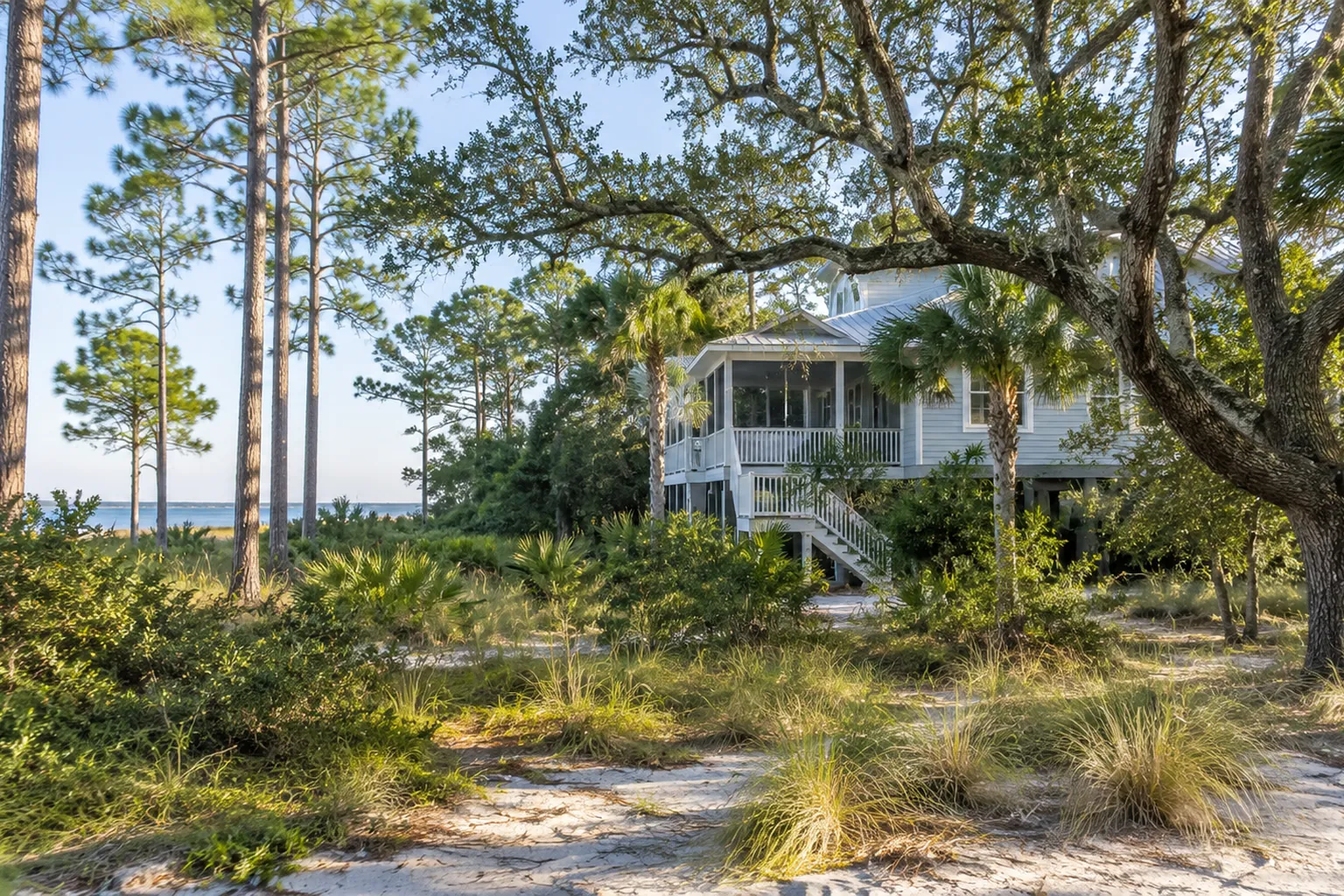
Hurricane tree damage in Santa Rosa Beach and Miramar Beach calls for a clear cleanup plan. Start with the tree concerns, then discuss access, dune vegetation, debris hauling, and care for trees you hope to keep. This guide helps South Walton owners plan those questions without guessing what happened at a particular home.
Use current official information before planning tree work. Check the National Hurricane Center advisory and NWS Mobile for current forecasts. Follow local officials for access and emergency instructions. Forecasts do not establish damage at a particular property.
How Does Hurricane Tree Damage Change The Cleanup Plan?
Separate visible tree damage, reported flooding, and the routes proposed for cleanup before agreeing on work. Read the tree risk guide for Pensacola owners and Pensacola root recovery guide for related tree-care background. They do not decide claim, contract, or permit questions for your site.
The Tallahassee forecast included broken and uprooted trees among potential wind impacts: Several large trees snapped or uprooted, but with greater numbers in places where trees are shallow rooted.
NWS potential wind impacts. Record damage actually visible at your address, and label reports from other people as secondhand details.
Surge raises a distinct recovery question. UF/IFAS states, Significant tree dieback due to salt damage can occur in coastal areas that receive storm surge from hurricanes.
UF tree guide. Ask the tree expert to address known water exposure alongside visible breaks.
- For example, an owner may want a broken pine reviewed, debris hauled, and nearby scrub left in place.
- Write those requests apart, with a location for each one. That lets the contractor explain the proposed tree work without treating every part of the yard as an area to clear.
Use the same approach when several people share the property. Agree on which questions need answers, who can approve work, and which vegetation you want retained. Keep uncertain details marked as unknown rather than filling gaps with guesses about the storm.
What Should Be Addressed Before General Cleanup?
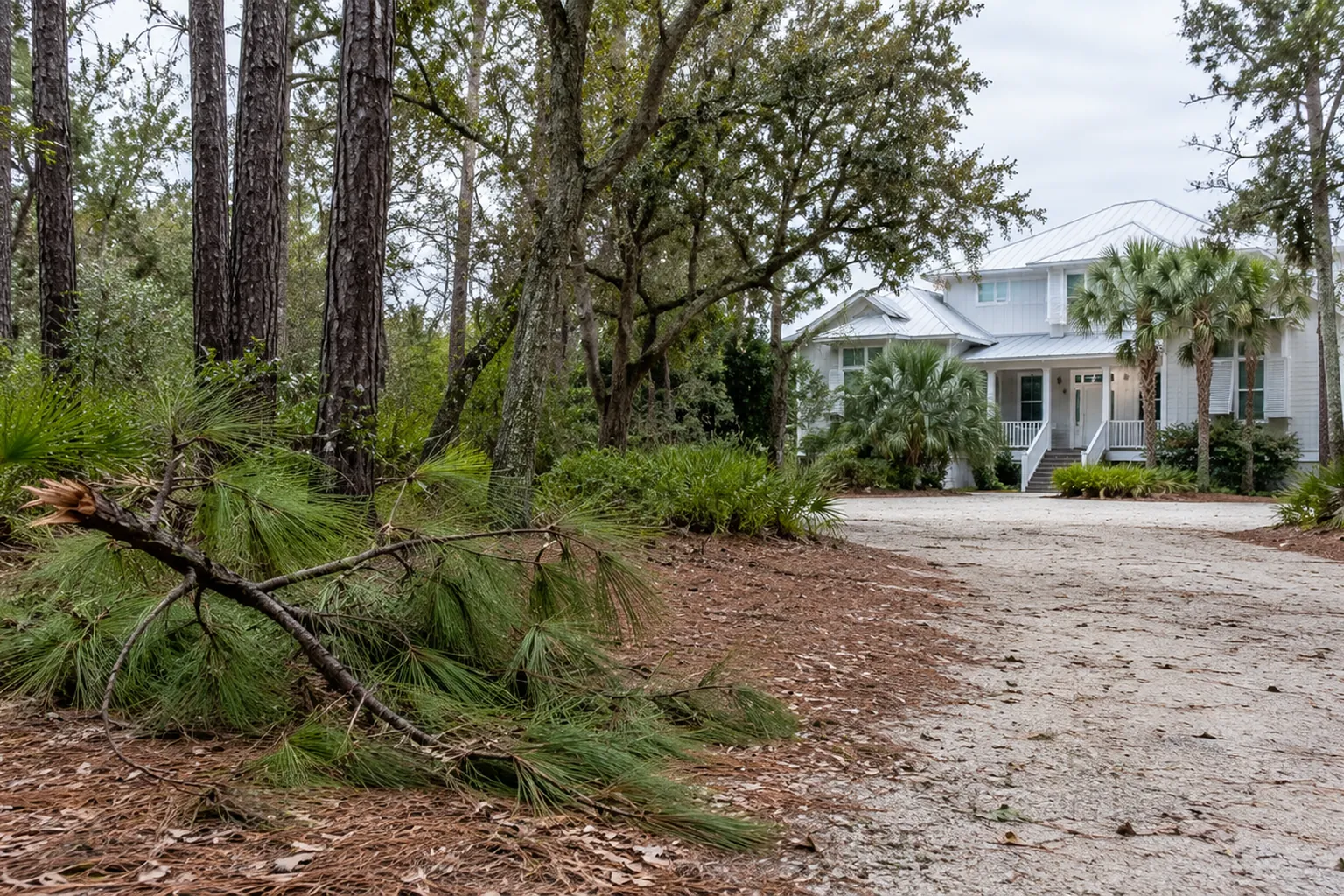
Arrange expert help for hanging limbs and leaning trees before general cleanup. The Pensacola tree risk guide outlines tree work, while Pensacola tree risk guide offers related tree-care background. UF/IFAS says these situations should be taken care of by a professional before anything else.
UF tree guide. For related tree-care background, read the Pensacola tree risk guide and Pensacola root recovery guide.
Tell the contractor whether branches and electrical lines are involved in your request. UF/IFAS gives an exact direction: If a limb has fallen near power lines, make sure that a qualified line-clearance arborist treats the situation.
UF tree guide. Describe the concern without trying to handle the branch or line yourself.
The same source identifies large hanging limbs or leaning trees that could fall on a person, hit a house, or damage other potential targets if they go down.
UF tree guide. Include these concerns at the start of your request, ahead of routine hauling or yard clearing.
- Describe each tree's location in relation to the house, driveway, or fence.
- Share photos you already have, with the date and location clearly noted.
- Explain which routes you hoped to use for the proposed cleanup work.
- List any other contractor whose work needs to be coordinated at the property.
Treat photos as a way to explain your request rather than a final decision about the tree. Ask who will review the concern, what work they propose, and whether another specialist needs to be involved. Keep those answers with the written scope.
For a rental or shared home, choose one contact to gather these answers. Give that person the owner's requests so the contractor receives a clear account of the work being considered.
How Should Damaged Pines And Live Oaks Be Reviewed?
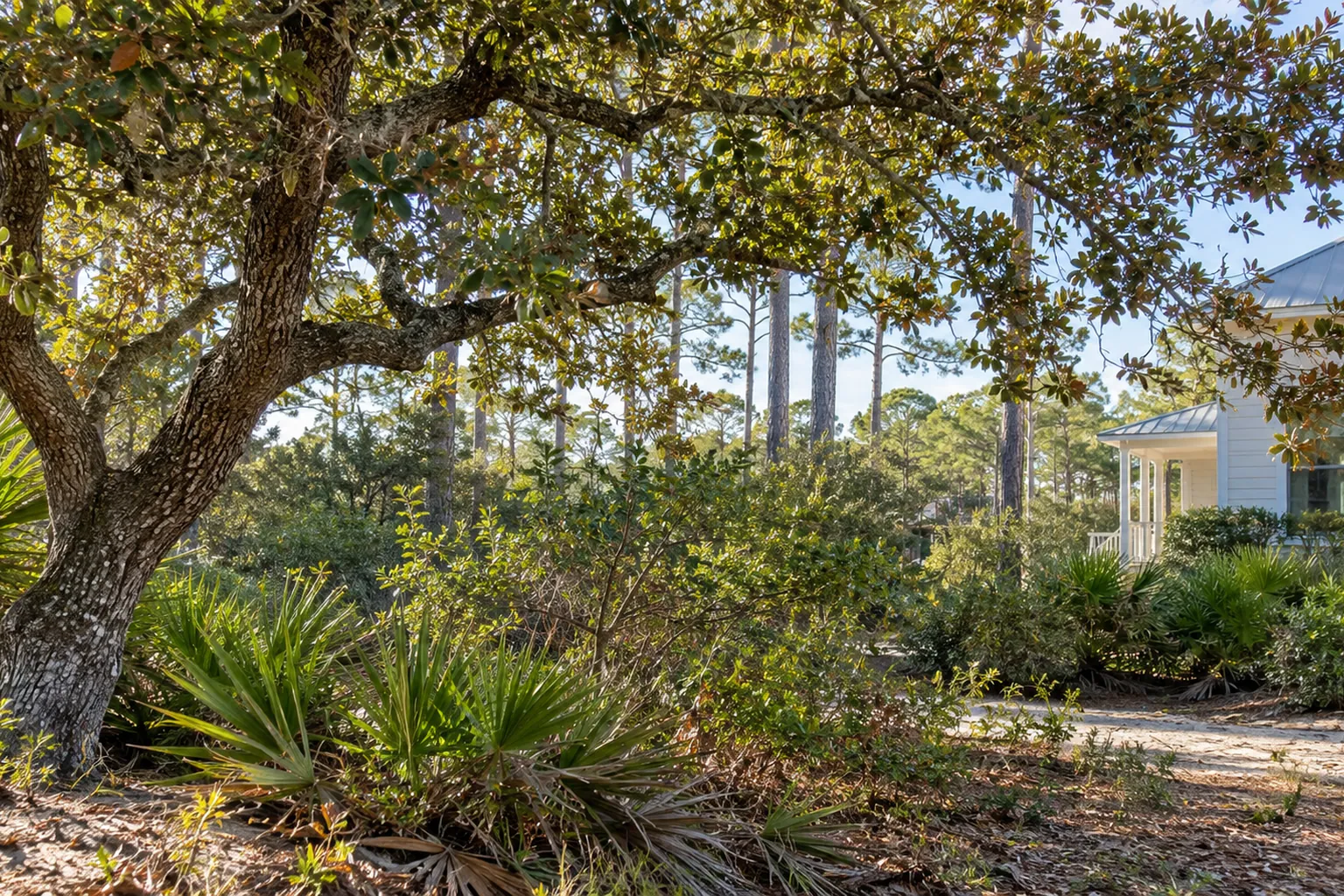
Have each pine or live oak reviewed on its own condition, and ask what supports the advice. Read the tree risk guide for Pensacola owners and Pensacola root recovery guide for related tree-care background. They do not decide claim, contract, or permit questions for your site.
- UF/IFAS describes a key condition for repair:
The structure of the tree should be intact, without any visible cracks or large wounds on the main trunk, limbs, or main roots.
UF tree guide. Ask the expert to explain how that condition applies to the particular tree being reviewed. - Pines have a different growth response from many leafy trees. UF/IFAS states,
Pines sprout very little or not at all.
UF tree guide. When discussing a damaged pine, ask what the remaining crown and trunk mean for the advice. Keep the expert's explanation with the record for that tree.
Species can inform a recovery plan. UF/IFAS identifies live oak and buttonwood, which resist decay and recover from damage much better than laurel oaks, which often have severe internal decay.
UF tree guide. Use that comparison as background when asking about a live oak, rather than as a promise about its future.
Broken limbs alone do not settle every removal question. UF/IFAS explains, Trees can recover from complete leaf loss or significant damage to the canopy, including several broken limbs, but major trunk damage is often irreparable.
UF tree guide. Ask whether the proposed outcome is removal, repair, or a further review.
How Can Cleanup Plans Respect Dunes And Coastal Scrub?
Name vegetation you want retained and discuss equipment routes before approving a broad clearing request. Read the tree risk guide for Pensacola owners and Pensacola root recovery guide for related tree-care background. They do not decide claim, contract, or permit questions for your site.
The Tallahassee statement listed Severe beach erosion with significant dune loss.
among potential surge impacts. NWS potential coastal surge impacts. That forecast supports asking about the actual ground conditions at a coastal property. It does not establish that a particular dune, yard, or access route was damaged.
Use an existing property photo or plan to show the proposed work area. Name the driveway, boardwalk, fence, loading point, and vegetation you want included in the talk. Ask the contractor to describe the route they propose and any questions they need resolved before work begins.
- List the trees and debris included in the requested work, with their locations.
- Name the shrubs, grasses, and small trees you want discussed before any clearing.
- Ask who can confirm access across shared land or neighboring property.
- Record the agreed loading area and who will approve changes to the scope.
Where a route involves beach areas, dunes, or unclear boundaries, ask the responsible owner or manager which authority can confirm current rules. Seek answers for the actual address and proposed work. Keep those answers together so everyone works from the same understanding.
If the contractor proposes a different route, ask for the revised plan before approving it. A request to handle one damaged tree should clearly state whether any surrounding clearing is included.
How Should Salt-Exposed Trees Be Followed After Cleanup?
Keep a dated record of known flooding and visible changes, then ask for a follow-up plan. Read the tree risk guide for Pensacola owners and Pensacola root recovery guide for related tree-care background. They do not decide claim, contract, or permit questions for your site.
UF/IFAS notes that Significant tree dieback due to salt damage can occur in coastal areas that receive storm surge from hurricanes.
UF tree guide. Ask how known water exposure affects the care plan for the trees retained at your property.
Describe what you know without adding details you cannot confirm. A dated photo of water on the property is useful information. The length of exposure or whether that water contained salt may remain unknown. Keep those gaps visible in the notes you share.
- Give each tree a simple location name that you can use in later messages.
- Save dated views of the crown, using photos already available to you.
- Note when flooding was seen and who supplied that information to you.
- Record the next review date and the person responsible for that review.
Ask for care suited to the tree and site rather than a single watering rule. UF/IFAS states, Irrigation is not needed if the root ball is already saturated or wet from heavy rains.
UF tree guide. Have the expert explain any proposed treatment and its purpose before adding it to the work.
For each retained tree, request a clear next step: what to record, when to share it, and who will respond. Keep later photos with the original notes so the reviewer can follow the same tree over time.
How Should Tree Work, Hauling, And Records Be Organized?
Put the proposed tree work, access route, hauling, and follow-up into one written scope before approving the job. The Pensacola tree risk guide addresses the tree work, while Pensacola tree risk guide offers related tree-care background. Make each included task clear enough to review on its own. For related tree-care background, read the Pensacola tree risk guide and Pensacola root recovery guide.
- List each tree or branch included in the proposed work, using clear location names.
- Record who will review the tree concerns and explain the suggested next steps.
- Agree on the equipment route, loading point, and vegetation to retain in the scope.
- State whether hauling is included and who will handle any remaining debris.
- Keep the signed scope, dated photos, contractor contact details, and later changes together.
- Set out the next review for retained trees, including the contact responsible for follow-up.
For trees retained after the first cleanup, ask whether later visits form part of the proposed plan. UF/IFAS explains, Restoration typically requires more than one pruning to develop strong tree structure
. UF tree guide. Record what is included now and what will need a distinct decision later.
Frequently asked questions
For broader context, read the Emerald Coast Tree Cleanup Guide. It does not decide claim, contract, permit, or safety questions for your site.
The questions below cover tree structure, salt exposure, electrical lines, and access near dunes. Read the tree risk guide for Pensacola owners and Pensacola root recovery guide for related tree-care background. They do not decide claim, contract, or permit questions for your site.
Does A Green Pine Mean Its Structure Is Sound?
Green needles alone do not meet the repair criteria described by UF/IFAS. It says, The structure of the tree should be intact, without any visible cracks or large wounds on the main trunk, limbs, or main roots.
UF tree guide. Ask for a review of that structure alongside the foliage.
Must A Live Oak With Broken Limbs Be Removed?
Broken limbs do not automatically mean removal is the only outcome. UF/IFAS states, Trees can recover from complete leaf loss or significant damage to the canopy, including several broken limbs, but major trunk damage is often irreparable.
UF tree guide. Ask which parts of the tree support the advice being made.
Does Salt Exposure Need Its Own Follow-Up?
Salt exposure belongs in the recovery talk for retained coastal trees. UF/IFAS states, Significant tree dieback due to salt damage can occur in coastal areas that receive storm surge from hurricanes.
UF tree guide. Share known flooding dates and ask what the follow-up plan should record for each affected tree.
Who Should Handle A Limb Near Power Lines?
A qualified line-clearance arborist should handle the situation described by UF/IFAS: If a limb has fallen near power lines, make sure that a qualified line-clearance arborist treats the situation.
UF tree guide. State that concern clearly when requesting help, and leave the branch and line work to the qualified specialist.
What Should Be Confirmed Before Work Near A Dune?
Confirm the proposed route, work area, loading point, and vegetation to retain with the owner or manager and contractor. Where beach access or boundaries need clarification, ask which local authority can answer for that address. Keep the answers with the written scope, and have changes to the agreed route reviewed before they are approved.
Related Reading And Scope
See the Pensacola tree risk guide and Pensacola tree risk guide for related background. For related tree-care background, read the Pensacola tree risk guide and Pensacola root recovery guide.
Use the Pensacola storm cleanup checklist to organize the first steps. Read the tree risk guide for Pensacola owners and Pensacola root recovery guide for related tree-care background. They do not decide claim, contract, or permit questions for your site.
For related reading, see the Pensacola tree risk guide and Pensacola tree risk guide. For a property outside Volusia or Flagler County, contact a local tree professional.
- Florida Foliage is a Daytona Beach tree service that works with an ISA Certified Arborist consultant.
- For a property in Volusia or Flagler County, call (386) 481-7913 to request an estimate.
Drafting disclosure: This article was drafted with AI assistance using public sources. It does not independently verify live forecasts, site conditions, pickup notices, or insurance coverage. Check current details with the responsible agency or a qualified local professional.
For tree work in Volusia or Flagler County, call (386) 481-7913 to request a free on-site estimate.