Reviewed by Clinton Funk
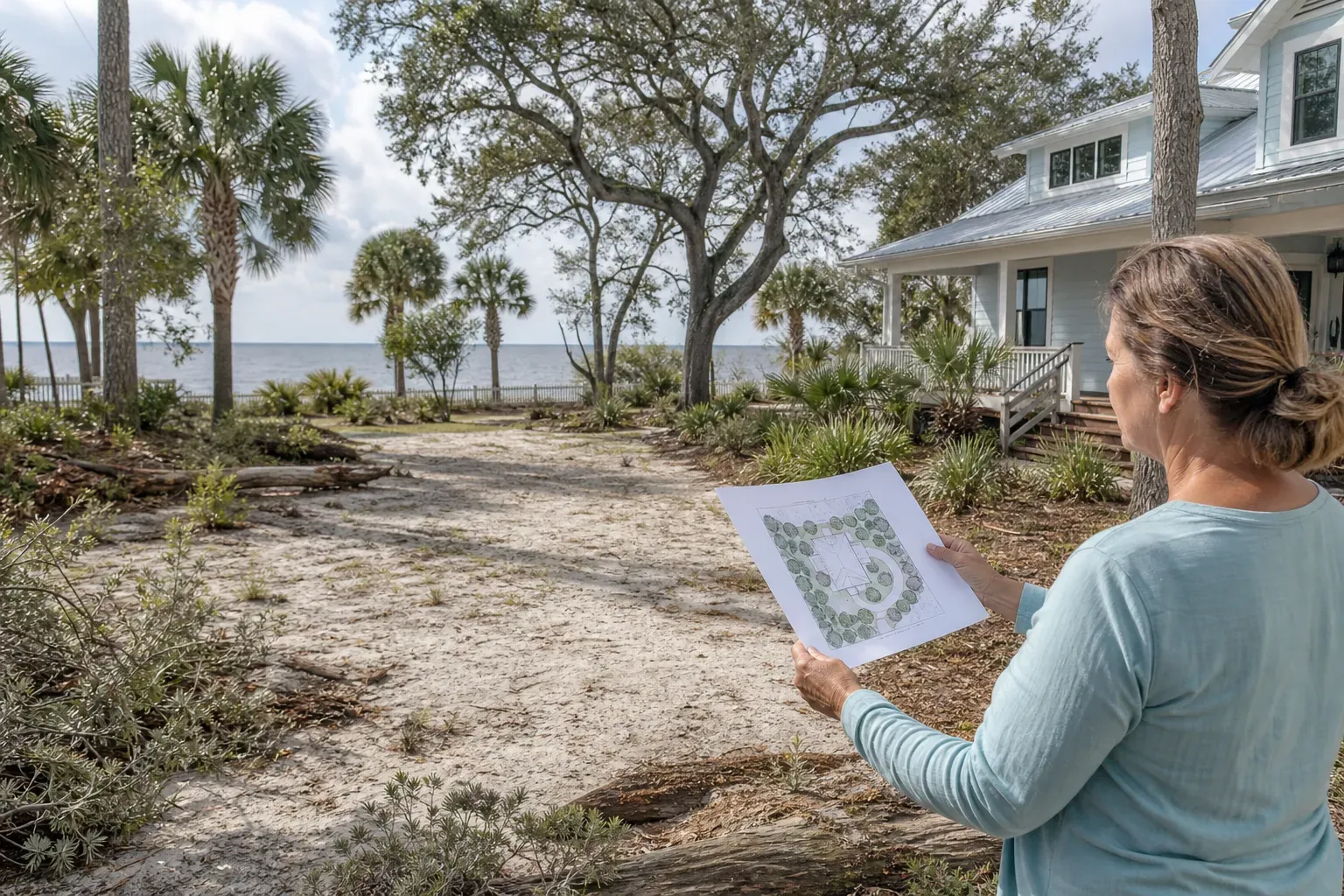
Put people, transport, and clear access ahead of yard work. Hurricane Isaias Accessible Yard Plans In Fort Walton Beach should connect mobility needs with official emergency guidance. Choose a usable route, confirm help, and leave tree hazards to qualified crews. Do not delay an ordered evacuation to finish cleanup.
The supplied October 9 National Hurricane Center advisory identifies Isaias as a current named system. Forecasts and warnings can change. Use the latest official updates, not this article, for live decisions.
This guide covers access planning, not medical care or a property safety assessment. It does not establish current shelter openings, pickup services, or local permit rules. Florida Foliage serves Volusia and Flagler counties from Daytona Beach. This Fort Walton Beach guide is general public education, not an offer of local service.
What should Hurricane Isaias Accessible Yard Plans In Fort Walton Beach include?
An accessible plan starts with people, not pruning. The broader Pensacola yard and evacuation plan covers the overall planning sequence. The related Pensacola tree risk guide offers related tree-care background.
Focus on the trip from the home to transport. A route may look clear but still be hard to use. Loose gravel, tight turns, steps, or a heavy gate can create barriers. Ask the person who uses the route what works. Do not assume that a helper's preferred path meets their needs.
Keep the plan short enough to share by phone. Name the main route and any usable backup. Record where transport should stop and who will help. Share only the personal details each helper needs.
Use this planning order before conditions become unsafe:
- Ask about access needs. Confirm which entrance and route the person can use. Discuss help with the person, rather than making assumptions.
- Check official instructions. Confirm evacuation guidance and ask the relevant local authority about shelter access or transport arrangements. Do not assume registration guarantees a ride.
- Agree on a meeting point. Choose a place that allows the planned transfer. Avoid a spot beneath visibly damaged limbs or beside a blocked gate.
- Assign tasks by name. Identify who will confirm transport, contact the household, and report an access problem. Give each task a backup contact.
- Set a stop-work rule. Yard tasks must not delay departure. Stop if weather, tree damage, or loss of safe footing makes access uncertain.
- Share the final plan. Keep a paper copy as well as a phone copy. Confirm that helpers understand it before relying on them.
The plan should fit the person and the site. It need not turn the whole yard into an access route. One suitable path and a clear handoff can be more useful than a long cleanup list.
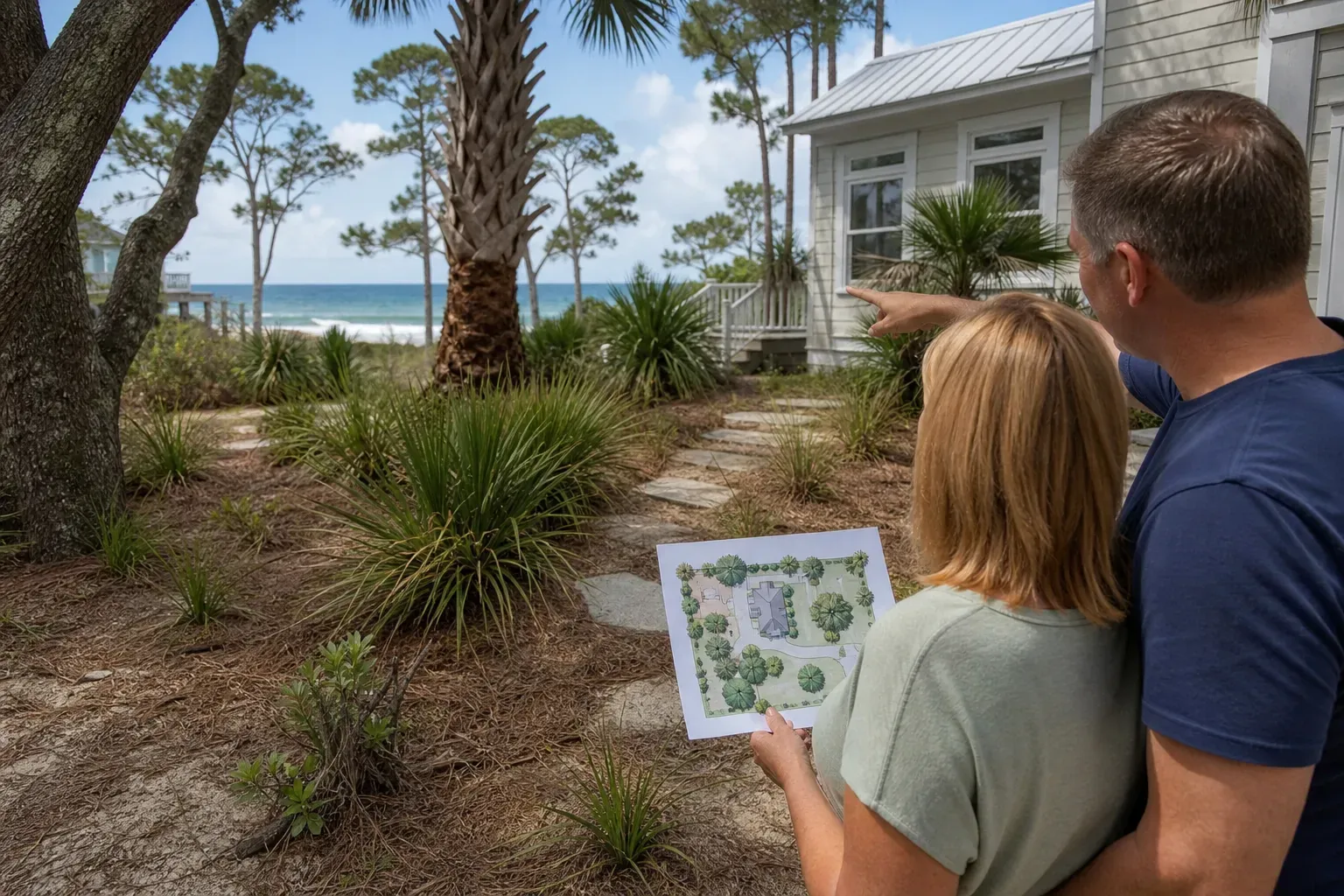
How can you check a route without taking on risky yard work?
Check access from a safe place, before weather worsens. The Pensacola tree risk guide offers related tree-care background. The Pensacola tree risk guide supports the key boundary: a blocked path does not justify unsafe work. For related tree-care background, read the Pensacola tree risk guide and Pensacola root recovery guide.
Look at the route the person will actually use. Include the door, porch, gate, path, and pickup point. Check whether turns and surfaces suit their usual mobility aid. Any trial of the route should be voluntary and safe. Do not test a path beneath a hanging branch.
A visual check is not a tree risk assessment. The International Society of Arboriculture's tree owner resources cover pruning, tree risk, and storm damage. A qualified arborist can assess concerns that a household cannot resolve by looking from the doorway.
Use clear, complete notes:
- The main gate should be usable by the person or their agreed helper. Note a stiff latch or heavy gate before it becomes a last-minute problem.
- The route should not depend on moving heavy yard items. Ask for suitable help while conditions allow, rather than planning a rushed lift.
- The pickup point should have room for the agreed transport. Confirm that need with the driver instead of guessing about vehicle access.
- The route should avoid known tree hazards. Keep people away from hanging limbs, a newly leaning tree, or visible root movement.
- The backup path should meet the same access needs. A narrow side gate is not a useful backup if the person cannot pass through it.
Small loose items may be easy to address in calm conditions. Large limbs, unstable trees, and tangled debris are different. Do not cut, pull, climb, or drag them to make a route. Keep away from fallen wires and anything touching them. Contact the utility; call emergency services for immediate danger.
If no safe route remains, report the problem. Give the address, affected entrance, and nature of the barrier. Ask the responsible authority what to do next. Do not send a helper into a hazard to prove the path is blocked.
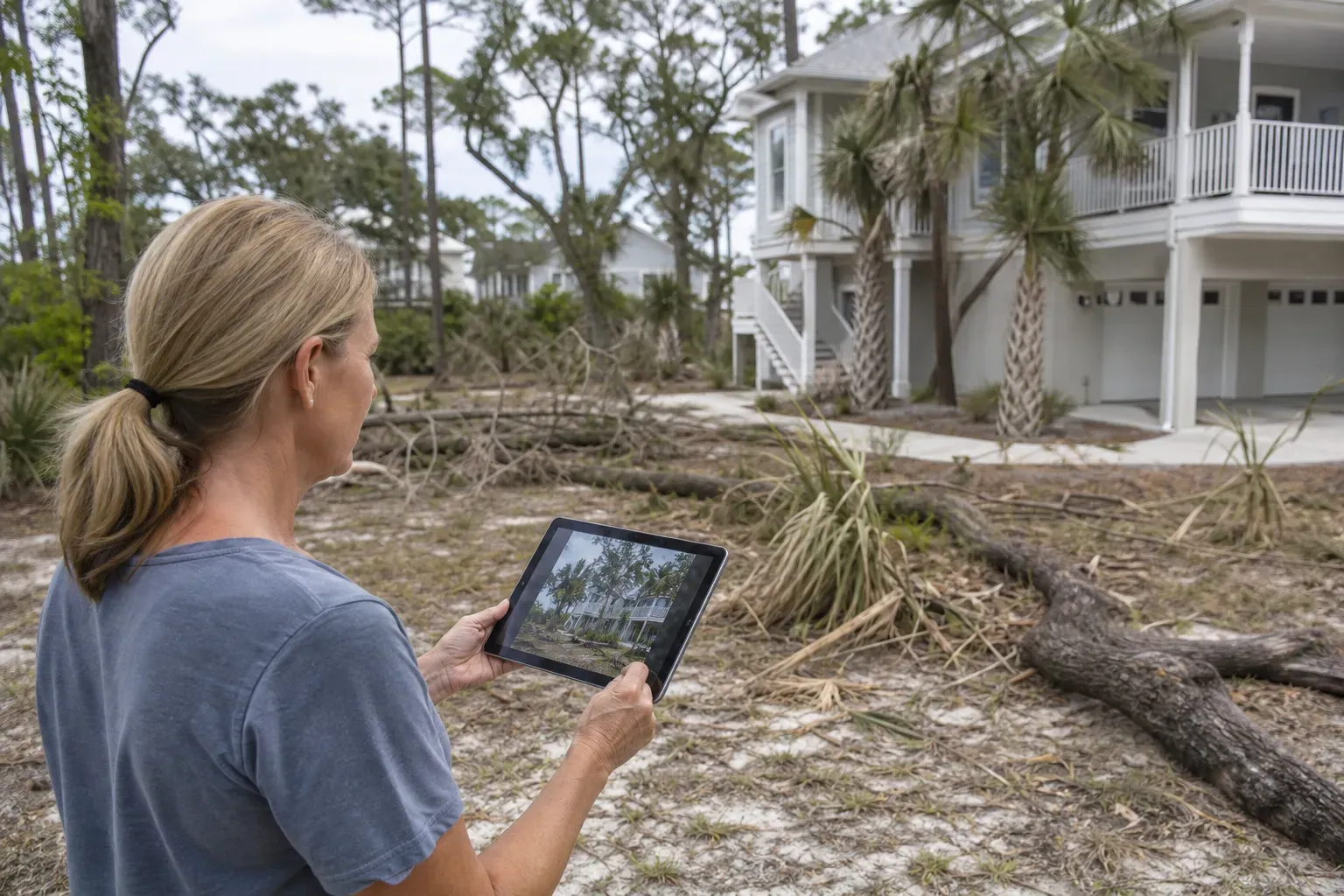
Who should coordinate mobility needs and departure plans?
The household should coordinate with the people and agencies it will rely on. The Pensacola tree risk guide offers related tree-care background. The Pensacola yard and evacuation pillar provides broader context without replacing local instructions.
Ask Fort Walton Beach or Okaloosa County emergency officials what help is available now. Check shelter access and the steps to book a ride. Ask if you need to sign up. The sources here do not confirm those local services. Do not rely on a pickup until it is confirmed.
The Escambia County evacuation FAQs stress following local evacuation orders. That is general planning guidance, not a Fort Walton Beach shelter listing. Use the authority responsible for your own address.
Give each task to the right person. Emergency officials explain public orders and aid programs. Your transport provider confirms the ride. Ask a health professional about your care needs. Ask a tree professional to check tree hazards. A neighbor can share news but cannot take the place of these people.
Useful questions include:
- Ask the transport provider how to report a blocked pickup point. Confirm whether a different meeting place is possible before relying on it.
- Ask shelter staff about the access features you need. Do not infer suitability from a building name or an old online listing.
- Ask emergency officials what to do if planned help falls through. Explain the access barrier without waiting for a yard crew.
- Ask a health professional about personal care or equipment concerns. This article cannot advise on medicines, transfers, or powered medical devices.
- Ask each helper to confirm their task. A shared message is not the same as a clear agreement.
Choose one household contact for updates where practical. This can reduce mixed messages from several helpers. Keep a backup contact in case the first person cannot respond.
Do not make the plan depend on someone carrying a person. That requires individual guidance and suitable help. The goal is a confirmed route and support plan, not an improvised rescue.
When should yard work stop and the access plan change?
Stop when work threatens safe access or departure. The Pensacola tree risk guide offers related tree-care background. The Pensacola tree risk guide adds a useful check: work should not create a new barrier for people who need entry. For related tree-care background, read the Pensacola tree risk guide and Pensacola root recovery guide.
There is no single cutoff time for every property. Conditions, official orders, and personal transport needs differ. Do not use a forecast landfall time as permission to keep working. The NHC advisory directs people to follow local officials and monitor official weather products.
Treat these events as reasons to stop and reassess:
- An evacuation instruction requires action. Follow it rather than finishing a cleanup task or waiting for a tree estimate.
- Wind or rain makes footing uncertain. A route that worked in dry weather may no longer be suitable.
- A tree develops a new lean or a limb breaks. Keep away and seek qualified help instead of trying to clear the route.
- Floodwater blocks the planned path. Do not test its depth by walking or wheeling into it.
- Transport changes or fails to arrive. Contact the provider or responsible authority and use the agreed backup process.
- A helper cannot complete the task safely. Change the plan rather than pressuring them to continue.
A stop-work rule is useful even for small tasks. Searching for tools or shifting pots can consume time needed for departure. Decide which tasks can be abandoned without discussion.
Do not treat a quieter spell as proof of safety. Use official guidance to decide when outdoor activity may resume. A household access plan should be flexible enough to pause without losing contact with helpers.
How should you handle blocked access after the storm?
Return to access planning before cleanup begins. The Pensacola tree risk guide offers related tree-care background. The Pensacola yard and evacuation plan places recovery within the wider household plan.
Follow official return and travel rules first. Once access is allowed, check from a safe place:
- Note which doors or gates are blocked.
- Look for broken gates and fallen limbs.
- Note any changes in the ground.
- Stay out from under damaged trees, even for photos.
Tell responders or contractors which entrance matters most. Describe the barrier in plain terms. For example, state that a fallen limb blocks the only usable gate. Do not assume that clearing the driveway also restores access to the door.
Tree recovery and route clearance are separate decisions. UF/IFAS storm restoration guidance explains that damaged trees may need several pruning visits. Large branch wounds can take many years to be covered by new growth. A quick cleanup does not establish long-term tree safety.
Palm care also needs restraint. UF/IFAS advises keeping bent green fronds unless they pose a hazard or interfere with the bud, where new leaves emerge. Its hurricane palm care guidance notes that full canopy replacement takes at least a year, and usually longer. It also reports no research proving a benefit from routine post-hurricane fungicide use.
Do not strip a palm to make the yard look tidy. Ask a qualified professional about damaged foliage and recovery. Avoid adding fertilizer or chemicals based only on storm damage.
Before nonurgent removal or pruning, verify applicable local rules. Pensacola's city arborist page describes its own tree permit requirements. Those rules do not establish requirements in Fort Walton Beach. Contact the authority responsible for the property, especially for trees on public land or rights of way.
What records help with cleanup and insurance questions?
Keep records of the damage and the access you need. The Pensacola tree risk guide offers related tree-care background. The Pensacola tree risk guide makes a key point: do not enter a hazard to get records. For related tree-care background, read the Pensacola tree risk guide and Pensacola root recovery guide.
Keep these records, but do not enter a hazard to get them:
- Take photos only when it is safe.
- Write down where the damage is.
- Keep estimates, invoices, and receipts.
- Note if a tree hit a structure, blocked an entrance, or fell elsewhere.
These facts help explain the damage. They do not prove that your policy covers it.
The Florida CFO homeowners insurance overview says tree and debris removal coverage varies. It notes that many policies cover removal when a fallen tree damages insured property, subject to limits. Some policies address a blocked main entrance. Trees that fall without damaging covered property may not have removal coverage.
Ask your insurer how your contract applies. A blocked accessible route is important to report, but does not itself prove coverage. Do not assume that a contractor can authorize an insurance payment.
The Florida CFO hurricane deductible guide explains that hurricane deductibles have specific terms. Ask your insurer or agent to explain the amount and conditions in your policy. This article does not interpret a contract or predict a claim result.
Also confirm debris disposal rules with the local waste authority. Do not assume storm collection includes every limb or contractor-generated pile. Keep debris out of the access route, and agree on disposal responsibilities before nonurgent work starts.
Frequently asked questions
Should yard cleanup delay an ordered evacuation?
No. Follow the order to leave and use your agreed plan. Yard work can wait. If your route is blocked, tell local emergency officials and ask what to do next. Do not cut or move damaged trees to clear a path before you leave.
Can a clear driveway count as an accessible route?
Not by itself. Check the whole path from the door to the pickup point. Include the gate, ground, and turns along the way. Ask the person if each part works with their usual mobility aid and agreed help. A clear driveway alone does not show this.
Who can confirm shelter access and transport?
Ask local emergency officials about current options. Check access needs with shelter staff and confirm your ride with the transport provider. Do not rely on an old listing or assume that signing up guarantees a ride. This guide does not confirm open shelters or rides in Fort Walton Beach.
Should all bent palm fronds be removed after Isaias?
No. UF/IFAS says to keep bent green fronds unless they pose a hazard or block the bud, where new leaves grow. These fronds can help the palm recover. Ask a qualified tree professional to check the damage. Do not remove every frond just because it looks bent.
Does Florida Foliage provide Fort Walton Beach storm crews?
This article makes no such claim. Florida Foliage is based in Daytona Beach and serves Volusia and Flagler counties. Fort Walton Beach readers should use local authorities and suitable local professionals for site-specific help.
Editorial disclosure: This article was drafted with AI assistance using the cited public sources. Tim Francis is identified as Tree Content Expert, not as a credentialed practitioner. The article provides general education, not individualized medical, legal, insurance, or tree risk advice.
Florida Foliage is a Daytona Beach tree service that works with an ISA Certified Arborist consultant.
For tree work in Volusia or Flagler County, call (386) 481-7913 to request a free on-site estimate.
For tree work in Volusia or Flagler County, call (386) 481-7913 to request a free on-site estimate.