Reviewed by Clinton Funk
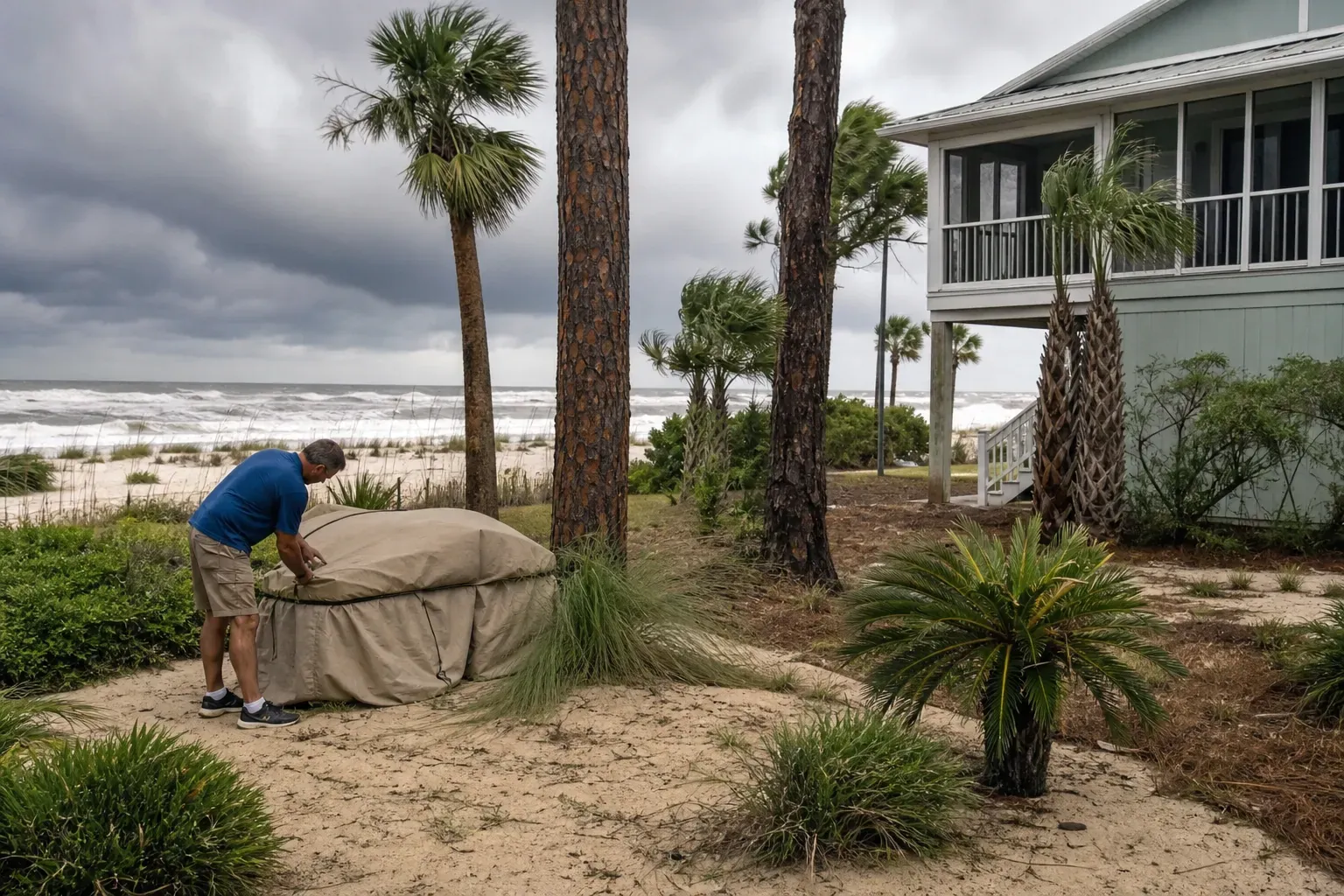
Follow the alerts for your property's county and state. Do not assume Pensacola orders cover Baldwin County, Alabama. Hurricane Isaias Alabama Border Yard Alerts Near Pensacola require two checks: the latest weather warning and the local instructions for your address. Stop yard work when it conflicts with safe shelter or evacuation.
This guide helps you decide which alerts to follow near the state line. It has no live alerts. It cannot tell you how to care for a tree on your lot. The supplied October 9 National Hurricane Center advisory identifies Isaias as a named system. Forecasts and warning areas can change. Check the latest reports from weather officials before you act. This article is not a current forecast.
Which Hurricane Isaias Alabama Border Yard Alerts Near Pensacola should you follow?
Use the Pensacola yard and evacuation plan for the broader planning context. The Pensacola tree risk guide offers related tree-care background. Here, the key issue is which authority covers your address.
Weather warnings may cross the state line. Each place still has its own local orders. The same coastal forecast does not mean the same county rules. A Florida permit rule does not apply in Alabama just because both places face the same storm.
The National Weather Service Mobile/Pensacola office provides weather information for the border region. Use its latest products alongside National Hurricane Center updates. Then check your county and city for local action instructions.
For a home in Baldwin County, check with county and town or city officials. For a home in Escambia County, Florida, check with that county's officials. Inside Pensacola city limits, check city notices too. A Pensacola mailing address alone does not tell you which local rules apply.
Keep three types of information separate:
- Weather warnings describe the hazard. Check the area, issue time, and expected conditions in the official product.
- Local orders tell you what action to take. Follow the authority responsible for your address, including evacuation and access instructions.
- Property conditions affect your immediate choices. A blocked exit or damaged tree can require help even without a new warning.
Read the full notice, not solely its headline. Check whether it names a county, zone, city, or road. Also check whether a later notice has changed it. A saved screen image may no longer reflect the current order.
If you do not know which area covers your home, ask your county or city. Do not choose a notice because it has fewer limits. If you cross the state line, check the orders for both the place you leave and the place you plan to go.
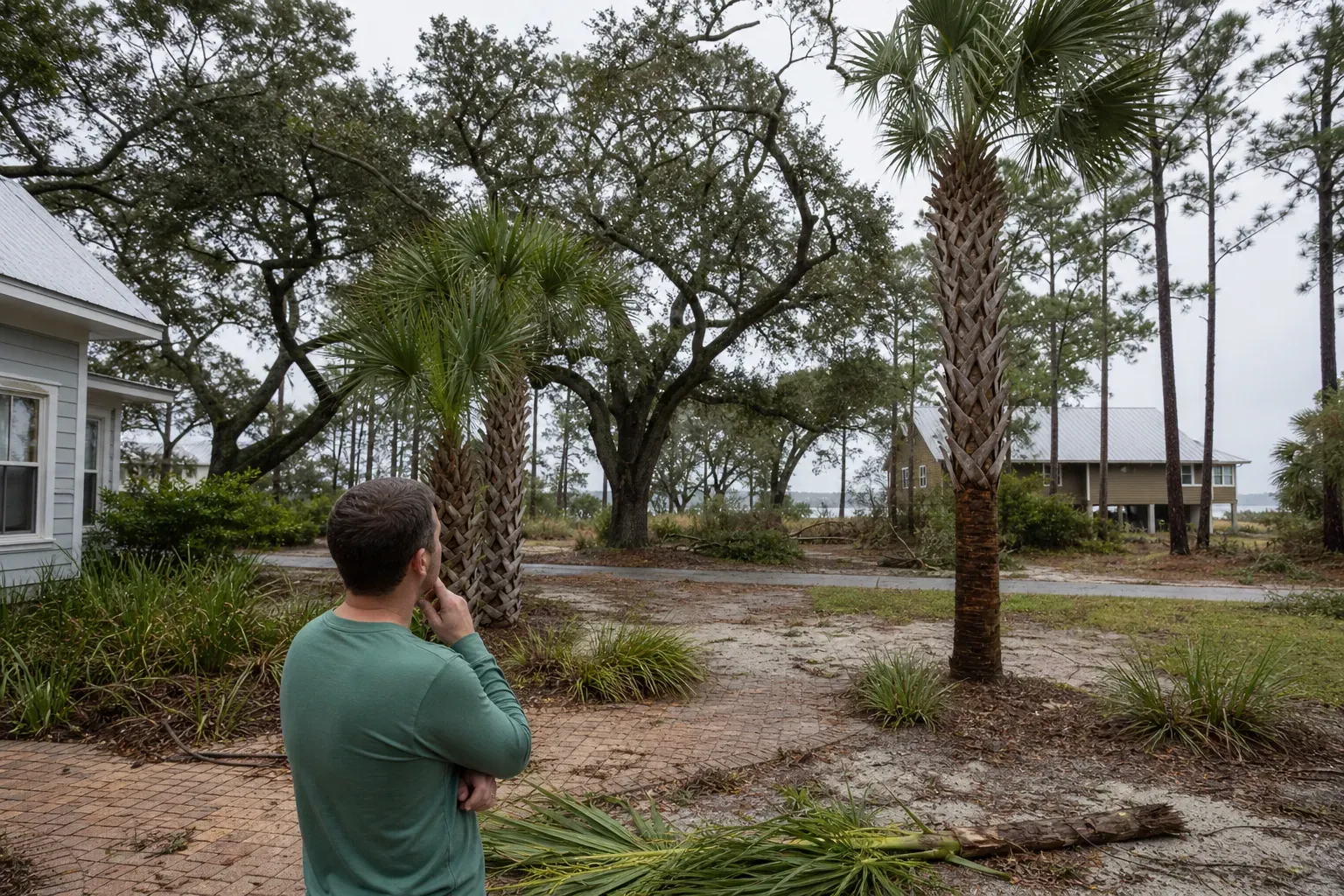
How do county instructions change your yard and evacuation decisions?
The Pensacola tree risk guide offers related tree-care background. The Pensacola tree risk guide offers related tree-care background. Neither replaces the orders for a Baldwin County or Escambia County address. For related tree-care background, read the Pensacola tree risk guide and Pensacola root recovery guide.
Evacuation comes before yard appearance. Do not delay leaving to finish pruning, stack limbs, or arrange debris. A task that seemed small can grow when a gate sticks, a limb shifts, or traffic builds.
Escambia County's evacuation guidance identifies storm surge as a major threat to life. It tells residents to heed local officials and evacuation orders. Its advice is for its own jurisdiction. Alabama residents should confirm Alabama instructions rather than borrow Florida zone guidance.
Use this order of decisions:
- Confirm the property's county, state, and city status. Use the actual address, not the closest well-known city.
- Read the latest official weather product. Check its issue time and the warning area it names.
- Check local evacuation and access instructions. Ask the authority if a zone or road notice is unclear.
- Choose departure or shelter before assigning yard tasks. Follow local orders and allow for your household's needs.
- Leave nonessential work unfinished. Do not let cleanup delay the action officials direct.
If it is still safe to plan, note your usual way out. Look for risks only from a safe place. You might see a limb above the driveway or a tree near a gate. Note the risk for a trained tree care professional. Do not try to remove it yourself.
Children, pets, medicines, and transport needs deserve time. A yard checklist should not compete with those needs. If a household member needs help to leave, seek local guidance early.
County notices may also say when you can return and which roads are closed. Being allowed back does not mean each yard is safe. Check for hazards before you use a driveway or walk under damaged trees.
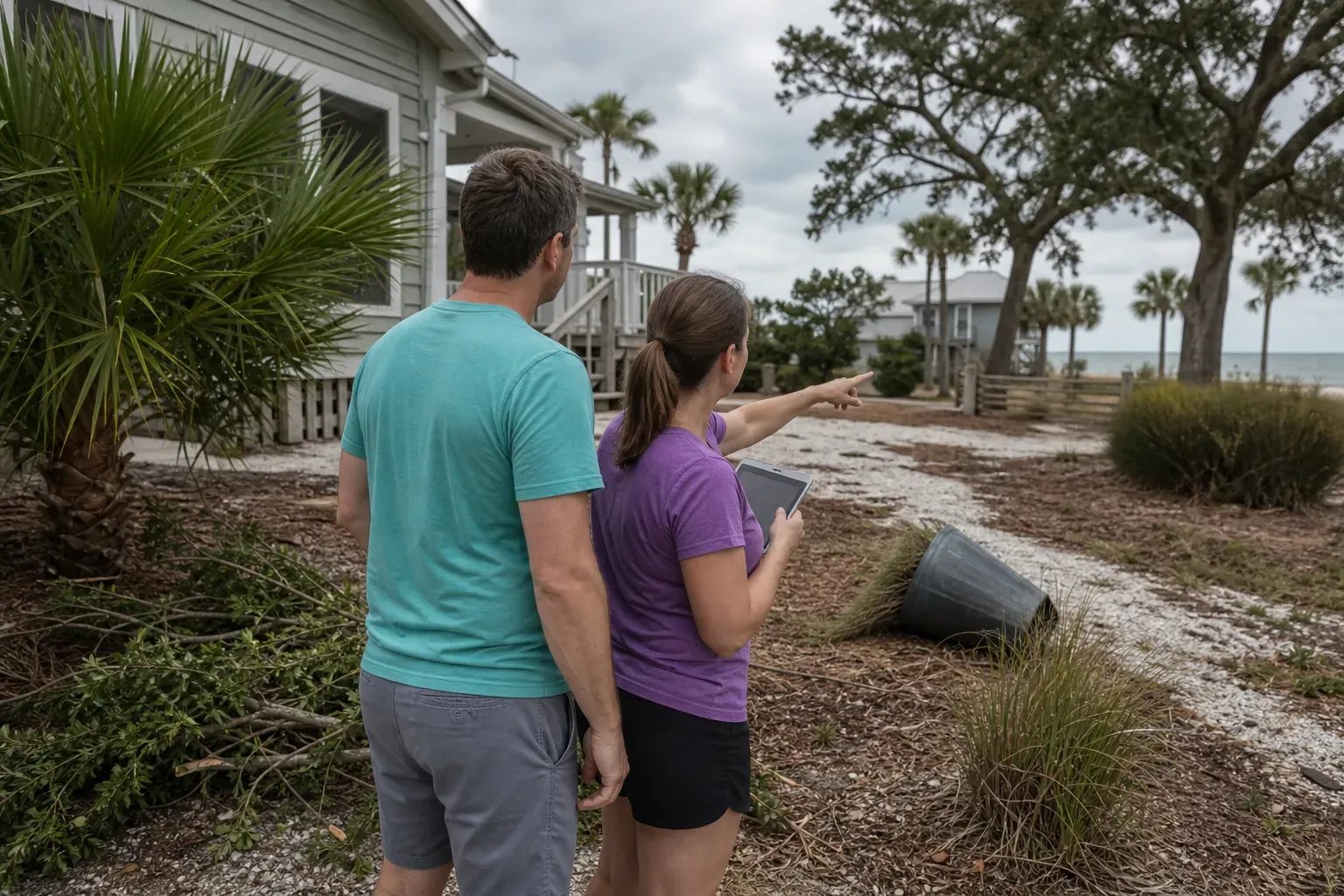
When should yard work stop near the state line?
The Pensacola tree risk guide explores when to pause yard tasks. Pair it with the broader Pensacola yard and evacuation plan to keep cleanup in its proper place. The border-specific rule is simple: neither side of the line makes hazardous tree work safe.
Stop when local instructions require another action. Also stop when conditions make the task unsafe. Do not wait for a named wind speed to justify leaving a risky job unfinished.
Some warning signs call for distance, not closer inspection:
- Stay clear of damaged trees and hanging limbs. Do not stand below them to judge how firmly they remain attached.
- Stay clear of wires and trees touching wires. Contact the utility and follow its instructions. This guide does not determine a wire’s status or authorize tree work near it.
- Do not enter water to reach debris. You may not be able to see what lies beneath it.
- Do not climb, use ladders, or cut storm-loaded wood. Leave hazardous tree work to qualified professionals.
- Do not work where a limb or trunk blocks your retreat. Keep people away and seek help rather than forcing a route.
Call emergency services for an immediate threat to life. Report utility hazards to the utility. A tree service estimate is not a substitute for either response.
A storm-damaged tree may need more than a quick visual check. The International Society of Arboriculture's tree-owner resources include guidance on tree risk and storm damage. Use those resources to understand the questions to ask, not to clear a damaged tree for use.
Do not assume heavy pruning is a safe last-minute fix. The tree's shape and damage matter. So do nearby people and buildings. A trained tree care expert must check the tree and work area.
The same rule holds after the storm. Clear skies do not fix hanging limbs or damaged roots. Stay out of the area until the hazard is dealt with. Do not set a cleanup deadline that pushes anyone to work when it is unsafe.
What should you confirm before moving debris or arranging tree work?
The Pensacola tree risk guide offers related tree-care background. The Pensacola tree risk guide offers related tree-care background. For border properties, also confirm whose collection and tree rules apply. For related tree-care background, read the Pensacola tree risk guide and Pensacola root recovery guide.
First check who owns the tree. Find out who controls the road and which local rules apply. A tree by your fence may be on public land. Land beside the road may be a public right of way. A tree near your home may not be yours to prune.
Pensacola's City Arborist page states that city trees and trees in public rights of way require permits for citizen pruning or removal. It also describes permit requirements for heritage trees and land-use-dependent protected trees. Those are Pensacola rules, not a summary of Baldwin County law.
Before authorizing work, confirm these points:
- Ask who controls the tree or roadside area. The answer may be the owner, city, county, or another public authority.
- Ask which current permit rules apply. Do not assume storm damage removes every approval requirement.
- Ask how storm debris must be placed. Confirm location, separation, size limits, and whether collection has been announced.
- Ask whether contracted cleanup includes hauling. A written scope should say what will happen to the material.
- Ask whether the work affects road or utility access. Coordinate with the responsible authority when needed.
Pensacola Sanitation Services handles yard waste for its service area. Its page also lists materials excluded from normal collection. That does not establish storm pickup dates or rules for nearby counties. Check the latest local notice before placing material at the curb.
For Florida projects outside Pensacola, the correct office may differ. Escambia County Development Review and Santa Rosa County Development Services provide routes for project questions in their jurisdictions. Neither page establishes Alabama requirements or a blanket storm-work exemption.
Document damage only from a safe place. The Florida CFO homeowners insurance overview recommends photos when possible and keeping repair records and receipts. It also explains that tree and debris coverage varies by policy. Ask your insurer about your own contract before making coverage assumptions.
Florida insurance guidance should not be presented as Alabama law. The Florida hurricane deductible resource concerns Florida rules. For an Alabama property, ask your insurer or agent which policy terms and state requirements apply.
How should you approach damaged trees and palms after officials allow return?
The Pensacola yard and evacuation plan provides the wider return-planning context. The Pensacola tree risk guide offers related tree-care background. Once return is allowed, this border-area guide still calls for a separate property safety check.
Put people and safe access first, not pruning. Keep children and pets out of damaged areas. Report each hazard to the right service. Leave trees that may fall, hanging limbs, and trees near wires to trained professionals.
Some damaged trees can be kept. Some standing trees must come down. The choice depends on the tree's health and shape, where it grows, and what it could hit. A photo alone may not show enough to decide.
UF/IFAS storm-restoration guidance describes recovery as a process that can require repeat pruning visits. Large broken branches can take many years to grow over a pruning cut. Do not expect one visit to restore a storm-damaged canopy.
Palms need different care from trees with branches. UF/IFAS says to keep bent green fronds if they are still attached and pose no hazard. These leaves still help the palm make energy. Cutting off too many live leaves can slow its recovery.
Use the following points when discussing palm care:
- Separate hazards from untidy foliage. A bent green frond is not automatically a reason for removal.
- Ask what can be assessed and monitored. UF/IFAS explains that the bud is not visible or accessible for inspection. Unless the trunk is broken or bud damage is obvious, the source says palm survival cannot be predicted. Ask a qualified professional what this means for the palm in question.
- Do not add treatments simply because a storm occurred. Fertilizer and pesticide choices require a sound reason.
- Expect recovery to take time. New leaves do not mean the full canopy has returned.
UF/IFAS guidance on hurricane-damaged palms says full canopy replacement takes at least a year and usually longer. It also states that research has not documented benefits from routine post-hurricane fungicide use. Seek qualified advice rather than choosing a tree care from a storm checklist.
The right fertilizer plan depends on the palm's health. The advice differs for palms still rooted in place and those planted again after a fall. This guide cannot tell which plan fits your palm. Have a trained palm care expert check it before you change its care.
Frequently asked questions
Do Pensacola evacuation orders apply to Baldwin County, Alabama?
No. Do not assume Pensacola orders cover an Alabama address. Follow orders from your Alabama county and town or city. A weather warning may cover both states, but local orders can differ. Check the place named in each notice and make sure it covers your home.
Does this article show live Isaias warnings?
No. This is a dated planning guide, not a live alert feed. Read the latest updates from the National Hurricane Center and National Weather Service. Also check with your county and city before you act. Follow their orders on when to leave, road closures, and when to return.
Should I finish tree trimming before leaving?
No. Do not let tree trimming or any other yard task delay an order to leave. Leave unsafe or unfinished tree work alone. Do not climb or cut trees during the storm. Follow local orders. Call emergency services for a threat to life and the utility for wire hazards.
Will insurance pay to remove a fallen tree?
Coverage depends on your policy and the facts of the loss. Florida CFO guidance notes that debris coverage often depends on damage to insured property, with limits and exceptions. Ask your insurer about your contract. Do not assume Florida guidance settles an Alabama claim.
Does Florida Foliage serve Pensacola or Baldwin County?
No service is offered here for those areas. Florida Foliage is based in Daytona Beach and serves Volusia and Flagler counties. This guide is for public education. It does not offer crews, a local office, or tree service in Pensacola, elsewhere in the Florida Panhandle, or Alabama.
Author and drafting disclosure
Tim Francis is Tree Content Expert. AI helped draft this article. It is a general guide. It is not a site inspection or live emergency notice. It does not give legal advice or decide what insurance covers. For urgent help, contact emergency officials or utilities. A trained tree care expert must assess tree issues at your home.
Florida Foliage is a Daytona Beach tree service that works with an ISA Certified Arborist consultant.
For tree work in Volusia or Flagler County, call (386) 481-7913 to request a free on-site estimate.
For tree work in Volusia or Flagler County, call (386) 481-7913 to request a free on-site estimate.