Reviewed by Clinton Funk
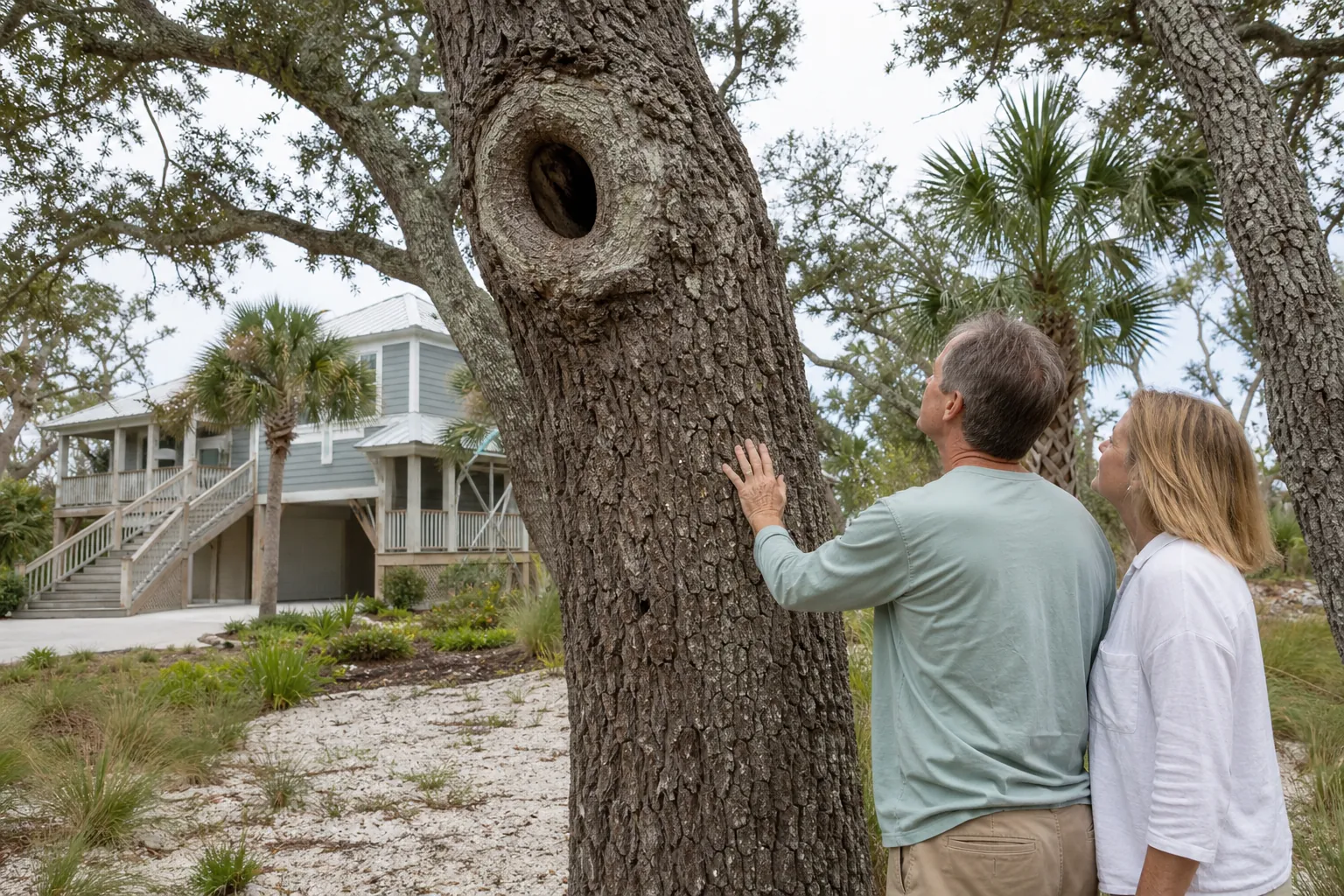
If you notice a tree cavity, ask a qualified arborist about it. This guide does not decide whether a tree will fall. Describe what you can see from a safe place. Tell an assessor where the opening sits, what has changed, and what lies nearby. Do not probe the hole or approach a suspect tree for a better view.
Hurricane Isaias Ask About Tree Cavities In Gulf Breeze is a focused guide to that conversation. It cannot rate a tree's strength or clear a property for use. Storm warnings and local officials' instructions come first.
What does Hurricane Isaias Ask About Tree Cavities In Gulf Breeze mean for homeowners?
Start with the broader Isaias tree-risk questions for Pensacola homeowners, then use this guide to describe a visible cavity. The Pensacola rental tree-record guide offers a separate way to track observations, messages, and unanswered questions.
The goal is a clear report, not a home tree assessment. A dark opening may look dramatic. A small opening may seem harmless. Ask what the assessor can tell you about the tree and its setting. Do not offer a strength rating based on how the opening looks.
Use the word cavity to identify the opening you wish to discuss. Ask what may have caused it and what remains unknown. Let the assessor explain any findings about its extent or effects.
The International Society of Arboriculture's tree-owner resources cover tree risk, storm damage, and why to hire an arborist. These are useful background topics. They are not a substitute for assessing your tree.
For a cavity discussion, keep three questions separate:
- What is visible? Report the opening, its position, and nearby features without guessing at hidden damage.
- What could be struck? Note buildings, paths, vehicles, or other places people use near the tree.
- What decision is needed? Explain whether you need guidance about access, further assessment, or longer-term care.
This article cannot decide whether the tree needs removal or whether it is safe. Ask the assessor to explain the findings and limits of the assessment. Avoid treating any single feature as the answer.
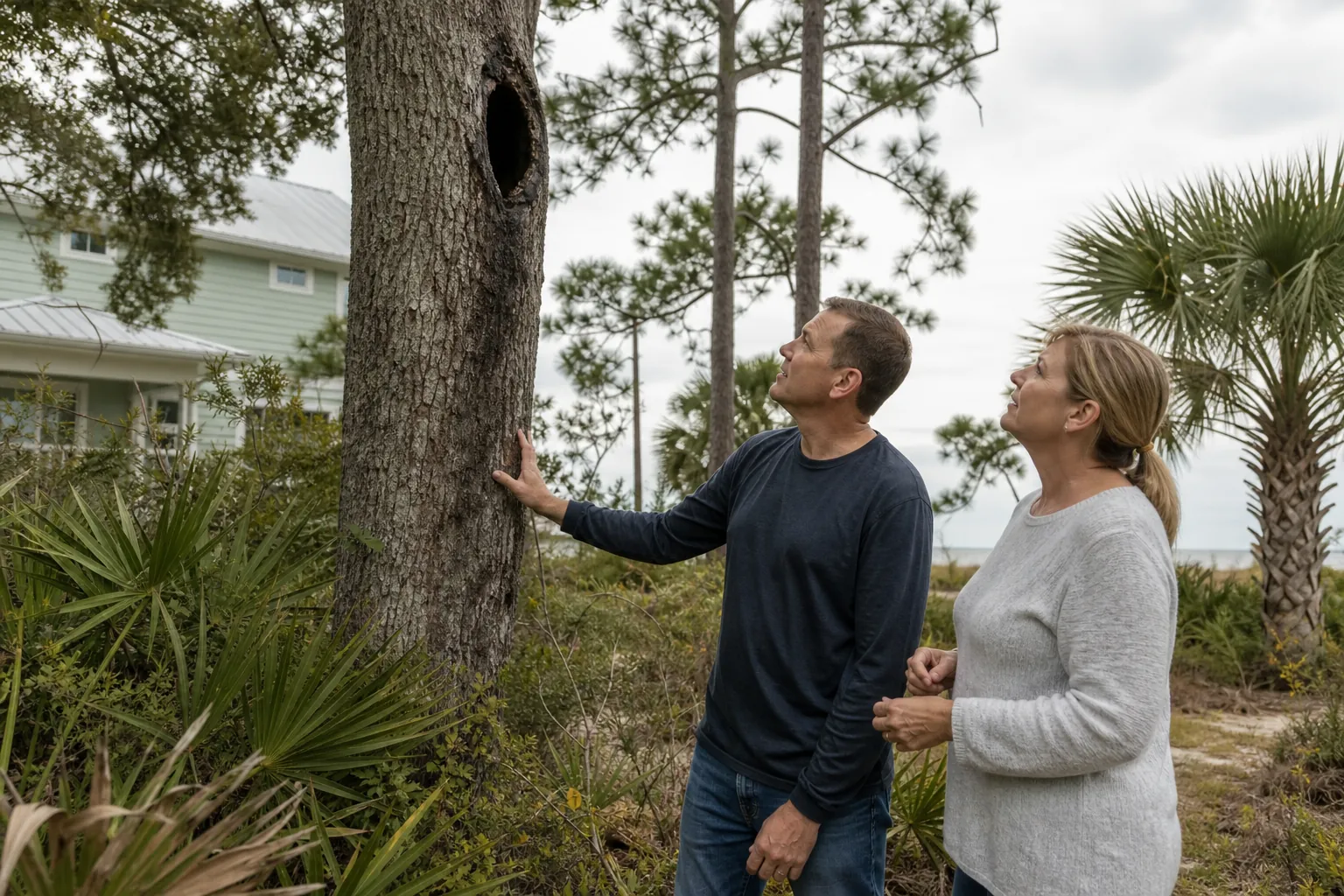
Which cavity details should you relay to an assessor?
Use the Pensacola tree-risk question guide for the wider assessment conversation. The rental tree-record guide keeps observations apart from an assessment. For this report, focus on where the cavity sits and what is visible around it.
Plain words are enough. You do not need the name of each tree part. Say whether the opening is near ground level, on the trunk, or on a large branch. If it sits where two stems meet, mention that too.
Describe size only from an existing safe view. An estimate such as “about as wide as a dinner plate” can convey scale. Make clear that it is an estimate. Do not walk up with a ruler to make the report more precise.
Useful details include:
- The opening's location matters. Say whether it faces the house, street, yard, or another clear landmark.
- Its visible shape helps identify it. Describe a round hole, a long slot, or an open section along the trunk.
- Nearby cracks deserve mention. State where you see them, without guessing how deep they go.
- Changes over time add context. Note whether the opening looks larger in older photos or whether wood recently fell away.
- Branch and stem features belong in the report. Mention a nearby fork, broken limb, or old cut that you can already see.
- Other visible signs can guide follow-up questions. Report mushrooms, loose bark, or fallen wood without naming a cause.
Distinguish “new” from “newly noticed.” A cavity seen for the first time after a storm may have been there before. If you do not know when it formed, say so.
Keep the report brief but specific. “There is a hole in the tree” leaves much unclear. “There is a long opening low on the trunk, facing the driveway” gives the assessor a better starting point.
Do not reach into the opening. Do not insert a tool, remove loose wood, or peel bark. Ask the assessor what information is needed. Leave hands-on examination to a qualified professional.
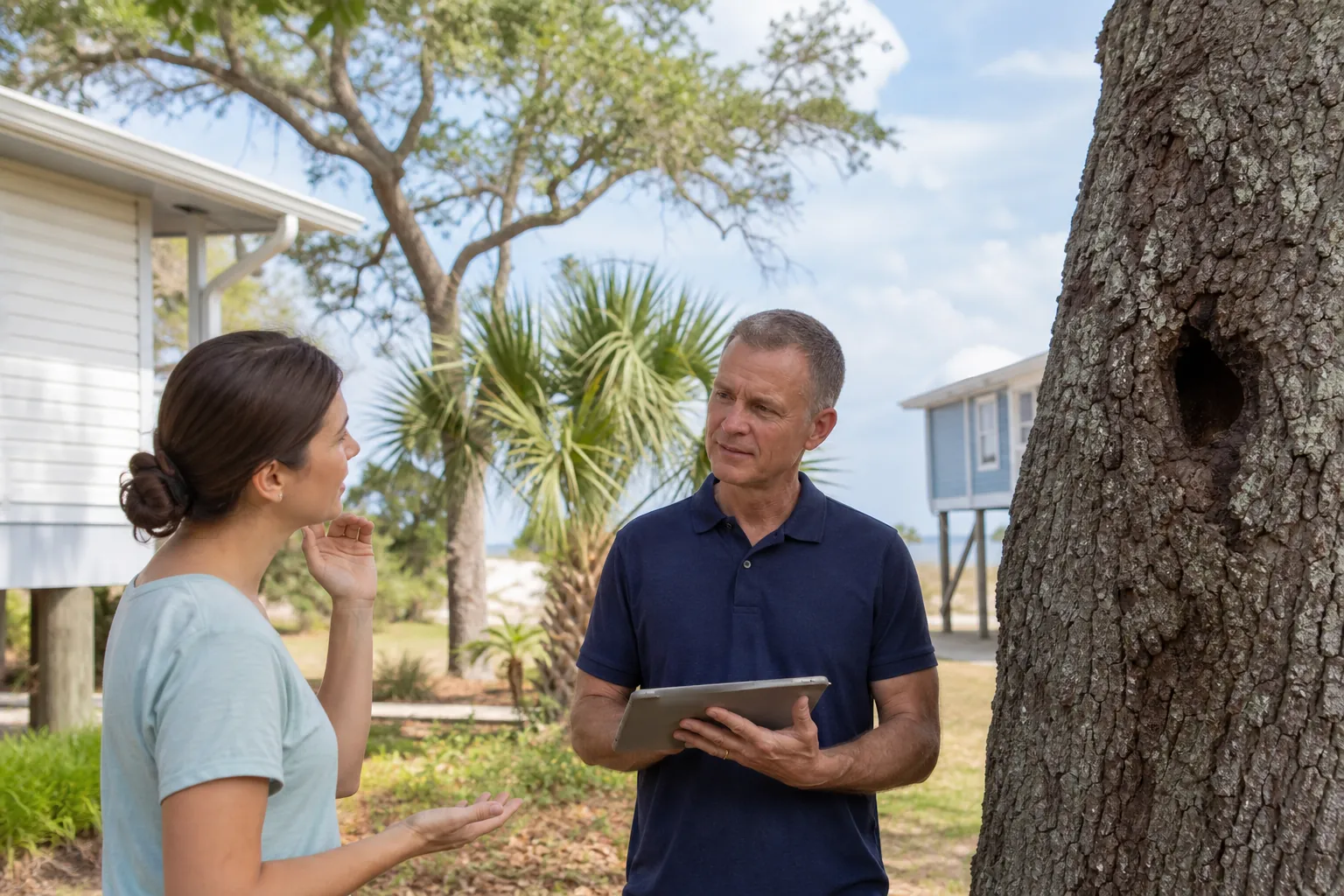
How can photos and site notes help without becoming a tree assessment?
The Pensacola homeowner tree-risk guide offers questions for a professional visit. Pair it with the Pensacola rental record guide when sharing earlier photos or messages. Images can support a discussion; this article does not use them to clear a tree.
Use photos you already have when possible. A past yard photo may show the tree before the current concern. Keep the original date if it is known. Do not claim that two images show growth or damage unless the views support that claim.
A close image may show the opening well but hide its location. A wider view may show the trunk and nearby structures. Both can be useful if they were taken without entering a suspect area.
There is no need to get a complete set. Missing a photo is better than taking a risk. Stay away from fallen wires, damaged limbs, floodwater, and places closed by officials. Do not stand below a branch to photograph its underside.
Use this short report format:
- Identify the tree's location. Give the address and a clear landmark, such as the tree beside the driveway.
- Describe the cavity. State where it sits and what its opening looks like from your existing view.
- Separate facts from unknowns. Say what changed, what you only recently noticed, and what you cannot see.
- List nearby places people use. Include rooms, entrances, parking spaces, paths, or neighboring areas that may be relevant.
- Ask for the next safe step. Let the assessor decide whether more information or an on-site visit is needed.
Do not give the assessor a percentage of hollow wood based on a photo. Ask which features can be discussed from the images and which need further examination. Record the answer instead of guessing at hidden conditions.
An assessor may request more views or recommend a closer examination. Ask how to provide information safely. Do not assume that a request for detail means you should approach the tree during hazardous weather.
When should storm instructions take priority over a cavity check?
The wider Pensacola hurricane tree-risk guide frames questions to take to an assessor. The rental tree-record guide helps keep a concern and its response together. Neither replaces evacuation orders or other official safety instructions.
The supplied October 9, 2026 NHC Isaias advisory describes a hurricane threat to the western Florida Panhandle and Alabama coast. It is a dated forecast, not a lasting statement of local conditions. Do not use its timing or forecast values as current guidance without checking official updates.
For Gulf Breeze, follow the latest information from the National Weather Service Mobile/Pensacola office and local public authorities. Follow evacuation and access instructions. A tree inspection must not delay leaving an area when officials direct you to leave.
A cavity report can wait when conditions make observation unsafe. Stop gathering details if doing so would mean going outside during dangerous weather, entering floodwater, or walking under damaged limbs.
- Keep away from a tree that appears to be moving or breaking. Do not approach to confirm what is happening.
- Treat wire contact as a utility hazard. Stay away from the tree, wire, and nearby debris, and contact the utility or emergency services as appropriate.
- Leave blocked or restricted areas alone. Do not pass a barrier to collect photos or reach the tree.
- Report an immediate threat to people through the proper emergency channel. Do not wait for a routine tree-care appointment.
Avoid turning a cavity observation into a shelter decision. This article cannot tell you which room is safe or whether a building should be used. Those decisions depend on conditions beyond one tree feature.
Once officials allow access and conditions are safe, report visible changes from a safe place. Fresh debris or a changed lean is worth describing. You do not need to identify the cause before asking for professional guidance.
What should you ask before agreeing to cavity-related tree work?
Return to the Pensacola tree-risk questions for the broad assessment discussion. Use the rental tree-record guide to connect recommendations, approved work, and follow-up notes. Ask what supports the proposed work beyond the opening’s appearance.
A useful assessment should help you understand the next decision. Ask which parts of the tree were examined and which remain uncertain. Ask whether the recommendation addresses the cavity itself, another defect, or the tree's position near people and property.
Questions worth raising include:
- What did you observe around the opening? Ask for a plain-language explanation of the visible findings.
- What cannot be determined from this visit? Ask whether hidden wood or roots remain a concern.
- Would further assessment change the recommendation? Ask what added information would help and why.
- What options fit this tree and site? Ask about the purpose and limits of each proposed option.
- What follow-up is needed? Ask which changes should prompt another assessment and how they should be reported.
Ask what any proposed pruning, filling, or covering is intended to achieve. Ask whether it addresses your concern and what limits remain. Discuss the purpose of the work with the qualified professional assessing the tree before agreeing to it.
Storm-damaged crowns may need a separate care plan. UF/IFAS restoration guidance describes staged pruning over multiple visits. It notes that growth over a large pruning cut can take many years. That guidance concerns recovery, not a guarantee that a hollow trunk can be retained.
Palms need their own assessment and care approach. UF/IFAS palm guidance recommends retaining broken green leaves in many cases because they still support recovery. It also states that research has not documented benefits from routine post-hurricane fungicide use.
Those limits matter when choosing work. Ask which findings support the assessment after cleanup. Ask for a reasoned recommendation tied to the actual tree, rather than a promise based on one photo or one hole.
Frequently asked questions about tree cavities after Isaias
Does a hollow tree always need to be removed?
This guide cannot decide whether a hollow tree needs removal. Ask a qualified arborist what findings support a recommendation for your tree. Ask which questions remain open after the visit. Do not read this answer as permission to use an area beneath a suspect tree.
Can a small cavity still matter?
Report a small opening if it is part of your concern. Ask the assessor how to describe it and what information would help. This guide gives no size-based verdict about the tree. Keep the observation separate from any conclusions in the assessment.
Should I clean out the cavity before someone visits?
No. Leave it alone for the assessment. Do not reach inside, scrape wood, or pull away bark. Describe what is visible from a safe place. If debris blocks the view, report that limitation rather than trying to expose more of the opening yourself.
Can an assessor clear the tree from photos alone?
Photos can help with an initial discussion, but they have limits. Ask which features the assessor can discuss from your pictures and which remain unexamined. Ask what conclusions can reasonably be drawn from the images and whether an on-site assessment is needed. Do not treat a brief photo review as a guarantee.
Does Florida Foliage provide this service in Gulf Breeze?
This article does not claim Gulf Breeze or Panhandle service. Florida Foliage is based in Daytona Beach and serves Volusia and Flagler counties. Gulf Breeze readers should seek an appropriate local qualified professional for tree-specific decisions and follow public authorities for storm safety.
About the author and drafting: Tim Francis is a Tree Content Expert, not a credentialed tree practitioner. This article was drafted with AI assistance using the linked public sources. It provides general education, not an individualized tree-risk assessment.
Florida Foliage is a Daytona Beach tree service that works with an ISA Certified Arborist consultant.
Call (386) 481-7913 to request a free on-site estimate.
For tree work in Volusia or Flagler County, call (386) 481-7913 to request a free on-site estimate.