Reviewed by Clinton Funk
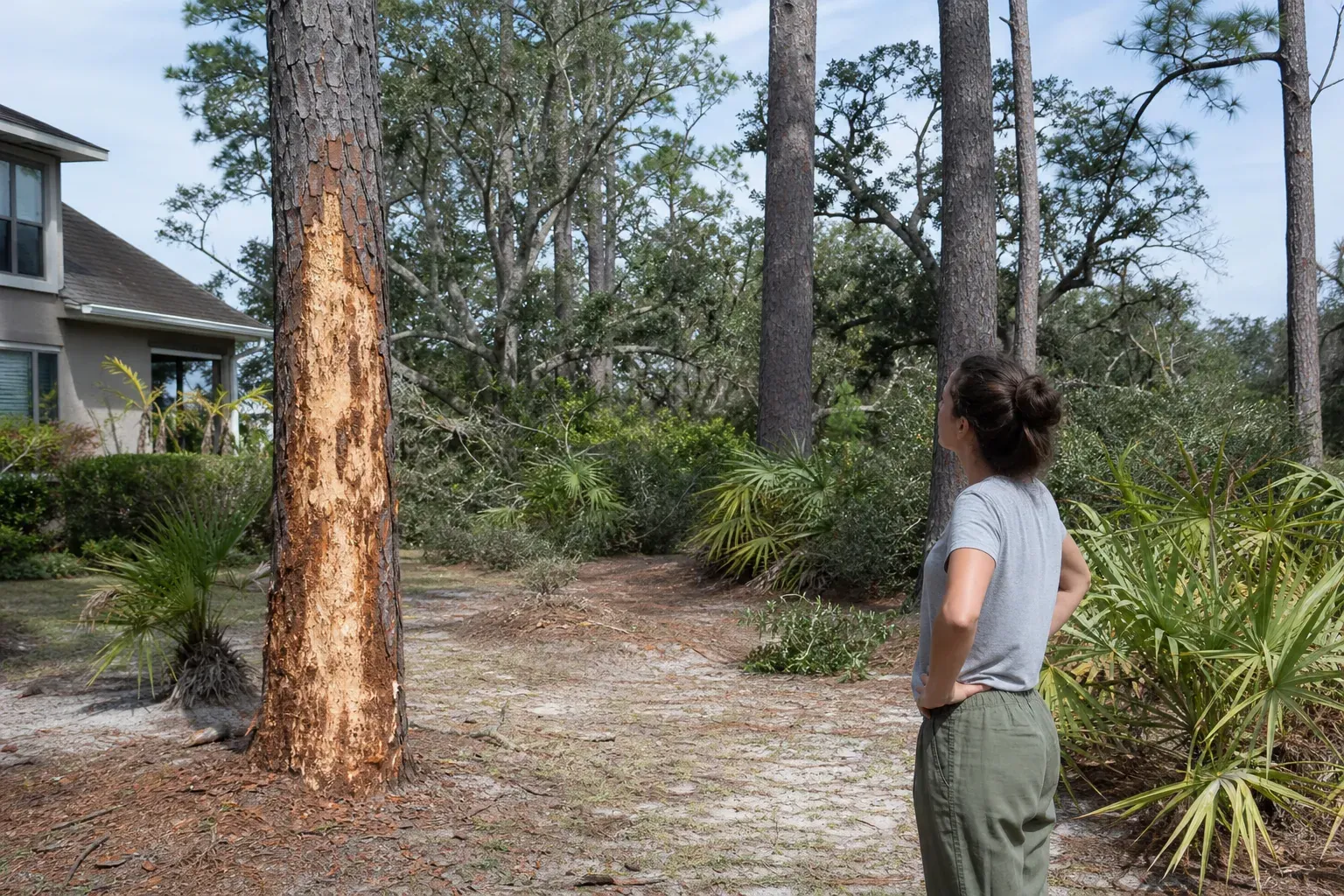
Hurricane Isaias Bark Injury Follow-Up In Pace starts with safe records, not wound tree care. Keep people clear of damaged trees. Take photos only from a safe place. Note what changed, then seek qualified review. Bark damage alone cannot tell you whether a tree is safe or likely to recover.
This guide covers wound records and follow-up questions. It does not confirm storm damage at any Pace property. It also does not replace an on-site tree assessment. Weather, access, and public safety orders take priority over tree care.
The supplied October 9 National Hurricane Center advisory is a dated forecast snapshot, not proof of local damage. Forecast details can change. Check the latest official advisory and local instructions before going outside.
What should Hurricane Isaias Bark Injury Follow-Up In Pace include?
Start with a clear record of the wound and tree. The broader Isaias tree canopy recovery guide for Pensacola covers canopy concerns. The Pensacola root recovery guide offers related tree-care background.
A useful record connects the bark injury to its location. Describe the visible location in plain words, and ask the arborist which additional details would help the assessment. Photos should help the reviewer understand that setting.
Do not assume a fresh-looking wound came from this storm. Older damage may become easier to see after leaf loss. Debris may hide parts of the trunk. Record what you know, and mark the rest as unknown.
Useful notes include these details:
- Record when you first saw the injury. State whether a pre-storm photo shows that same area.
- Identify the tree with a simple label. Use a label such as “front yard tree near driveway.”
- Describe where the wound sits. Note whether it is on the trunk, a limb, or a branch union.
- Describe what is visible without touching it. Examples include missing bark, exposed wood, or a dark patch.
- Note nearby places people use. Include doors, paths, parking spaces, and play areas.
- Record related damage seen from safe ground. Mention broken limbs or a newly changed lean without approaching them.
Use plain words rather than a tree assessment. “Dark patch below the scrape” is a useful observation. “The trunk has rot” is a conclusion that needs review.
The International Society of Arboriculture tree owner resources include guidance on tree risk, storm damage, and hiring an arborist. Use those resources to prepare for a qualified assessment. Do not use a checklist to declare the tree safe.
How can you document a wound without treating it?
Keep a photo record, but avoid contact with the wound. The Pensacola root recovery guide adds context for later growth. The Pensacola tree risk guide offers related tree-care background.
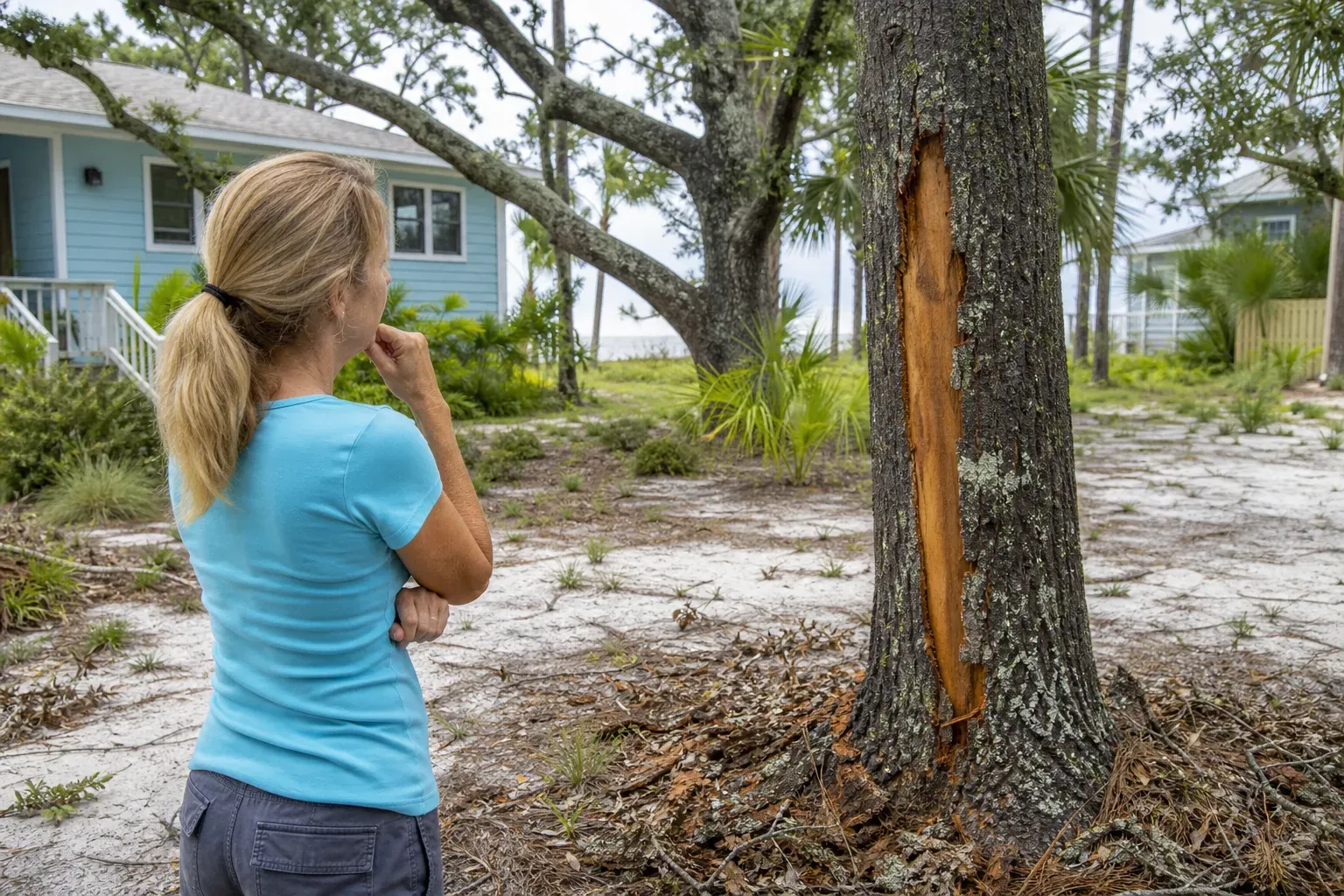
Your goal is to make later review easier. It is not to expose more wood or test the tree. There is no need to pull loose bark away. Do not probe a cavity, climb the trunk, or reach under hanging limbs for a better photo.
If conditions are unsafe, skip the photos. A written note from a safe place is enough to start. Do not enter floodwater or approach downed wires. Report electrical hazards to the utility. Use emergency services when there is immediate danger to people.
When access is safe, use this simple record plan:
- Give the tree a clear label and date the entry. Keep that label the same in later notes.
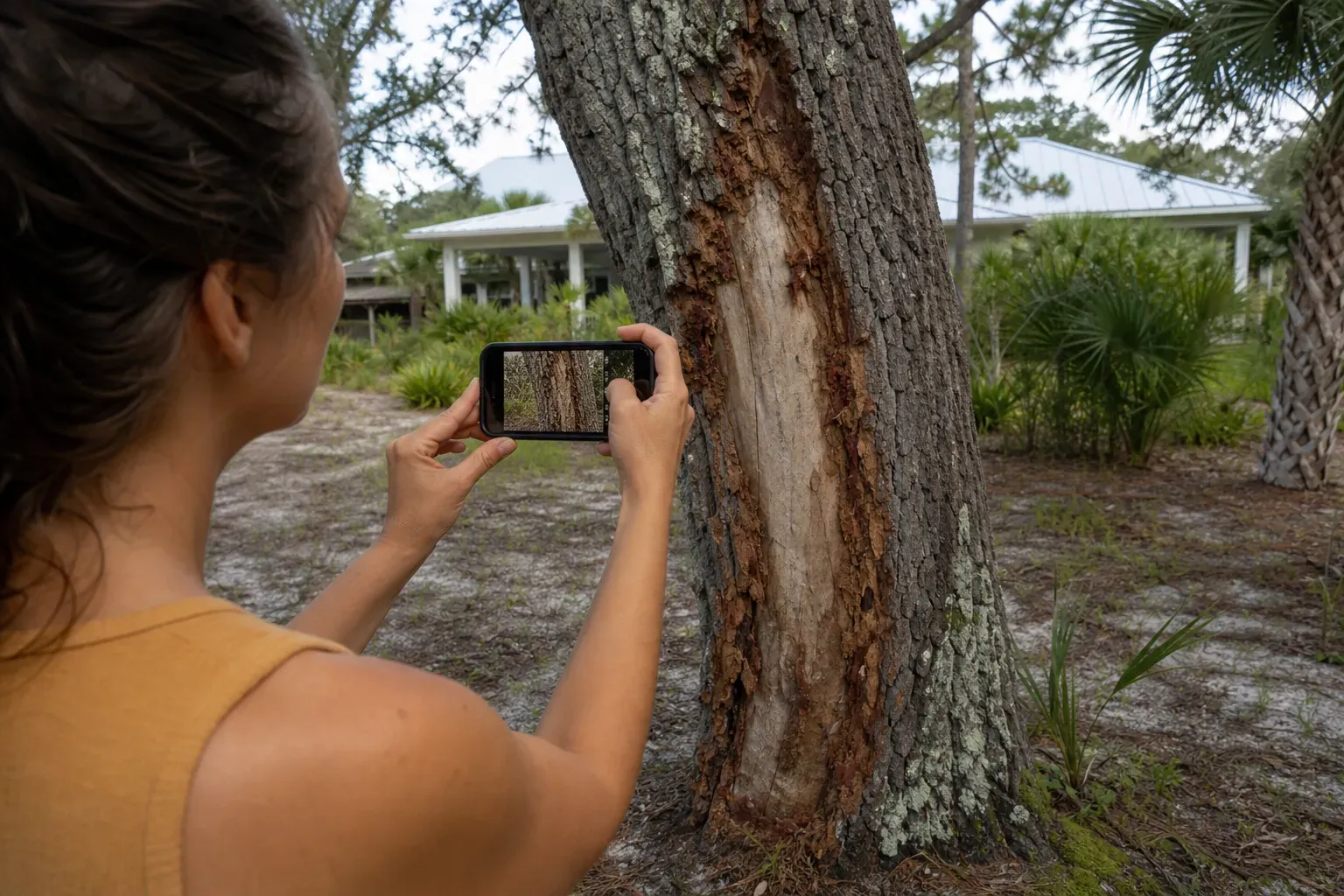
- Take a whole-tree photo from a safe viewpoint. Include nearby features that show the tree's setting.
- Take a view that shows where the wound sits. Use zoom if a closer approach would create risk.
- Write a short description of the visible injury. Note any parts that you cannot see.
- Save the original photos in a dated folder. Keep any marked copies separate from the originals.
- Add later photos only when access remains safe. Use the same viewpoint when practical, and note any change in angle.
A ruler is not worth an unsafe approach. Do not place one on the wound merely to add scale. If the size is only a guess, label it as an estimate. An on-site reviewer can decide whether measurements are needed.
Keep photos in order rather than replacing old ones. A single close-up can hide the wound's place on the tree. A wide view and a dated note often provide more context.
Avoid filters that change color or sharpness. Shade, rain, and camera settings can alter how a wound looks. If the latest photo seems darker, note the weather and light. Do not treat a color shift as proof of decline.
Which changes should you bring to qualified review?
Report clear changes, especially those tied to structure or use of the site. The Pensacola canopy recovery overview explains the wider recovery picture. The Pensacola tree risk guide offers related tree-care background.
Bark appearance is only one part of an assessment. A reviewer may also need to inspect roots, branch attachments, and nearby targets. Targets are people or things that could be struck if a tree or limb falls.
Do not wait for your next planned photo if a new hazard appears. Keep people away and seek prompt qualified review. The right contact depends on the hazard. Electrical risks belong with the utility, while immediate threats to people may require emergency services.
Bring these observations to the review:
- Report a new crack or a visible change in an existing crack. Do not push on the trunk to test it.
- Report a newly changed lean or shifted soil near the base. Do not assume the bark wound is the cause.
- Report a hanging limb or split branch attachment. Stay out from beneath the damaged area.
- Report bark loss that appears to extend beyond earlier photos. Explain whether the camera angle changed.
- Report new wet areas, dark marks, or growths near the wound. Record what you see without naming a cause.
- Report new branch dieback or leaf loss. Note whether it affects one limb or much of the crown.
These signs do not all mean removal is needed. They also do not establish that monitoring is enough. Their value is that they give a qualified reviewer specific questions to resolve.
A good request is direct: “This crack was not visible in my earlier photo. Does this change the need for assessment?” That is more useful than asking whether the wound looks normal.
Ask the reviewer to define the follow-up plan. Find out which changes should trigger another visit. Also ask which areas should remain clear of people. A general article cannot set a safe distance for a specific damaged tree.
Why can't wound closure or new growth prove recovery?
New growth can be encouraging, but it is not a safety test. The Pensacola root recovery guide offers related tree-care background. The Pensacola root recovery guide offers related tree-care background. For related tree-care background, read the Pensacola tree risk guide and Pensacola root recovery guide.
The UF/IFAS storm restoration guidance describes recovery as a process that can take years. It notes that large branch wounds are less likely to close over than small ones. It also describes repeated visits to manage sprouts and restore structure.
That guidance discusses broken branches and pruning cuts. It does not provide a timeline for every bark injury. Do not apply its branch examples to a trunk scrape and predict a closure date.
Ask the arborist to explain any change visible at the wound and how it affects the assessment. Keep surface notes separate from the safety assessment.
New sprouts deserve the same care in interpretation. They show that growth is occurring. They do not settle questions about a split trunk, damaged roots, or a weak branch union. UF/IFAS describes later structural pruning after new leaders and branches have been re-established.
Useful follow-up questions include these:
- Ask whether the visible wound changes the assessment plan. Do not ask for a recovery promise from a photo alone.
- Ask which parts of the tree need an on-site view. Some concerns may not be visible from your photo point.
- Ask how new sprouts fit into the restoration plan. Do not assume every sprout should stay or be removed.
- Ask whether another review should follow a specific event. Examples include further wind damage or a newly visible crack.
Palms need separate care. Their growth differs from that of branching trees. UF/IFAS guidance for hurricane-damaged palms explains that an intact bud is key to producing a new canopy. Full canopy replacement takes at least a year, and often longer.
The same palm guidance generally favors keeping broken leaves that remain green. It does not support treating all storm damage alike. Tell the reviewer whether the injured plant is a palm, rather than applying hardwood restoration advice to it.
What should you ask before authorizing follow-up work?
Ask for a clear scope tied to the assessed damage. The Pensacola root recovery guide can help frame the work discussion. The Pensacola canopy recovery guide provides the broader context without replacing a property-specific assessment.
Request an explanation that separates three things: observed damage, the proposed work, and future monitoring. Those are not the same. A bark scrape may be documented while a separate broken limb needs action.
Ask who will make the tree care decisions. The ISA's tree owner resource page links to information about hiring arborists and recognizing tree risk. Confirm relevant qualifications rather than relying on a broad job title.
Questions worth asking include these:
- Ask what problem each proposed task addresses. The scope should be clearer than “storm cleanup.”
- Ask whether the plan concerns the wound, the canopy, or both. This helps keep separate issues from being blurred together.
- Ask which concerns remain uncertain after the assessment. A useful plan should not hide limits.
- Ask who will confirm local permit requirements. Do not assume storm damage removes all review requirements.
- Ask whether hauling and disposal are included. Do not assume public collection will accept contractor debris.
- Ask what records you should keep after the work. Save the written scope, invoices, photos, and follow-up notes.
Pace property owners should direct site-specific permit questions to the relevant local authority. Santa Rosa County Development Services provides land use and permit contacts. Its general page does not settle whether your particular tree work needs approval.
Rules from another city are not a substitute. For example, Pensacola tree requirements should not be used as proof of the rules for a Pace property. Confirm the jurisdiction and the proposed task before relying on a permit answer.
Keep insurance questions separate from tree care decisions. The Florida CFO homeowners insurance overview says debris and tree removal coverage varies by policy and circumstance. It also recommends damage photos, when possible, and accurate records of temporary repairs.
Document only when it is safe. Do not delay needed safety action for a better claim photo. Ask your insurer or agent about coverage, required records, and policy terms. Neither a wound photo nor this guide can predict payment.
Frequently asked questions
Does missing bark mean the tree must be removed?
No. Missing bark alone does not establish the need for removal. The injury's location, other damage, tree structure, and nearby targets all matter. A qualified on-site assessment is needed for that decision. Keep people clear if there are visible structural hazards.
Should I peel loose bark away to improve the photos?
No. Document what you can see without changing the wound. Peeling bark changes the area you are trying to record. It may also require an unsafe approach. Use a wider photo or zoom, and tell the reviewer which parts were not visible.
How often should I photograph the injury?
There is no single schedule for every damaged tree. Ask the qualified reviewer for a follow-up interval and clear reasons to contact them sooner. If a new crack, hanging limb, or changed lean appears, do not wait for the next scheduled photo. Keep people away and seek review.
Can I send photos instead of arranging an on-site assessment?
Photos can help explain the concern and start a discussion. They cannot show every root, trunk, or branch condition. Ask whether the reviewer needs an on-site visit. Do not treat a brief photo response as clearance to use the area beneath a damaged tree.
Does Florida Foliage provide tree service in Pace?
Florida Foliage is based in Daytona Beach and serves Volusia and Flagler counties. This Pace article is general public education. It does not state or imply Pace crews, a local office, or service availability. Pace owners should seek qualified help that serves their property location.
Editorial disclosure
This article was drafted with AI assistance. Tim Francis is identified as Tree Content Expert, not as a credentialed tree care practitioner. The article provides general education, not an individualized tree assessment, insurance determination, or permit decision.
Florida Foliage is a Daytona Beach tree service that works with an ISA Certified Arborist consultant.
For tree work in Volusia or Flagler County, call (386) 481-7913 to request a free on-site estimate.
For tree work in Volusia or Flagler County, call (386) 481-7913 to request a free on-site estimate.