Reviewed by Clinton Funk
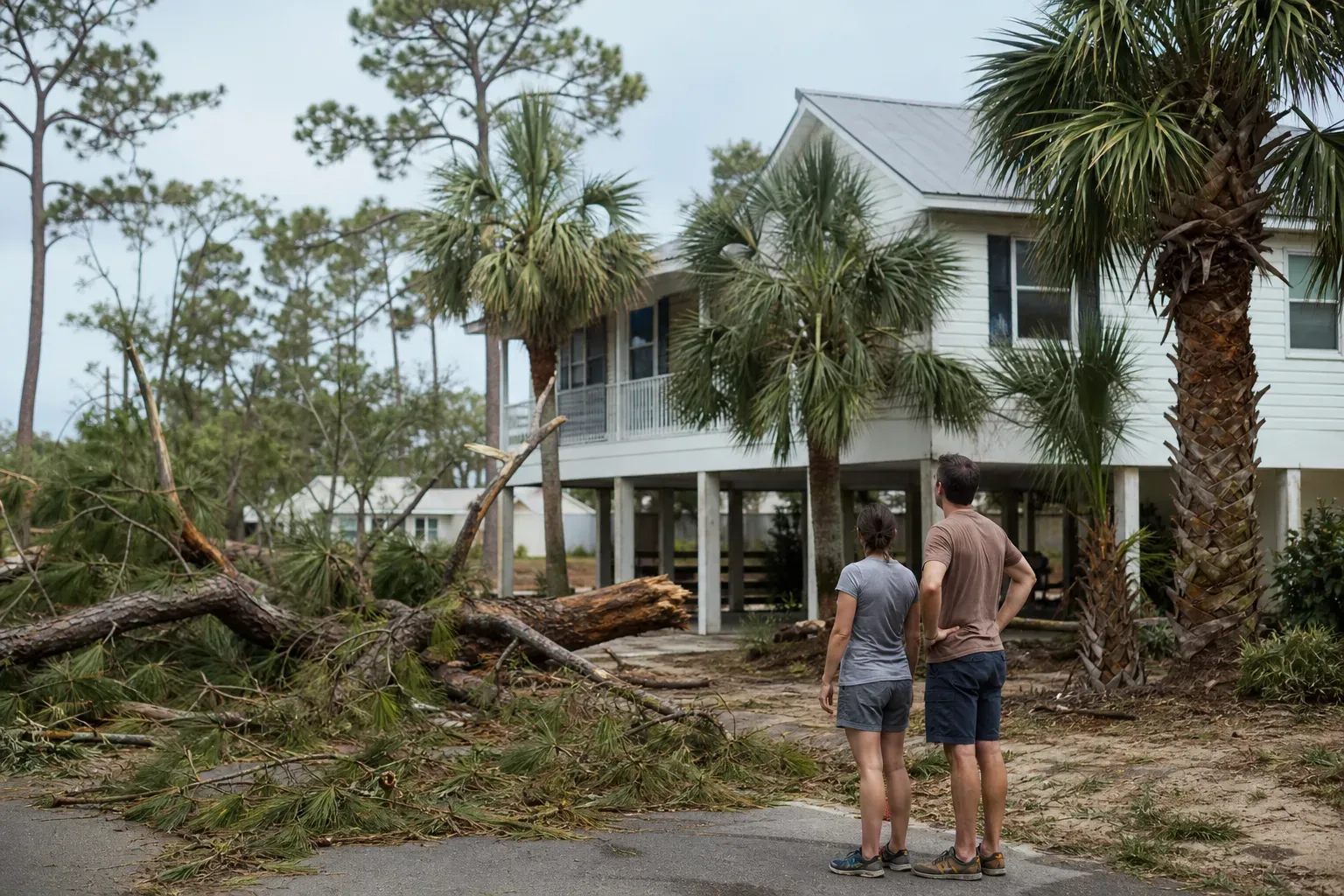
Start with the property's actual boundary location. Then confirm who owns or controls the tree site. For Hurricane Isaias City Or County Tree Rules In Escambia, a Pensacola mailing address alone does not settle which office has authority. Ask the relevant city or county office to verify the parcel before arranging pruning or removal.
Storm damage does not, by itself, prove that work needs no permit. Public trees, heritage trees, and private trees may follow different paths. This guide explains how to find the right path. It does not decide whether a specific tree is safe or whether a legal exception applies.
How do you check Hurricane Isaias City Or County Tree Rules In Escambia?
Use the Pensacola tree-permit overview for the wider context. The Pensacola tree-permit overview and Pensacola root recovery guide offer related tree-care background. They do not decide insurance, contract, or permit questions for your property.
A mailing address helps deliver mail. It is not proof of city limits. Give the office the full street address and parcel number, if known. Ask staff to confirm the governing area using their records. Do not rely only on a search result, neighborhood name, or contractor's guess.
If staff sends you to another town or public office, follow that lead. You may need help from more than one office. Who owns the tree, how the land is used, and where the road ends can shape the next step.
The Escambia County Development Review page provides a contact point for development review questions. Use the contact details on that page to reach the office. Its supplied guidance concerns development proposals and site plans. It does not establish a blanket storm-tree removal exemption.
For property inside Pensacola, the City Arborist page explains several tree categories and permit paths. The city states that heritage-tree pruning or removal requires a permit under its ordinance. It also says protected-tree permit needs depend on the property's land use.
Use this short sequence before committing to work:
- Record the street address and parcel number. Include the tree's position on the lot.
- Ask the public office to confirm the parcel's jurisdiction. Request a referral if you reached the wrong office.
- Confirm whether the tree is private, city-owned, or within a public right of way.
- Describe the proposed work clearly. Distinguish pruning, full removal, and clearing fallen debris.
- Ask which rules and documents apply. Request written guidance or the relevant official page.
- Keep the reply with your photos and work estimate. Share it with the person planning the work.
These steps help you know what to ask before you pay for work. They also help you avoid using city rules for a county lot or county rules for a city tree.
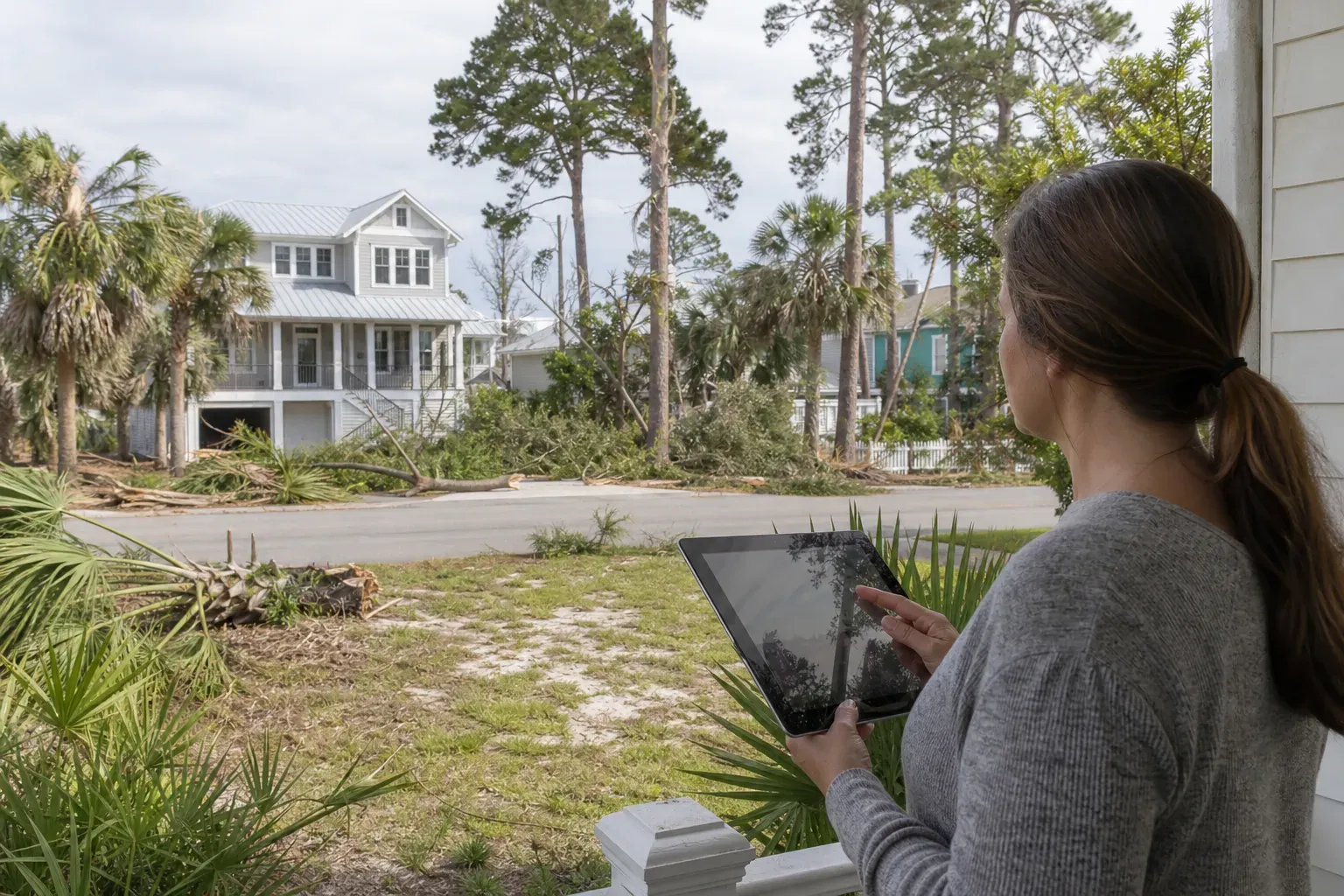
Does a private yard or roadside tree change who you contact?
The Pensacola permit guide helps frame city-tree questions. The Pensacola tree risk questions guide and Pensacola root recovery guide offer related tree-care background. They do not decide insurance, contract, or permit questions for your property.
A tree near your fence may still raise boundary questions. The same is true of a tree beside a sidewalk. Its location near your home does not prove that you may authorize work on it.
Ask the responsible office to identify any public right of way at the site and its boundaries. Ask the office in charge to check where it ends. A mowed strip does not prove who owns the land.
Pensacola's City Arborist guidance says trees on city-owned land and city rights of way are city trees. It states that permits are required when a citizen wishes to prune or remove them. The page also directs requests for hazardous limbs or dead trees on city property to Parks and Recreation through Pensacola 311.
For those city requests, use the contact details on the linked page. It separates tree-work requests from street-sign or traffic-signal visibility issues. Those visibility concerns go to Public Works through the city's reporting process.
Keep the question tied to the actual site:
- Tell staff whether the trunk stands in the yard or roadside strip. Explain any uncertainty about the boundary.
- Describe nearby sidewalks, road signs, and utility equipment. These details help staff route the request.
- Ask who may approve work on the tree. Do not assume your contractor can obtain permission from you alone.
- For a shared boundary tree, seek clear ownership guidance. A permit answer does not settle a neighbor dispute.
- If the site is outside Pensacola, ask the county which agency controls the roadside area. Do not use the city's process by default.
Stay safe before you check permit rules. Keep away from fallen wires and trees that touch lines. Do not enter a blocked or flooded area to look at a trunk. Call the power company about unsafe lines. Call emergency services if a life is at risk right now.
Do not cut a hanging limb to test its stability. Keep clear of a tree resting against another tree and ask a tree professional for guidance. Keep people clear and seek a qualified assessment.
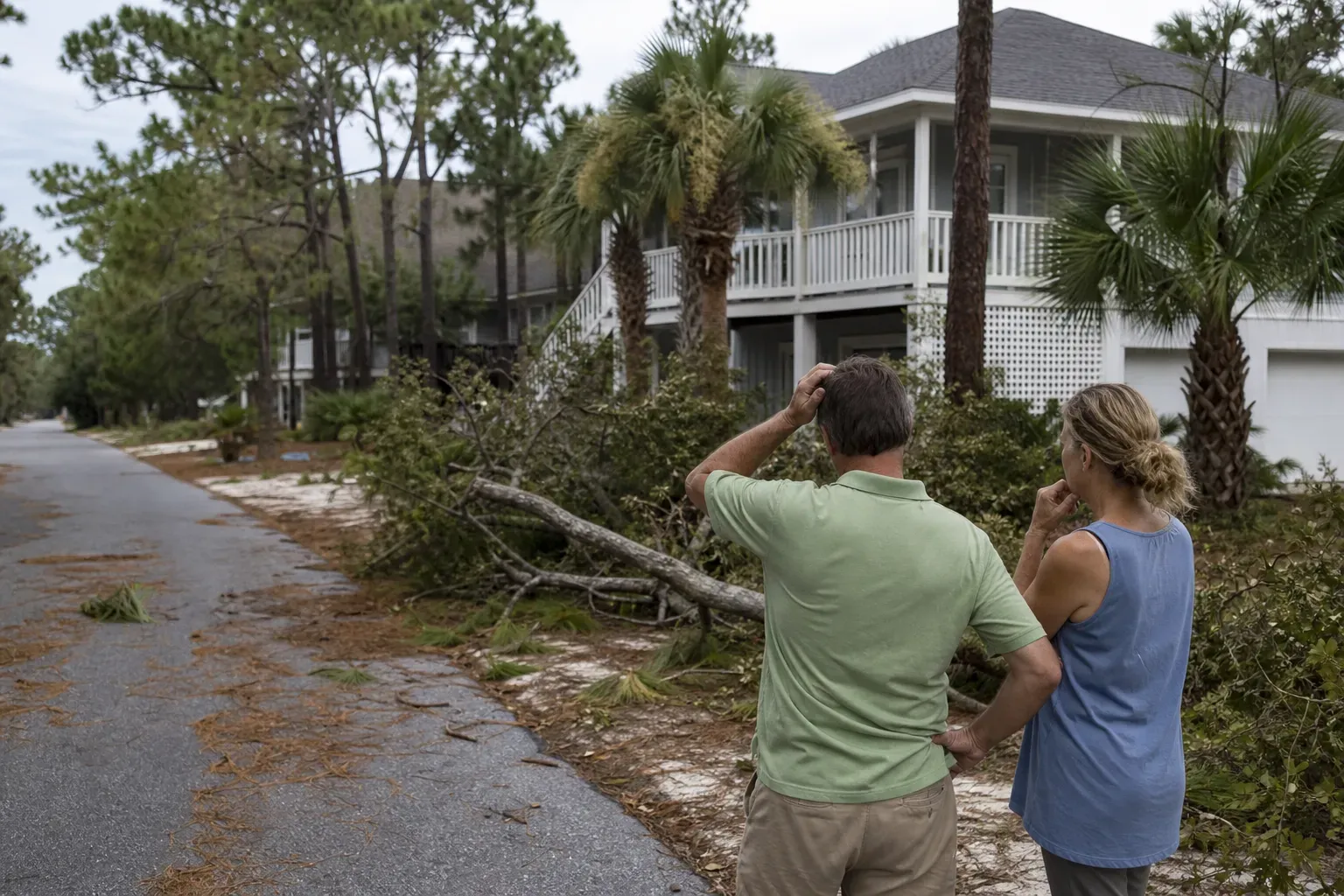
Does Isaias damage mean pruning or removal is exempt?
The Pensacola storm-tree overview covers broader permit questions. The Pensacola tree risk questions guide and Pensacola root recovery guide offer related tree-care background. They do not decide insurance, contract, or permit questions for your property.
Ask the public office about the work you plan. A fallen branch is not the same as a broken treetop or a tree pulled from the ground. Rules for clearing debris may differ from rules for cutting a tree that still stands. Say what happened. Do not try to give it a legal label.
Pensacola identifies protected trees by species and size under its ordinance. Its City Arborist page describes heritage trees as a protected category based on diameter. The city says heritage trees are protected across the land uses listed in the ordinance, including single-family or duplex properties.
Use that page to help you ask questions. Do not decide the tree's legal status on your own. Staff may need to check its type, size, and health. They may also need to know how you use the land. Ask what records they need for your lot.
Useful questions include:
- Ask whether the proposed pruning or removal requires a permit. Name the parcel and describe the work.
- Ask whether any storm-related process applies. Request the conditions and required records in writing.
- Ask who may provide an acceptable tree assessment. Do not assume any informal opinion will qualify.
- Ask whether an inspection is needed before work. Explain any hazard without entering the danger area.
- Ask how to handle public-tree damage. Private permission does not authorize work on public land.
A tree report and public approval do not do the same job. An arborist can check the tree and explain ways to care for it. The city or county can explain its permit rules. Do not use one in place of the other.
The International Society of Arboriculture's tree-owner resources include guidance on tree risk, storm damage, pruning, and hiring an arborist. These resources help owners ask better questions. They do not establish an Escambia permit exemption.
Not every damaged tree needs removal. UF/IFAS restoration guidance describes staged pruning after storms. It notes that larger broken branches can require years of follow-up work. It also identifies weak structure, such as competing main stems, as a storm concern.
Palms need a different review from broadleaf trees. UF/IFAS advises retaining bent green fronds unless they pose a hazard. Those leaves help supply energy during recovery. Its hurricane-damaged palm guidance also notes that full canopy replacement can take at least a year, usually longer.
These are broad care tips, not steps for climbing or pruning. Have a trained tree care expert check the tree and plan safe work. Do not strip live leaves just to make storm damage look tidy.
What records help with permits, insurance, and debris pickup?
The Pensacola tree-permit overview provides the broader local framework. The Pensacola tree risk questions guide and Pensacola root recovery guide offer related tree-care background. They do not decide insurance, contract, or permit questions for your property.
One office's answer may not settle all three. A tree permit does not prove that your policy will pay. A claim number does not give you the right to remove a tree. A debris pickup notice does not mean you may cut a tree that still stands.
Take photos only from a safe place. Show the tree, visible damage, and affected property. Do not move beneath hanging limbs for a better view. If access is unsafe, explain that limit to the office or insurer.
A useful file can include:
- Keep the parcel details and a simple site sketch together. Mark the tree's location and nearby public land.
- Save dated photos and the original files. Include wider views when safe access allows.
- Keep public-office emails and permit records. Record the staff member's name and the date of a call.
- Request a written estimate that describes the work. Check whether hauling and debris disposal are included.
- Save invoices and receipts for completed work. Keep them separate from unapproved estimates.
- Record insurer instructions and claim communications. Ask about needed evidence before disposing of material when safely possible.
The Florida CFO homeowners insurance overview explains that debris and tree removal coverage varies by policy. It notes that policies commonly cover removal when a downed tree damages insured property, subject to limits. Trees that fall without damaging covered property may not have the same coverage.
That summary does not decide your claim. Ask your insurer or agent to check your policy. Ask about its limits and the amount you must pay out of pocket. The Florida hurricane deductible guidance explains those rules. You still need to check your own policy's terms.
For pickup inside Pensacola, the Sanitation Services page identifies the city's role in yard-waste collection. Use the contact details on that page for questions. The supplied storm notice postpones Friday collection and schedules garbage collection for Monday, October 12. Check current rules for your address and contractor debris before relying on that dated notice.
Ask about the current rules before you put debris at the curb. Check what crews will take, where to put it, and size limits. Ask if they take waste left by a contractor. Outside city service, ask the county or your waste provider. Keep drains, sidewalks, and roads clear.
Which storm information should guide your next decision?
Read the Pensacola tree-permit overview for the wider approval picture. The Pensacola tree risk questions guide and Pensacola root recovery guide offer related tree-care background. They do not decide insurance, contract, or permit questions for your property.
The supplied October 9 NHC advisory identifies Isaias as a named system. Forecast details can change. Treat that dated advisory as a time-stamped report, not a lasting statement of conditions at your home.
Use the latest official information before travel or cleanup. The National Weather Service Mobile/Pensacola page provides regional weather products. Local warnings and evacuation directions matter more than a tree-work schedule.
Escambia County's evacuation guidance tells residents to heed local orders. It identifies storm surge flooding as a major life-safety threat. Permit research must not delay an ordered evacuation.
Put safety first when you plan your next step:
- Follow local evacuation orders before you research tree permits.
- Wait for officials to allow access to closed areas.
- Stay out of floodwater, even to take tree photos.
- Stay inside during dangerous winds. Check trees from a safe distance afterward.
Keep your first message brief: “Please confirm which office handles this parcel and whether the proposed tree work needs approval.” Add the address, tree location, and safe photos. Clear facts help staff answer without guessing.
FAQ: What are the common city-versus-county tree questions?
Does a Pensacola mailing address mean city tree rules apply?
No. The Pensacola tree risk questions guide and Pensacola root recovery guide offer related tree-care background. They do not decide insurance, contract, or permit questions for your property. Give the office your property address and keep its dated written reply with your site records.
Can I assume a storm-damaged tree needs no permit?
No. Ask the city or county about your tree and the work you plan. The linked sources do not show that all Isaias damage is exempt from permits. Ask which rules apply before work starts. Keep the office's reply and any required tree report with your job records.
Who handles a damaged tree beside a city street?
First ask whether the tree stands on city land or in a public right of way. Pensacola sends city-tree work requests to Parks and Recreation through its reporting process. Outside city limits, another agency may handle the tree. Ask the county who controls the site before you arrange work.
Will insurance pay because the tree fell during Isaias?
Not always. Your policy and the damage determine what may be covered. The cost to remove a tree, damage to your home, policy limits, and your deductible can affect the claim. Ask your insurer or agent to review your case. Keep photos taken from a safe spot, work estimates, and receipts.
Does an arborist's opinion replace public approval?
Do not assume it does. An arborist's report tells you about the tree's health and care needs. Ask city or county staff what permits and records you need. Ask if an exception applies. Find out how they use the report before you treat it as a right to start work. Ask the public office whether it needs a tree report and what approval applies.
About the author and drafting: Tim Francis is Florida Foliage's Tree Content Expert. This article was drafted with AI assistance. It provides general education, not a site-specific tree assessment, legal opinion, or insurance determination.
Florida Foliage is based in Daytona Beach and serves Volusia and Flagler counties. This guide is for learning. It does not mean the company has crews or an office in Escambia or the Florida Panhandle. It does not mean the company offers service there.
Florida Foliage is a Daytona Beach tree service that works with an ISA Certified Arborist consultant.
For tree work in Volusia or Flagler County, call (386) 481-7913 to request a free on-site estimate.
Call (386) 481-7913 to talk through next steps.