Reviewed by Clinton Funk
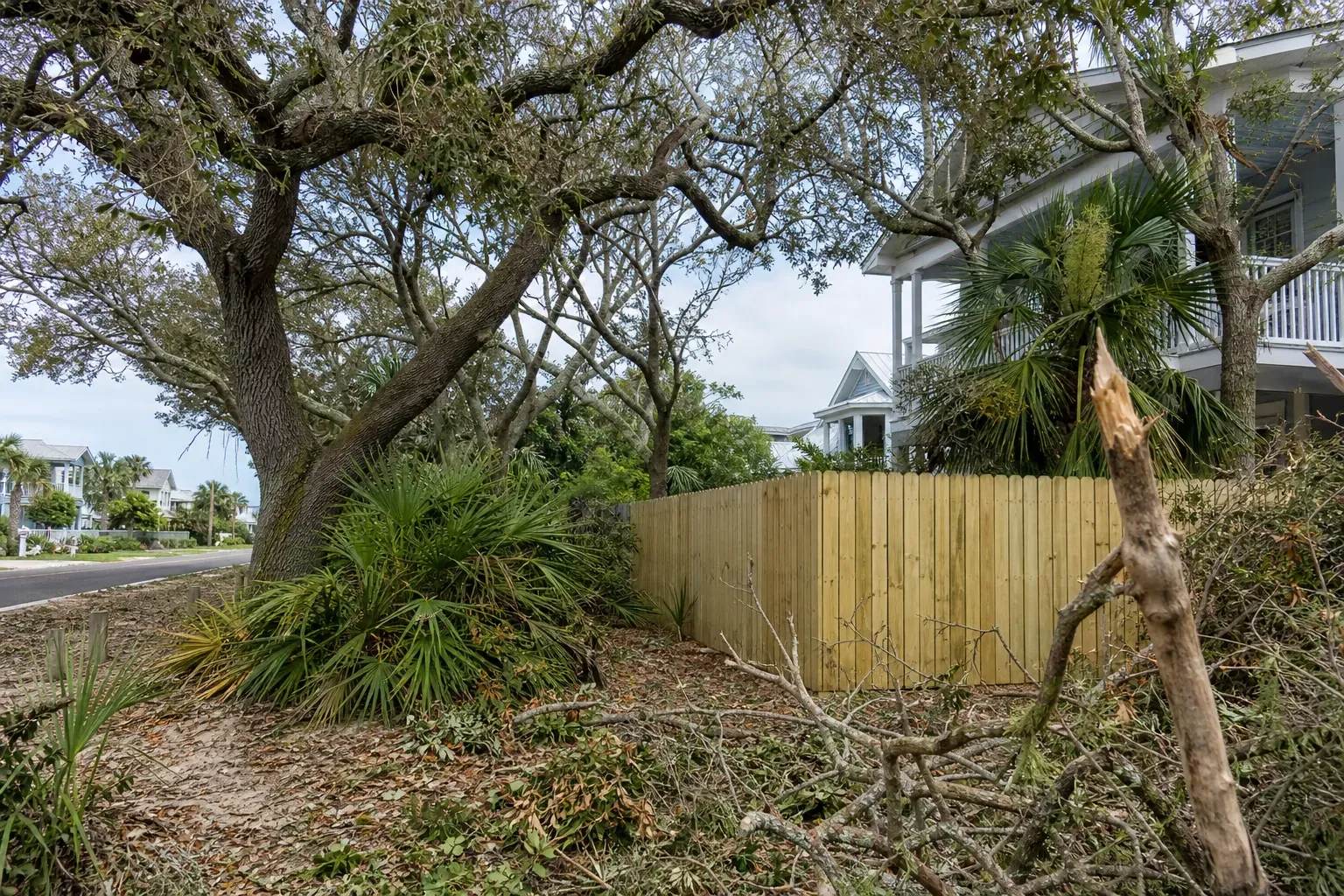
Keep people clear of tree hazards first. Then confirm the property line and work consent before disturbing a fence, stump, or root zone. A fence alone should not settle a disputed boundary. Hurricane Isaias Fence Boundaries And Tree Work In Escambia involves three separate questions: where work may occur, who may approve it, and what work is safe.
This guide helps you plan work near unclear fence lines. It does not settle who owns the land or who pays for repairs. Ask a survey professional about the line. Ask an attorney about disputed rights. Use a qualified tree professional to check tree risks.
The supplied October 9 storm advisory is a dated snapshot. Do not use its forecast as a live update. Follow the latest National Hurricane Center advisory, local National Weather Service updates, and orders from local officials. Florida Foliage serves Volusia and Flagler counties, not Escambia County.
What should Hurricane Isaias Fence Boundaries And Tree Work In Escambia address first?
Separate the immediate hazard from the boundary dispute. Read the tree risk guide for Pensacola owners and Pensacola root recovery guide for related tree-care background. They do not decide claim, contract, or permit questions for your site.
A tree can cross a fence in several ways. Its trunk may stand on one side. Its limbs may rest on the other. Roots may run beneath both yards. None of those facts, by itself, answers every ownership or access question.
Start with what you can see from a safe place. Do not walk beneath hanging limbs to inspect the fence. Do not enter a damaged building to photograph a tree. Stay away from fallen wires and anything touching them. Report electrical hazards to the utility and urgent threats to emergency services.
Escambia County's hurricane guidance directs residents to heed local officials. A plan to save a fence must not override an evacuation order.
Once access is safe, sort the problem into three parts:
- Record the visible damage. Note where limbs, fence panels, and posts now rest.
- Flag the uncertain line. Tell the contractor which fence sections may not match the boundary.
- Define the proposed work. State whether it includes hauling, pruning, removal, stump work, or fence access.
These tasks need different skills. A tree professional can check the tree and work risks. That check does not settle the lot line. A survey professional can help locate the line. That does not mean they can approve tree work for each owner.
Keep those roles clear when seeking help. It reduces the chance that a cleanup estimate becomes an unspoken agreement to move a fence or enter another yard.
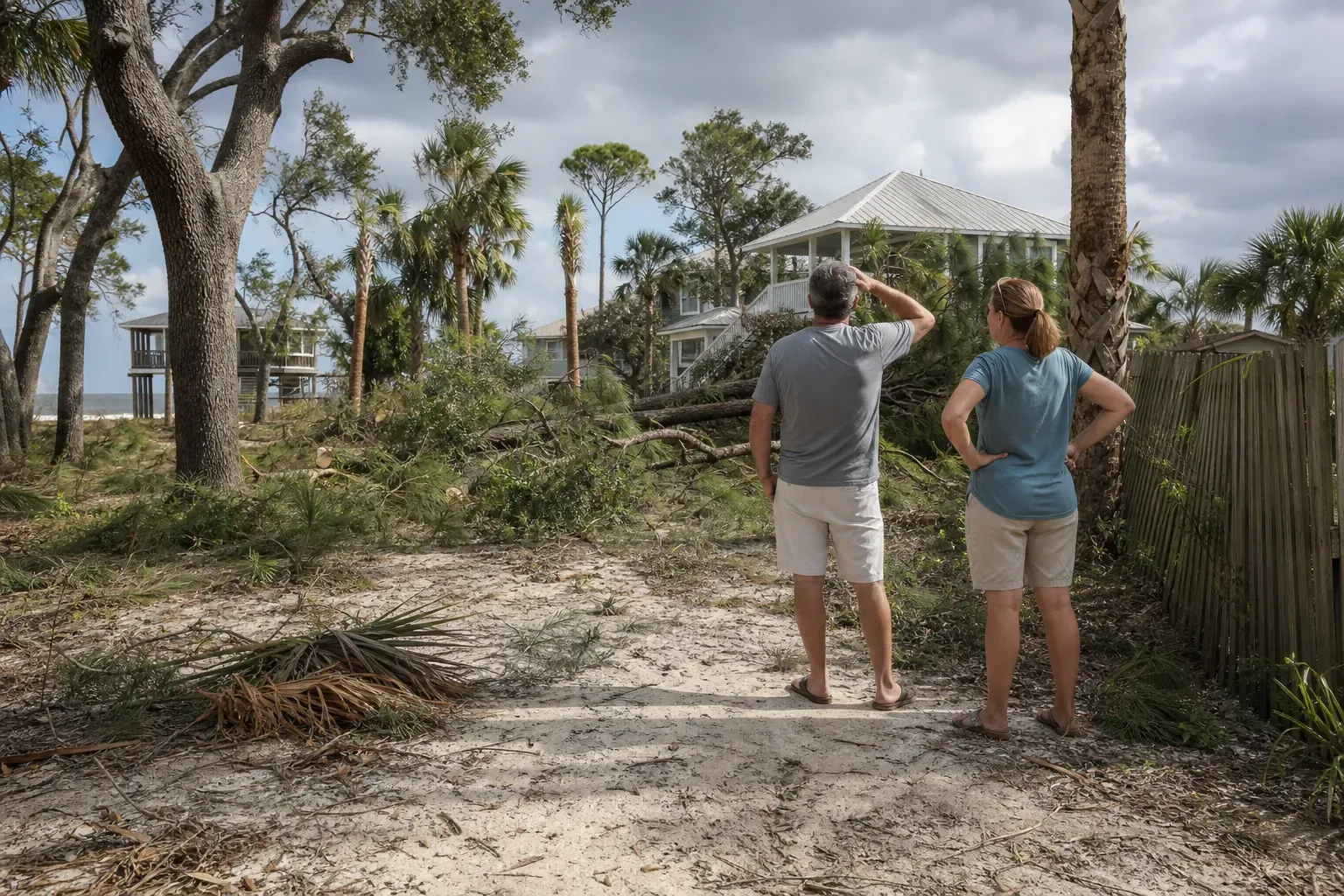
Does a damaged fence establish the property line?
Treat the fence as a feature to document, not proof of the line. Read the tree risk guide for Pensacola owners and Pensacola root recovery guide for related tree-care background. They do not decide claim, contract, or permit questions for your site.
Storm damage can make an old question harder to see. A post may lean. A panel may shift. Debris may hide markers or the base of a tree. Guessing from the new position can lead to work in the wrong area.
Gather any survey, deed, plat, or old records of the lot line. If the line is unclear, share these with a qualified survey professional. Online maps and rough measurements can help you ask questions. They should not be your sole basis for settling a dispute.
Ask focused questions before approving ground disturbance:
- Can the line be located from the available records? Ask what further field work may be needed.
- Could cleanup disturb a marker? Identify that concern before equipment enters the area.
- Does the planned work cross the confirmed line? Include equipment, debris handling, and fence access in that question.
- Is ownership still disputed? Seek legal advice before treating a survey result as full work consent.
Avoid moving suspected boundary markers. Also avoid asking a crew to place the new fence “where it looks right.” Fence placement is a separate decision from clearing tree debris.
If the line remains unclear, ask whether the job can be split. Work wholly within an agreed area may be easier to define. Work near disputed posts, roots, or stumps may need to wait for review. A tree professional should assess whether that limited scope is safe.
Put the uncertainty in writing. A short note such as “boundary not yet confirmed” helps prevent assumptions. It should appear in the scope, not solely in a phone call.
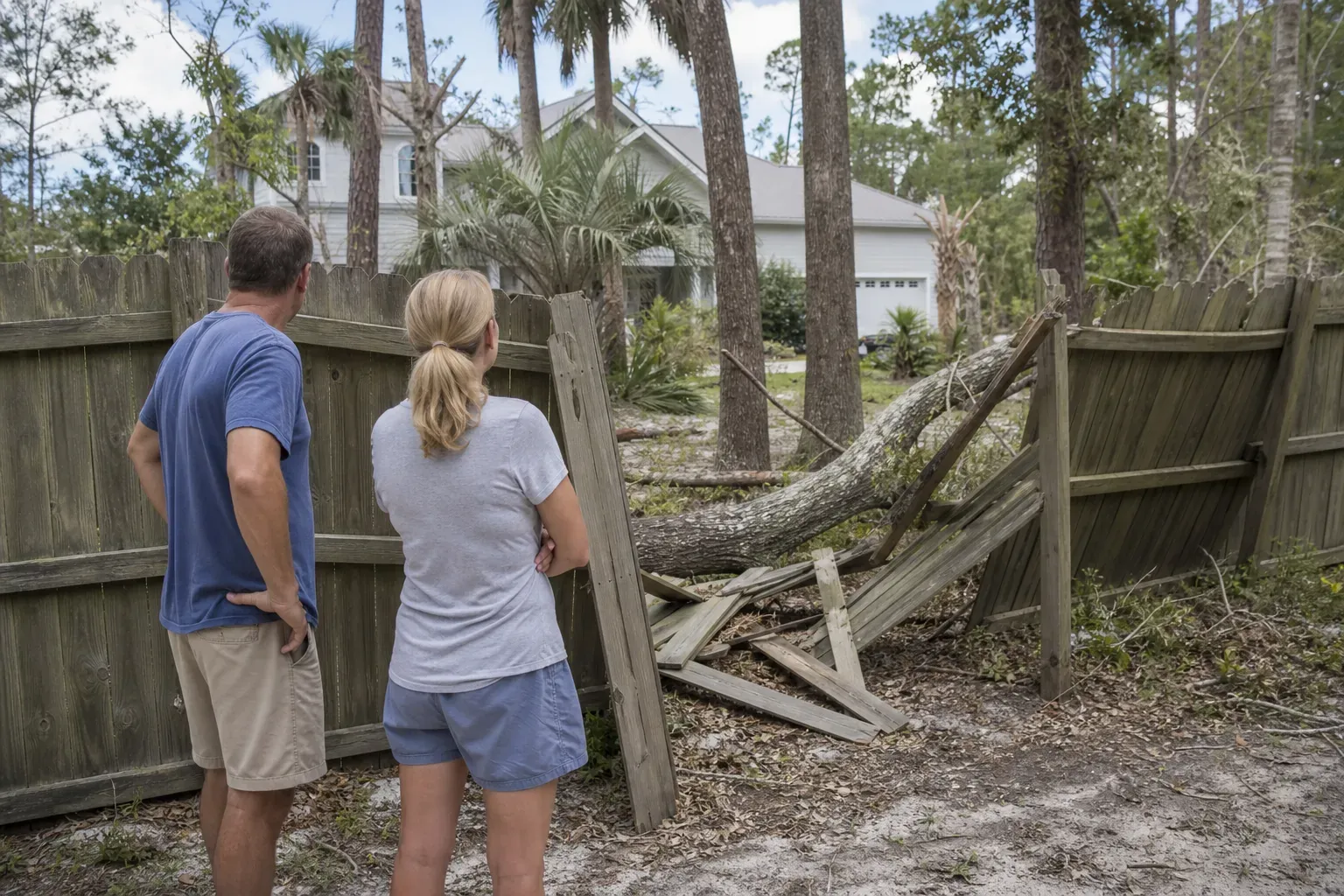
What consent should be clear before a crew crosses the fence?
Confirm who can approve each part of the job. Read the tree risk guide for Pensacola owners and Pensacola root recovery guide for related tree-care background. They do not decide claim, contract, or permit questions for your site.
A neighbor may agree to collect loose debris. That does not necessarily include moving fence panels, driving equipment across the yard, or grinding a stump. Write down the actual tasks and access limits.
For a rental home, do not assume the tenant can approve lasting changes. Ask who must sign the work plan. Shared or managed land may need someone else's approval too. Ask an attorney for help if people dispute who can approve the work or what rights apply.
Use this planning sequence before work starts:
- Identify the people whose approval may be needed. Include affected owners and any property manager involved.
- Describe the work in plain terms. Separate debris pickup from pruning, removal, stump work, and fence changes.
- Confirm the boundary or record the open question. Do not hide uncertainty inside a broad cleanup scope.
- Agree on access and staging. Describe which gate, yard area, and haul route the crew may use.
- Check permits and other approvals. Confirm requirements with the authority for that address.
- Record consent and limits in writing. Include a pause point if conditions differ from the plan.
Useful limits are specific. For example, a scope might allow debris pickup through a named gate while excluding fence removal and stump grinding. This is a planning example, not a legal form.
Ask the contractor how unexpected conditions will be handled. Hidden damage may change the work plan. The written scope should explain when new approval is needed before work expands.
Keep the payment terms apart from consent to enter the yard. Permission to enter does not settle who pays. A neighbor may offer to pay. That does not prove they can approve work on someone else's land.
Which local checks matter before disturbing fences, roots, or stumps?
Check the rules for the exact address and proposed work. Read the tree risk guide for Pensacola owners and Pensacola root recovery guide for related tree-care background. They do not decide claim, contract, or permit questions for your site.
Escambia County and the City of Pensacola have different rules. First check whether the land is within city limits. Then tell the right office about each task. Ask about pruning, tree removal, fence changes, and work in a public right-of-way. Each task may need its own review.
The City of Pensacola arborist page states that heritage-tree pruning or removal requires permits. It also explains that protected-tree requirements depend on land use. Work on trees in public rights-of-way requires a permit under city rules.
Those city statements should not be treated as rules for every county address. For county property, use Escambia County Development Review to identify the right review path and ask project-specific questions.
Describe the whole job when seeking guidance:
- State the tree's location. Explain whether it is near a road, sidewalk, fence, or suspected public area.
- List the proposed tree work. Distinguish pruning from removal and stump grinding.
- Explain any fence changes. Say whether panels will be moved temporarily or posts replaced.
- Disclose ground disturbance. Mention digging, root work, equipment access, and stump work.
Ask the permit office how any storm rules affect your job. A storm does not mean you can skip all permits. Check with that office before you rely on an exception.
Tree health also deserves a separate review. UF/IFAS storm-restoration guidance describes recovery as a process that may take several pruning visits. Some large broken branches need years of follow-up. A damaged tree is not automatically a removal decision.
For palms, the same guidance favors keeping green fronds unless they pose a hazard or interfere with recovery. Do not strip live foliage merely to improve fence access. Ask a qualified tree professional to assess the tree and the proposed work. The ISA tree-owner resources offer further guidance on pruning, risk, and choosing an arborist.
What records help with claims, fence repair, and debris removal?
Keep clear records without entering a hazard area. Read the tree risk guide for Pensacola owners and Pensacola root recovery guide for related tree-care background. They do not decide claim, contract, or permit questions for your site.
Take wide photos from safe ground. Show the tree, fence, nearby buildings, and where the debris lies. Take close shots only if you can reach the spot safely. Keep old photos that show the tree or fence before the storm.
Label notes as observations. “The panel is beneath the limb” records a visible fact. “The neighbor owes for the panel” makes a legal claim. Keep those separate.
The Florida CFO homeowners insurance overview advises taking photos before temporary repairs when possible. It also advises keeping accurate records and receipts. Do not take risks to obtain a better picture.
Coverage depends on the policy and facts. The CFO explains that debris and tree removal is often covered when a fallen tree damages insured property, subject to limits. Trees that fall without damaging covered property often have no debris coverage. Some policies address blocked main entrances. Ask your insurer how those terms apply to your loss.
Keep a simple file containing:
- The photos and dates. Preserve original files where possible.
- The written work scope. Keep fence access, tree work, and debris hauling clear.
- The consent records. Save messages that show approved tasks and limits.
- The estimates and receipts. Ask for separate descriptions of different work items.
- The claim communications. Note questions asked and instructions received.
A hurricane deductible is another policy question. Use the Florida CFO hurricane deductible guide and ask your insurer or agent for a policy-specific explanation. Do not assume that a repair estimate equals a covered payment.
Confirm debris handling before the job starts. Ask whether hauling is included or debris will remain on site. Pensacola Sanitation Services handles yard waste for city customers. That does not establish pickup rules for every county address or every contractor pile. Check current directions with the correct provider.
Do not place debris in a neighbor's yard without consent. Keep access routes and public areas clear as directed by officials. Fence repair can follow once hazards, the line, and approval are resolved.
Frequently asked questions
For broader context, read the Isaias: Shared Tree Questions In Pensacola. It does not decide claim, contract, permit, or safety questions for your site.
Can I use the fence as the boundary for tree work?
Not when the boundary is uncertain or disputed. Document the fence, then ask a qualified survey professional to locate the line. Seek legal advice if ownership or work rights remain disputed. Do not ask the tree crew to decide the boundary.
Does permission to enter a yard include stump grinding?
Ask the owner and, if needed, a local attorney whether the actual written consent covers stump grinding. List each planned task and work area for their review. Ask what the crew may do, where it may enter, and which approvals the proposal needs before work starts.
Should a fence be removed before the tree is assessed?
No, not as a routine first step. A damaged tree or trapped fence panel may be unsafe. Ask a qualified tree professional to check the work plan first. Before removing the fence, confirm who owns it, who must consent, and which approvals the job needs.
Will insurance pay for both tree removal and fence repair?
It depends on your policy and the facts of the loss. Limits and your deductible also affect what the insurer may pay. Take photos from a safe place and ask the insurer to review each work item. A crew's price quote does not prove coverage or who must pay.
Does Florida Foliage provide this work in Escambia County?
No. Florida Foliage is based in Daytona Beach and serves Volusia and Flagler counties. This article provides general education for Escambia readers. Use local officials and qualified local professionals for project-specific decisions.
About the author and drafting: Tim Francis is Tree Content Expert. This article was drafted with AI assistance. It is general education, not a site inspection, survey, legal opinion, or insurance determination.
Florida Foliage is a Daytona Beach tree service that works with an ISA Certified Arborist consultant.
For tree work in Volusia or Flagler County, call (386) 481-7913 to request a free on-site estimate.
For tree work in Volusia or Flagler County, call (386) 481-7913 to request a free on-site estimate.