Reviewed by Clinton Funk
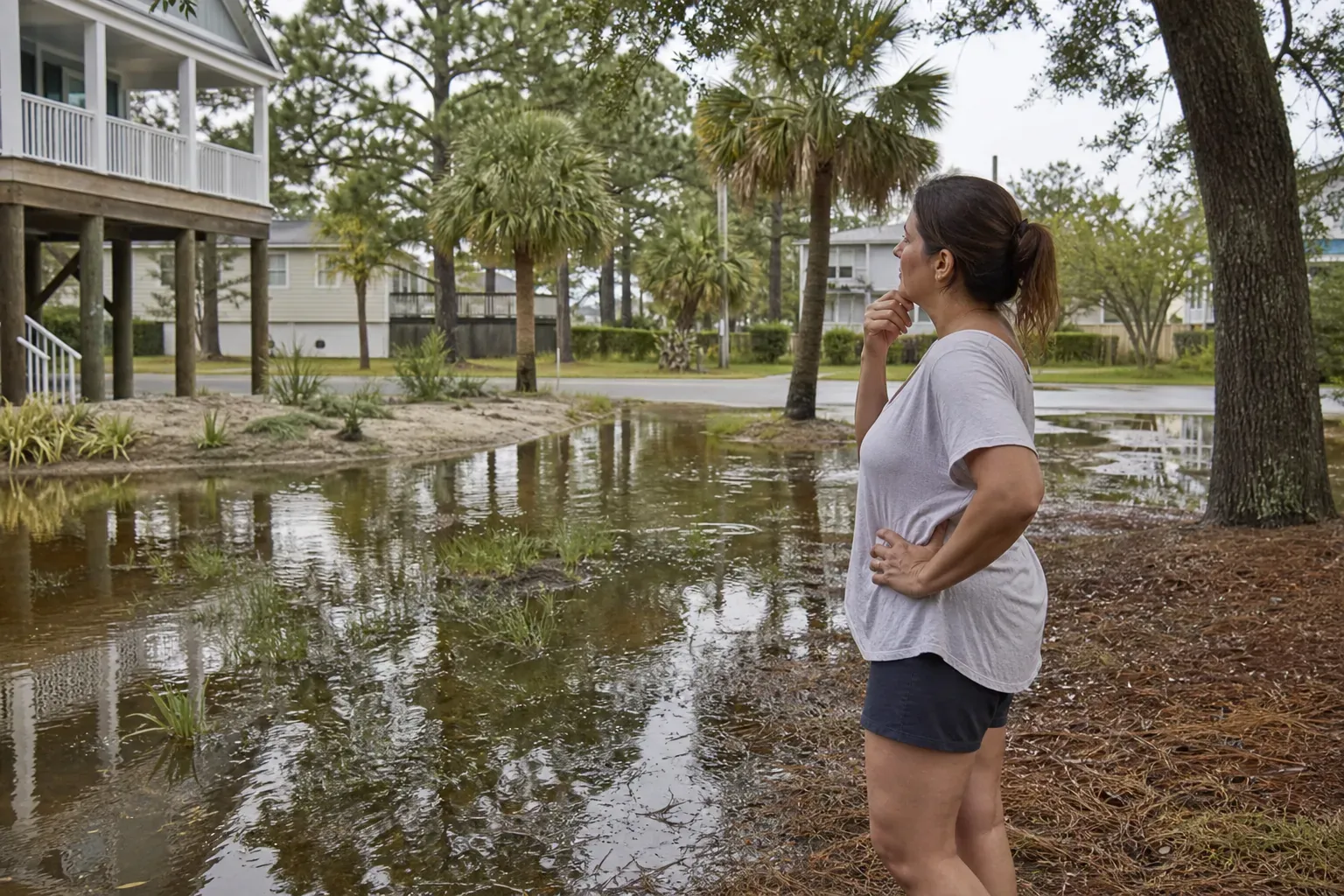
Do not add fertilizer just because a flooded tree looks stressed. Ask your local UF/IFAS Extension office what the tree needs first. If flood exposure occurs, fertilizer questions in Okaloosa should start with the species, exposure history, and signs of new growth, not a blanket treatment.
This guide addresses fertilizer decisions for Okaloosa County readers. It does not assess a specific tree or offer a tree care plan. Florida Foliage is based in Daytona Beach and serves Volusia and Flagler counties, not Okaloosa County.
Storm details can change. Follow the dated October 9 National Hurricane Center advisory and local officials for safety guidance. A forecast does not show whether your yard has flooded. The advice below applies if flood exposure occurs and the site is safe to assess.
Where should Isaias fertilizer questions in Okaloosa begin?
Start by separating flood exposure from a proven nutrient need. The broader root-zone recovery questions in Pensacola help frame that review. For related background, see Port Orange buried root flare article.
A storm can leave several problems at once. A palm may have torn fronds, wet soil, and salt exposure. A tree may also have broken limbs nearby. Those observations do not all point to fertilizer.
The first useful question is simple: What problem would fertilizer address? If no one has identified that problem, pause. A bag labeled for trees or palms is not a tree assessment.
UF/IFAS offers different guidance for different palm conditions. Its hurricane-damaged palm guidance says to maintain the prior fertilizer program for palms that were not uprooted. For replanted palms, it says not to add extra fertilizer to the root zone until new leaves appear.
Its storm restoration guidance also advises waiting for new leaf growth before applying fertilizer to correct palm nutrient deficiencies. These points should not become one rule for every flooded tree. Ask Extension which guidance fits the plant and its condition.
Useful starting questions include:
- Tell Extension whether the plant is a palm or another tree, and ask for help with species identification if needed.
- Describe whether it stayed rooted, shifted, or was replanted after the storm.
- Explain whether fertilizer was already part of its care before the flood.
- Ask whether the visible signs warrant testing, observation, or an on-site review.
- Ask what would count as a reason to resume or change care.
This approach keeps the decision narrow. It avoids treating every damaged plant as if it has the same need.
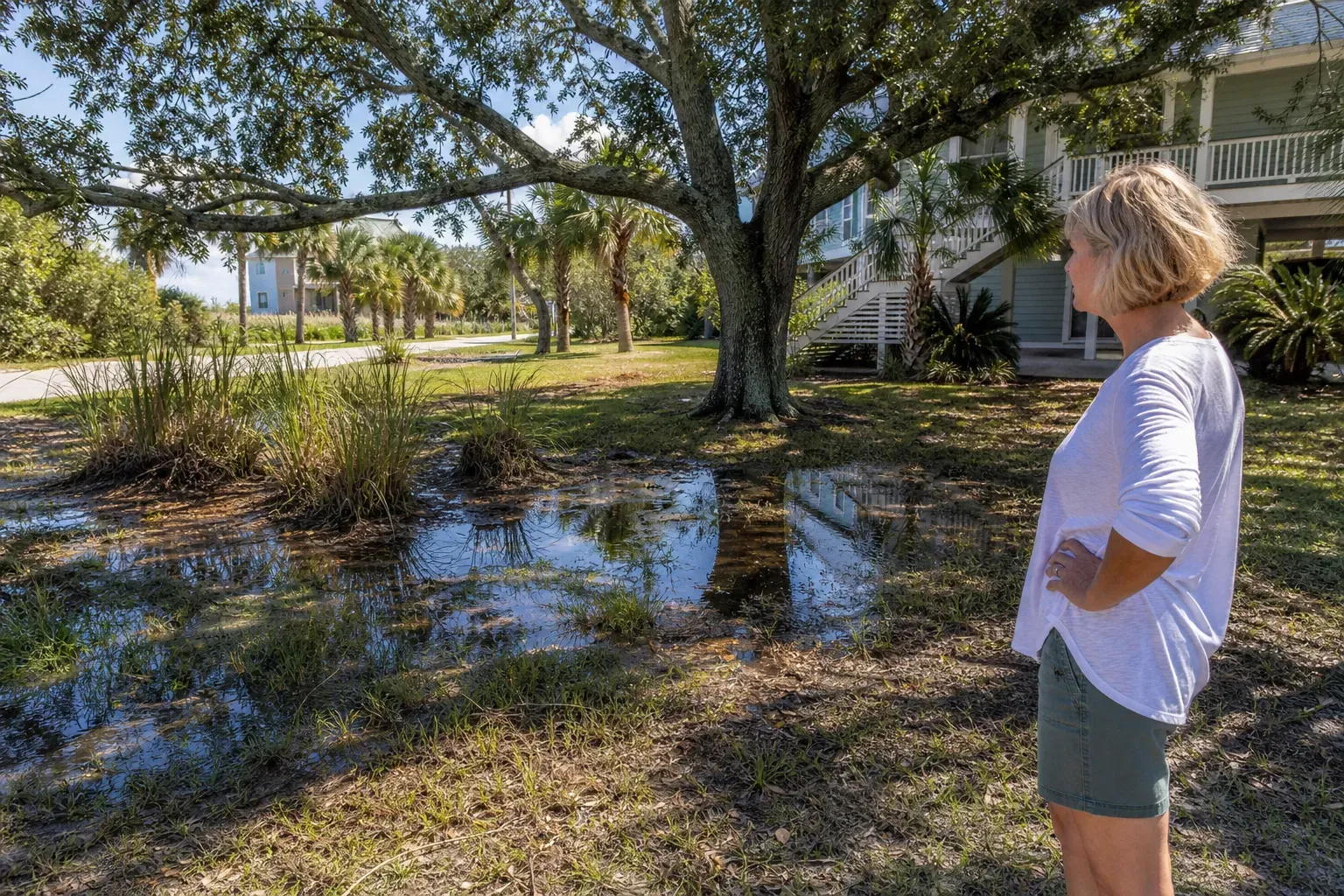
What should you record before asking Extension about fertilizer?
Record the flood history and visible changes before choosing a product. Include those conditions in your request, rather than assuming fertilizer can solve them. For related background, see New Smyrna Beach soil compaction article and Daytona Beach grade change article.
Good notes help an adviser ask better questions. You do not need to identify every symptom yourself. A clear description is more useful than a guessed cause.
Use this short record when you contact Extension:
- Identify the plant as well as you can. Give its common name if known. Take a whole-tree photo from a safe place, plus a closer view of leaves if reachable from the ground.
- Describe the water exposure. Note when water arrived and receded. State whether it may have included salt water, or whether the source is unknown.
- Describe the site after the water left. Note standing water, fresh sediment, exposed roots, moved soil, or vehicle tracks near the tree.
- List the recent care history. Include fertilizer labels, dates, and known amounts. Also note any recent pruning or transplanting.
- Record changes over time. Date photos of leaf color and new growth. Keep observations distinct from conclusions about their cause.
Only collect details where access is safe. Do not walk beneath hanging limbs for a better photo. Do not approach a tree touching a power line. Contact the utility for line hazards, and emergency services for an immediate threat to life.
If you do not know a date or amount, say so. There is no need to fill gaps with estimates that sound exact. An adviser can work with an honest record of what is known.
Keep product bags or clear label photos, too. Saying “tree food” leaves out key details. The label helps Extension understand what has already been applied and what you are considering.
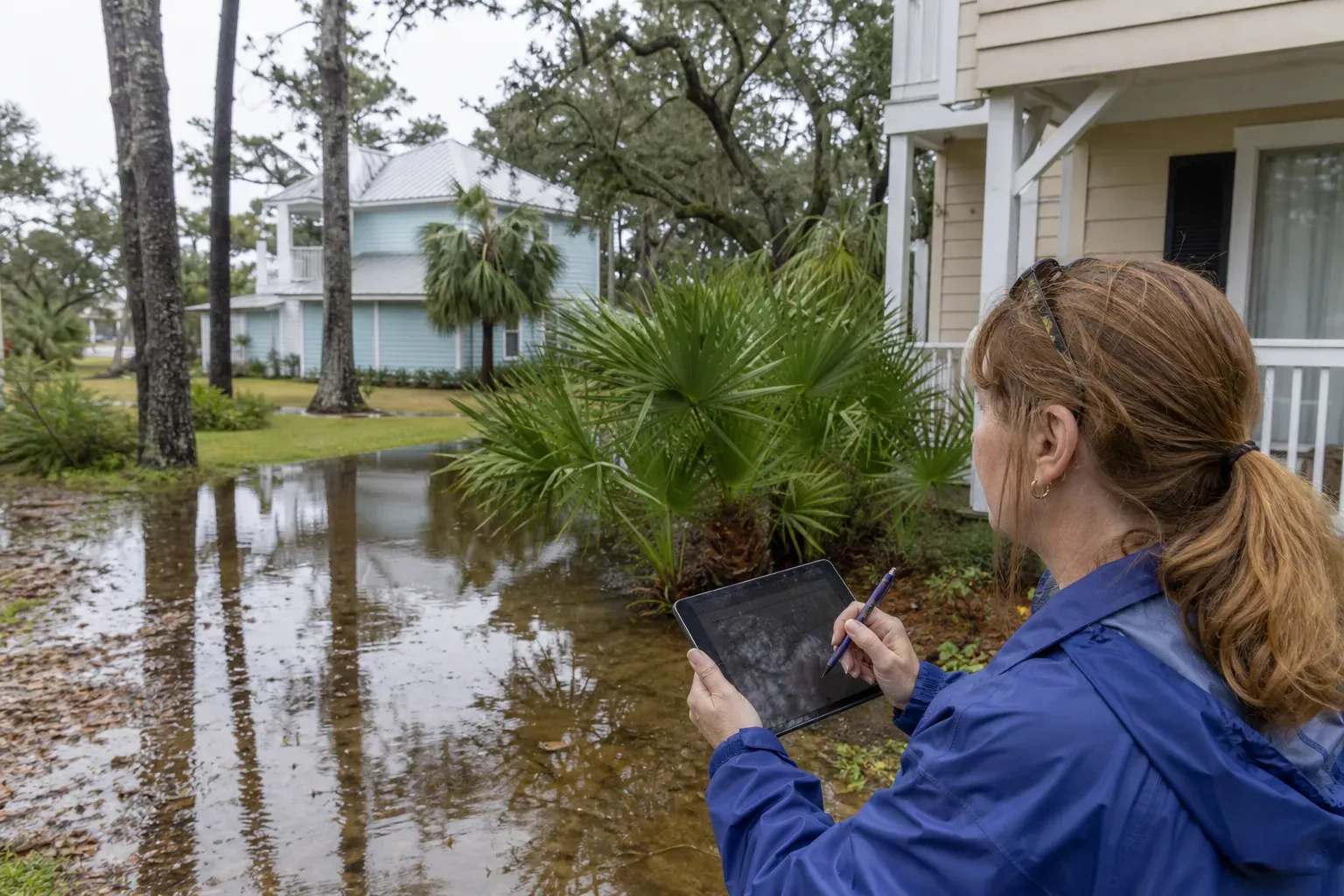
Does saltwater flooding change the fertilizer discussion?
Yes. Possible salt exposure is a separate concern to report. For related background, see Port Orange buried root flare article and Pensacola Isaias root zone guide.
According to UF/IFAS guidance on hurricane-damaged palms, salts left in soil after saltwater flooding can seriously injure many palm species. Risk is of particular concern when salt water remains for more than a few hours. A lack of meaningful rain after the water recedes is another concern.
The same source notes that salt injury often causes dead leaf tips throughout the canopy. That pattern is worth reporting. It is not enough for a homeowner to confirm the cause from leaf tips alone.
UF/IFAS discusses fresh-water leaching when rain does not follow saltwater flooding. Leaching means moving dissolved salts through the soil with water. This is not a blanket instruction to soak every flooded yard.
Ask Extension whether that approach fits your site. Describe any water that still stands near the tree. Do not use a general watering suggestion as a substitute for site-specific guidance.
Questions worth asking include:
- Explain whether the floodwater source is known, and ask how that affects the review.
- Ask whether soil testing would help assess the concern before fertilizer is used.
- Describe rainfall after the flood and ask whether it changes the next step.
- Ask whether the species needs a different plan from nearby palms or trees.
- Request clear guidance on when the site should be checked again.
Keep salt concerns and fertilizer needs distinct. The presence of one does not prove the other. A useful plan should say which concern it addresses and how progress will be judged.
Should yellow leaves or broken palm fronds trigger fertilizer?
No. Leaf color and broken fronds need context first. Do not let leaf color crowd out the rest of the history. For related background, see Daytona Beach grade change article and New Smyrna Beach soil compaction article.
Yellow leaves may draw attention right after a storm. Yet UF/IFAS describes one storm-related effect that is not, by itself, proof of a nutrient shortage. Wind can force a palm's youngest unopened leaf to open early. This leaf is called the spear leaf.
The palm hurricane guidance notes that this early opening can leave the leaf pale green or yellow. It often gains normal color within a few days. The effect is most often seen on royal palms, though it has been observed on others.
That does not mean every yellow leaf is harmless. It means timing, species, and the leaf's position matter. Report those details before buying a tree care.
Broken green fronds also have value. UF/IFAS recommends leaving them attached because they can still make energy for the palm. Its restoration guidance says to retain bent green fronds until new foliage fully emerges, unless they pose a hazard. Fronds that smother the bud need a separate review.
The bud is the growing point where new leaves form. Protecting that living tissue matters more than making the canopy look tidy.
- Describe which leaves changed color, rather than saying the whole palm looks sick.
- Note whether the pale leaf was newly opened after the wind.
- Tell the adviser whether green fronds remain attached and whether any pose a fall hazard.
- Ask whether the issue calls for nutrient guidance, pruning guidance, or both.
Do not strip a palm of yellowing fronds for appearance alone. UF/IFAS warns that these leaves still support growth. Excessive removal reduces vigor and can cause severe harm. Fertilizer does not justify removing useful live foliage.
How should you handle existing fertilizer plans and other treatments?
Review the old care plan before starting a new one. The Pensacola root-zone recovery questions help keep that review in context. For related background, see Port Orange buried root flare article.
A prior fertilizer program is useful information, not a reason to add extra doses. Bring the product label and schedule to Extension. Ask whether to maintain, pause, or revise that plan for the specific plant.
For palms that were not uprooted, UF/IFAS advises maintaining the program used before the storm. For replanted palms, it advises no extra root-zone fertilizer until new growth appears. It notes that this may take a month or longer in many cases. Its restoration guidance describes longer waits in some damaged palms.
These are not fixed deadlines. A month on the calendar does not prove that a palm is ready. Ask what visible change should guide the decision.
Avoid adding other products to fill that waiting period. The UF/IFAS palm guidance reports no known benefit from micronutrient sprays on the canopy after a hurricane. It also warns that incorrect use may harm the palm. Micronutrients are nutrients needed in small amounts.
That source also says research has not documented benefits from fungicides after a hurricane. A fungicide is a product used against fungal disease. Storm exposure alone is not evidence that one is needed.
- Ask what evidence supports each proposed product before agreeing to tree care.
- Ask whether a test result would change the product choice or timing.
- Keep records of each application so later advice is based on a clear history.
- Follow pesticide labels and seek qualified guidance rather than mixing products on your own.
Tree safety remains a separate issue. Fertilizer advice cannot establish whether a leaning tree or broken limb is safe. For that concern, seek a qualified arborist. The ISA tree-owner resources explain tree risk, storm damage, and why owners may hire an arborist.
If damaged insured property is involved, document it from a safe location. The Florida CFO homeowners insurance overview recommends photos and accurate records of temporary repairs. Ask your insurer about your own policy. This guide makes no coverage prediction.
FAQ: What are the most common fertilizer questions after a flood?
Should every flooded tree receive fertilizer?
No. The supplied UF/IFAS guidance does not support that rule. Ask Extension about the species, water exposure, and current growth before treating a tree. Palm guidance should not be applied to all other trees. For related background, see Port Orange buried root flare article and Pensacola Isaias root zone guide.
How long should I wait before fertilizing a replanted palm?
UF/IFAS says not to add extra fertilizer to its root zone until new leaves appear. That may take a month or longer. Other restoration guidance notes longer waits in some cases. Use the plant's condition and qualified advice, not a date alone, to guide the next step.
Do brown leaf tips prove the soil needs fertilizer?
No. UF/IFAS identifies dead leaf tips as a possible sign of salt injury in palms. Leaf appearance alone does not confirm the cause. Tell Extension about possible saltwater exposure, rainfall, and which leaves are affected. Ask whether testing or further assessment would help.
Can a spray help a palm recover faster?
Do not assume so. UF/IFAS reports no known benefit from post-hurricane micronutrient canopy sprays and warns of harm from incorrect use. It also reports no research documenting benefits from post-hurricane fungicide use. Ask a qualified adviser to explain the need for any proposed tree care.
Who should Okaloosa County residents contact for help?
Contact your local UF/IFAS Extension office for plant-care and fertilizer questions. Seek a qualified arborist for tree condition and risk concerns. Use local officials and the utility for public safety and power-line hazards. Florida Foliage serves Volusia and Flagler counties and does not offer Okaloosa County service through this guide.
Editorial disclosure: This article was drafted with AI assistance from the public sources linked above. Tim Francis is Florida Foliage's Tree Content Expert; that title does not denote practitioner credentials. This content provides general education, not an on-site assessment or individual tree care plan.
Florida Foliage is a Daytona Beach tree service that works with an ISA Certified Arborist consultant.
For tree work in Volusia or Flagler County, call (386) 481-7913 to request a free on-site estimate.
Call (386) 481-7913 to talk through next steps.