Reviewed by Clinton Funk
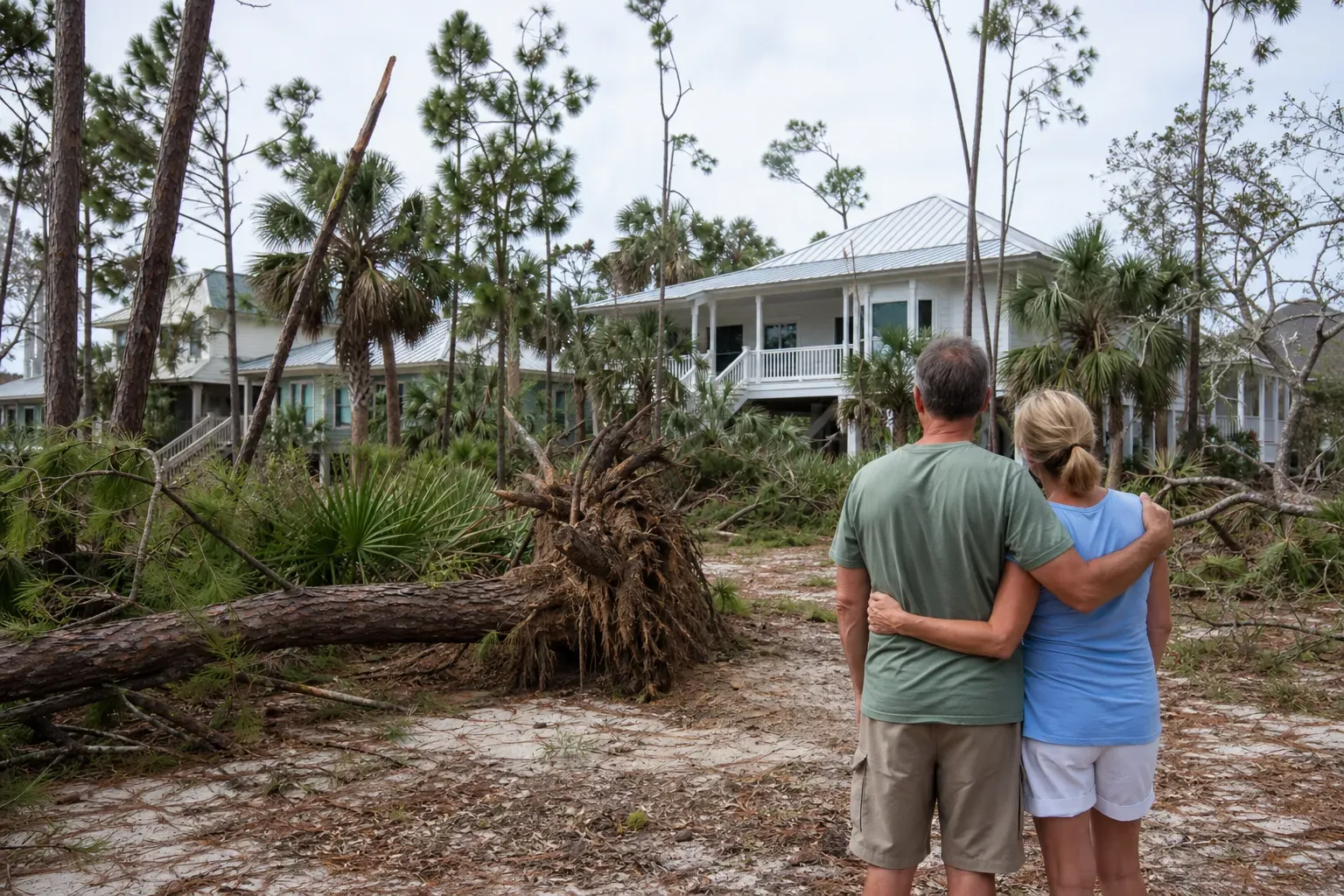
Ask the HOA and the responsible public office which approvals each requires. Hurricane Isaias HOA Tree Approval Questions In Milton start with three checks: who owns the tree, which private rules apply, and which public office has authority. Keep people clear of damaged trees while you seek answers.
This guide covers private approval and public review, not a confirmed Milton permit exemption. The supplied public sources do not establish your HOA’s rules or the full tree rules for your address. The linked National Hurricane Center advisory is an October 9 snapshot. Check current local updates from National Weather Service Mobile/Pensacola. Dated storm details are not a substitute for current alerts.
How should you handle Hurricane Isaias HOA Tree Approval Questions In Milton?
Treat HOA consent and public permits as separate checks. The Isaias tree permit questions around Pensacola guide and Pensacola root recovery guide offer related tree-care background. They do not decide insurance, contract, or permit questions for your property.
Ask the HOA for its governing documents and review process. Ask the public office which rules it applies to the address. Neither decision should be treated as proof of the other.
Start with the exact street address. A Milton mailing address alone does not tell you which office to ask. Check whether the lot is inside city limits or in a part of Santa Rosa County outside any city. Then ask the right office which tree rules apply.
Santa Rosa County Development Services handles land use and building questions. Its page lists an online application portal and a public inquiry email. It does not, by itself, confirm that your tree work needs a permit. Nor does it establish a storm-related exemption.
Ask that office whether it handles your address and proposed work. If not, ask which office does. For a site within Milton city limits, seek confirmation from the city before using county guidance as your answer.
Give both the HOA and public office the same scope. “Tree work” is too broad. State whether you seek pruning, full removal, or cleanup of fallen material. Include the tree’s location and what it could strike.
Use these questions to keep the two reviews clear:
- Ask the HOA which document governs the proposed work.
- Ask whether written consent is needed before work begins.
- Ask the public office whether a permit or other review applies.
- Ask whether any claimed exception needs specific proof.
- Ask who may authorize work on shared or public land.
Keep each answer with the request that produced it. An email about pruning should not be read as consent for removal. If the scope changes, check whether either review must change too.
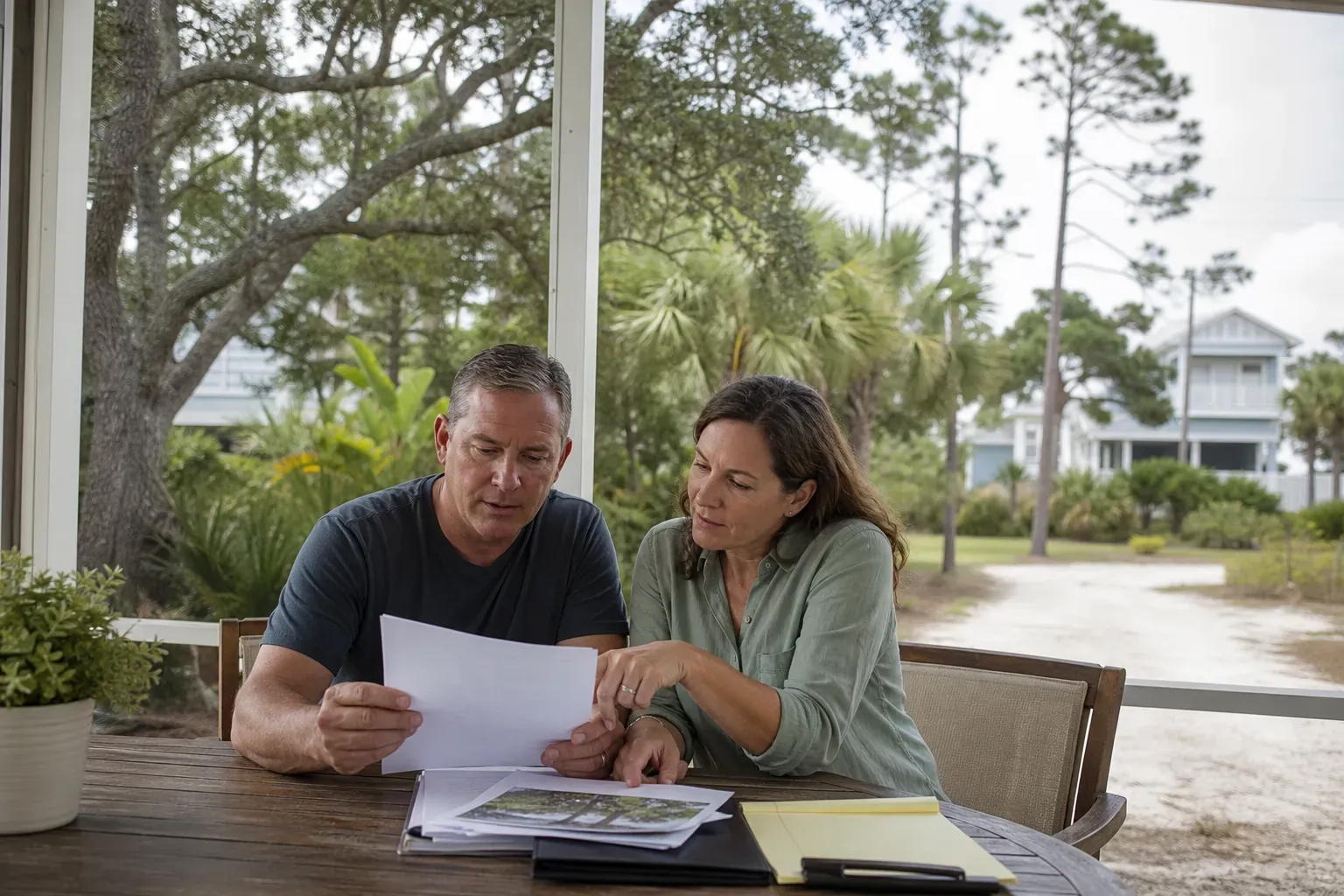
Who can approve work on a private, shared, or roadside tree?
Ownership helps identify who may request or authorize work. The Pensacola tree risk questions guide and Pensacola root recovery guide offer related tree-care background. They do not decide insurance, contract, or permit questions for your property.
A tree beside your lawn may sit on a common parcel. A roadside tree may be on public land. A tree near a lot line may raise a boundary question. Its shade, branches, or leaves do not prove who owns the land beneath it.
Check the records before making a work request. Useful records may include your survey, subdivision plat, deed, and HOA common-area map. A fence is not enough to resolve a disputed line. If ownership remains unclear, seek help from the appropriate survey or legal professional.
The HOA’s role may also vary by location. It might review work on your lot. It might manage trees on common land. Those are different roles. Ask whether the association is giving private design consent or acting as the owner of the tree site.
Use plain terms when describing the location:
- State whether the tree appears to stand on your lot.
- Note whether HOA maps show common land at that spot.
- Flag any uncertain lot line or road boundary.
- Identify nearby sidewalks, roads, utilities, and shared paths.
- Ask who is responsible for the next ownership check.
Public trees need their own review. For example, the Pensacola City Arborist page says permits are required for pruning or removal of city trees. That rule is specific to Pensacola. Its value here is to show why public ownership matters, not to supply a Milton rule.
Do not assume that an HOA board can approve work on a public tree. Likewise, a public office’s response does not prove that an HOA-owned tree is yours to alter. Confirm both authority and scope.
If branches involve power lines, contact the utility. Do not approach, touch, or try to free them. For an immediate threat to life, contact emergency services. Approval paperwork should never draw someone into a hazardous area.
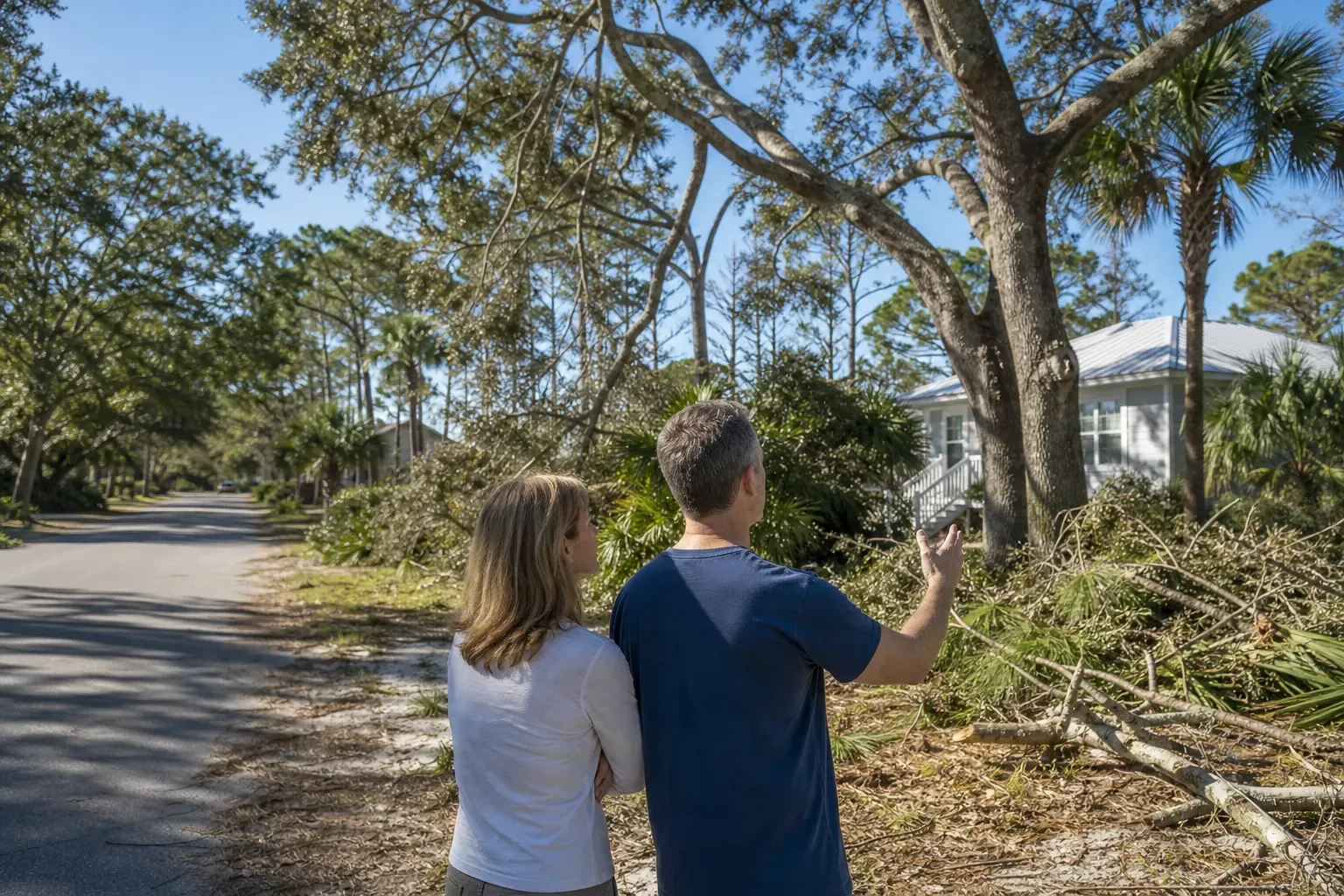
What should an HOA tree request include after storm damage?
A useful request shows the site, the concern, and the work sought. The Pensacola tree risk questions guide and Pensacola root recovery guide offer related tree-care background. They do not decide insurance, contract, or permit questions for your property.
Keep the request brief but complete. The board needs enough detail to understand it. The public office needs enough detail to identify the site and scope. Neither needs a guess about a tree’s health presented as fact.
Take photos only from a safe place. Do not stand under broken limbs to get a better view. Show the whole tree when possible. Add a view that shows nearby buildings or paths. Close views are useful only when they can be taken safely.
Describe what you can see. “A limb is hanging over the drive” is clearer than “the tree is dying.” “Soil appears raised beside the trunk” records an observation. It does not establish the cause or predict failure.
Use this numbered request process:
- Confirm the address and likely owner of the tree site. Note any boundary question that still needs review.
- Gather the HOA’s current tree rules and request form. Ask which provision applies to the proposed work.
- Record visible damage from a safe location. Include dates and photos without attempting a tree assessment.
- Define the proposed scope. Separate pruning, removal, stump work, and debris hauling where relevant.
- Ask the correct public office about review. Include the same address, photos, and scope sent to the HOA.
- Save written decisions and their conditions. Check that the approved scope matches the planned work.
A professional assessment may help explain the options. The ISA tree owner resources cover pruning, storm damage, tree risk, and finding an arborist. Ask a qualified arborist to assess the tree when damage, roots, or structure raise concerns.
A written report should name the tree and the work proposed. It should state what the assessor could and could not check. A photo alone may not be enough to judge the risk.
Do not add claims that the assessor did not make. “Needs review” is not the same as “must be removed.” If the HOA asks for a certain kind of report, ask what it needs before you pay for one.
Does storm damage let you skip approval or remove the whole tree?
Do not assume storm damage cancels private or public review. The Pensacola tree risk questions guide and Pensacola root recovery guide offer related tree-care background. They do not decide insurance, contract, or permit questions for your property.
Ask the HOA whether its documents include an urgent-work process. Ask the public office whether an applicable exception exists. If either says yes, request the basis, proof needed, and scope allowed. Do not turn a general reply into blanket consent.
Keep safety response separate from routine approval. Stay away from hanging branches, leaning trees, exposed roots, and damaged utility lines. Follow local officials’ instructions. Do not delay reporting an immediate hazard while waiting for a board meeting.
Damage also does not mean full removal is the only option. UF/IFAS restoration guidance describes staged care for some storm-damaged trees. The work may extend over years. Large broken branches can take much longer to close over than small ones.
That guidance is not a tree assessment of your tree. An on-site assessment must consider the species, damage, roots, structure, and nearby targets. A target is something a failing tree or branch could hit, such as a house or path.
Ask for a clear reason behind each proposed action:
- Ask which observed defects support the recommended work.
- Ask whether pruning is an option or would leave unacceptable concerns.
- Ask what follow-up care a retained tree may need.
- Ask whether the proposed work changes the approval request.
Palms need particular care. UF/IFAS advises leaving bent green fronds unless they pose a hazard. Those leaves can still help the palm recover. Its hurricane-damaged palm guidance also notes that full canopy replacement takes at least a year, and often longer.
Avoid asking for severe trimming just to make a palm look neat. Seek a sound pruning scope instead. Do not add fertilizer, fungicide, or other treatments as a guessed cure for storm damage. Those choices need site-specific guidance and label compliance where pesticides are involved.
How should you handle insurance records, work scope, and debris?
Keep approval records separate from coverage questions and cleanup plans. The Pensacola tree risk questions guide and Pensacola root recovery guide offer related tree-care background. They do not decide insurance, contract, or permit questions for your property.
HOA consent does not establish insurance coverage. A tree permit does not establish it either. Your insurer must address the policy, loss facts, limits, and deductible.
The Florida CFO homeowners insurance overview explains that debris and tree removal coverage varies. Damage to covered property often matters. A tree that falls only on the ground may be treated differently. Some policies address blocked access.
Ask your insurer about your own claim. Do not budget on the belief that every fallen tree is covered. The Florida hurricane deductible guide explains how hurricane deductibles can affect a loss. Review the actual dollar amount shown in your policy.
Record damage safely before work when possible. Keep photos, written estimates, invoices, and receipts. The Florida CFO overview advises documenting damage and keeping repair records. Seek claim guidance promptly rather than relying on a general article for deadlines.
A clear work scope also helps prevent approval disputes. Before authorizing work, make sure the written estimate and consent describe the same tree and task.
- Check whether the estimate covers pruning or full removal.
- Check whether stump work is included or separate.
- Check who will haul branches, logs, and other debris.
- Check whether shared land or access needs separate consent.
- Check who will confirm any required public review.
Public debris pickup is a separate service question. Ask the local waste provider about current storm collection rules. Confirm where material may be placed and whether contractor-generated debris is accepted. Do not assume routine yard-waste rules cover a large removal job.
Keep vegetative debris apart from other waste if officials require it. Do not block roads, drains, sidewalks, or utility access. If moving material would require entering a hazardous area, leave it for qualified help.
One tidy file can save you from asking the same questions twice. Keep HOA emails and letters, public replies, tree reports, and claim records together. Mark each with the date and the tree’s location. This helps keep a decision about one tree from being used for another.
Frequently asked questions
Can my HOA approve removal without a public permit?
An HOA can address its private rules, but its consent does not resolve public permit duties. Ask the office with authority over your address whether review is required. The supplied sources do not confirm a general Milton exemption. Keep the HOA decision and public response as separate records.
Does a public permit override HOA tree rules?
Do not assume it does. A permit addresses a public process. Private covenants can raise a separate question. Ask the HOA which rules apply and obtain written clarification. If the two decisions conflict, seek advice from the responsible public office and a qualified legal professional before proceeding.
What if the HOA does not answer an urgent request?
Keep people away from the hazard. Contact emergency services for an immediate threat to life, or the utility for line-related hazards. Send the HOA a dated written notice through its stated process. Ask the public authority about applicable urgent-work procedures. Seek a clear answer before treating an unanswered request as approval.
Should every broken palm frond be removed?
No. UF/IFAS advises keeping green broken or bent fronds in many cases because they support recovery. Hazardous fronds and those smothering the bud need separate assessment. Ask a qualified professional for a pruning plan. A neat-looking canopy is not proof that aggressive trimming is good for the palm.
Does Florida Foliage serve Milton or the Panhandle?
Florida Foliage is based in Daytona Beach and serves Volusia and Flagler counties. This guide does not announce service in Milton, the Panhandle, or Alabama. Readers there should seek qualified local help. Ask your own HOA, utility, insurer, or public office for answers about your project.
About this article: Tim Francis is Tree Content Expert. This article was drafted with AI assistance using the linked public sources. It provides general education, not a site assessment, legal opinion, insurance coverage decision, or approval to begin work.
Florida Foliage is a Daytona Beach tree service that works with an ISA Certified Arborist consultant.
For tree work in Volusia or Flagler County, call (386) 481-7913 to request a free on-site estimate.
Call (386) 481-7913 to talk through next steps.