Reviewed by Clinton Funk
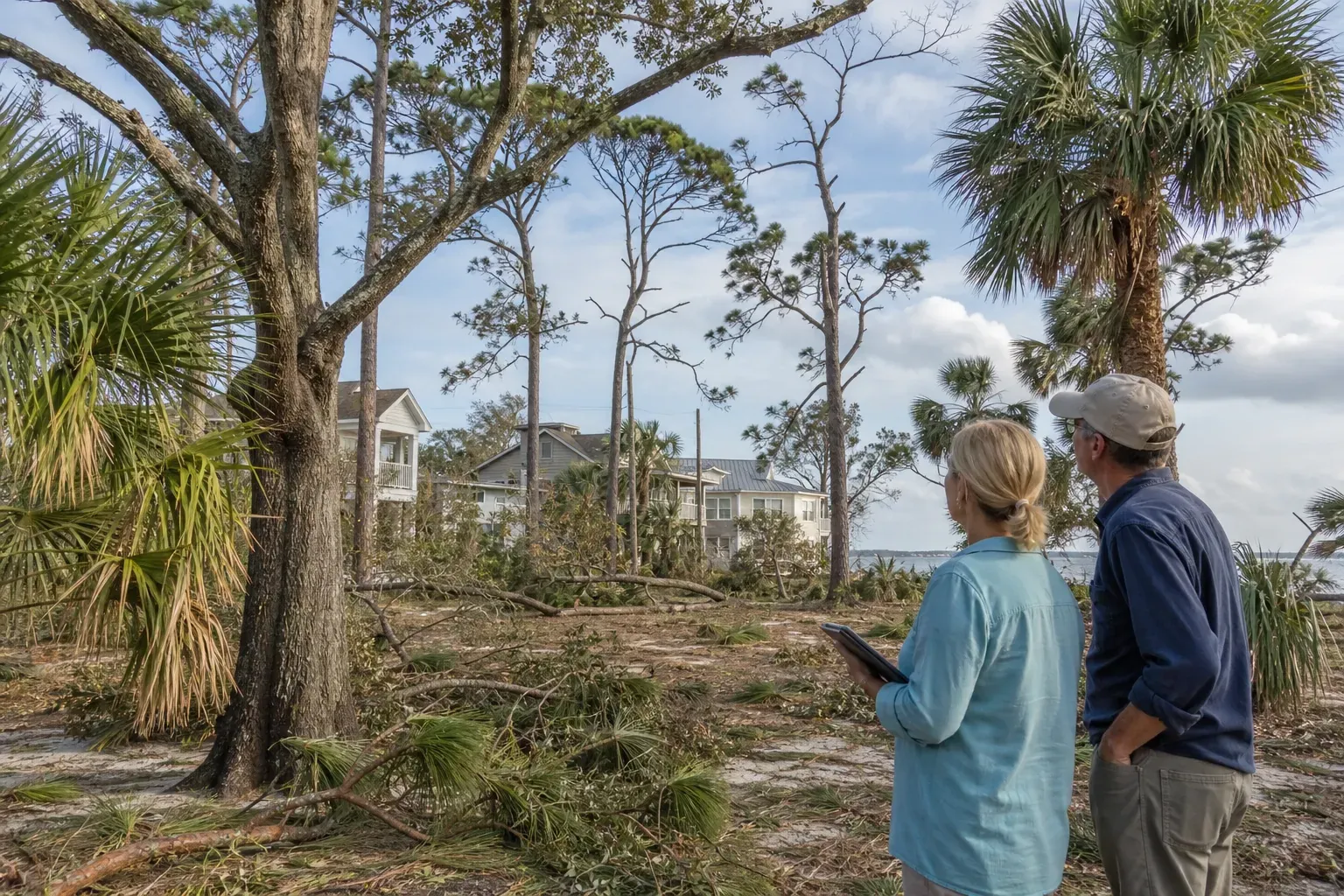
Leaf loss alone does not prove a storm-damaged tree is dead. For Hurricane Isaias Leaf Loss And Tree Monitoring In Milton, the useful first step is to separate missing foliage from hazards. Once officials say it is safe, record visible changes from a safe spot. Let a qualified arborist assess damage that photos cannot explain.
This guide covers observation, not hands-on storm cleanup. It does not establish that a particular Milton property has suffered damage. As of the supplied October 9 advisory, Isaias is a current named system. Forecasts can change. Follow the supplied October 9 National Hurricane Center advisory, a dated snapshot and National Weather Service guidance for the region, rather than using this article as a live alert.
What does Hurricane Isaias Leaf Loss And Tree Monitoring In Milton involve?
It means tracking changes in the crown. Bare branches alone do not mean a tree is dead. The broader Isaias tree canopy recovery guide for Pensacola covers recovery context. The Pensacola root recovery guide offers related tree-care background.
A canopy is the tree's crown of branches and leaves. Wind can strip leaves, bend foliage, or break branches. Those changes do not all mean the same thing. A sparse crown may still have living branches. A leafy crown may still contain a serious structural defect.
Keep two questions separate: What changed in the foliage? What changed in the tree's support? Your notes can help an arborist answer both. They cannot replace an inspection of roots, trunk, and branch unions.
UF/IFAS storm restoration guidance describes recovery as a process that can require repeated pruning visits over several years. That supports a measured approach, not a promise that every damaged tree can be saved.
Use plain descriptions when recording what you see:
- Record whether leaves are missing across the crown or mainly on one side.
- Note whether visible twigs remain attached or branches appear broken.
- Describe leaf color without calling the tree dead or diseased.
- Record visible trunk or ground changes separately from foliage loss.
- State when the view is blocked or a feature cannot be seen safely.
Avoid giving the tree a survival percentage. A distant photo cannot supply that number. The tree's type and past health matter. So does damage to roots and branches. The ISA tree owner resources include guidance on tree risk, pruning, and plant health care.
The goal is a useful record of change. It is not a home tree assessment. A clear note such as “less foliage on the east side” is more useful than “the tree is dying.”
When should observation stop and professional assessment begin?
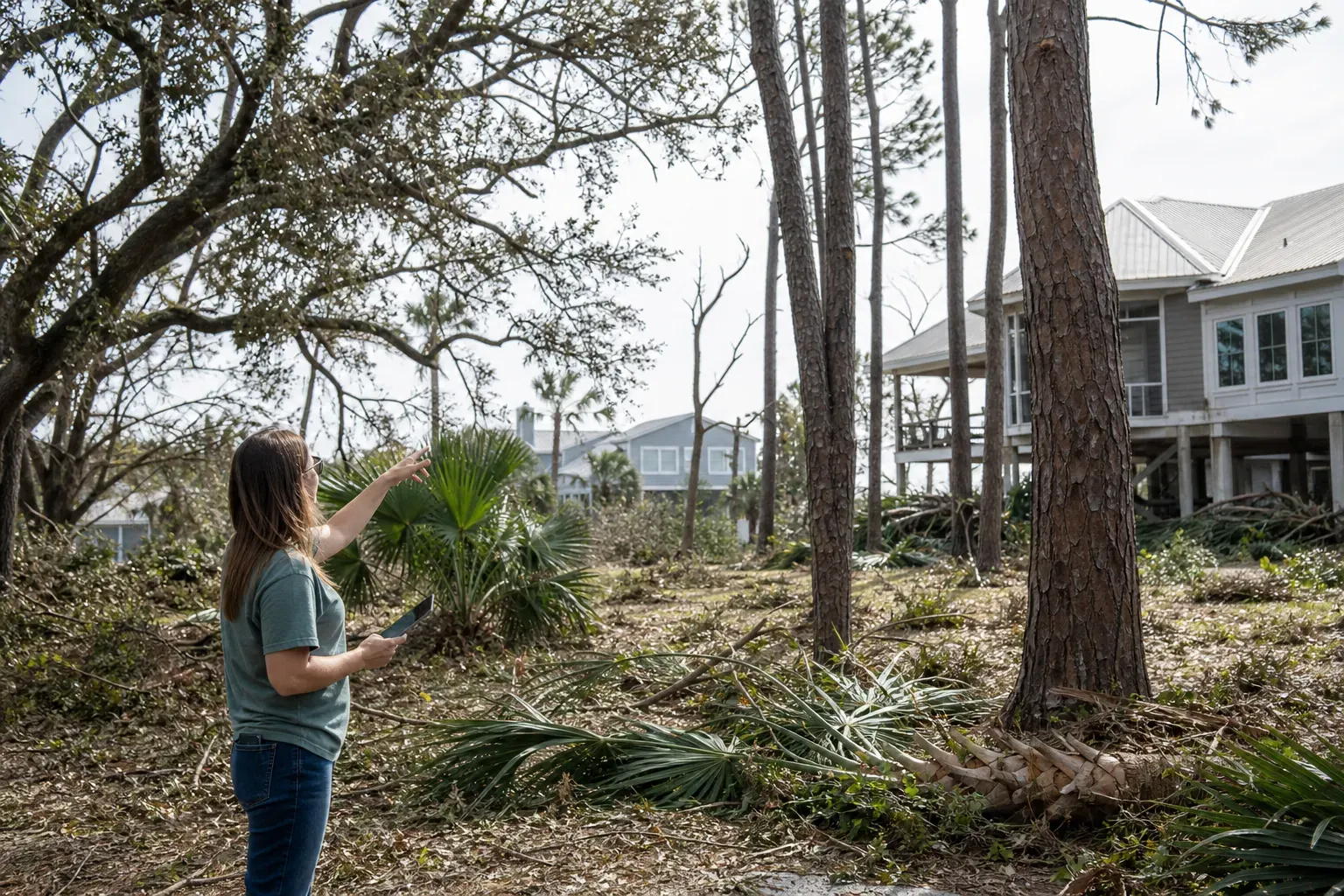
Stop when getting a better view would expose you to danger. Compare foliage notes with the broader Pensacola canopy recovery guidance and the focused Pensacola root recovery guide. Missing leaves and damaged bark are different concerns, even when both follow the same storm.
Do not approach a damaged tree just to complete your record. Stay clear of hanging limbs, split trunks, leaning trees, and disturbed root areas. Do not stand under the crown to take photos. Keep people and pets away from the area of concern.
If a tree or branch touches a wire, stay away. Contact the utility. Do not touch the tree, wire, or nearby debris. For an immediate threat to life, contact emergency services. Tree monitoring must never compete with evacuation or other official safety orders.
Arrange a qualified assessment when you observe concerns such as these:
- A large broken limb remains suspended over a used area.
- The trunk has a visible split or a major branch has partly detached.
- The tree's lean appears to have changed since the storm.
- Record any visible ground change from a safe place and ask the arborist whether further assessment is needed.
- Damage threatens a home, driveway, walkway, or neighboring property.
These signs call for review. They do not always mean a tree must come down. Do not test whether a tree is stable. Do not pull branches or probe a split. Let a trained tree care expert check it with a safe plan.
UF/IFAS identifies structural weaknesses, including weak branch unions and overextended crowns, as places where trees can fail in storms. Its restoration guidance also distinguishes early cleanup from later structural pruning.
If only foliage loss is visible, ask whether monitoring is appropriate. If structural concerns are present, ask what access limits are needed. An arborist may recommend keeping an area closed while further review takes place.
Photos should support that conversation, not delay it. A tree does not need to lose more leaves before a hanging limb deserves attention.
How can you build a useful canopy record from a safe spot?
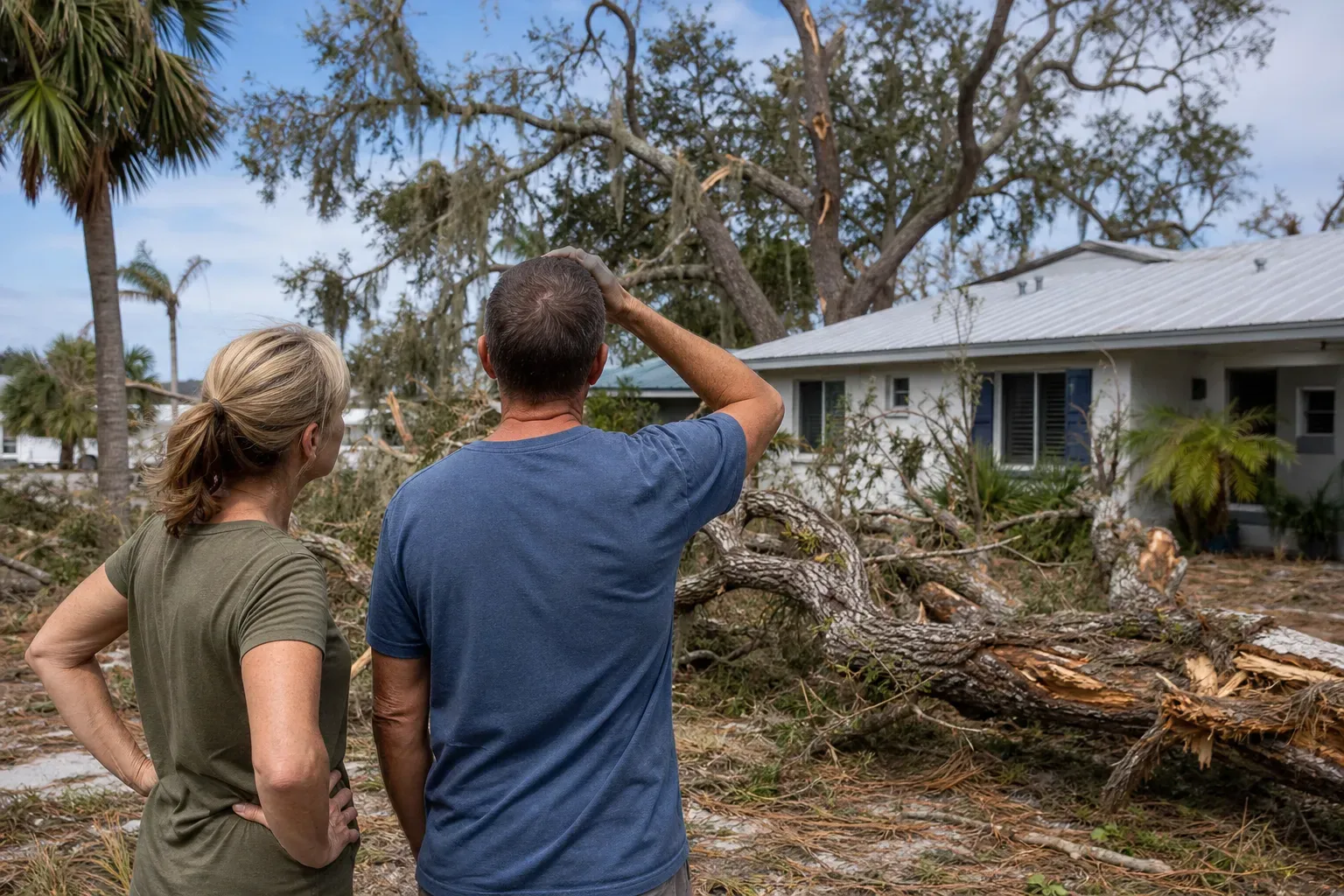
Use repeat views and brief notes instead of constant close checks. The Pensacola root recovery guide can help frame later growth observations. The Pensacola root recovery guide offers related tree-care background. For related tree-care background, read the Pensacola tree risk guide and Pensacola root recovery guide.
Choose a viewing point outside the area of concern. Use the same spot when it remains safe. A window or another sheltered viewpoint may be better than walking into the yard. Never cross a closure or ignore official guidance for a photo.
A simple record can follow this order:
- Identify the tree. Use a location label, such as “back fence tree.” Do not guess the species if you are unsure.
- Date the observation. Note when the photo was taken and whether a new storm occurred between views.
- Take a wide view. Include the whole crown when possible, without moving closer to damaged branches.
- Describe the foliage. Note broad patterns, colors, and visible new leaves. Avoid unsupported health labels.
- Record separate concerns. List visible broken limbs, bark changes, or ground changes without inspecting them up close.
- Keep the follow-up advice. Save the arborist's recommended review date and any access restrictions.
Do not try to give an exact percent of leaves lost. The figure may be wrong if you lack earlier photos from the same view. “Upper crown much thinner than before” can be a more honest description.
Changes in light also affect photos. A dark crown against bright sky can look bare. Different camera angles can hide branches. Note those limits before assuming the tree has worsened.
Useful entries might say “no clear change from the last wide view” or “new leaves visible on two lower branches.” Those are observation labels, not proof of recovery. They describe what the image actually shows.
Let the tree care expert set the dates for review. No one photo schedule fits all tree types and kinds of damage. After more severe weather, ask if the plan needs to change.
Keep original images as well as marked copies. If you add arrows or circles, label them as your notes. This helps distinguish what was visible from what you thought it meant.
What do new leaves, sprouts, and damaged palm fronds tell you?
New foliage is worth recording, but it does not clear structural concerns. Read the focused Pensacola root recovery guide alongside the Pensacola root recovery guide. Growth and pruning decisions are linked, but they are not interchangeable. For related tree-care background, read the Pensacola tree risk guide and Pensacola root recovery guide.
On a hardwood tree, new shoots show growth in those spots. They do not prove that roots or branches are safe. A split or weak branch joint may still pose a risk. Keep people out of closed areas until the expert advising you says that can change.
UF/IFAS explains that rebuilding branches can take time. A new leader, the shoot that becomes a main growing branch, may form within a year or two after certain smaller tip breaks. Larger broken branches may require many years and more visits. These are examples from storm restoration guidance, not deadlines for your tree.
That guidance also notes that cuts on branches at least four inches across are less likely to close over than smaller cuts. A flush of leaves should not distract from the size or location of a major wound.
Palms need a different reading. Their new leaves emerge from a growing bud. According to UF/IFAS palm hurricane recovery guidance, an undamaged bud can produce a new canopy. Full canopy replacement takes at least a year and often longer.
For palm observations, keep these distinctions clear:
- Bent green fronds can still help the palm produce energy.
- Dead fronds that could fall onto a target need professional attention.
- Broken fronds that cover the bud may interfere with new growth.
- Yellow fronds or brown tips alone do not justify stripping the crown.
The UF/IFAS restoration publication advises retaining bent green fronds unless they pose a hazard. It warns against overpruning palms. Do not climb or reach into the crown to check the bud.
UF/IFAS also describes a palm spear leaf that wind forces open early. It may appear pale or yellow before gaining its normal color. That explanation does not cover every yellow leaf. Record the change and seek advice if its cause is unclear.
Do not add fertilizer or fungicide just because leaves look poor. The palm sources give different fertilizer advice for palms already in place and those replanted. They also report no research showing that fungicides help after a hurricane. Ask for advice for that palm. Do not choose a tree care from a photo alone.
How should Milton homeowners use records for permits and claims?
Use records to explain visible conditions, not to establish coverage or permission. The Pensacola canopy recovery overview provides broader context, while the Pensacola root recovery guide offers related tree-care background. Neither replaces Milton-area authorities or your insurance contract.
For a Milton address, first confirm which jurisdiction governs the property. The Santa Rosa County Development Services page provides a route for land-use and permitting questions. Its general page does not establish whether a particular tree job requires a permit.
Ask the city or county office in charge about the planned work. Give the address, where the tree stands, and what work you plan. Storm damage does not mean all rules cease to apply. Do not use Pensacola's tree rules for Milton. Rules may differ for public land, rights of way, and private land.
Also confirm debris collection instructions with the responsible local agency. A tree work estimate and public debris pickup are separate matters. Ask the contractor whether hauling is included, and ask officials where debris may be placed.
For insurance, the Florida CFO homeowners insurance overview explains that tree and debris removal coverage varies. Coverage often relates to damage to insured property. A tree that falls without damaging covered property may not have removal coverage.
Keep these records where they can be found easily:
- Save safe, dated photos of the tree and any property damage.
- Keep estimates, invoices, receipts, and written work descriptions.
- Record claim communications and questions that still need answers.
- Retain the insurer's instructions and the arborist's findings separately.
Safety comes before photos. The CFO overview says to record damage before short-term repairs when you can. It also says to protect the property from more damage. Ask your insurer how to do both without going into an unsafe area.
The Florida hurricane deductible guide explains that hurricane deductibles have specific terms. Do not assume a deductible amount from the storm's name. Ask your insurer or agent to explain your own policy.
Frequently asked questions
Is a tree dead if Isaias strips most of its leaves?
Not necessarily. Missing leaves alone cannot settle that question. Record foliage loss and visible damage separately. A qualified arborist can assess whether monitoring, pruning, or another action is appropriate. Do not wait for leaf changes when a structural hazard is present.
How long should I wait for new leaves?
There is no single waiting period for all trees. Species, season, prior condition, and damage affect the assessment. Ask an arborist for a review schedule. For palms, UF/IFAS says complete canopy replacement takes at least a year and often longer, even when the bud survives.
Should green but bent palm fronds be removed?
UF/IFAS generally advises keeping bent green fronds unless they pose a hazard. They still help the palm produce energy. Fronds blocking the bud may need removal, but that calls for safe professional assessment. Do not climb the palm or pull fronds to test their attachment.
Does new sprout growth mean the tree is safe?
No. It shows growth where the sprouts appear. It does not confirm the strength of the trunk, roots, or damaged branches. Continue the agreed monitoring plan and retain access restrictions until the qualified professional advising you says they can change.
Does Florida Foliage provide tree service in Milton?
Florida Foliage is based in Daytona Beach and serves Volusia and Flagler counties. This Milton article is general public education. It does not offer Milton, Panhandle, or Alabama crews or availability. For work in Milton, contact a qualified local provider and the relevant public authority.
By Tim Francis, Tree Content Expert. This article was drafted with AI help using the public sources linked above. It is a general guide. It is not a tree assessment, an emergency guide, legal advice, or a ruling on what insurance covers.
Florida Foliage is a Daytona Beach tree service that works with an ISA Certified Arborist consultant.
For tree work in Volusia or Flagler County, call (386) 481-7913 to request a free on-site estimate.
For tree work in Volusia or Flagler County, call (386) 481-7913 to request a free on-site estimate.