Reviewed by Clinton Funk
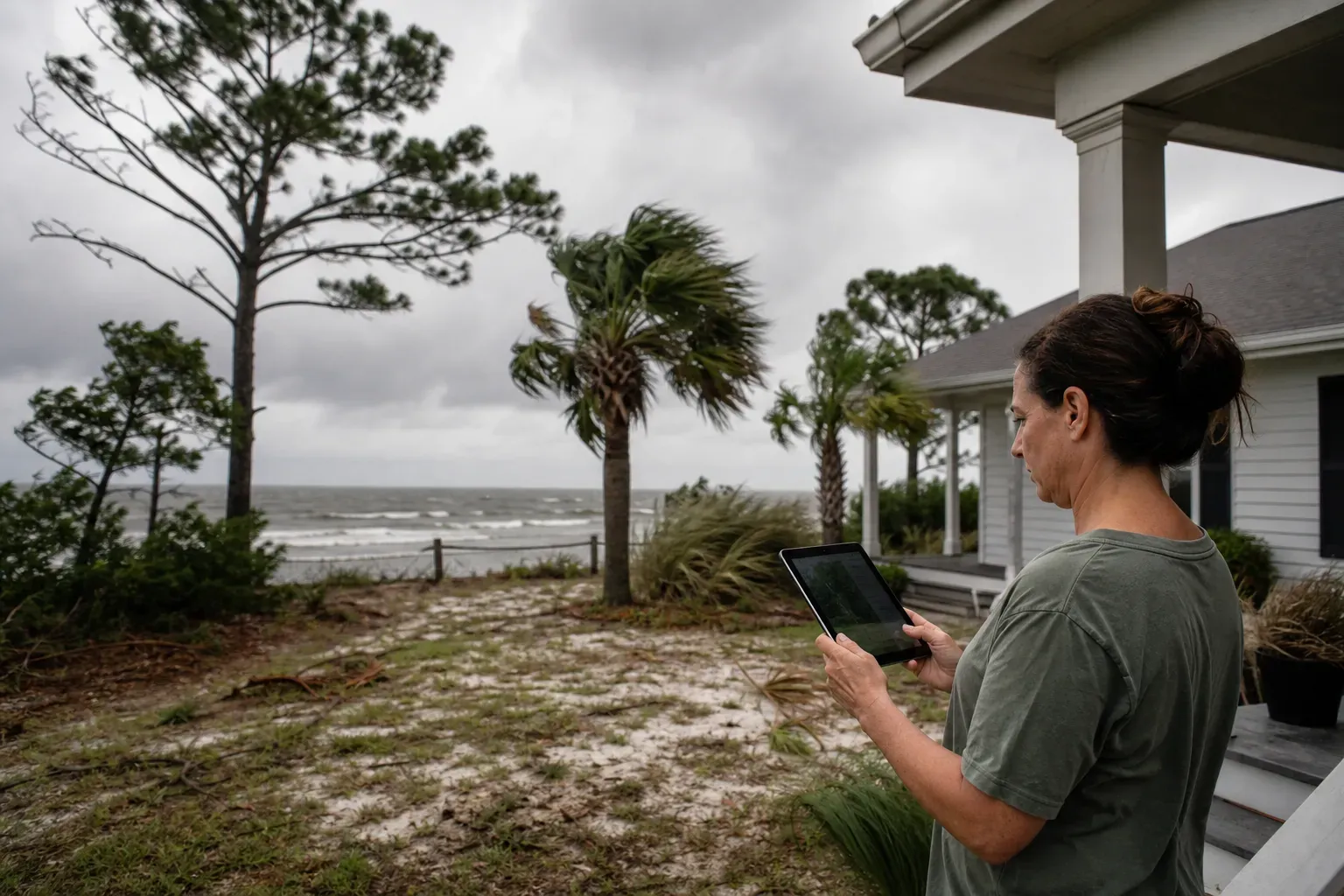
Use the National Hurricane Center for storm forecasts. Use the local National Weather Service for area hazards. Follow local officials for evacuation orders and access rules. Hurricane Isaias Official Alert Sources For Pensacola Yards should guide decisions, not shared screenshots or unsourced storm claims.
The supplied NHC advisory is dated October 9, 2026. It names the storm Isaias. This guide does not check live weather or current orders. Forecasts and local orders can change. Check the agency's source before you act on a dated claim.
This guide helps you choose the right source. It does not tell you to leave, assess a tree, or clear you to work. For urgent safety choices, turn to public officials and qualified experts.
Which Hurricane Isaias Official Alert Sources For Pensacola Yards should you use?
Start with the source that owns the decision. The Pensacola yard and evacuation plan covers the wider planning task. The Pensacola tree risk guide offers related tree-care background. Here, the goal is to find and check official messages.
Three source groups serve different roles. They work together, but they are not interchangeable.
National Hurricane Center: the storm forecast
The supplied NHC Isaias advisory gives the storm's position, movement, and forecast hazards. It also lists watches and warnings. Those details belong to the advisory's stated time.
Use the NHC source to understand the broad threat. Do not treat an old forecast as a live update. Check the date, issue time, and advisory number. Then look for the latest official information available there.
A forecast track does not describe every yard hazard. The advisory also discusses wind, rain, surge, and tornadoes. Read those sections, not solely the center-line map.
Local National Weather Service: area hazards
The NWS Mobile/Pensacola office provides local weather products and hazard information. Use it for warnings and area-specific weather context.
A county order and a weather warning serve different needs. A warning tells you about a weather threat. Local officials issue orders to leave and direct other local steps. You need both sources.
Local officials: evacuation and local instructions
Escambia County's evacuation guidance says to heed local advice and orders. It identifies storm surge flooding as a major life-safety threat.
Use county guidance to understand evacuation decisions. Check current official notices for any active order. A FAQ page explains rules but may also display old notices. A banner alone is not proof of a current order.
Keep these roles clear:
- NHC advisories explain the storm and forecast hazards.
- Local NWS products explain threats across the local area.
- Local officials issue evacuation instructions and local restrictions.
- Tree-care pages explain recovery principles, not weather clearance.
- Permit and sanitation offices answer work and disposal questions.
How can you tell an official update from a stale social post?
Trace each urgent claim back to its original source. The Pensacola tree risk guide offers related tree-care background. The Pensacola yard and evacuation plan puts those decisions into a broader plan. Neither should replace a current public notice.
A social post may be useful as a prompt. It is not enough on its own. Even a true screenshot can become stale. Cropped images may hide dates, places, or warning changes.
Use this short check before sharing or acting:
- Open the source. Read the agency's own notice. A screenshot is not enough.
- Check the date and time. Include the year and time zone.
- Check the place. Similar names may refer to different areas.
- Check the type. Watches, warnings, forecasts, and orders mean different things.
- Check for updates. Compare numbers, times, changes, and expiry dates.
- Follow the right source. Weather agencies forecast; local officials order evacuations.
The supplied NHC advisory defines its watches and warnings. For example, a storm surge warning concerns dangerous rising water moving inland. It directs people to follow local evacuation instructions promptly.
That is more useful than a post saying, “The storm turned.” A track change does not cancel all hazards. Read the hazard text and local instructions together.
Be cautious with claims that lack a time stamp. Also question posts that promise a safe work window. A broad forecast cannot confirm safety beneath one damaged tree.
If two notices seem to clash, check what each covers. One may cover weather in a broad area. The other may apply to one zone where people must leave. Check when each was issued before you decide.
Do not settle a safety question by counting shares. Go back to the agency that sent the notice. If a local rule is still not clear, ask the public office in charge.

Which alerts should guide yard work and access decisions?
Yard work must not delay a required evacuation. This section explains which official messages support those choices. For related tree-care background, read Pensacola tree risk guide and Pensacola root recovery guide.
Check weather hazards and local orders before planning outside work. Follow restrictions that apply to your area. Do not infer consent from a quiet patch of weather.
The NHC advisory describes several kinds of storm danger. These include surge, wind, rain, tornadoes, and rough surf. The local NWS office is the source for local weather products.
A yard can face more than one hazard. A lower wind forecast does not settle flood risk. A forecast for the coast may not describe every inland threat.
Keep the decision narrow: does the current official guidance require leaving, sheltering, or avoiding travel? Resolve that before thinking about debris or tree appearance.
- Follow an evacuation order that applies to your location.
- Do not stay behind to finish pruning or cleanup.
- Do not enter floodwater to inspect yard damage.
- Keep away from downed lines and nearby debris.
- Do not work beneath broken or hanging limbs.
- Report urgent hazards to the appropriate public authority.
These rules help keep you safe. They are not a plan to remove a tree. This guide gives no steps for cutting, climbing, rigging, or chainsaw use. A trained tree care expert must check each damaged tree on site.
Escambia County's evacuation FAQ discusses ordered zones, flood-prone areas, mobile homes, and unsafe structures. It does not provide clearance for yard work. Do not stretch its shelter guidance into that role.
Check local rules before you try to enter an area. A forecast does not tell you which roads are open or when you may return. A fallen tree at an entry may affect power lines or public land. Do not move it without the right help.
If there is an immediate threat to life, contact emergency services. Do not wait for a social-media answer or a routine estimate.
Where should you check tree, permit, and debris guidance?
Use tree-care sources for recovery and public offices for rules. The Pensacola tree risk guide offers related tree-care background. The Pensacola yard and evacuation plan covers the larger planning picture. Neither is a substitute for a tree assessment or permit decision.
Tree condition and recovery
The ISA tree-owner resource page offers guidance on pruning, tree risk, and storm damage. It also points owners toward arborist resources. Use that material to frame questions for a qualified professional.
Ask whether the tree needs removal, restoration, or monitoring. A photo may show obvious damage but not the whole risk. Do not assess a damaged tree from a general guide.
UF/IFAS restoration guidance explains that recovery pruning may take repeated visits. Larger broken branches can take many years to develop replacement growth. An initial cleanup does not mean full recovery.
Palm care has its own limits. UF/IFAS says to keep bent green fronds if they are still attached and pose no risk. They help the palm regain energy. Dead fronds that pose a risk need other care. So do fronds that smother the bud.
The bud is the palm's growing point. Protecting it matters, but stripping the canopy is not a safe default. The UF/IFAS palm storm guide says full canopy replacement takes at least a year, often longer.
Do not treat a palm based on a storm rumor. That guide says no research shows a benefit from fungicide use after a hurricane. Feed advice differs for palms replanted after a storm and those that stayed rooted. Ask for advice that fits the palm's state.
Permits and public trees
The Pensacola City Arborist page identifies permit requirements for heritage trees and work in public rights of way. Rules for protected private trees depend on land use. Ask the city about the tree and parcel involved.
Ask the responsible local office which current permit process or exemptions apply to the planned work. This guide does not decide those questions for your property. The city page also tells you how to report a problem with a city tree.
Outside Pensacola city limits, confirm the correct jurisdiction. Escambia County Development Review provides development-review contacts. Santa Rosa County Development Services provides planning and permit contacts. Their pages do not, by themselves, settle a specific tree-removal question.
Yard debris and collection
Pensacola Sanitation Services handles city garbage, recycling, and yard waste. Check current city instructions before setting out storm debris. Normal collection information does not prove that special storm pickup is active.
- Confirm that your address falls within the service area.
- Ask about debris types and current set-out rules.
- Keep hazardous materials out of ordinary yard waste.
- Do not assume contractor debris qualifies for resident pickup.
- Avoid blocking access while waiting for disposal instructions.
The city lists pesticides, paint, and other hazardous items as unacceptable in normal collections. Keep tree debris questions separate from hazardous-waste questions.
Which official sources answer insurance questions after yard damage?
Use your policy and insurer for coverage decisions. The Pensacola yard and evacuation plan covers wider preparation. The Pensacola tree risk guide offers related tree-care background. Neither can predict what an insurer will pay.
The Florida CFO homeowners insurance overview explains that debris and tree-removal coverage varies. It says many policies cover removal when a downed tree damages insured property, subject to limits.
It also notes that trees falling without covered property damage usually lack debris-removal coverage. Some policies address a blocked main entrance. These are general patterns, not a claim decision.
Ask your insurer about the actual policy language. Tree ownership alone does not settle coverage. Nor does a contractor's statement that a job is “covered.”
When safe, document damage before temporary repairs. The CFO overview recommends photos, records, and receipts. Do not enter a dangerous area just to gather evidence.
- Ask which documents the insurer needs for your claim.
- Keep estimates, invoices, receipts, and claim messages together.
- Describe observed damage without guessing at hidden causes.
- Ask how policy limits and deductibles may apply.
- Confirm current notice requirements directly with the insurer.
The Florida CFO hurricane deductible guide explains hurricane deductibles and exceptions. A percentage deductible relates to the insured dwelling or structure limit. Read the dollar amount stated in your policy.
Do not use this guide to work out what your policy pays or when a claim is due. It is a broad guide, not legal or insurance advice. Ask your insurer or agent about your policy terms. For a claim dispute, they or a trained adviser can help.
Frequently asked questions
Is this article a live Isaias alert?
No. This guide is dated October 9, 2026. It uses the supplied sources. It does not check live alerts or orders. Open the NHC and local NWS pages for current weather alerts. Check local public notices for orders that apply where you live.
Does an NHC forecast tell me whether to evacuate?
An NHC forecast explains storm threats, watches, and warnings. Local officials tell people when and where to leave. Follow any order that applies to your home or area. Read the forecast for context, but do not use the track map to set aside a local order.
Can I trust a screenshot from an official account?
Use it as a prompt to check, not as the final word. Open the notice on the source's own page. Check its date, time, area, and status. Even a real image can be old or leave out key details. Look for a newer notice before you act.
Can a forecast confirm that my damaged tree is safe?
No. A forecast tells you about weather, not the state of one tree. Stay away from broken limbs and other dangers. Have a qualified tree care professional assess the tree on site. Wait until weather and local orders allow that visit. A calm spell is not proof of safety.
Does Florida Foliage serve Pensacola or the Panhandle?
Florida Foliage is based in Daytona Beach and serves Volusia and Flagler counties. This Pensacola guide is public education. It does not imply Panhandle or Alabama crews, an office, service, or availability. Ask qualified local providers about work at your own site.
About this article: Tim Francis is a Tree Content Expert. AI helped draft this guide from the supplied public sources. It does not claim hands-on tree care credentials or an expert site check. Check dated facts with the agency that issued them.
Florida Foliage is a Daytona Beach tree service that works with an ISA Certified Arborist consultant.
For tree work in Volusia or Flagler County, call (386) 481-7913 to request a free on-site estimate.
For tree work in Volusia or Flagler County, call (386) 481-7913 to request a free on-site estimate.