Reviewed by Clinton Funk
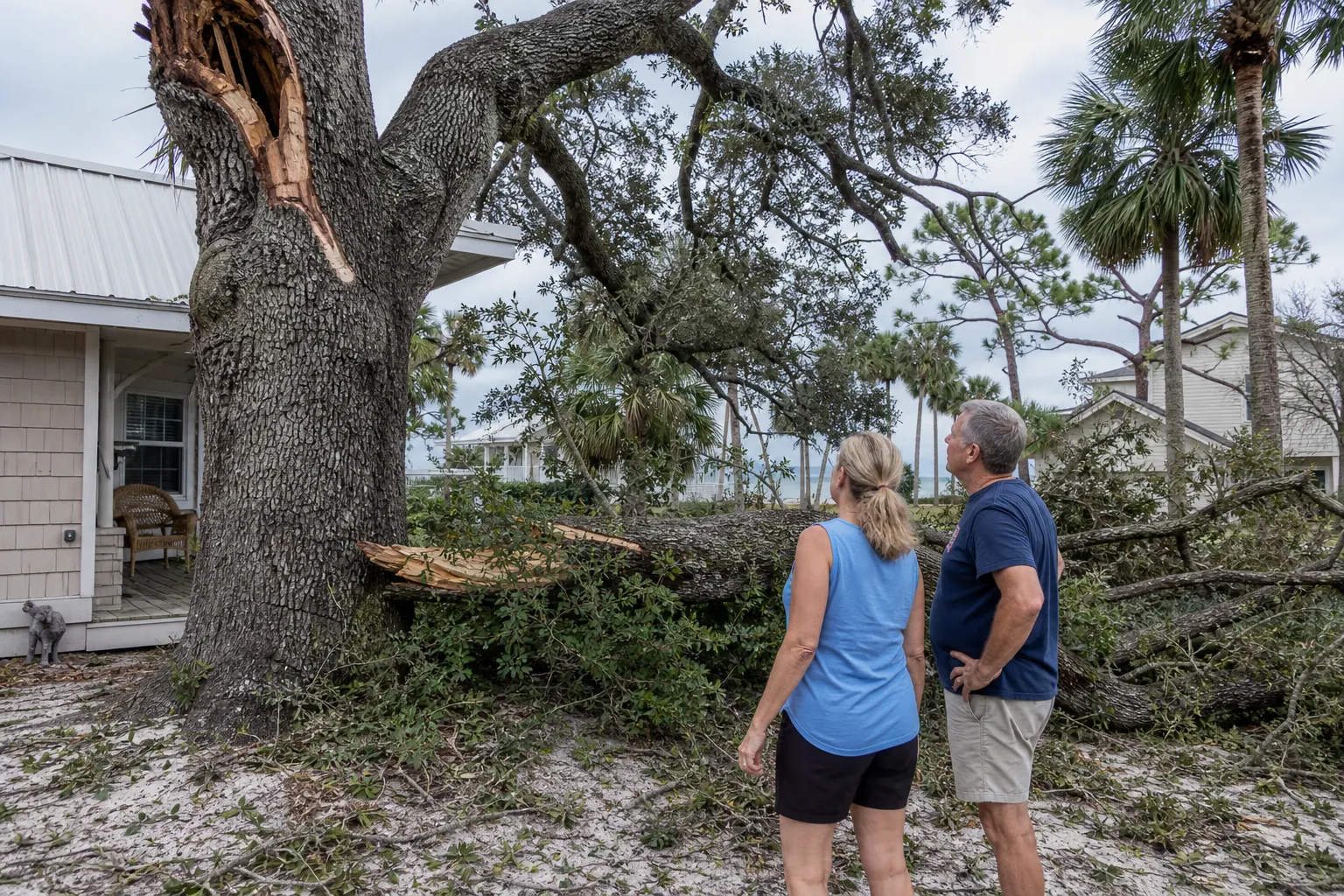
Old tree wounds are worth discussing with a qualified arborist. This guide cannot decide whether a tree should be removed or retained. This guide to Hurricane Isaias Old Tree Wounds To Discuss In Milton focuses on past trunk damage, old cuts, and prior repairs. Share records from a safe place. Do not climb, probe a wound, or test a damaged tree.
Storm safety comes before tree work. Follow local officials on shelter, travel, and evacuation. This article offers general education, not a tree inspection or a finding that any tree is safe. It does not announce tree service availability in Milton.
Which Hurricane Isaias Old Tree Wounds To Discuss In Milton deserve attention?
Keep wound history in the record. The Pensacola tree-risk questions provide the wider assessment context. The Pensacola rental tree-record guide helps separate observations, messages, and professional advice. Neither assesses a Milton tree or resolves the gaps in its history.
A useful first question is simple: “What happened here?” Ask what the existing records say caused the wound. Share that account with the person assessing the tree. If the cause is unknown, say so.
A second question is whether the area has changed. Old photos may show a smaller opening or a branch that once stood nearby. They can help establish a timeline. Ask the assessor which questions those photos leave open.
The ISA tree owner resources include guidance on tree risk, pruning, and storm damage. The page is a resource index. Ask a qualified assessor which guidance applies to the specific concern.
Useful points to flag include these:
- An old trunk wound has a new crack nearby.
- A large branch was lost at the same spot.
- The wound sits where two main stems meet.
- A past repair is visible, but no records exist.
- The area has changed since the last assessment.
- The tree stands near a place people use often.
These are reasons to ask questions, not a tree assessment. Do not approach the tree just to complete the list. A distant photo or an old record may be enough to start the discussion.
Does closed bark mean the problem is gone?
Ask the assessor what growth around the wound shows, what remains unexamined, and which findings support their recommendation.
UF/IFAS storm-restoration guidance notes that large branch cuts are less likely to close over than small ones. It identifies branches four inches or more across as less likely to close. This is about branch wounds, not a universal test for trunk strength.
Ask what the assessor can tell from the surface. Then ask what remains unknown. A sound assessment should make those limits clear.
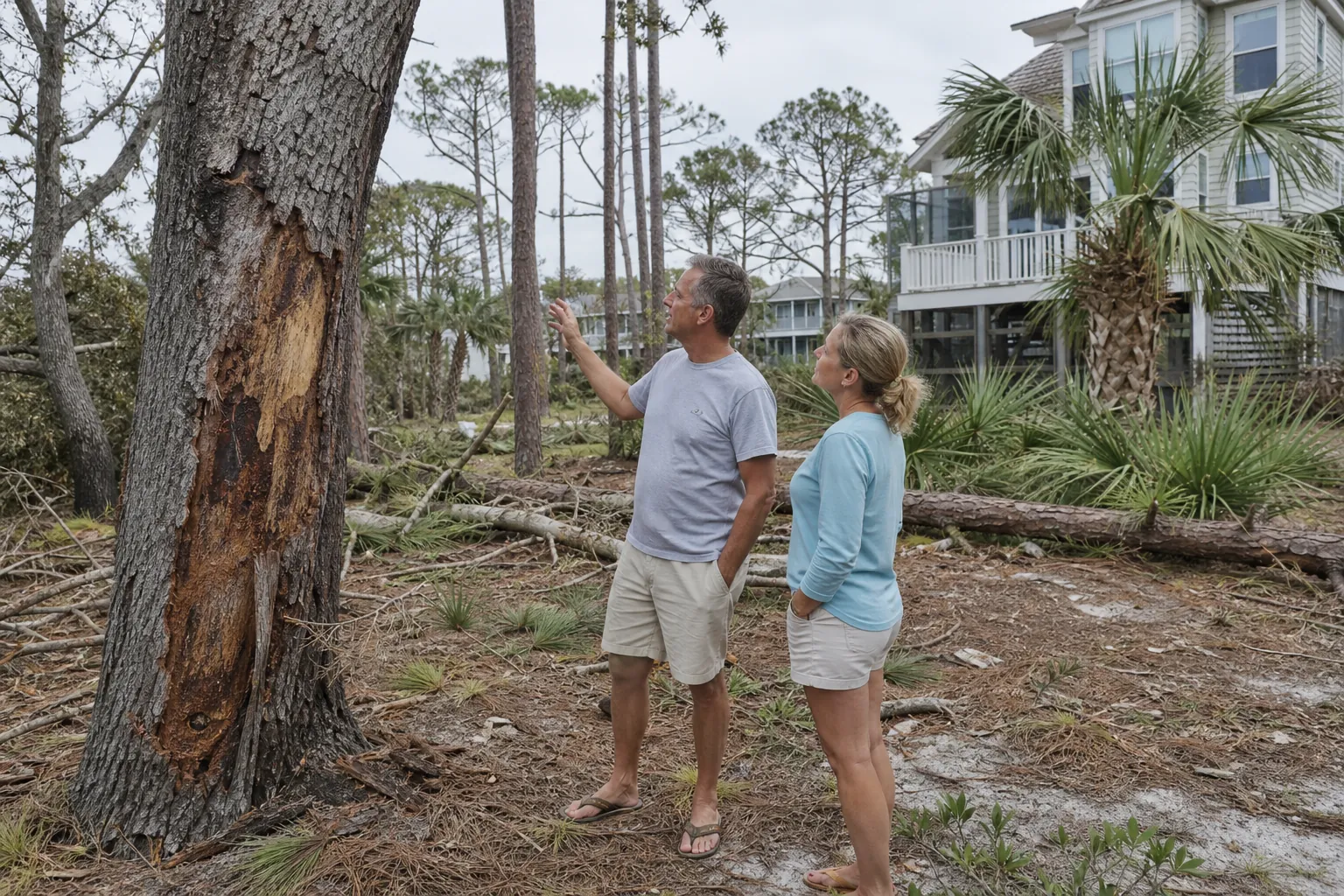
What history should you share about a wound or prior repair?
Keep old repairs and follow-up notes in the record. The Pensacola tree-risk questions provide the wider assessment context. The Pensacola rental tree-record guide helps separate observations, messages, and professional advice. Neither assesses a Milton tree or resolves the gaps in its history.
A repair history may be as useful as a photo. Was a branch cut after a storm? Was hardware installed? Did someone recommend later checks? Do you know who did the work?
Use plain words when the terms are unclear. “Metal parts between two limbs” is useful information. You do not need to name a support system correctly. Do not pull on cables, turn bolts, or move hardware to see how it works.
Gather what you already have in this order:
- Find earlier photos. Look for images taken before and after the wound appeared. Keep dates if they are known.
- Collect work records. Save invoices, written findings, pruning plans, and notes about installed supports.
- Write a short timeline. Note known storms, branch losses, and changes in the wound. Mark estimates as estimates.
- Describe nearby use. Explain whether people sleep, park, walk, or gather near the tree.
- List unresolved questions. Ask whether prior recommendations still apply and what follow-up is needed.
This is a records task, not a field inspection. Use photos taken from a safe place. Do not stand under a suspect branch to get a better angle.
Keep facts separate from guesses. “The opening looks wider in this dated photo” is a clear observation. “The trunk is rotten” is a conclusion that needs assessment.
How can you reconcile an old wound history?
Consider this hypothetical record review. The entries show how to separate the document from the question it leaves open. They do not describe a real client or establish workmanship, hidden damage, or safety.
| Existing record | What to record | Question to ask |
|---|---|---|
| A dated photo of an opening | The date and visible appearance in that image | What can the assessor compare with the present view? |
| An invoice saying branch pruning | The exact work description and date | Does it identify the same wound or a different branch? |
| A report recommending a later check | The stated recommendation and any follow-up record found | Which questions remain if the later record is missing? |
What if there are no records?
Say that the wound history is unknown. Record the gaps without drawing a conclusion about workmanship, hidden damage, or safety. Ask which past repair claims can be checked.
Ask the assessor to explain what is visible now. Also ask whether more information would change the recommendation. There may be limits even after a site visit. A written account of those limits can help guide later decisions.
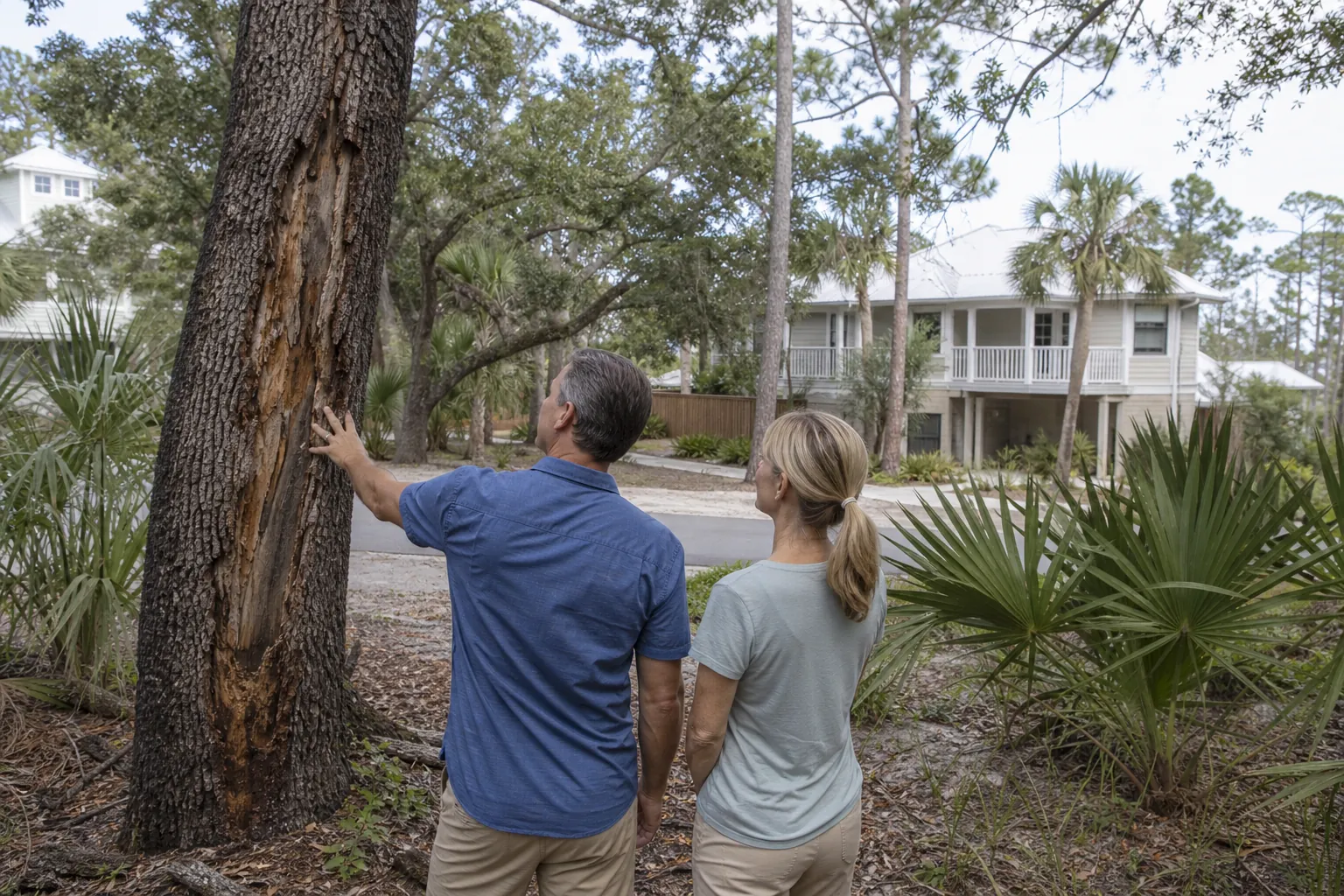
How should old cuts and storm damage shape the questions?
Keep old branch cuts in the record. The Pensacola tree-risk questions provide the wider assessment context. The Pensacola rental tree-record guide helps separate observations, messages, and professional advice. Neither assesses a Milton tree or resolves the gaps in its history.
Past branch loss can affect later growth and care. According to UF/IFAS, storm restoration may require several pruning visits over years. Small broken branch tips may develop a new leader sooner than larger damaged branches. Ask the assessor to explain those terms and their relevance to this tree.
The same source identifies weak branch structure as a concern in storms. Examples include two competing main stems, trapped bark at a union, and long, unbalanced limbs. Ask the assessor what each term means for the proposed review.
These points explain why one old wound needs context. The assessor may need to consider nearby stems, later shoots, and the shape of the crown. Ask which parts need review and what the review can establish.
Useful questions include these:
- “Was this cut part of a planned restoration process?”
- “Did later pruning visits take place?”
- “How does new growth affect the old damaged area?”
- “Are nearby branch connections relevant to this wound?”
- “What can be assessed now, and what needs follow-up?”
Do not turn those questions into a plan to prune. Removing live growth can have lasting effects. Storm preparation is not a reason to make rushed cuts around an old wound.
Are palm wounds assessed the same way?
Palms need their own discussion. Do not apply hardwood branch-restoration advice to a palm trunk or crown.
UF/IFAS guidance on hurricane-damaged palms explains the role of the bud, where new leaves form. It also recommends retaining broken green leaves in many cases because they still support recovery. Ask the professional how that guidance applies to this palm. Also ask how the hazard and bud-obstruction cautions in UF/IFAS restoration guidance apply.
Ask someone familiar with palms to assess the damage. Do not cut into the trunk or try to check the bud yourself. Keep the question focused on the palm's condition, its surroundings, and appropriate next steps.
How do nearby people and buildings change the discussion?
Keep nearby occupied spaces in the record. The Pensacola tree-risk questions provide the wider assessment context. The Pensacola rental tree-record guide helps separate observations, messages, and professional advice. Neither assesses a Milton tree or resolves the gaps in its history.
Describe occupied rooms, paths, parked cars, and other nearby uses. Ask the assessor how that information relates to their recommendation.
A tree beside a bedroom raises different questions from one beside an unused corner of a yard. Ask how each setting affects the questions to be checked. Share the wider setting along with the wound photo.
Share how the space is used:
- A bedroom is occupied overnight beside the tree.
- A driveway is used for daily parking.
- A path leads to a door used often.
- Children or pets spend time in that part of the yard.
- Utility lines or nearby structures limit access.
Only describe features you can observe safely. Do not walk beneath hanging limbs to measure a distance. Avoid tree parts touching, or close to, power lines. Report utility hazards to the utility or appropriate public authority.
Ask what interim precautions are suitable for the site. A tree professional can address tree-specific concerns. Public officials remain the authority for evacuation, storm shelter, and safe travel.
For immediate danger, contact emergency services as appropriate. Do not wait for a routine estimate when a life-safety issue needs urgent help.
What can wait until safe access is restored?
Keep later review questions in the record. The Pensacola tree-risk questions provide the wider assessment context. The Pensacola rental tree-record guide helps separate observations, messages, and professional advice. Neither assesses a Milton tree or resolves the gaps in its history.
The October 9 NHC advisory supplied for this article describes Isaias and forecasts hazards along parts of the northern Gulf Coast. It is a dated advisory, not a live statement of conditions at your property.
Forecasts and warnings can change. Check the latest official information, including the National Weather Service Mobile/Pensacola office. Follow instructions from local officials. Do not use this article to judge whether outdoor work or travel is safe.
After officials permit access, an assessment may still face limits. Debris, wet ground, damaged lines, and nearby broken branches can prevent a safe approach. More than one visit may be needed to answer the questions. No timing or outcome can be promised.
Useful follow-up questions include these:
- “Which concerns need attention before normal use resumes?”
- “Which findings are certain, and which remain unclear?”
- “Does this tree need another assessment later?”
- “What changes should be reported from a safe place?”
- “How does the proposed work address the stated concern?”
Ask for the reason behind a recommendation. Ask which findings support removal or retention, and which questions remain open. Keep the tree, site, and assessment limits in the written record.
Frequently asked questions about old tree wounds
Does an old trunk wound mean a tree must be removed?
This guide cannot decide removal or retention. Ask a qualified arborist what findings support their recommendation, what remains unexamined, and how nearby people and property affect the questions. Share the existing photos and records without treating them as a decision.
Should I fill a hollow or cover an old wound before Isaias?
Do not make a rushed repair based on this article. Ask about the purpose and limits of any proposed filling, coating, or covering. Tell the assessor about any material already applied. Leave old repairs and hardware undisturbed until a qualified professional can advise on the specific tree.
Can a photo show whether the trunk is strong enough?
A photo can show visible features and help compare dates. Ask what the photo can show, what remains unexamined, and which findings would support a recommendation. Share both wider views and existing close-ups if available. Explain where the tree stands and how the nearby space is used. Do not take risks to collect more images.
What should I ask about a cable or brace installed years ago?
Ask what it was intended to support, whether records exist, and whether it has had follow-up checks. Do not assume the hardware still serves its original purpose. Equally, do not assume it has failed because it is old. Leave inspection and any adjustment to a qualified professional.
Does Florida Foliage provide this service in Milton?
Florida Foliage is based in Daytona Beach and serves Volusia and Flagler counties. This educational article does not imply a Milton office, crew, service area, or availability. Milton homeowners should seek a qualified professional serving their area. Tim Francis is the Tree Content Expert, not a credentialed practitioner presented as having inspected these trees.
Drafting disclosure: This article was drafted with AI assistance using the supplied public brief and linked sources. It is general education, not an on-site assessment or a live weather bulletin.
Florida Foliage is a Daytona Beach tree service that works with an ISA Certified Arborist consultant.
Call (386) 481-7913 to request a free on-site estimate.
For tree work in Volusia or Flagler County, call (386) 481-7913 to request a free on-site estimate.