Reviewed by Clinton Funk
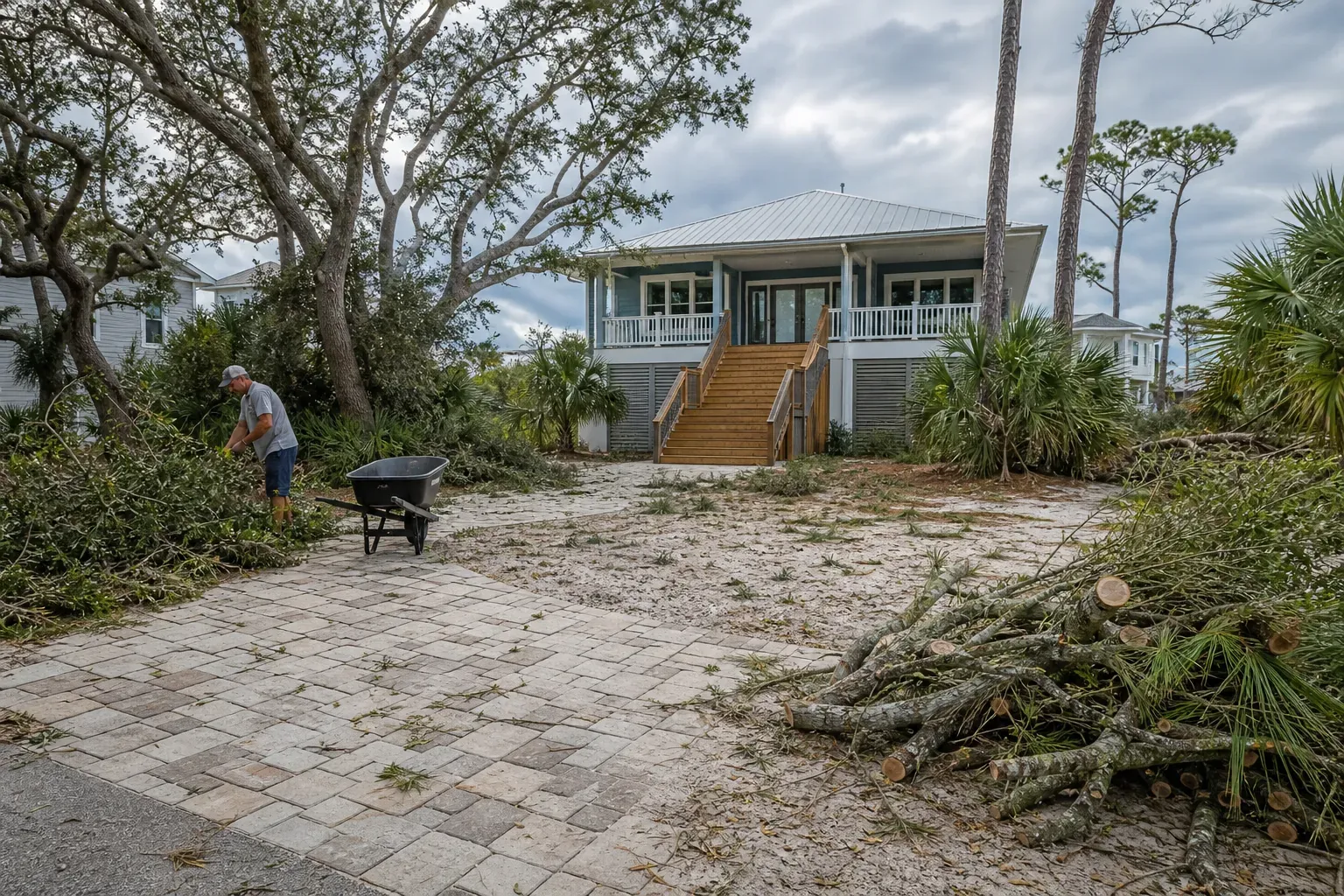
Before tree equipment crosses pavers, ask for a site-specific route and protection plan. Share visible ground and edge conditions, and ask which further checks the proposed route needs. Hurricane Isaias Pavers And Tree Equipment In Pace is an access-planning topic, not a do-it-yourself load check. Do not assume a paved path can support tree equipment.
This guide helps Pace homeowners discuss load-sensitive surfaces with a local tree contractor. It does not provide equipment weight limits or an engineering sign-off. Florida Foliage is based in Daytona Beach and serves Volusia and Flagler counties. This educational article does not indicate service or crew availability in Pace.
The supplied October 9 National Hurricane Center advisory identifies Isaias as a named system. That dated advisory is not a live forecast. Check the latest official updates and local orders before entering a storm-damaged site. Surface concerns must never delay action to protect life.
What should Hurricane Isaias Pavers And Tree Equipment In Pace planning cover?
Start with the full access route, not solely the driveway. Read the tree risk guide for Pensacola owners and Pensacola root recovery guide for related tree-care background. They do not decide claim, contract, or permit questions for your site.
Ask the contractor or engineer what the existing surface records and safe views can establish. Share the planned turns, edges, slopes, and stopping points, and ask which further site checks are needed.
The access plan should name each surface along the way. It should also explain where equipment will work. A driveway crossing and a work area are not the same thing. Ask which equipment and setup points are proposed and which site review is needed for each.
Use this numbered list to frame the discussion:
- Name the planned route. Ask the contractor to identify entry, turns, crossings, and the work area before moving equipment.
- Flag known concerns. Share the location of prior repairs, loose pavers, drains, buried systems, and areas that held floodwater.
- Ask who will assess the surface. The contractor should explain when input from a paver specialist or qualified engineer is needed.
- Discuss protection and limits. Ask what the proposed system is meant to protect, and what risks it cannot rule out.
- Agree on stop conditions. Establish how new movement, cracks, sinking, or changed ground conditions will affect the plan.
- Record the agreed scope. Keep the route, protection terms, and exclusions with the written estimate or work order.
These questions do not establish a safe load. They help reveal gaps before work starts. Do not use paver thickness, driveway age, or past car traffic as proof that tree equipment can cross.
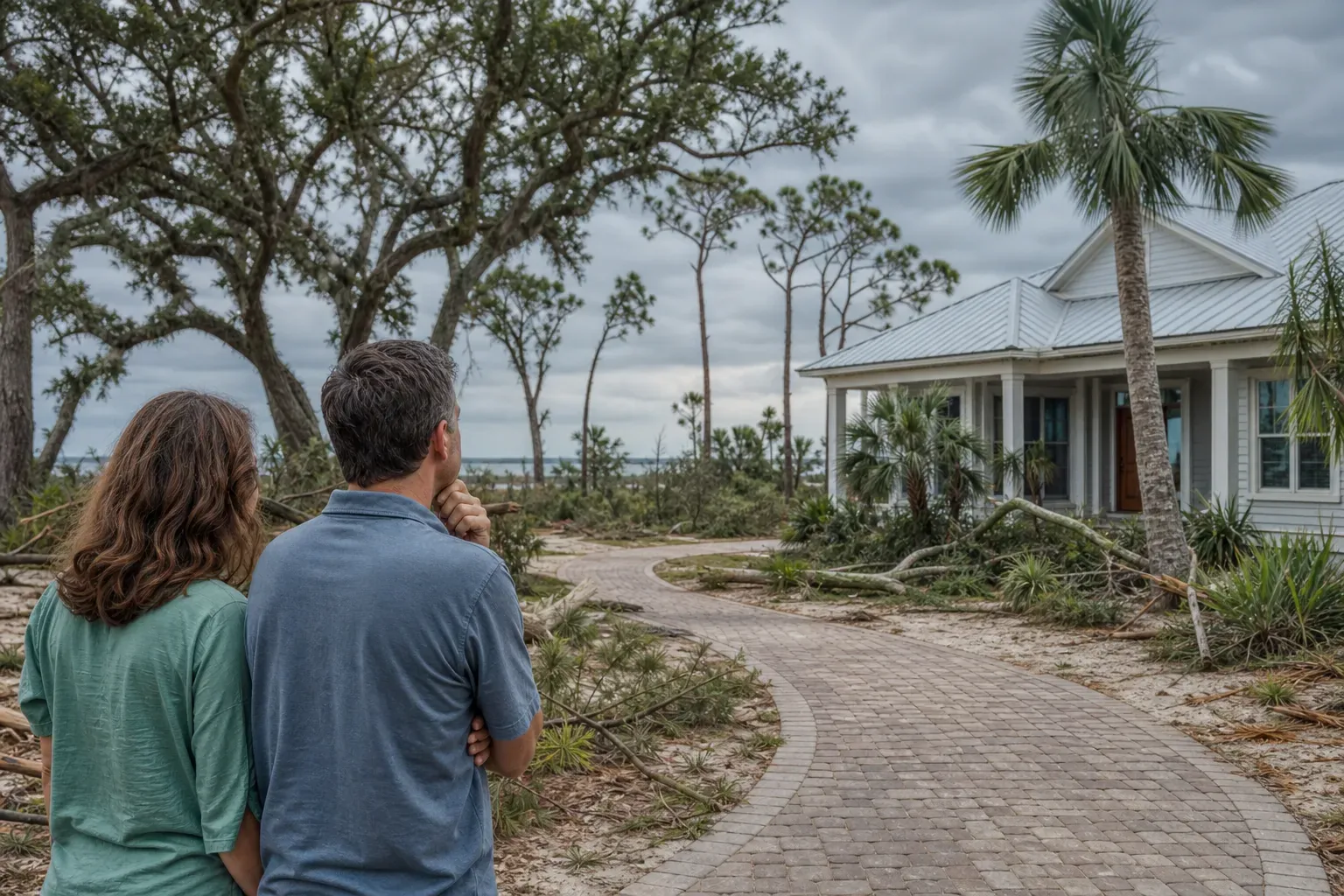
Which surface and ground details should you share?
Share what you know, but do not inspect unsafe areas. Read the tree risk guide for Pensacola owners and Pensacola root recovery guide for related tree-care background. They do not decide claim, contract, or permit questions for your site.
Start with records you already have. A paver invoice, repair note, or site plan may help. The lack of records is useful information too. Tell the contractor when the base, drainage, or installation details are unknown.
Describe changes since the storm from a safe location. New dips, lifted edges, gaps, or pooled water deserve attention. None of those signs tells you the cause by itself. They are reasons to pause and seek review, not grounds for a remote tree assessment.
Useful details include the following:
- Point out prior repairs. A patch may have different layers or support than the rest of the paved area.
- Identify known buried features. Share records for septic systems, irrigation lines, drains, and other services where available.
- Describe recent flooding. Tell the contractor where water stood and whether those areas still appear wet.
- Flag exposed edges. Note borders beside lawns, beds, steps, drains, or retaining walls without walking into danger.
- Share drainage concerns. Explain where runoff gathers or where the surface has shifted before.
- Identify unknown areas. State plainly when you do not know what lies beneath a route.
Keep people away from hanging limbs and unstable trees. Stay clear of damaged wires and equipment in contact with them. Urgent hazards belong with emergency services or the utility, as appropriate. Do not walk beneath a damaged canopy to obtain better photos.
A tree contractor may need another specialist's input. Tree care expertise does not, by itself, establish pavement capacity. The ISA tree-owner resources cover tree risk, pruning, and choosing an arborist. They are tree-care guidance, not a pavement load-rating method.
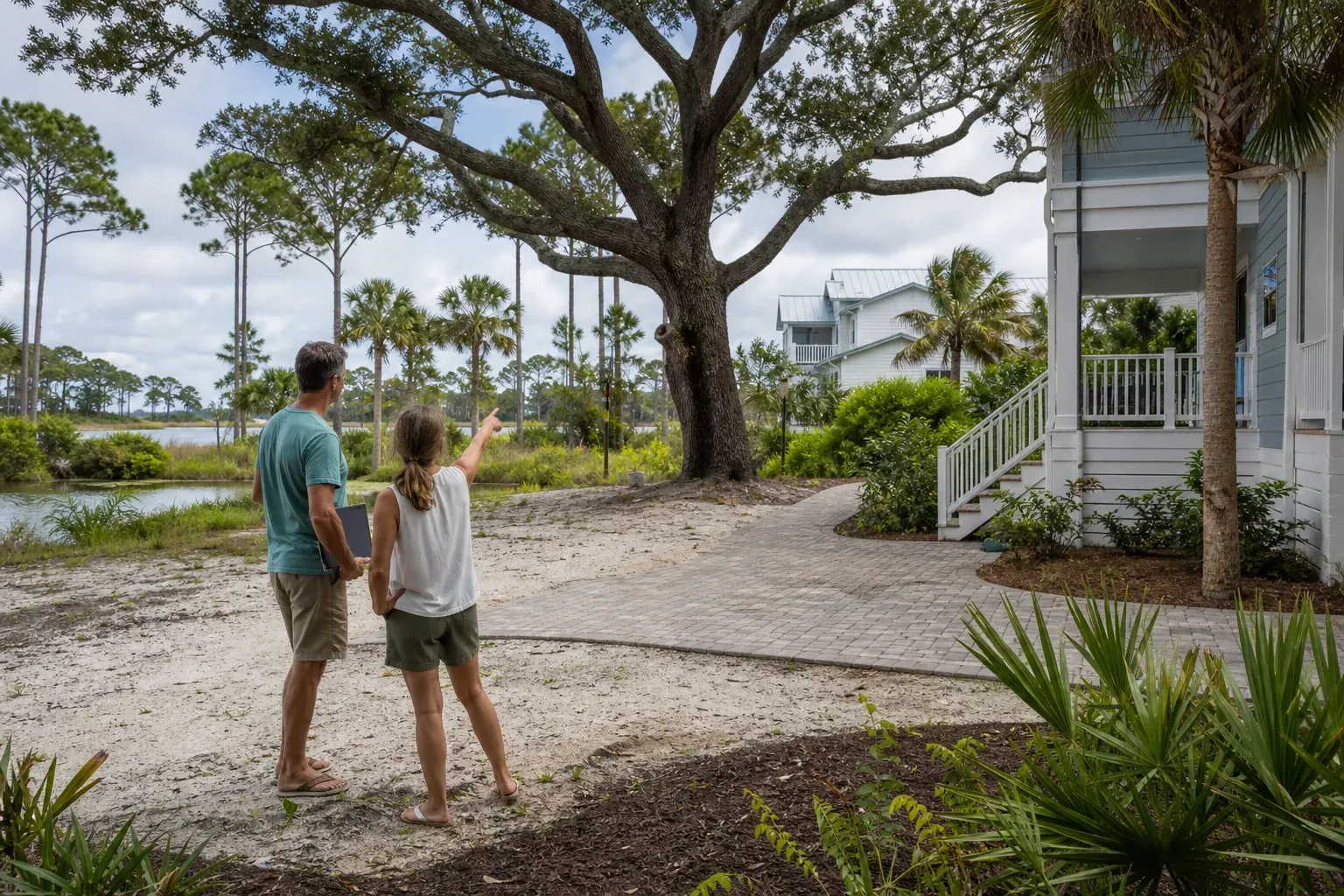
What should you ask about equipment and surface protection?
Ask for the method before discussing mats alone. Read the tree risk guide for Pensacola owners and Pensacola root recovery guide for related tree-care background. They do not decide claim, contract, or permit questions for your site.
Ask which equipment is proposed and where it will travel. Also ask where it will turn, stop, and unload. Those details let the contractor assess the actual task rather than an abstract driveway crossing.
Ask what the proposed ground-protection system is intended to address. What can the contractor or engineer establish about the surface and base, and which questions remain open? Do not treat the proposal as a damage guarantee.
Do not choose mat size, sheet thickness, or a stacking method yourself. Avoid home load tests or trial crossings. Those steps can create the damage you hope to prevent. The contractor and any needed specialist should assess the proposed system.
Ask clear, open questions:
- Ask what the protection is designed to do. The answer should distinguish surface wear from support and load concerns.
- Ask how turns will be handled. The route plan should account for corners, not solely straight travel.
- Ask where support feet will sit. If the machine uses outriggers, their placement needs specific attention.
- Ask what happens if conditions change. Rain, new ground movement, or a changed equipment choice may require another review.
- Ask about a route that avoids the pavers. An alternative may be worth assessing, but it can have its own risks.
- Ask what the contractor cannot confirm. Clear limits are more useful than a vague promise that everything will be fine.
Ask the contractor or engineer why each proposed machine and travel pattern fits the site. What records or checks support that choice, and what would lead them to change the plan?
Ask how protection will be placed and removed. The plan should account for that work too. Homeowners should not stand in the equipment route to guide placement or monitor paver movement. Agree on a safe way to raise concerns with the crew.
When should the route change or work pause?
An access plan must allow for a change in conditions. Read the tree risk guide for Pensacola owners and Pensacola root recovery guide for related tree-care background. They do not decide claim, contract, or permit questions for your site.
Pause the access decision when key facts are missing. That does not mean every paver area needs an engineer. Ask the contractor to explain which questions remain and who can answer them.
- Flag unknown buried structures. Ask who can assess them before access.
- Report new surface movement. Ask for review before equipment crosses.
- Resolve missing route details. Confirm the plan before equipment moves.
A route change should be a planned decision. Moving onto a lawn may expose roots, drains, or septic features. Using a neighboring parcel needs consent and a separate review. Do not assume the unpaved route is safer merely because it has no pavers.
Ask about other ways to reach the tree. The contractor may assess another work position or removal method. That choice depends on the tree, nearby targets, and site limits. No article can select the right method from a street address.
The tree itself also needs a separate decision. Storm damage does not always mean full removal. UF/IFAS storm-restoration guidance explains that some damaged trees need staged pruning and later visits. Large broken branches can take years to recover, when recovery is feasible. A qualified tree professional should assess the specific tree.
For palms, cleanup should not become heavy stripping of live fronds. UF/IFAS advises retaining bent green fronds unless they pose a hazard, and removing fronds that smother the bud. Its hurricane-damaged palm guidance also notes that full canopy replacement can take at least a year, often longer.
Those tree-care choices may affect the access plan. Do not order a more invasive task just to match an equipment setup. First establish what work is needed, then assess access for that work.
What records, permissions, and cleanup terms should be settled?
Keep the route agreement with the work scope. Read the tree risk guide for Pensacola owners and Pensacola root recovery guide for related tree-care background. They do not decide claim, contract, or permit questions for your site.
Take dated photos only from safe places. Include existing chips, dips, repairs, and border damage where visible. Keep original files and brief notes. Do not delay urgent safety action to complete a photo set.
Ask for written terms on protection and cleanup. The scope should state whether debris will be hauled away. It should also explain whether removal vehicles will use the same route. A tree may be reached one way while debris leaves another way.
Useful records and terms include these points:
- Keep the route description. It should identify the agreed entry and work areas in clear language.
- Record the protection scope. Note what will be supplied and which surfaces it is intended to protect.
- Clarify repair handling. Ask how concerns about new damage will be reported and reviewed.
- Keep estimate exclusions. Unknown ground conditions and third-party reviews should not be hidden in verbal discussions.
- Confirm debris handling. Ask where debris will be staged and who will remove it.
- Retain invoices and receipts. Keep these with photos and claim correspondence if insurance is involved.
Do not assume a storm removes permit requirements. For property-specific questions in Pace, contact Santa Rosa County Development Services. Its page provides permitting and planning contacts. It does not establish a tree-removal exemption or approve a particular paver crossing. Rules from Pensacola or Escambia County should not be treated as Pace rules.
Insurance is a separate review. The Florida CFO homeowners insurance overview explains that tree and debris coverage depends on the policy and damage circumstances. A tree lying on the ground without damage to covered property may not have debris-removal coverage. Do not infer coverage for paver damage from that general guidance.
Ask your insurer or agent about your own contract. Coverage, limits, and deductibles can affect a claim. The Florida hurricane deductible guide explains why the policy's deductible terms matter. A contractor's estimate is not a coverage decision, and this guide does not predict payment.
Frequently asked questions
For broader context, read the Isaias Tree Access Plans In Pensacola. It does not decide claim, contract, permit, or safety questions for your site.
Can tree equipment cross a paver driveway after Isaias?
Possibly, but the surface needs a site-specific review. Paver appearance and past vehicle use do not establish capacity. Ask the contractor to assess the route and explain any need for a paver specialist or engineer. Do not attempt a test crossing yourself.
Will ground-protection mats prevent paver damage?
Mats may form part of the protection plan. They do not prove that the surface can support the load. Ask what the system addresses and what it cannot confirm. Ask whether the base needs a separate review. Do not treat any mat or sheet as a damage guarantee.
What if there is no route that avoids pavers?
Ask the contractor to assess other work positions or methods. If important ground or surface details remain unknown, seek the appropriate specialist's review. Do not remove walls, fences, or pavers yourself to create access. A changed route needs its own plan.
Should I check the pavers while the crew works?
Stay outside the work zone and equipment route. Agree on a safe way to communicate concerns before work begins. Ask whom to contact if you notice a change. Let the crew handle monitoring during equipment movement. Report visible changes from a safe place rather than approaching a machine.
Does Florida Foliage provide tree work in Pace?
Florida Foliage is based in Daytona Beach and serves Volusia and Flagler counties. This Pace article provides general education only. It does not offer Panhandle crews, a Pace office, or local availability. Homeowners in Pace should use local professionals and the appropriate public authorities for site decisions.
Author: Tim Francis, Tree Content Expert. This article was drafted with AI assistance. It is general educational content, not an engineering assessment, tree diagnosis, permit decision, or insurance determination.
Florida Foliage is a Daytona Beach tree service that works with an ISA Certified Arborist consultant.
For service questions in Volusia or Flagler County, call (386) 481-7913. This article does not indicate service availability in Pace.
For tree work in Volusia or Flagler County, call (386) 481-7913 to request a free on-site estimate.