Reviewed by Clinton Funk
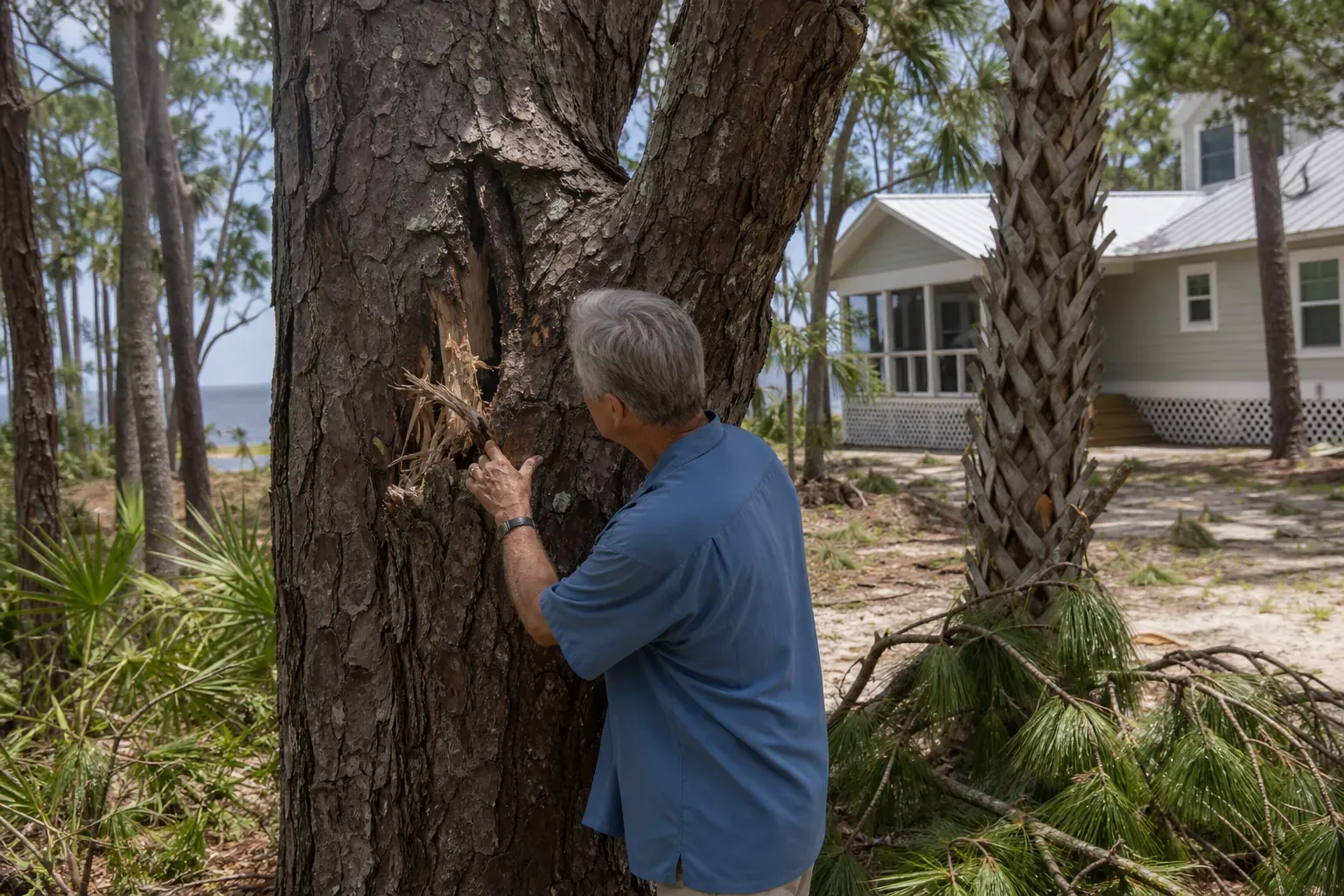
Hurricane Isaias Pest Checks On Stressed Trees In Escambia should start with safety, not tree care. Once officials say conditions are safe, record visible changes from stable ground. Refer suspected pest signs to local Extension staff or a qualified tree assessor. Leaf loss, brown tips, and broken limbs alone do not prove a pest problem.
This guide covers what to note and whom to ask. It does not assess trees or recommend pesticides. As of the supplied October 9 advisory, Isaias is a named system. Check the dated October 9 NHC advisory and National Weather Service updates before planning any outdoor check. Forecasts and local conditions can change.
When should Hurricane Isaias Pest Checks On Stressed Trees In Escambia begin?
Begin only when access is safe and officials allow it. The broader Isaias tree canopy recovery guide for Pensacola covers recovery priorities, while Pensacola tree risk guide offers related tree-care background. Pest checks are one small part of that process.
A quiet yard is not proof of safe access. Broken limbs may still hang above paths. Follow official flood and access instructions before approaching the area. Stay away from downed wires and anything touching them. Do not walk beneath a damaged canopy to get a better photo.
If a tree threatens people, a home, or a road, treat that as a safety concern first. Contact the appropriate emergency authority, utility, or qualified tree professional. A pest question can wait until the area is safe.
Escambia County's hurricane guidance tells residents to heed local orders and advice. Tree checks must not delay evacuation or require entry into a closed area.
Separate your concerns into two groups:
- An urgent hazard needs prompt referral. Examples include a hanging limb over an entrance or a tree in contact with a wire. Do not approach to confirm the cause.
- A plant-health concern needs careful records. Examples include changing leaf color or a visible patch of damaged foliage. Record it only from a safe place.
- An uncertain condition needs an honest description. Say what you can see, not what you think caused it. “Leaves turned brown on one side” is more useful than “the tree is infested.”
There is no single waiting period for every tree. Site hazards, weather, access, and the kind of damage all matter. Ask a qualified assessor when another check would be useful. Do not set a fixed schedule based only on the storm's name.
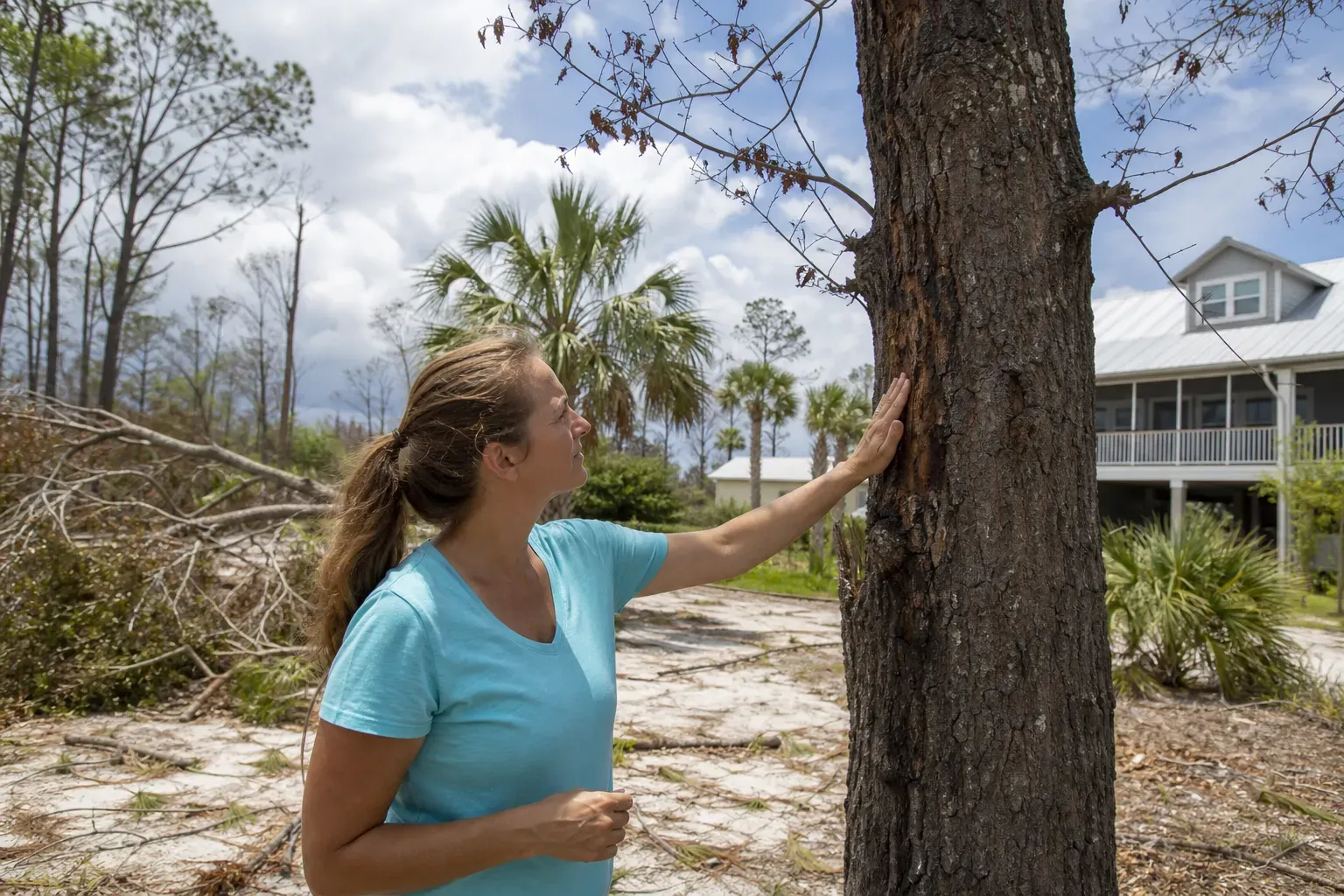
What visible signs are worth recording without calling them pests?
Record changes that help someone compare the tree over time. Use the Pensacola tree risk guide for foliage questions and the Pensacola root recovery guide for growth questions. Neither leaf loss nor new sprouts identify a pest by themselves.
A useful record shows the whole tree and the affected area. Take photos from a safe distance. Keep the view as similar as possible on later visits. Note the date, what changed, and whether that change began before the storm.
If you see insects, holes, loose bark, webbing, or unusual debris, describe those details. These observations are reasons to ask questions, not proof of a cause. Ask a qualified professional to assess the cause and whether the available photos are adequate for the review.
Useful notes include the following:
- Describe where the change appears. State whether it affects one limb, one side, or most of the canopy. This is more useful than saying the whole tree looks bad.
- Record the timing as closely as you can. Note whether the sign was present before the storm, appeared soon afterward, or developed later.
- Describe color and shape in plain terms. “Brown leaf tips” or “small holes in one visible bark patch” gives the assessor a clearer starting point.
- Note major site events. Include known flooding, saltwater exposure, broken limbs, or work near the tree. Do not guess at events you did not observe.
- Record earlier care. List known pruning, fertilizer, and pesticide use. If details are missing, say so rather than filling the gaps.
Do not peel bark, cut into wood, or pull apart damaged tissue to search for pests. Do not climb, use a ladder, or handle overhead branches. Ask Extension staff what photos or samples they need before collecting anything.
The ISA tree-owner resources include plant-health care, insect and disease problems, and tree-risk guidance. Those topics belong together. A health question and a safety question may need different forms of assessment.
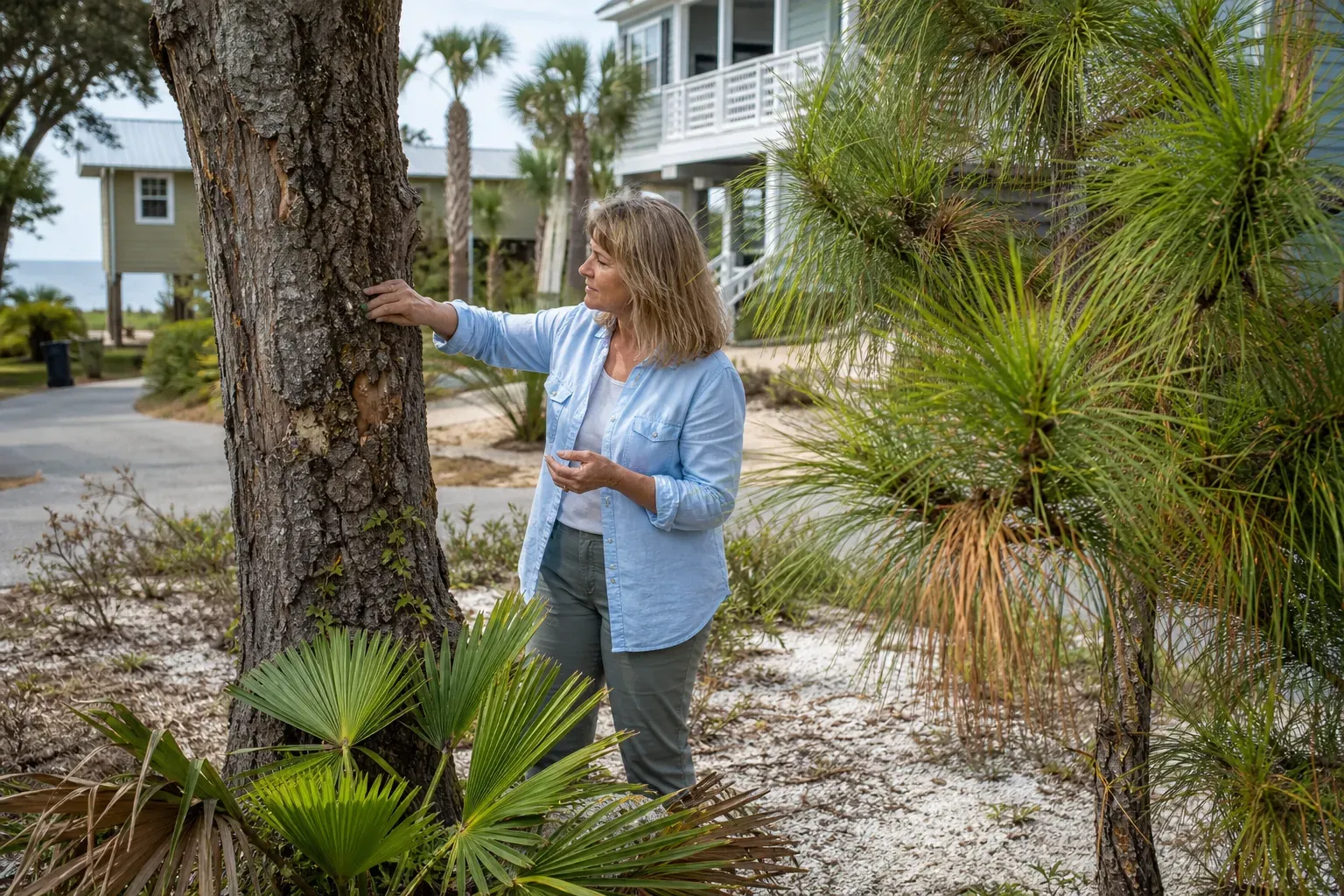
How can storm stress look like a pest or disease problem?
Storm effects can overlap with signs people associate with pests. The Pensacola canopy recovery guide provides the wider context, and Pensacola root recovery guide offers related tree-care background. A rough-looking canopy does not establish the need for tree care or more pruning.
A sign is not the same as its cause. Brown leaves are a sign, not a tree assessment. To name a pest or disease, an assessor needs facts that this guide cannot provide.
Palms offer clear examples of why that distinction matters. UF/IFAS guidance on hurricane-damaged palms explains that wind can force a young spear leaf open too soon. That leaf may look pale or yellow because it was not fully developed. The guidance notes that these leaves typically turn their normal green color after a few days.
That does not mean every yellow palm leaf is harmless. It means yellow color alone cannot settle the cause. Record the change and ask for advice if concern remains.
The same UF/IFAS source explains that saltwater flooding can injure palms. Salt injury can cause dead leaf tips throughout the canopy. If saltwater reached your yard, include that fact in the referral. Do not assume brown tips point to insects.
Broken green palm leaves may still help the palm recover. UF/IFAS recommends leaving them attached in many cases because they still support photosynthesis, the process plants use to make food. UF/IFAS restoration guidance also cautions against removing too much live foliage.
For trees with broken branches, wound size affects recovery. The restoration guidance says branches four inches or more in diameter are less likely to close over than smaller branches. Large wounds can take years to develop covering growth. A wound that remains visible is not, by itself, proof of an active infestation.
Ask an assessor to review these facts before naming a pest:
- Tree and site: Share the species and known site conditions.
- Damage and history: Note storm damage and signs seen before the storm.
- Current signs: Share what you can see now from safe ground.
The assessor may need more facts before naming a cause.
Who should assess suspected pests, and what should you send?
Refer suspected pest signs to local Extension staff or a qualified tree assessor. The Pensacola root recovery guide and Pensacola root recovery guide offer related tree-care background. Keep the pest referral focused on the signs you observed and the decision you need help making. For related tree-care background, read the Pensacola tree risk guide and Pensacola root recovery guide.
Different questions may call for different help. Extension staff can be a starting point for plant-health questions. A qualified tree professional can assess tree condition and discuss needed work. Electrical hazards belong with the utility or emergency authority, not a plant-health inquiry.
The International Society of Arboriculture's tree-owner page offers resources on hiring an arborist, plant-health care, and risk. Ask about relevant qualifications and the scope of an assessment. A pest identification does not automatically settle whether a damaged tree is safe.
Use this referral sequence:
- State the main concern first. Explain whether you need help with a visible insect, changing foliage, a damaged trunk, or a safety concern.
- Give the location and tree identity. Include the species if known. If it is unknown, provide a safe photo rather than guessing.
- Send dated views of the tree and affected area. Explain where each close view sits within the larger tree. Use zoom only from a safe location.
- Add the storm and care history. Mention known flood exposure, breakage, earlier symptoms, and any recent tree care or pruning.
- Ask what evidence is still needed. Follow the recipient's directions for further photos, samples, or an on-site visit. Do not collect material from a hazardous area.
Useful questions include: What supports the suspected cause? What else could explain these signs? Is an on-site visit needed? What change should trigger another call?
Keep answers and photos together. If more than one adviser is involved, share the same record. This helps avoid conflicting advice based on different facts.
Photos and notes may not be enough to assess a tree. Some signs need a closer view or a site visit. If the cause is unclear, seek more facts rather than guess at care.
Why should tree care and pruning wait for a clear purpose?
Neither pesticides nor heavy pruning should be the default response. Review Pensacola root recovery guide alongside the Pensacola canopy recovery overview before treating every storm change as a separate problem. First establish the concern, then ask what action is justified.
Before you agree to tree care, ask:
- What is the target? Ask what pest or problem was found.
- What supports that finding? Ask which signs point to that cause.
- How will this help? Ask what the work is meant to achieve.
This guide gives no pesticide product, dose, or steps for use.
For palms, UF/IFAS hurricane guidance states that there is no research documenting the benefits of fungicide use after a hurricane. It also notes that many palms survive windstorms without fungicide applications. Do not treat storm exposure alone as a reason to spray.
Fertilizer decisions also depend on the palm's condition. The same source distinguishes palms that stayed rooted from replanted palms. It advises against extra root-zone fertilizer for replanted palms until new growth appears. That distinction is a reason to seek specific advice, not to apply one rule to every yard.
Pruning can remove foliage that still supports recovery. UF/IFAS restoration guidance recommends retaining bent green palm fronds unless they pose a hazard, and warns against overpruning. Safety work may still be needed, but it should have a defined purpose.
Before planned work, check the rules that apply to the property. Pensacola's city arborist page describes permit requirements for heritage trees and public-right-of-way trees. Those city rules should not be assumed to cover every Escambia County address. Ask the relevant local authority about your site.
Document damage safely before cleanup when possible. The Florida CFO's homeowners insurance overview recommends photos and accurate records. It also explains that tree-removal coverage varies by policy and circumstances. Ask your insurer about your contract; do not assume suspected pests or storm exposure establish coverage.
Frequently asked questions
Does leaf loss after Isaias mean my tree has pests?
No. Leaf loss alone does not identify a pest. Record when it began, where it appears, and whether it changes. Add any other safely visible signs. Ask local Extension staff or a qualified assessor to review the evidence before choosing tree care.
Should I spray a damaged palm to prevent disease?
Do not assume preventive spraying is needed. UF/IFAS reports no research documenting the benefits of post-hurricane fungicide use in palms. A specific concern needs assessment. This guide does not recommend a chemical tree care or explain how to apply one.
Can I remove green fronds to see the palm better?
Do not remove useful foliage just to improve the view. UF/IFAS advises retaining many bent green fronds because they help recovery. If foliage poses a hazard or blocks a needed assessment, let a qualified professional decide how to proceed safely.
How often should I check a tree for new signs?
There is no universal interval in the supplied guidance. Ask the assessor to set a review schedule based on the tree and its condition. Keep dated photos when safe. A new safety concern should be referred to the appropriate authority or professional rather than left for the next routine check.
Does Florida Foliage provide tree service in Escambia County?
Florida Foliage is based in Daytona Beach and serves Volusia and Flagler counties. This guide is for Escambia readers, but does not offer crews, a local office, or service in the Panhandle or Alabama. Seek local qualified help for on-site decisions.
Author and drafting disclosure: Tim Francis is a Tree Content Expert, not a credentialed tree-care practitioner. This article was drafted with AI assistance. It is general education, not an individualized diagnosis, treatment plan, legal opinion, or insurance determination.
Florida Foliage is a Daytona Beach tree service that works with an ISA Certified Arborist consultant.
For tree work in Volusia or Flagler County, call (386) 481-7913 to request a free on-site estimate.
For tree work in Volusia or Flagler County, call (386) 481-7913 to request a free on-site estimate.