Reviewed by Clinton Funk
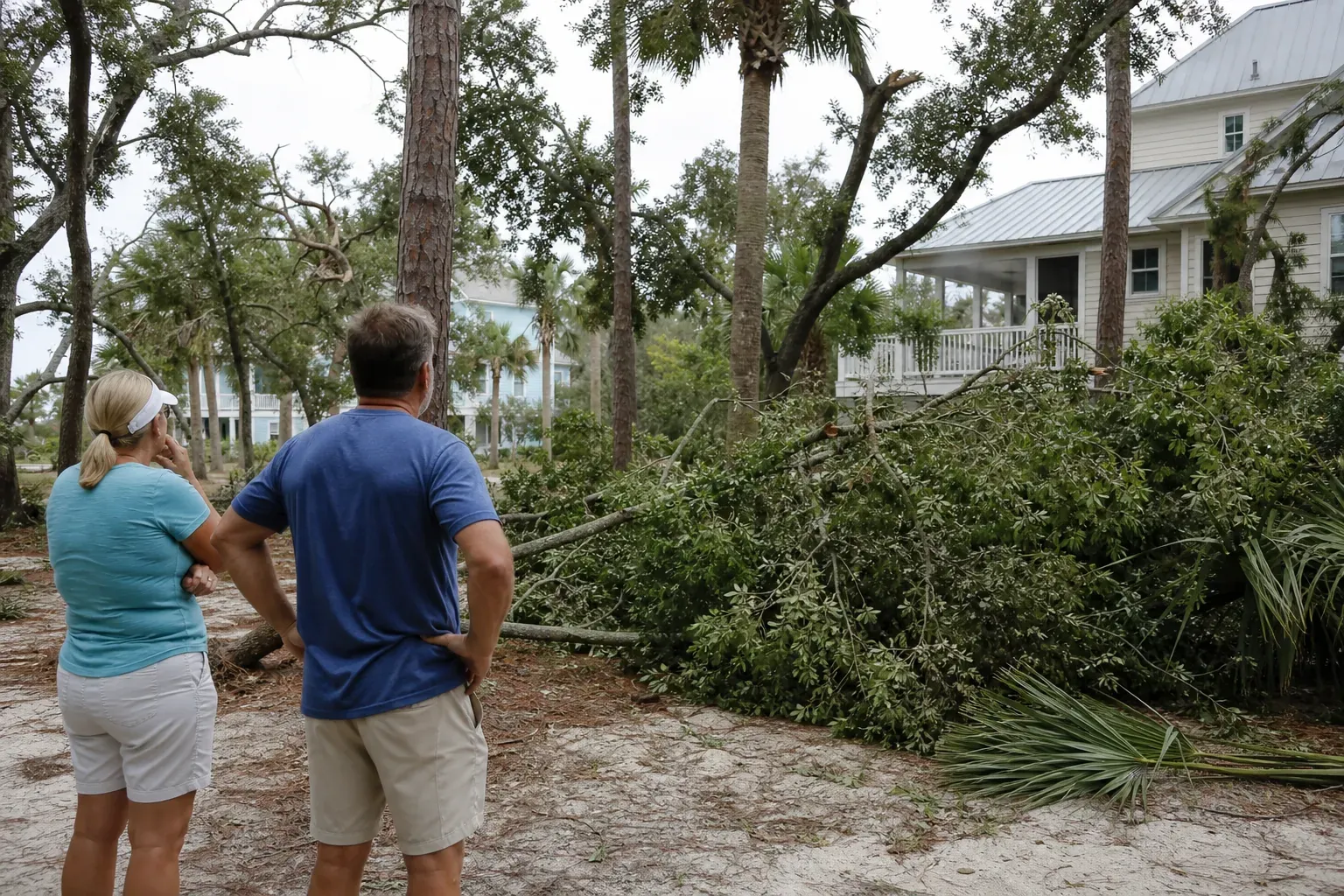
Storm-damaged trees may need prompt hazard assessment, not immediate heavy pruning. The key is to separate unsafe limbs from live growth worth keeping. Hurricane Isaias Pruning Timing Questions In Gulf Breeze should start with site safety, then move to a staged care plan. A rough-looking crown alone does not settle when to prune.
As of the October 9 National Hurricane Center advisory, Isaias is a current named system. Forecasts can change. Follow the latest official advisory and local orders, not this article, for storm decisions.
This guide addresses pruning timing, not removal methods. It offers general education for Gulf Breeze readers. It does not assess any tree or imply local service from Florida Foliage.
What should guide Hurricane Isaias Pruning Timing Questions In Gulf Breeze?
Start with risk, then ask what can wait. The broader Pensacola tree canopy recovery guide gives context for storm recovery. The Pensacola tree risk guide offers related tree-care background. Neither replaces an on-site assessment.
There are two distinct pruning goals after a storm. One is to address dead or damaged parts that pose risk. The other is to help a surviving tree regain sound form. Those goals may require separate visits.
A broken limb over a walkway needs a different decision than sparse leaves. A split near the trunk also raises different concerns than bent tips. Do not judge the whole tree by leaf loss alone.
UF/IFAS storm restoration guidance supports removing dead and damaged parts while limiting the loss of live tissue. That is not a call to trim every uneven branch. It is a reason to define each cut's purpose.
Ask a qualified arborist to sort proposed work into clear groups:
- Identify which defects pose a risk to people or property.
- Explain which damaged parts need pruning once access is safe.
- State which live branches should stay during recovery.
- Describe which choices need another look as growth returns.
Ask for reasons, not solely a pruning date. “After the storm” is too broad to guide a useful plan. The tree's damage, nearby targets, and site conditions all matter.
A target means something a falling part could strike. It might be a home, car, path, or person. The same limb can present different risk in different settings. Keep that context in the discussion.
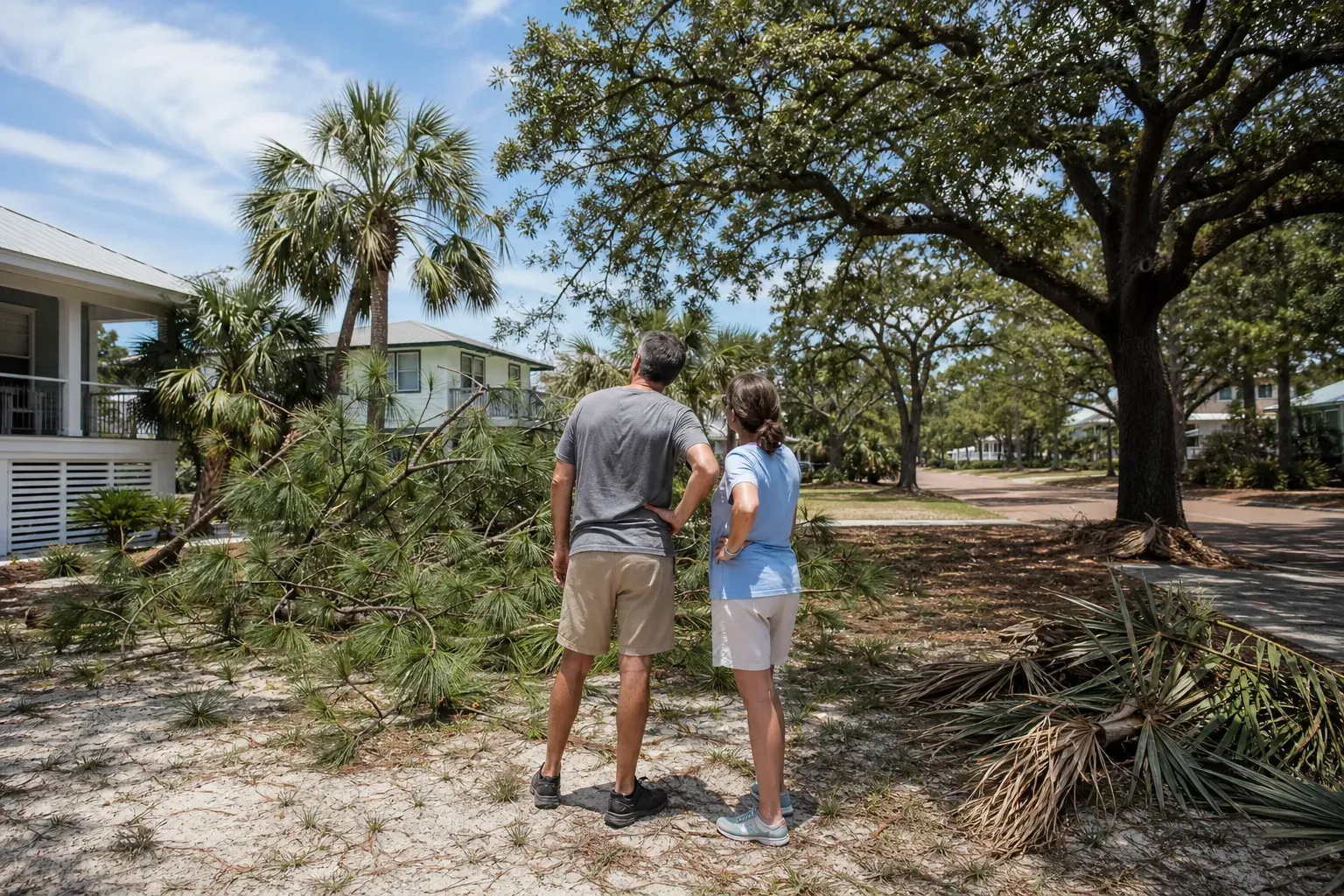
When does a damaged tree need prompt assessment rather than routine pruning?
Visible hazards deserve prompt professional assessment when conditions allow safe access. For broader context, see tree canopy recovery in Pensacola and Pensacola root recovery guide. Pruning timing is only one part of that review.
Stay away from hanging branches, unstable trees, and damaged utility lines. Do not climb, pull on limbs, or test loose wood. Call the utility about line hazards. Direct threats to life belong with emergency services and public authorities.
Follow local instructions on travel and site access. The National Weather Service Mobile/Pensacola office provides official regional weather information. Tree work should not take priority over storm safety orders.
From a safe place, note what has changed. Useful observations include a new lean, hanging wood, or a visible split. These are reasons to seek assessment, not grounds for a remote tree assessment.
Tell the assessor where people need to walk or park. Also mention damage near doors or occupied spaces. This helps frame the risk before anyone discusses routine shaping.
Do not confuse prompt assessment with a promise of prompt pruning. Unsafe weather, utility hazards, and blocked access can affect when work is possible. The appropriate public authority or qualified professional must guide those decisions.
A useful first visit may focus on hazards alone. The remaining crown can be reviewed later. Ask whether the proposed scope separates those tasks.
- Ask which areas should remain unused until assessed.
- Ask whether utility clearance is needed before tree work.
- Ask whether the tree needs more than a pruning review.
- Ask what new changes should trigger another call.
A tree can look less untidy after pruning yet still have serious defects. Appearance is not proof of safety. The ISA tree owner resources include guidance on storm damage, tree risk, and choosing an arborist.
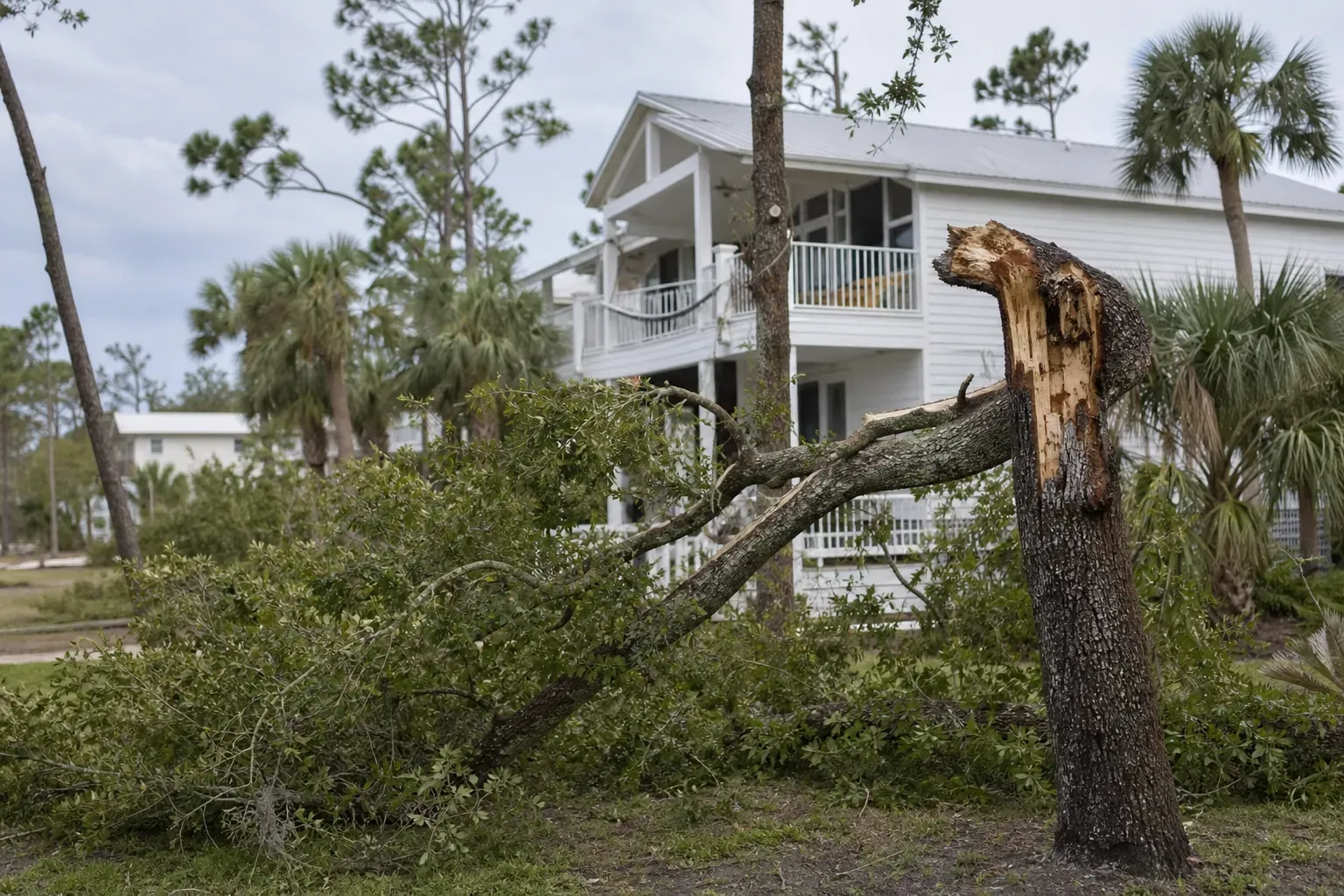
Why can staged corrective pruning be better than one heavy cutback?
Staged work can retain live growth while the tree rebuilds. Questions about Pensacola root recovery guide and Pensacola tree risk guide fit this timing issue. New growth needs review, not automatic removal.
A storm may leave gaps and broken branch ends. Heavy pruning can make that crown look more even. But a tidy shape is not the same as recovery. Removing more live tissue can work against the goal of keeping useful foliage.
UF/IFAS describes restoration as a process that may take years. Small and large broken branches do not recover at the same pace. In its restoration pruning guidance, broken tips about one to two inches across may establish a new branch leader within a year or two. A leader is a main growing branch.
That example is not a deadline for a specific tree. Larger damaged branches may need many years and more visits. UF/IFAS also notes that branches four inches or more across are less likely to close over than smaller ones.
Ask what “staged” means in the written plan. It should name the work proposed now and explain what remains undecided. It should also say what future visits will review.
Use this sequence to discuss the plan, not to perform the work:
- Confirm that site access is safe under current official guidance.
- Have a qualified professional assess damage and nearby targets.
- Separate hazard-related work from later crown restoration.
- Ask why each proposed live-branch cut is needed.
- Agree on follow-up observations and reasons for reassessment.
New shoots may form near a broken branch. Some may become part of the restored crown. Others may later need reducing or removal. Stripping all sprouts at once skips that selection process.
UF/IFAS describes later structural pruning once new leaders and branches have been re-established. Its example addresses this stage four or more years after a storm. Structural pruning helps improve branch arrangement and reduce weak growth patterns.
That timeline shows why one visit may not finish restoration. It does not mean every damaged tree should wait four years. Hazard work and structural work serve different purposes.
Ask whether the goal is sound future growth or quick visual balance. If a proposal removes much live foliage, request a clear explanation. Avoid choosing heavy cutback merely because the crown looks uneven.
Should storm-damaged palms follow the same pruning schedule?
Palms need their own care decisions, not a hardwood pruning schedule. The Pensacola canopy recovery overview covers the wider recovery picture. The Pensacola tree risk guide offers related tree-care background.
Bent green fronds may still help a palm recover. UF/IFAS palm restoration guidance advises keeping them unless they pose a hazard. These fronds use sunlight to make energy for the palm.
Dead fronds that could fall onto a target need attention. Broken fronds that cover the bud may also need removal. The bud is the growing point where new leaves form. Protecting it matters more than making the crown look neat.
Yellowing fronds or brown tips do not, by themselves, justify broad stripping. UF/IFAS warns that too much pruning can reduce palm vigor. Older fronds still play a role in growth and bud protection.
A palm that lost many leaves may take time to replace them. UF/IFAS hurricane palm care guidance says replacing the full canopy takes at least a year, and usually longer. That is a general recovery range, not a promise of survival.
Ask the assessor to explain the status of each proposed frond cut:
- Identify dead or damaged fronds that pose a hazard.
- Explain whether broken fronds are blocking the bud.
- Identify green fronds worth retaining during recovery.
- Describe what new growth would support the next review.
Do not add fertilizer or fungicide just because a storm passed. UF/IFAS distinguishes care for palms that remain rooted from care for replanted palms. It advises no extra root-zone fertilizer for replanted palms until new growth appears.
The same source reports no research documenting benefits from post-hurricane fungicide use. tree care questions need species- and damage-specific advice. Pruning, fertilizer, and disease tree care are separate decisions. A single “storm recovery package” should not replace those explanations.
What should you confirm before approving pruning and follow-up visits?
Confirm the scope, local requirements, and review plan before work begins. The Pensacola root recovery guide and Pensacola root recovery guide offer related tree-care background. Ask which follow-up questions apply to your tree. For related tree-care background, read the Pensacola tree risk guide and Pensacola root recovery guide.
A useful proposal describes the intended result. “Trim the tree” leaves too much unclear. Ask whether the work addresses hazards, broken ends, selected shoots, or long-term structure.
Request a clear boundary between included work and future options. Ask whether debris handling is included. Also ask who will confirm any permit or right-of-way requirements. Do not assume storm damage removes those duties.
For Gulf Breeze property, verify the authority that governs your address. City limits, county areas, and public rights of way may involve different rules. Santa Rosa County Development Services provides county permitting and planning information. It does not, by itself, establish the tree-pruning rule for every Gulf Breeze site.
Rules from a nearby city are not a substitute. Pensacola's tree rules, for example, should not be treated as Gulf Breeze rules. Ask the appropriate city or county office about your exact project.
Insurance is another separate question. The Florida CFO homeowners insurance overview explains that tree and debris coverage varies by policy and circumstances. A fallen tree that damages insured property differs from one that falls without covered property damage.
Contact your insurer or agent about your own policy. Do not assume a pruning estimate proves coverage. Deductibles and policy limits can also affect a claim. The Florida hurricane deductible guide offers general information, not a decision on your loss.
Where safe, keep photos, written scopes, and receipts. The Florida CFO recommends documenting damage and retaining repair records. Do not enter a hazardous area to get a better picture.
For follow-up, agree on what will be reviewed. A date alone tells you little. The plan should connect each visit to a question about growth, damage, or structure.
- Ask whether new shoots will be reviewed before more cuts.
- Ask which signs require reassessment rather than routine waiting.
- Ask what the next visit can and cannot determine.
- Ask how a change in tree condition may alter the scope.
No plan can guarantee recovery or prevent all future failure. Good timing decisions make the limits clear. They also avoid removing live growth without a sound reason.
Frequently asked questions
Should every storm-damaged tree be pruned right away?
No. Hazard assessment and full restoration are different tasks. Dead or damaged parts may need attention once access is safe. Other live branches may be worth keeping. A qualified professional should explain which work is needed and which decisions can wait.
Is a bare or uneven crown proof that a tree needs heavy pruning?
No. Leaf loss and an uneven crown do not settle the pruning scope. Branch damage, structural defects, and nearby targets matter too. Ask for an assessment that addresses those issues. Do not approve heavy cutting solely to make the tree look balanced.
Should all new sprouts be removed after storm damage?
Not automatically. UF/IFAS describes selecting and managing sprouts during restoration. Some may help form new branches or leaders. Their role needs review over time. Ask which shoots will stay, which may need reducing later, and why that choice fits the tree.
Can bent green palm fronds stay attached?
Often, yes. UF/IFAS advises retaining bent green fronds unless they pose a hazard. They still help the palm make energy. Fronds that threaten a target or smother the bud need a separate assessment. Do not treat every drooping frond as dead.
Does Florida Foliage provide tree service in Gulf Breeze?
Florida Foliage is based in Daytona Beach and serves Volusia and Flagler counties. This article is educational content for Gulf Breeze readers. It does not announce Panhandle or Alabama crews, a local office, or service availability. Local work requires a provider serving that area.
About the author and drafting: Tim Francis is identified as Tree Content Expert. That title does not imply practitioner credentials. This article was drafted with AI assistance. It is general education, not an on-site tree assessment, treatment plan, insurance determination, or permit decision.
Florida Foliage is a Daytona Beach tree service that works with an ISA Certified Arborist consultant.
For tree work in Volusia or Flagler County, call (386) 481-7913 to request a free on-site estimate.
For tree work in Volusia or Flagler County, call (386) 481-7913 to request a free on-site estimate.