Reviewed by Clinton Funk
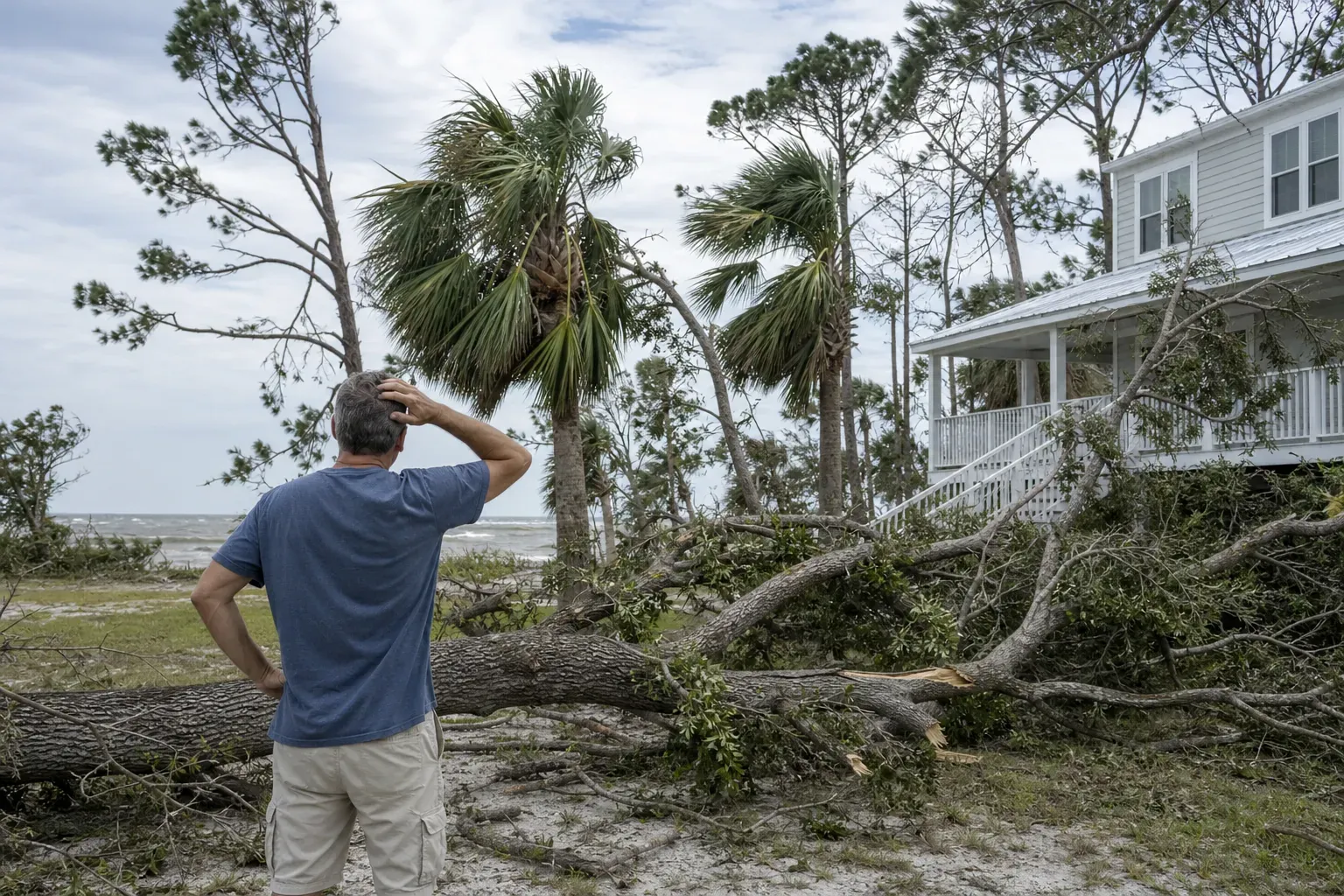
A storm tree quote should state what stays behind. For homeowners researching Hurricane Isaias Tree Quote Exclusions In Gulf Breeze, the key is to separate tree removal, debris hauling, stump work, and site repair. Do not assume one price covers all four. Ask for each task, limit, and exclusion in writing before you approve the work.
This guide covers scope gaps, not local service availability. Florida Foliage is based in Daytona Beach and serves Volusia and Flagler counties. This article does not offer crews or service in Gulf Breeze.
Storm conditions can change. Check the dated October 9 NHC advisory at the supplied advisory page and National Weather Service Mobile/Pensacola updates. Follow local officials on access and evacuation. A quote review should never delay a safety decision.
What should Hurricane Isaias Tree Quote Exclusions In Gulf Breeze make clear?
A clear quote defines the work and its limits. The Pensacola tree risk questions guide and Pensacola root-zone recovery questions guide offer related tree-care background. These pages cannot decide claim, contract, or permit questions for your site.
An exclusion is a task the quoted price does not cover. It may be fair and needed. The problem is an unclear boundary between included work and extra work.
For example, “remove fallen tree” leaves several questions open. Does it mean clear the tree from a roof? Cut it into pieces? Move those pieces off the lot? Remove the stump? Repair the lawn? Those are separate tasks unless the quote joins them.
Ask the provider to name each tree and work area. A street address alone may not be enough. Use a marked photo or a plain description. “Fallen tree beside the rear fence” is more useful than “storm cleanup.”
Each work item should answer three questions: What will the crew do? Where will the material go? What will remain when the work ends?
- The tree removal line should identify the tree and the extent of removal.
- The hauling line should state which wood and brush leave the property.
- The stump line should describe any grinding, debris removal, and backfill.
- The site repair line should name the surfaces or landscape areas included.
- The exclusions should list tasks that need a separate quote or provider.
A short quote can still be clear. Long terms can still hide gaps. Focus on the work boundaries, not the page count.
Keep this review narrow. You are checking whether each bid covers the same end result. You are not trying to judge safe cutting methods from a desk. Leave those choices to qualified professionals who assess the site.
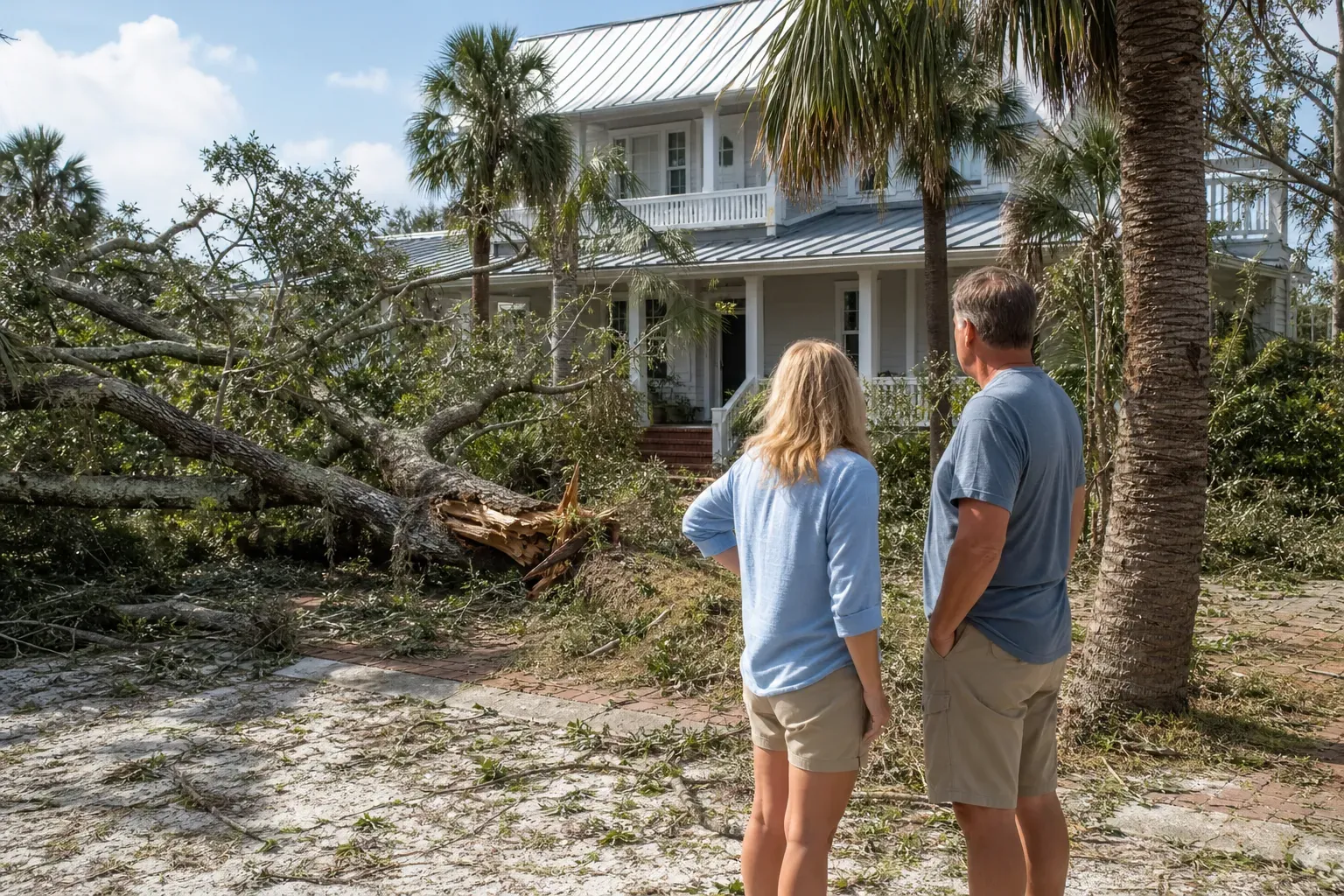
Does tree removal include hauling and disposal?
Tree removal and hauling should be stated as separate tasks. The Pensacola tree risk questions guide and Pensacola root-zone recovery questions guide offer related tree-care background. These pages cannot decide claim, contract, or permit questions for your site.
A provider may quote cutting and clearing but leave wood on site. Another may include loading and hauling. Neither scope is clear unless the quote says what happens to the debris.
Ask whether the hauling price covers the whole tree. Large logs, brush, root material, and stump grindings may have different terms. Do not assume that “debris removal” covers all of them.
Also check where material will wait before pickup. An on-site pile is not the same as completed disposal. If a staged pile is part of the plan, ask where it will sit and who will remove it.
Useful questions include:
- Does the price include loading and taking the wood off site?
- Are large trunk sections included, or will some remain?
- Are disposal charges included in the stated price?
- Does the quote cover only debris from the named tree?
- Who removes stump grindings if stump work happens later?
- What counts as completed hauling under this agreement?
Do not rely on an assumed public pickup. Ask the authority serving your exact address about current storm debris rules. Confirm whether contractor-generated debris is accepted and how it must be placed. Get those answers before treating public collection as part of your plan.
The City of Pensacola sanitation page describes that city's services. It does not establish pickup terms for Gulf Breeze. Nearby city rules are not proof of service at your address.
Keep mixed waste separate in the written scope. Tree debris is not the same as damaged fence panels, roofing, or household waste. Ask who handles each type. If a quote excludes non-tree debris, that should be plain before cleanup starts.
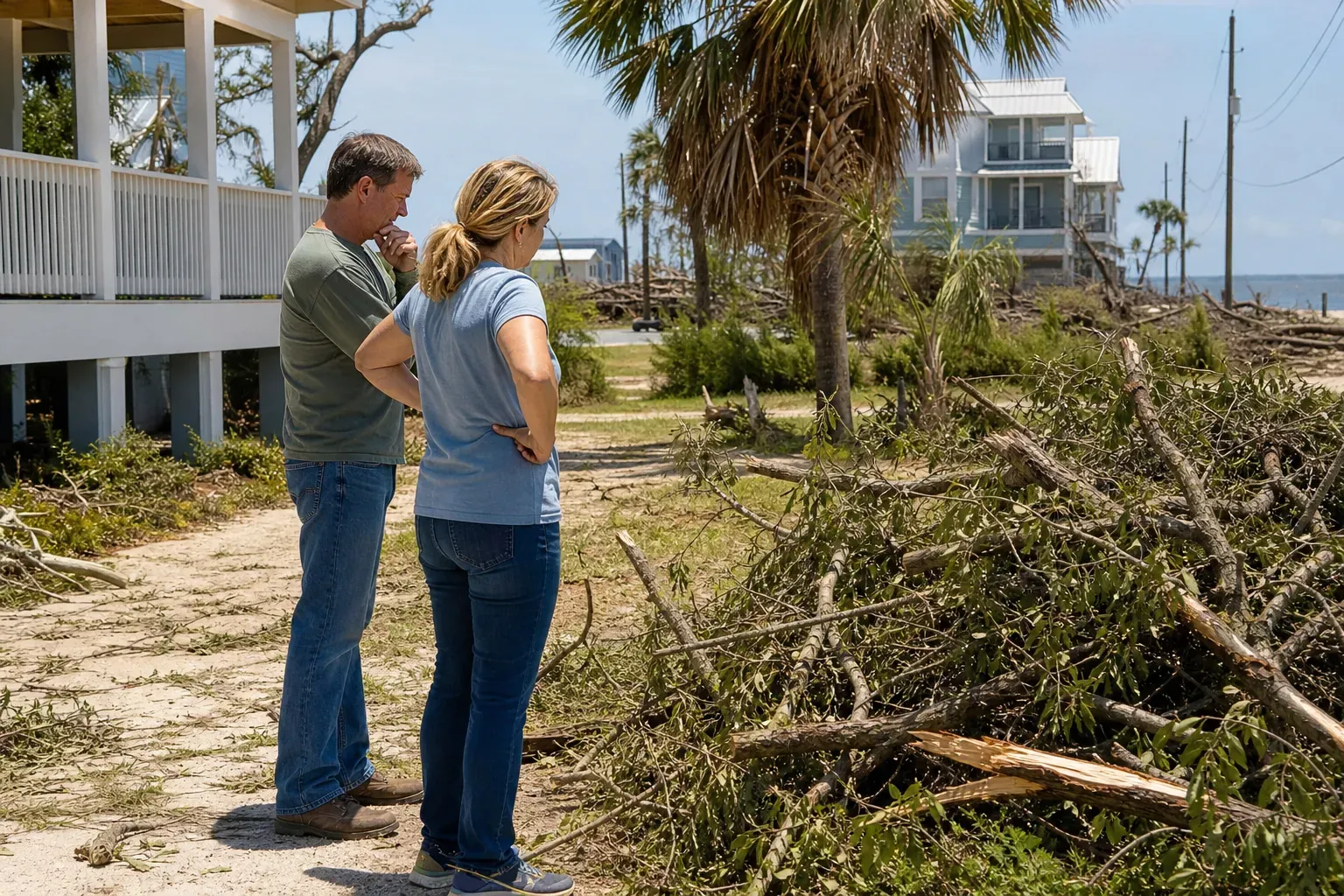
What can stump work and site repair leave out?
Stump work and site repair need their own scope lines. The Pensacola tree risk questions guide and Pensacola root-zone recovery questions guide offer related tree-care background. These pages cannot decide claim, contract, or permit questions for your site.
Removing a trunk does not tell you what happens below it. A quote may leave the stump in place. It may include grinding but not the cleanup that follows. Ask for a direct statement rather than a broad promise to “finish the job.”
For grinding, request the planned depth below the nearby ground level. Also ask whether the scope includes roots beyond the stump. A plan for lawn use may differ from a plan for future building work. Tell the provider your goal, but seek project-specific advice before assuming the site is ready for construction.
Grinding can leave a mix of wood chips and soil. Ask who removes that material. If it stays, ask where it will be placed. If it leaves, check whether hauling is in the price.
Backfill and final grading are separate questions. Backfill means material used to fill a hole. Grading means shaping the ground. Neither term alone promises new sod or a finished planting bed.
Site repair may involve more than the stump area:
- The quote should state whether lawn ruts are repaired.
- It should name any included soil, seed, sod, or mulch.
- It should explain whether fence or gate work is excluded.
- It should state whether damaged irrigation needs another provider.
- It should distinguish storm damage from damage caused during the work.
Discuss access before approval. Ask which route the crew plans to use. Note gates, paved areas, beds, and known irrigation lines. Do not inspect unsafe areas to gather this information.
If access conditions change, ask for a revised scope. A wider route or different equipment may affect the job. The written agreement should explain how those changes are reviewed, not leave them to a dispute at the end.
Which tree care, permit, and insurance issues need separate review?
A cleanup quote is not a permit decision or coverage ruling. The Pensacola tree risk questions guide and Pensacola root-zone recovery questions guide offer related tree-care background. These pages cannot decide claim, contract, or permit questions for your site.
A surviving tree may need follow-up care
Debris removal and tree recovery are different services. A quote may remove broken limbs but exclude later visits. Ask whether the proposal covers only initial cleanup or a longer care plan.
UF/IFAS storm restoration guidance describes repeated pruning visits as damaged trees recover. It notes that large branch wounds are less likely to close than small ones. That supports asking about follow-up care. It does not prove that a specific tree can be saved.
Palms need a distinct review. The same UF/IFAS guidance advises keeping bent green fronds unless they pose a hazard, and avoiding excess pruning. UF/IFAS palm hurricane guidance explains that full canopy replacement takes at least a year, and usually longer.
Do not ask for every bent frond to be cut just for a neat look. Ask a qualified tree care professional to assess the palm. If tree care is proposed, ask what supports it. UF/IFAS reports no research documenting the benefits of fungicides after a hurricane.
For help choosing a professional, the ISA tree owner resources cover arborist selection, pruning, and tree risk. This article cannot assess tree health from a description.
Local rules need address-specific checks
Ask the authority with jurisdiction over your property about permits. Do not assume storm damage removes all requirements. Confirm these duties in the quote:
- Who checks the permit rules for your address?
- Who submits an application if one is needed?
- Who pays any permit fees?
The Pensacola city arborist page describes rules for heritage trees and public rights of way in Pensacola. Those rules do not establish Gulf Breeze requirements. Likewise, the Santa Rosa County Development Services page is a contact resource, not proof that your exact tree work needs or lacks a permit.
Trees on public land or near a property boundary need extra care. Ask about ownership and authority before treating them as part of a private cleanup scope.
Insurance needs its own answer
A contractor's quote does not confirm insurance coverage. The Florida CFO homeowners insurance overview explains that debris and tree removal coverage depends on the policy and circumstances. It notes that limits can apply.
Ask your insurer which records it needs. When safe, document the damage before work changes the scene. Keep quotes, photos, approved changes, invoices, and receipts. Do not enter a hazard zone just to get a photo.
The Florida hurricane deductible guide explains deductible terms and exceptions. Ask your insurer or agent how your own policy applies. Do not treat the quote price as a prediction of your final covered cost.
How should you resolve exclusions before approving the quote?
Resolve scope gaps before signing, where safe conditions allow. The Pensacola tree risk questions guide and Pensacola root-zone recovery questions guide offer related tree-care background. These pages cannot decide claim, contract, or permit questions for your site.
Use this simple review order:
- Name the work. Identify each tree and the areas included. Attach marked photos taken from a safe place.
- Split the tasks. List removal, hauling, stump work, and site repair on separate lines.
- Mark the exclusions. Ask the provider to state what remains and which tasks need another quote.
- Assign outside checks. State who handles permit questions, utility coordination, and disposal rules where relevant.
- Set the change process. Ask how added work is priced and approved before it starts, subject to urgent safety needs.
- Define completion. Tie the final review to the listed tasks, not a vague promise of a clean yard.
For each item, record whether it is included, excluded, or unresolved. “Unresolved” is useful. It shows where another answer is needed. A blank space can be mistaken for agreement.
If two bids differ, ask for the missing line items. Do not rank prices until you know the scope. A lower quote may leave hauling out. A higher one may include grinding but exclude backfill. Neither total tells the whole story.
Keep all approved changes with the original quote. A text or email can help preserve the discussion, but ask how the provider formally records approval. Avoid relying on a verbal promise that conflicts with the written terms.
At completion, review only from a safe place. Compare the result with the agreed scope. Note any missed hauling or unfinished repair. Do not approach hanging limbs, unstable trees, or power lines for a closer look. Contact the utility for line hazards and emergency services for immediate threats to life.
Frequently asked questions
For broader context, read the Pensacola tree work quote guide. It does not decide claim, contract, permit, or safety questions for your site.
Does tree removal automatically include stump grinding?
No. Treat stump grinding as excluded unless the quote includes it. Ask about depth, roots, grindings, and backfill. Those details help define what the stump service will leave behind. Also ask whether the price covers hauling the grindings or leaving them on site.
Does debris hauling include every item damaged by the storm?
Not necessarily. A tree quote may cover only wood and brush from named trees. Ask about fence panels, building debris, and other waste separately. Confirm public pickup rules with the authority serving your address. Have the quote name which materials will stay on site.
Can I use Pensacola tree permit rules for Gulf Breeze?
No. Pensacola's rules apply within its jurisdiction. Ask the authority responsible for your Gulf Breeze property about current requirements. Have the quote state who handles any required application and fees. Do not assume that storm damage means you can skip a permit check.
Will insurance pay for an excluded task?
The quote cannot answer that. Coverage depends on your policy and the facts of the loss. Ask your insurer about each task and its documentation needs. A contractor's scope and an insurer's coverage decision are separate matters. Keep quotes, approved changes, invoices, and receipts for review.
Should all storm-damaged palm fronds be removed?
No. UF/IFAS advises retaining bent green fronds unless they pose a hazard. They can help the palm recover. Ask a qualified professional to assess damage and the scope of pruning. Do not use appearance alone to decide what gets cut.
Editorial disclosure
This article was drafted with AI assistance. Tim Francis is identified as Tree Content Expert; that title does not imply practitioner credentials. This is general education, not a site assessment, legal advice, or an insurance coverage decision.
Florida Foliage is a Daytona Beach tree service that works with an ISA Certified Arborist consultant.
For tree work in Volusia or Flagler County, call (386) 481-7913 to request a free on-site estimate.
For tree work in Volusia or Flagler County, call (386) 481-7913 to request a free on-site estimate.