Reviewed by Clinton Funk
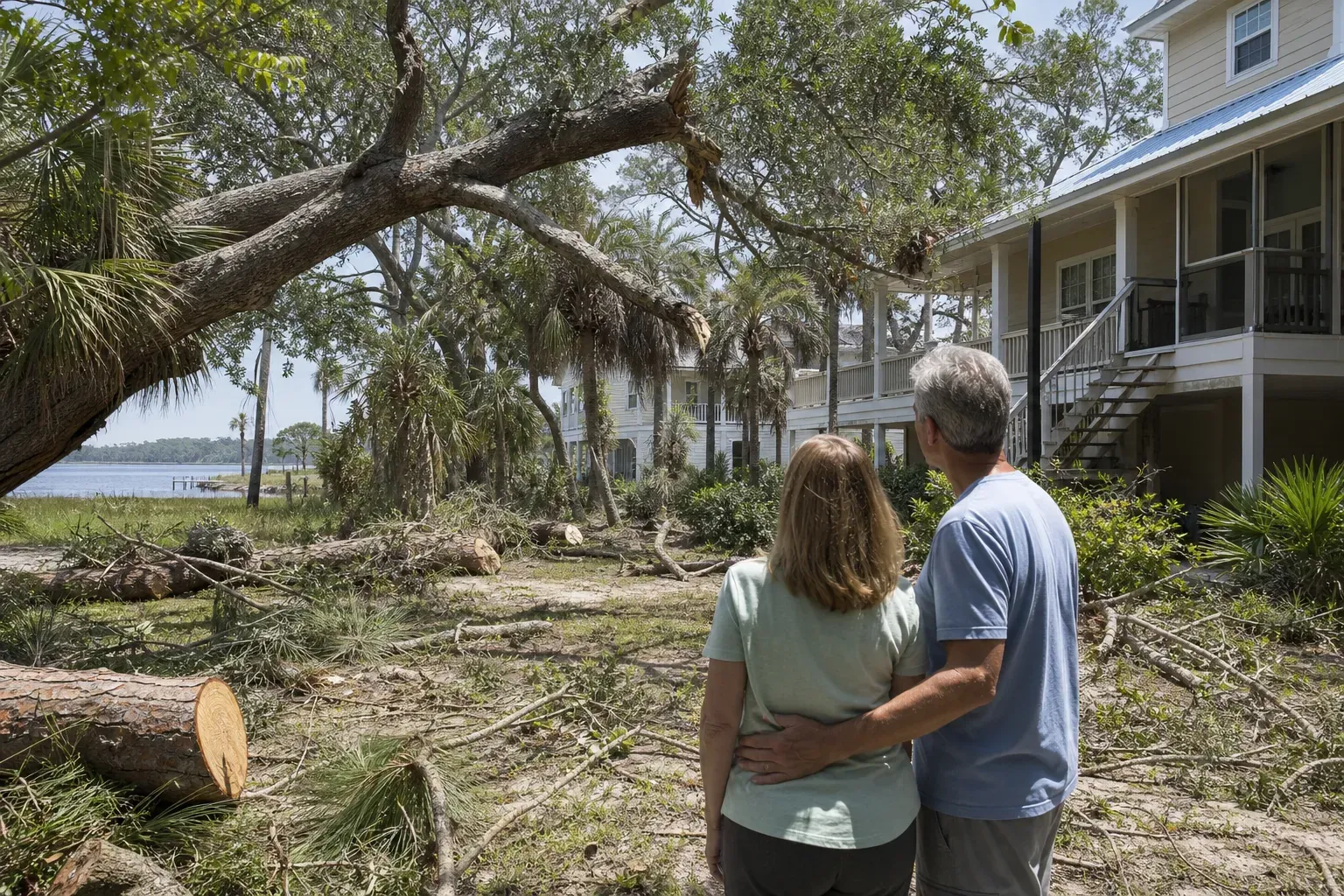
A tree work change order should state the new work, its cost, and who approved it. Get those details in writing before added work begins, where safe and practical. For homeowners researching Hurricane Isaias Tree Work Change Orders In Navarre, the key is simple: new damage does not make every added charge clear or agreed.
Keep the first quote and each later change together. Match new charges to a named tree, task, or haul load. Ask what remains unchanged, too. This guide covers that narrow step, not a full guide to hiring a tree service.
Storm plans can change. Check the official NHC advisory page and National Weather Service Mobile/Pensacola for official weather information. Follow local officials on access and safety. A quote discussion is not a reason to enter an unsafe site.
What should Hurricane Isaias Tree Work Change Orders In Navarre include?
A useful change order makes the added scope clear. The comparing tree work quotes in Pensacola and Pensacola root recovery guide offer related tree-care background. They do not decide insurance, contract, or permit questions for your property.
Ask the firm to describe each proposed revision in writing, including any task or method changes. It should connect to the first quote by date or job number. You should not need to guess which job it changes.
Ask for these details in plain words:
- Name the tree or area; use a sketch or labeled photo.
- Describe the added task; “extra cleanup” is too vague.
- Explain the finding; distinguish new damage from a missed item.
- Show the added charge or credit and revised job total.
- State payment or schedule changes; keep unchanged terms easy to find.
- Name who approved and when; keep the accepted version.
Use clear labels for trees. “Tree B beside the rear fence” is better than “the other tree.” If the work changes from pruning to removal, name that change. State whether stump work and debris hauling are included.
Written approval is a practical record, not a promise about legal rights. Contract rules depend on the agreement and the facts. For a legal dispute, seek qualified legal advice. For this review, focus on scope, price, and a shared record.
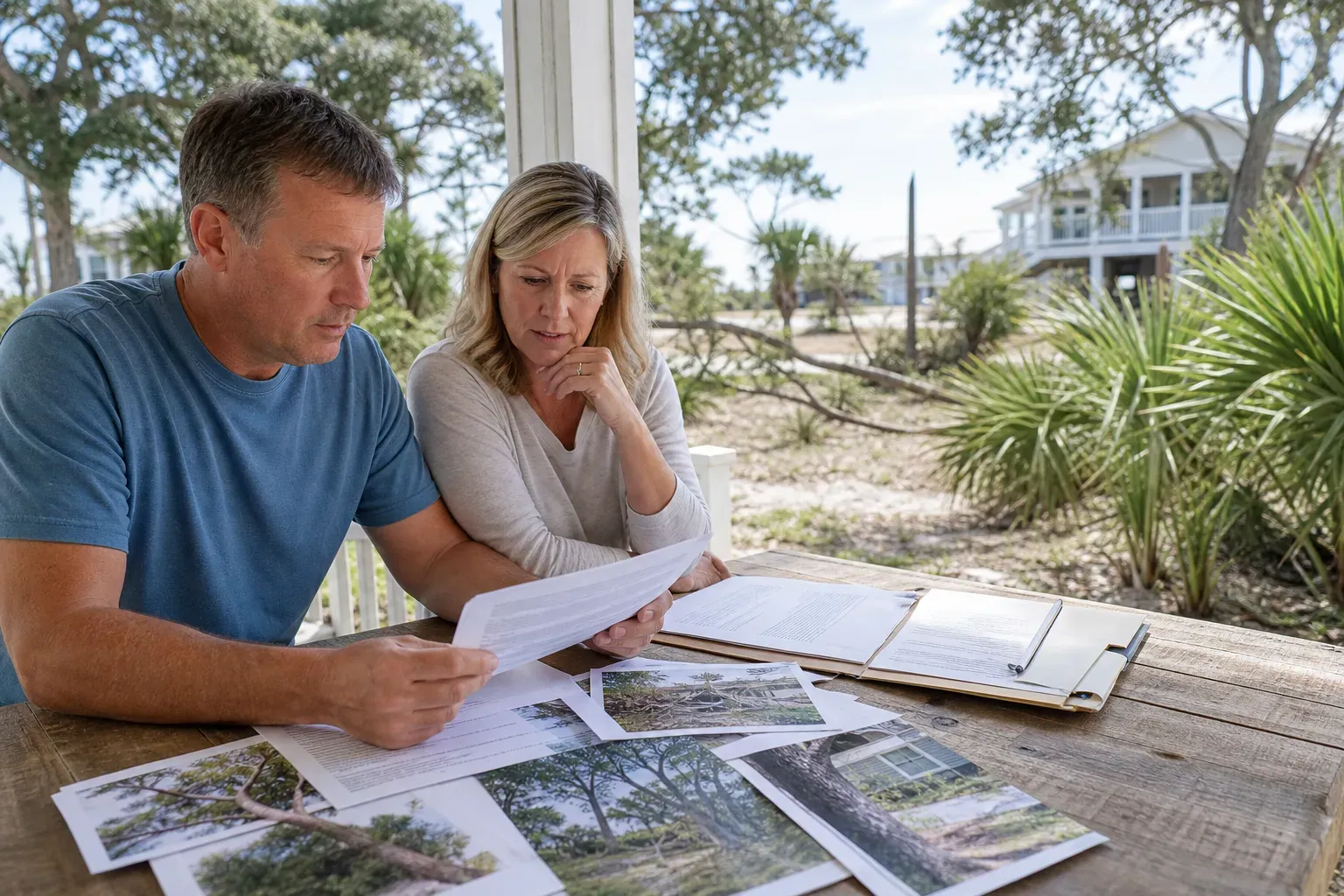
When does newly found damage justify a revised scope?
New findings can support a scope review, but they need an explanation. The Pensacola tree risk questions guide and Pensacola root recovery guide offer related tree-care background. They do not decide insurance, contract, or permit questions for your property.
Storm debris can hide parts of a tree or site. Once access improves, a contractor may see damage not visible before. That finding may affect the work plan. It does not, by itself, explain the cost.
Ask what changed since the first assessment. Was a damaged limb hidden from view? Is a separate tree now part of the job? Does the proposed method need different equipment? Have the contractor explain the finding without asking you to approach the hazard.
Photos may support that explanation when taken safely. Yet a photo alone cannot settle tree risk. The International Society of Arboriculture's tree owner resources include guidance on tree risk, pruning, and hiring an arborist. Seek a qualified arborist for tree-specific health or risk questions.
Do not treat every damaged canopy as a removal job. UF/IFAS storm restoration guidance describes restoration pruning over several visits. It notes that large branch wounds may take many years to be covered by new growth. These are general findings, not a tree assessment of your tree.
Palm work needs similar care. UF/IFAS advises leaving bent green fronds unless they pose a hazard. They can help the palm recover. Its hurricane-damaged palm guidance also explains that full canopy replacement takes at least a year, and often longer.
These points matter when a proposed change says “remove all bent fronds” or “strip storm damage.” Ask why each part needs removal. A neat look is not the same as sound recovery care.
Ask the contractor to explain these points:
- What damage was found after the first assessment?
- What work is now proposed?
- Why does that work fit the finding?
- What safe options are available?
Do not choose tree care based only on price.
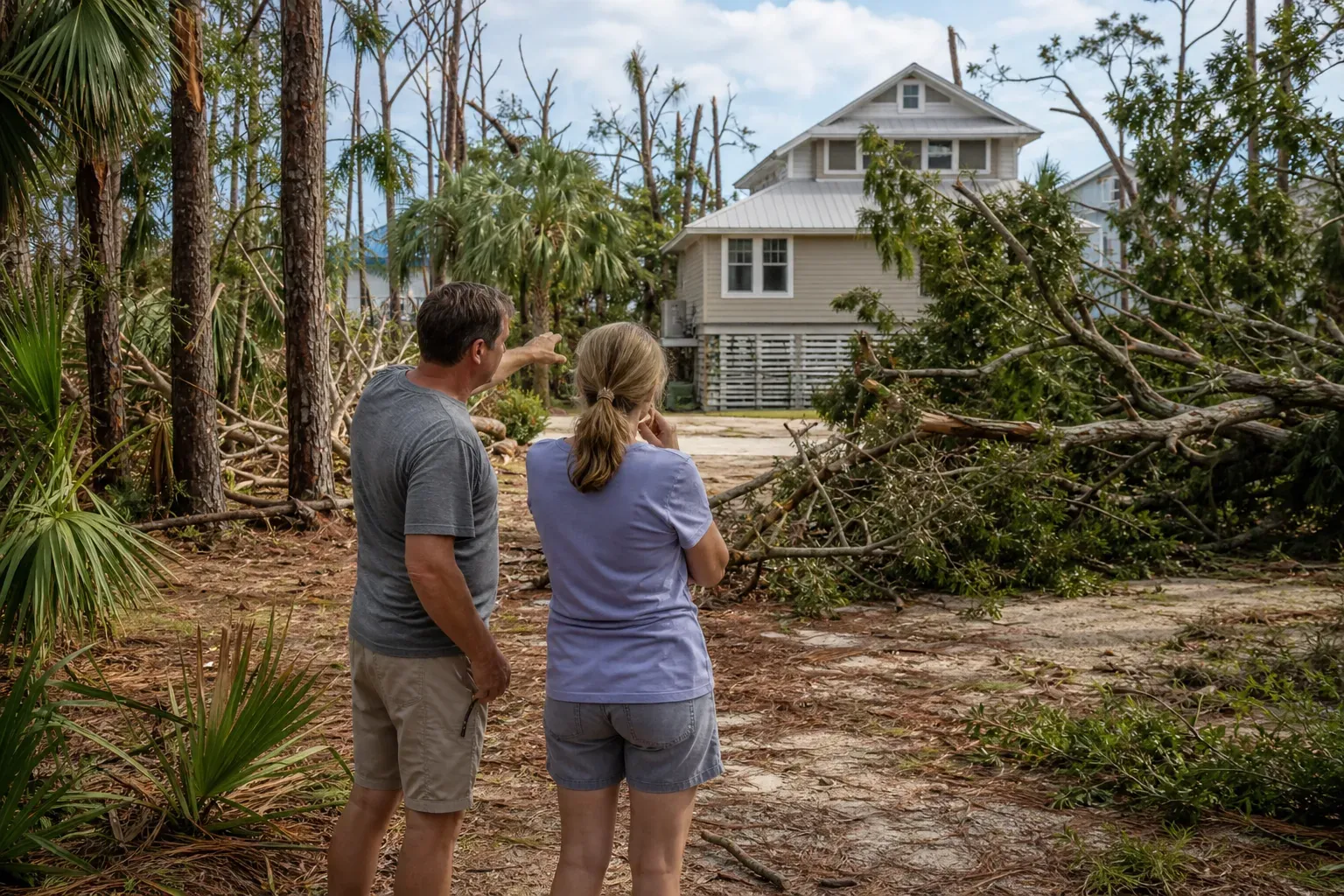
How can you review added costs without losing track of the first quote?
Review the new price against the original scope, not in isolation. The Pensacola tree risk questions guide and Pensacola root recovery guide offer related tree-care background. They do not decide insurance, contract, or permit questions for your property.
The main question is not solely “How much more?” Ask “What does that added amount buy?” A total without a task list makes later checks harder.
Use this review sequence:
- Find the original promise. Mark trees, tasks, and cleanup terms.
- Identify the new finding. Request written details and safe photos, if available.
- Define the added work. List the tasks being added, removed, or replaced.
- Check the price basis. Fixed charge, hours, loads, or another unit?
- Check related terms. Confirm hauling, access, payment, and schedule changes.
- Record the decision. Save the proposal and written approval, rejection, or revisions.
For a fixed added price, ask what it includes. For an hourly price, ask which workers and machines count. Ask when billed time starts and stops. If costs depend on haul loads, ask how a load is defined and recorded.
You can also request a limit for further spending. Make clear whether the contractor agrees to seek approval before exceeding it. Do not assume a note in your own file changes the agreement.
Watch for the same work appearing twice. A first quote may already include limb removal and hauling. A later charge for those tasks needs a clear distinction. It may cover a new tree or added debris, but the record should say so.
Credits deserve the same care as charges. If removal replaces planned pruning, ask how the unused pruning scope is handled. Do not assume the whole original charge still applies. Equally, do not assume a credit has been agreed without written confirmation.
A simple cost summary can help:
- The original accepted amount should remain visible.
- Each accepted change should have its own amount.
- Credits should be shown as credits, not buried in notes.
- The revised total and payment balance should be clear.
No price range can settle whether a change is fair for your site. Access, damage, equipment, and scope all matter. When time and safety allow, ask another qualified provider to review a clearly defined scope. Compare the same work, not solely the totals.
What if safety, permits, or insurance affect the change?
Keep urgent safety decisions separate from routine price approval. The Pensacola tree risk questions guide and Pensacola root recovery guide offer related tree-care background. They do not decide insurance, contract, or permit questions for your property.
Stay away from hanging limbs, unstable trees, and downed wires. Do not move debris touching a line or test whether it is live. Contact the utility for line hazards. Call emergency services when there is an immediate threat to life.
A contractor may need to stop work after finding a hazard. Ask which task has stopped and why. Then ask what must happen before work can resume. Do not press a crew to continue just to finish the original scope.
If a claimed hazard leads to a larger bill, request the facts behind it. Ask what action was taken, what remains proposed, and which charges relate to each. This documents the issue without asking you to judge the hazard yourself.
Permit questions need local answers. Santa Rosa County Development Services is a public contact for land use and permit questions. Confirm the authority that governs your Navarre property. The supplied county page does not establish a tree permit rule for every lot.
Do not borrow rules from a nearby city. Pensacola's tree rules are not a substitute for a Navarre determination. Ask the proper authority whether the proposed change affects required permits or approvals. Have the contractor state who will handle any required paperwork.
Insurance is a separate review. The Florida CFO homeowners insurance overview explains that debris and tree removal coverage varies. Coverage may depend on damage to insured property and policy limits. A tree down in the yard is not enough to assume payment.
The Florida CFO hurricane deductible guide also explains that hurricane deductibles can affect claims. Ask your insurer or agent how your policy applies. A contractor's estimate does not confirm coverage.
- Take damage photos only from a safe place.
- Keep the first estimate, all changes, invoices, and receipts.
- Ask your insurer what records it needs for added work.
- Do not treat an accepted change as an insurer's approval.
Avoid delaying urgent safety action solely to collect paperwork. Follow the proper authority's direction. Keep records when it is safe and practical to do so.
How should you document approval and check the finished work?
Approve a specific version, then check work against that version. The Pensacola tree risk questions guide and Pensacola root recovery guide offer related tree-care background. They do not decide insurance, contract, or permit questions for your property.
A short approval message can work as a clear record. It should identify the change, scope, added amount, and revised total. Whether a particular message meets contract requirements is a separate legal question.
For your records, ask the firm to identify the change number, date, task, added price, and revised total. Seek legal advice about the effect of approval on the agreement.
Do not approve a blank form or an unclear total. If a revised document arrives, check it before signing. Keep the version you accepted, not solely the latest draft in an email thread.
Assign one point of contact where possible. If several owners must agree, clarify that before work changes. Tell the contractor who can approve added scope. This helps avoid mixed messages about consent.
At completion, check from a safe location. Match each accepted change to its promised result. Do not climb, enter a work zone, or inspect a risky tree yourself.
- Confirm that work was done on the named trees.
- Check whether agreed debris removal is complete.
- Review any stump work as a separate listed task.
- Ask which follow-up tasks remain outside this visit.
- Compare the final invoice with all accepted changes.
Completion does not always mean full tree recovery. UF/IFAS describes later restoration visits and structural pruning in its storm recovery guidance. Ask whether your agreement covers one visit or a longer plan. Future care should not be implied by a vague cleanup line.
If the invoice differs from your records, ask for a written breakdown. Point to the exact item in question. Keep the discussion focused on scope, approval, and the billed amount. Seek qualified advice if a contract dispute remains unresolved.
Frequently asked questions
Is a verbal approval enough for added tree work?
Do not rely on memory alone. Ask for written scope and price details, then keep your response with the original quote. Name the task, added cost, and date in your reply. Whether verbal approval has legal effect depends on the facts and agreement. A qualified legal professional can advise on that question.
Should a change order replace the whole original quote?
Ask the firm which parts it proposes to revise and which terms it intends to retain. Seek legal advice about the effect on the agreement. Ask which document controls each task and charge. The change should identify the original quote by date or job number. Keep both records, and check that the revised total includes all agreed charges and credits.
Can a contractor charge more after finding hidden damage?
If the firm proposes a change because of hidden damage, ask it to explain the added work and price. Ask what was found and how it changes the planned work. Review the reason, added scope, price, and approval terms. Keep the written proposal. Seek legal advice for a dispute about an unapproved charge.
Will insurance pay for an accepted change order?
Acceptance does not confirm insurance coverage. Your policy, damage, limits, and deductible matter. Keep the original quote, accepted changes, photos taken safely, and receipts. Send the records your insurer requests and ask how your policy applies to the added work. Do not rely on a contractor's promise of reimbursement.
Does Florida Foliage provide tree crews in Navarre?
This guide does not advertise Navarre service. Florida Foliage is based in Daytona Beach and serves Volusia and Flagler counties. It does not imply Panhandle or Alabama crews, an office, or availability.
About this article: Tim Francis is Tree Content Expert, not a credentialed tree practitioner. This article was drafted with AI assistance using the supplied public sources. It provides general education, not site-specific tree, legal, insurance, or permit advice.
Florida Foliage is a Daytona Beach tree service that works with an ISA Certified Arborist consultant.
For tree work in Volusia or Flagler County, call (386) 481-7913 to request a free on-site estimate.
Call (386) 481-7913 to talk through next steps.