Reviewed by Clinton Funk
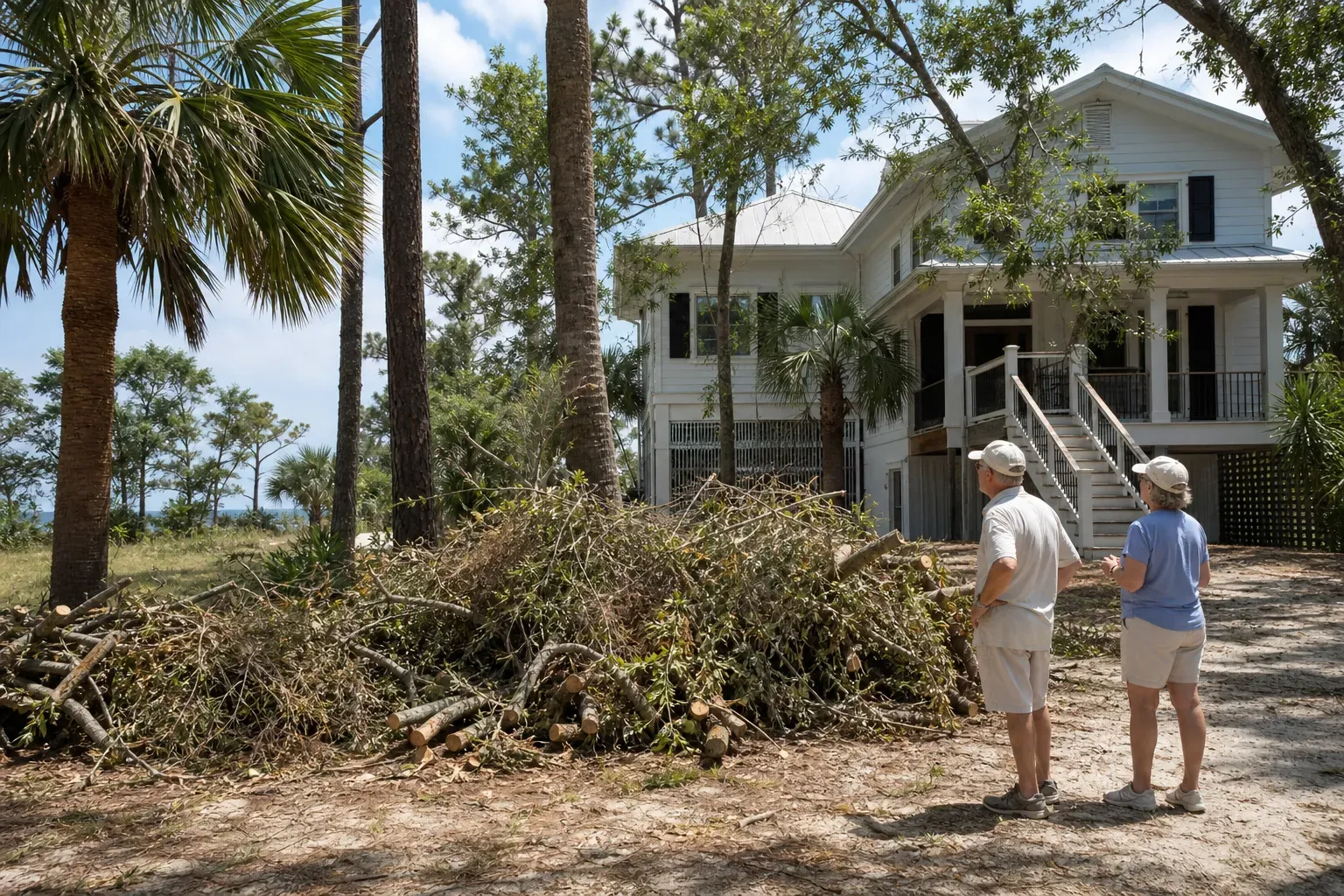
Hurricane Isaias Tree Work Completion Checks In Pace should compare finished work with the written scope. Check the listed trees, debris, stump work, approved changes, and final bill. Record gaps from a safe place. A closeout check does not prove that a tree is safe or that insurance will pay.
This guide covers contract closeout, not storm response or tree risk assessment. It is general education for Pace property owners. Florida Foliage is based in Daytona Beach and serves Volusia and Flagler counties, not Pace or the Panhandle.
The October 9 National Hurricane Center advisory identifies Isaias as a current named system. Forecasts can change. Follow the latest official alerts and local orders before any site visit. Do not enter an unsafe work area to check a contract.
What should Hurricane Isaias Tree Work Completion Checks In Pace cover?
Start with the signed scope, not the yard's appearance. The Pensacola tree risk questions guide and Pensacola root-zone recovery questions guide offer related tree-care background. These pages cannot decide claim, contract, or permit questions for your site.
A clean yard can still have unfinished work. A rough-looking yard can also match a limited contract. For example, a scope may cover cutting and stacking wood, but not hauling it away. Your check should use the actual terms.
Build a short list from the agreement. Include each tree, each task, and each promised finish. Use the same tree labels found in the quote. A street-side oak and a rear-yard oak need distinct labels.
Useful completion checks include these points:
- Each listed tree should match the agreed location and task.
- Debris should be hauled, stacked, or left as agreed.
- Stump work should match the stated scope and limits.
- Access routes should be checked for visible work-related damage.
- Added work should match a recorded approval.
- The final bill should match the agreed work and changes.
Keep contract questions separate from tree health questions. Whether a named limb was removed is a scope issue. Whether a remaining tree needs more pruning is a professional judgment.
The International Society of Arboriculture's tree owner resources cover pruning, storm damage, and tree risk. Use those resources to frame questions for a qualified professional. Do not treat a homeowner walk-through as a risk assessment.
Also note any known limits on your review. You may not be able to see the upper canopy. Wet ground may block access to a stump. Write down those limits rather than guessing that hidden work is complete.
Which records should you gather before the final walk-through?
Gather the quote, signed terms, photos, and change records first. The Pensacola tree risk questions guide and Pensacola root-zone recovery questions guide offer related tree-care background. These pages cannot decide claim, contract, or permit questions for your site.
Keep these records in one folder. A paper folder or a shared digital file will work. The goal is to avoid a dispute based on memory.
Look for the most recent version of the scope. A first quote may differ from the signed agreement. Later emails or change orders may alter that agreement. Do not assume a spoken request changed the price or finish terms.
Use this closeout sequence:
- Confirm the final scope. List the base work and each approved change. Note any terms that remain unclear.
- Match tasks to tree locations. Use existing photos, labels, or a simple sketch. Do not approach hazards to add labels.
- Review visible results from a safe place. Compare each result with the written task. Leave technical judgments to the right professional.
- Record gaps in plain words. State what you can see and what the scope says. Avoid guesses about fault or risk.
- Request a written reply. Ask whether the item is complete, excluded, or still pending. Ask for the proposed next step.
- Review the final bill and closeout terms. Compare amounts with the agreement and approved changes. Follow the contract's process for unresolved items.
A useful note says, “The scope lists removal of the rear-yard brush pile. That pile remains beside the fence.” It does not say, “The whole job was done wrong.” Clear facts make the issue easier to resolve.
Date your photos and keep the originals. Label the tree or area shown. Take photos only where access is safe. There is no need to climb, move logs, or stand beneath damaged limbs.
If several people helped manage the project, choose one record keeper. This reduces mixed messages. It also helps link each approval to a clear task and cost.

How can you check debris, stumps, and access areas?
Review each finish item on its own. The Pensacola tree risk questions guide and Pensacola root-zone recovery questions guide offer related tree-care background. These pages cannot decide claim, contract, or permit questions for your site.
“Tree removal” alone may not describe every finish detail. Look for terms that address logs, branches, brush, chips, and stumps. If a term is vague, ask the contractor to explain it in writing.
Debris and wood
Check where the agreement says debris should go. Haul-off, curb placement, and on-site stacking are different tasks. Do not judge one as complete based on the terms of another.
- Logs should be in the agreed place if you chose to keep them.
- Brush should not remain where haul-off was included.
- Chips should be removed or left as the scope states.
- Unrelated storm debris should be listed separately from contracted debris.
Do not assume public pickup will handle what remains. Ask the waste authority serving your address about its current rules. Confirm any placement limits before debris is moved. This article does not apply Pensacola's collection rules to Pace.
Stumps and grinding debris
Tree cutting and stump grinding are separate scope items. Check whether grinding was included at all. Then review any stated depth, area, chip removal, backfill, or surface finish.
A ground stump does not by itself show that all roots were removed. Nor does a pile of chips prove that backfill was included. Ask about the specific promised result.
Do not probe the ground or use equipment to test depth. If the result cannot be seen, request the contractor's work record or an explanation. A disputed technical detail may need an independent review.
Access routes and nearby property
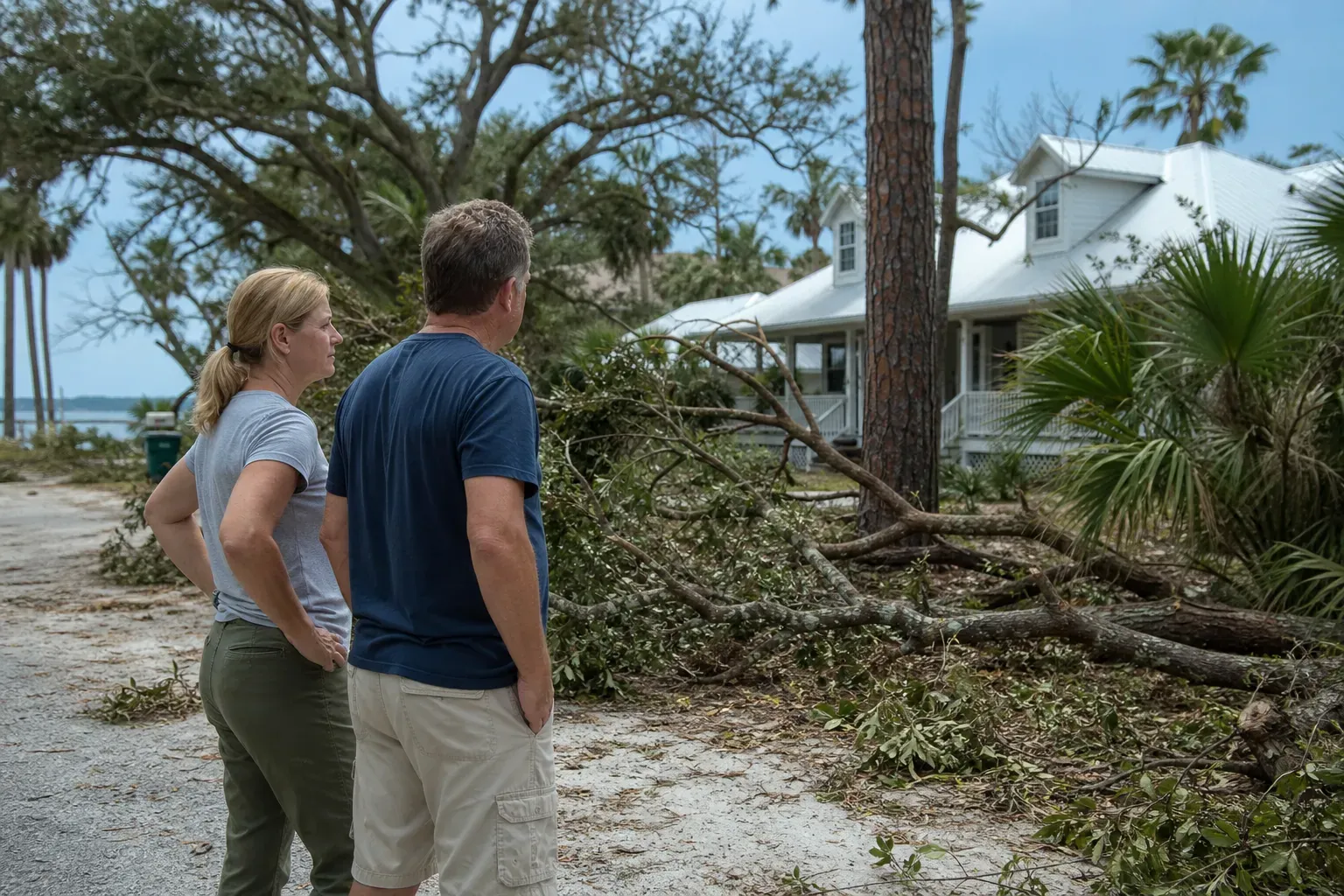
Review the agreed route for crew and equipment access. Compare safe, current views with pre-work photos. Note visible changes to gates, fences, paving, or other nearby features.
Describe the change without assigning cause too soon. “The gate latch no longer closes” is a clear observation. “The machine broke the gate” needs evidence.
Keep repair questions separate from tree work completion. Ask what the contract says about yard repair and damage reporting. Record the contractor's response, including any planned follow-up.
What if a tree or palm still looks damaged?
An uneven canopy does not automatically mean unfinished work. The Pensacola tree risk questions guide and Pensacola root-zone recovery questions guide offer related tree-care background. These pages cannot decide claim, contract, or permit questions for your site.
Storm recovery may take several visits. It should not be judged by neatness alone. Ask whether the contract covered hazard removal, initial cleanup, or a longer restoration plan.
UF/IFAS guidance on storm-damaged tree restoration explains that larger broken branches can need years of recovery and repeated pruning visits. Later structural pruning addresses weak branch arrangements. That long process is different from one cleanup job.
For your closeout file, ask for a plain description of:
- The pruning tasks completed during this visit.
- Any planned tasks that remain on the current scope.
- Any new concerns that need separate assessment.
- Any suggested future visits outside the current price.
Do not request extra cutting just to make the canopy look even. A qualified professional should decide whether more pruning is appropriate. Keep people away from an area where a suspected hazard remains.
Palms need special care. The same UF/IFAS restoration guidance says bent green fronds can help recovery and should often remain. Dead fronds that pose a hazard and fronds that smother the bud need a different review. The bud is the palm's growing point.
The UF/IFAS guide to hurricane-damaged palms also advises keeping broken green leaves in many cases. It notes that replacing a whole canopy takes at least a year, and usually longer.
So, green bent fronds left in place are not proof of poor cleanup. Compare the work with the scope and the professional's explanation. Do not pull fronds, test the bud, or apply products as part of closeout.
Ask for species-specific advice if growth or health is a concern. A contract checklist cannot assess damage or predict recovery.
How should you handle unfinished items, bills, and permits?
Separate the work list from the payment and approval records. The Pensacola tree risk questions guide and Pensacola root-zone recovery questions guide offer related tree-care background. These pages cannot decide claim, contract, or permit questions for your site.
Create one short list of open items. For each item, include the scope wording, your observation, and the requested reply. Send it through the contact method stated in the contract.
Ask the contractor to classify each item. It may be complete, excluded, pending, or disputed. A clear reply is more useful than a broad promise to “take care of it.”
If follow-up work is planned, request its scope in writing. Ask who will do it and how access will be arranged. Do not invent a deadline or assume a response time that was never agreed.
Final invoice review
Compare the invoice with the base price and approved changes. Check for repeated charges and tasks you cannot match to a record. Ask for an explanation before making assumptions.
- Each added charge should have a clear task description.
- Deposits and earlier payments should be shown accurately.
- Credits should match any agreed reduction in work.
- Pending tasks should be addressed in the closeout record.
This guide does not tell you to withhold payment. It also does not tell you to sign an acceptance form. Those decisions depend on the contract and the facts. Seek legal advice if terms or rights are in dispute.
Insurance records
Keep photos, invoices, receipts, and communications for your insurer. The Florida CFO's homeowners insurance overview explains that debris and tree removal coverage depends on the policy and circumstances. Limits may apply.
A completed job is not proof of coverage. A paid invoice is not a promise of reimbursement. Ask your insurer or agent about the records needed for your claim. Review your policy rather than relying on a contractor's coverage estimate.
Permits and public approvals
Ask whether permits or other approvals were required. Request copies of any records the contractor says apply. Do not assume storm damage removes all local requirements.
For Pace project questions, contact Santa Rosa County Development Services. Its published page provides permit and planning contacts. It does not establish a blanket tree-work exemption for your property.
Confirm the authority for your address and task. A finished appearance does not prove regulatory compliance. Likewise, permit records do not certify that a tree is safe.
Frequently asked questions
For broader context, read the Pensacola tree work quote guide. It does not decide claim, contract, permit, or safety questions for your site.
Does a completion check prove the remaining trees are safe?
No. A completion check compares finished work with the contract, not tree safety. Tree risk needs a separate professional assessment. Report suspected hazards and keep people away from the area. Contact the utility for trees or limbs involving power lines. Contact public emergency services for immediate danger.
Should all storm-damaged palm fronds be removed?
No. Green fronds can still support recovery after storm damage. UF/IFAS palm guidance recommends leaving broken green leaves in many cases. Have a qualified professional review the palm and explain which fronds should stay. Do not use a bare, tidy canopy as the standard for completion.
What should I do if debris remains after the crew leaves?
Check the written scope to see whether haul-off was included. Record the location and type of debris from a safe place. Ask the contractor whether removal is still pending or was excluded. If public collection is proposed, confirm the current rules with the authority serving your address.
Should I approve the final bill while items remain open?
Review the contract's payment and acceptance terms before deciding. Ask for a written list of open items and the proposed follow-up for each one. The right next step depends on your agreement and the facts. Seek legal advice if your payment duties or the acceptance terms are unclear.
Can Florida Foliage provide this work in Pace?
Florida Foliage serves Volusia and Flagler counties from Daytona Beach. This Pace article is educational, not an offer of local service. Pace readers should contact an appropriate local provider and relevant public authorities for project-specific help. Ask local providers about work at your property.
About the author and drafting: Tim Francis is Tree Content Expert. This article was drafted with AI assistance. His author role does not imply arborist or practitioner credentials.
Florida Foliage is a Daytona Beach tree service that works with an ISA Certified Arborist consultant.
For tree work in Volusia or Flagler County, call (386) 481-7913 to request a free on-site estimate.
For tree work in Volusia or Flagler County, call (386) 481-7913 to request a free on-site estimate.