Reviewed by Clinton Funk
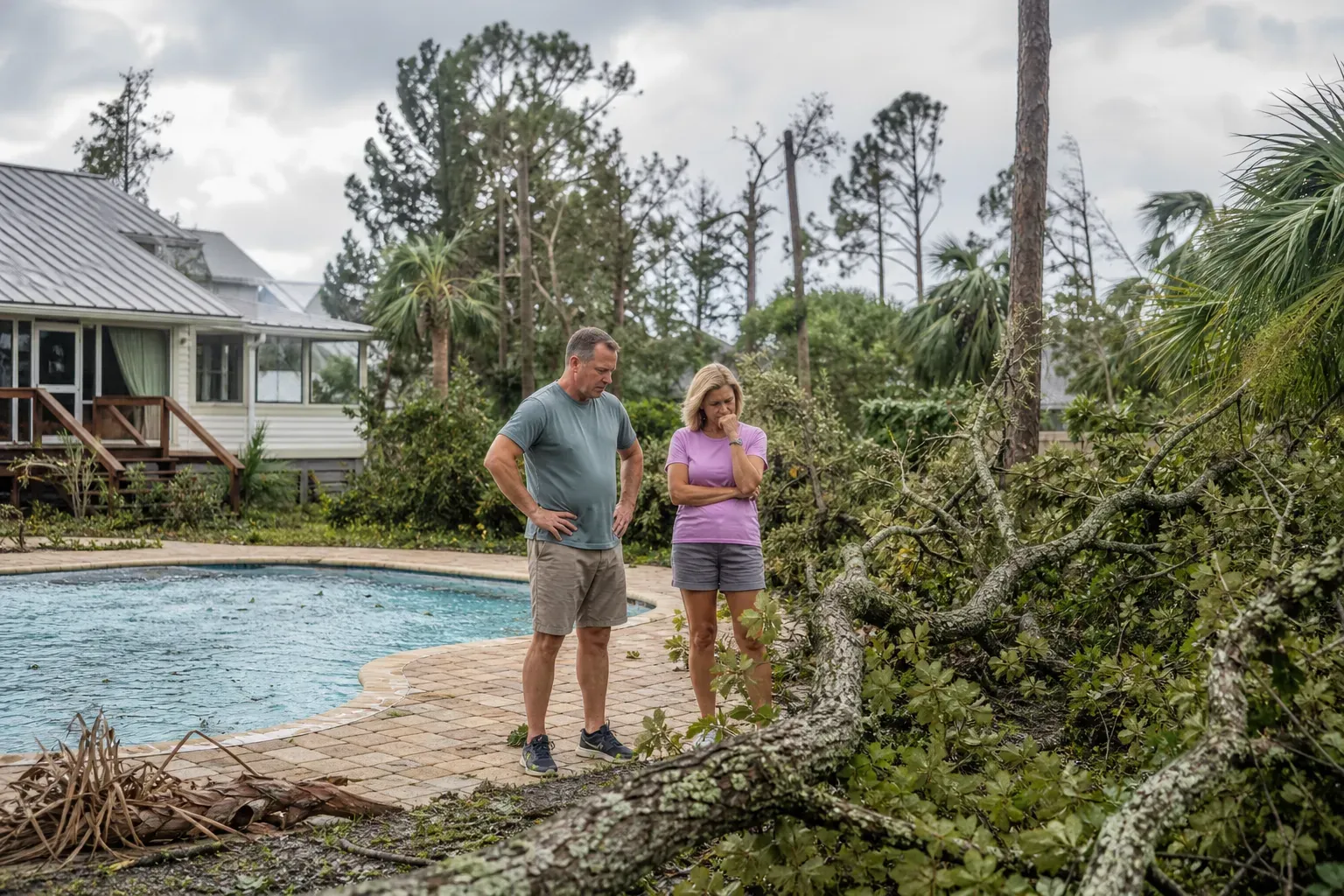
Hurricane Isaias Tree Work Near Pools In Milton should start with a professional site review, not cutting. The work scope should address the tree, pool shell, deck, screen frame, buried lines, and equipment route. Keep people away from damaged trees. Follow local safety orders before any site visit or cleanup.
This guide is for planning, not hands-on tree work. It does not offer a tree assessment or a removal plan. Florida Foliage is based in Daytona Beach and serves Volusia and Flagler counties. This Milton guide does not indicate local crews or service availability.
The supplied October 9 National Hurricane Center advisory identifies Isaias as a named system. Forecasts and warnings can change. Check the latest official information rather than using this article as a live storm update.
What should Hurricane Isaias Tree Work Near Pools In Milton include?
A pool-side scope should define access and structure limits. Read the tree risk guide for Pensacola owners and Pensacola root recovery guide for related tree-care background. They do not decide claim, contract, or permit questions for your site.
A tree may stand well outside the pool fence. Yet its limbs may extend over water or screens. The route to that tree may cross a pool deck. Those are separate concerns, and each belongs in the scope.
A screen frame is not solely an open work area. It can block access to limbs above it. Damage to the frame may also make the site unsafe. A pool cover should not be assumed to support debris, workers, or equipment.
Ask the tree professional to review these points on site:
- Identify limbs above the pool, deck, screen roof, and pump area.
- The plan should state which structures must remain clear during the work.
- The access route should show gates, turns, steps, and changes in grade.
- Flag known pool pipes, power lines, drains, and irrigation lines.
- The proposal should explain whether other trades need to attend first.
- The cleanup terms should separate tree debris from pool and screen repairs.
Do not treat all nearby damage as tree work. A bent screen frame may need a screen contractor. A damaged pump or exposed wire needs the right qualified trade. Damage to the pool shell needs a pool specialist.
The written scope should name those boundaries. For example, branch removal and pool leak testing are different tasks. One does not prove that the other is complete.
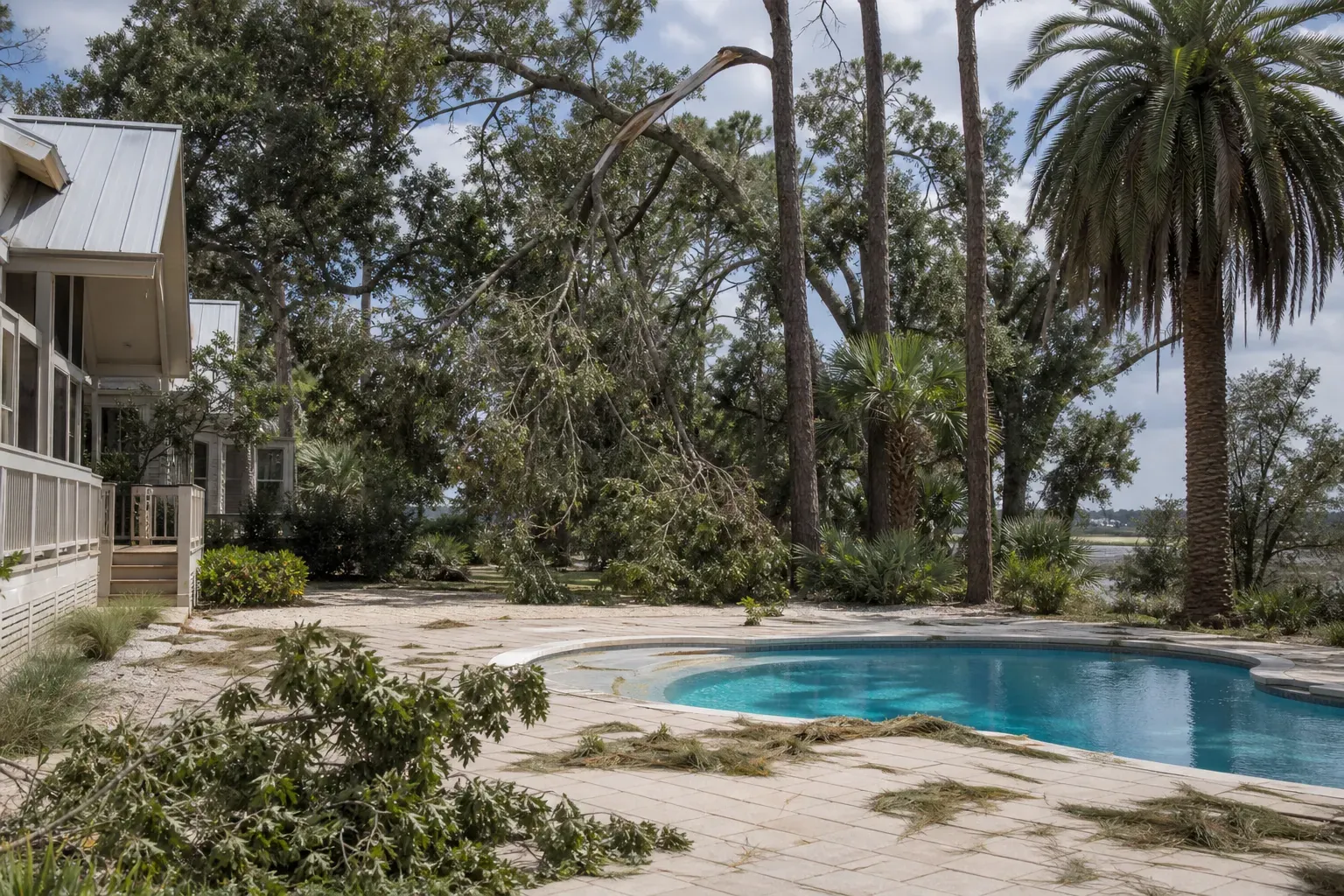
How should the equipment route account for decks and buried lines?
Review the whole route, not solely the gate width. Read the tree risk guide for Pensacola owners and Pensacola root recovery guide for related tree-care background. They do not decide claim, contract, or permit questions for your site.
A wide gate can lead to a tight turn. Beyond that turn, a raised deck may limit access. Pump pipes or drains may cross beneath the route. A clear view from the street will not reveal all these features.
Give the contractor any site plans you already have. Include pool plans and records of later changes. Mark information as known, suspected, or unknown. A rough sketch is useful, but it is not proof of where buried lines lie.
Pool decks differ in their build and condition. Do not assume a deck can carry equipment loads. Ask who will assess that question when it affects access. Photos alone cannot settle the issue.
Use this planning order without entering a hazard area:
- Gather existing pool, utility, drainage, and septic records from a safe place.
- Describe each possible route from the street to the tree.
- Flag gates, deck edges, screen frames, drains, and known buried services.
- Ask the contractor to review route limits during the site visit.
- Record the chosen route and any needed checks in the written scope.
- Confirm who will handle debris, surface cleanup, and separate repair work.
Do not widen gates or remove screen parts on your own to make room. Changes may need review by another trade. The contractor may also find a different route or method more suitable.
Ask how the route affects the job before accepting a proposal. A change in access can change the proposed work. It should not be left as an unwritten assumption.
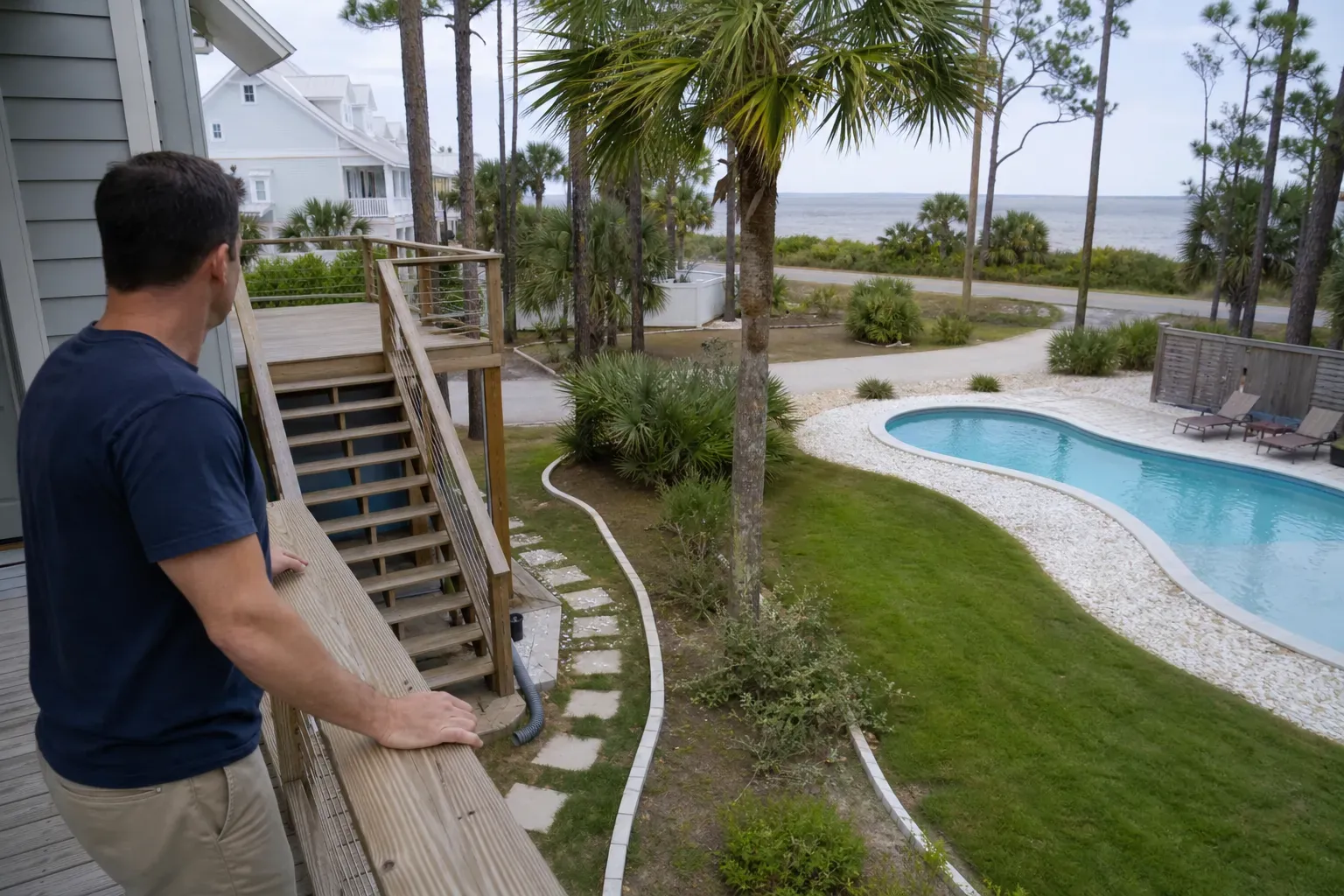
What should happen before anyone works near a damaged pool enclosure?
First, keep people out of the affected area. Read the tree risk guide for Pensacola owners and Pensacola root recovery guide for related tree-care background. They do not decide claim, contract, or permit questions for your site.
Do not go under hanging limbs to take photos. Do not climb onto a screen roof or pool cover. Tell a qualified tree professional where the limb and frame are visible from a safe place. Ask what review is needed, and do not cut or pull the limb yourself.
Keep away from fallen or low wires. Contact the utility for suspected electrical hazards. For immediate threats to life, contact emergency services. Tree crews should not be treated as a substitute for either.
Follow public orders about travel, evacuation, and site access. Use the National Weather Service Mobile/Pensacola page for official regional weather information. Do not infer that a lull means outdoor work is safe.
When officials allow access, arrange the right site reviews. Tell each professional about hazards you can see safely. Avoid stating that a structure is sound unless it has been assessed.
Useful questions for the site visit include:
- Ask how the contractor will keep people outside the work zone.
- State whether tree work needs a screen or electrical review first.
- Explain plans for the pool and nearby fixtures during work.
- State whether access changes need separate approval or repairs.
- Ask the contractor which tasks fall outside the tree-work scope.
The order of work matters. A tree task may need to wait for a utility. In another case, a separate trade may need tree debris cleared first. Let the qualified parties resolve that order on site.
A request for a site visit is not clearance to use the pool. Keep recreation separate from the work zone until the relevant hazards have been addressed.
Should storm-damaged trees and palms near a pool always be removed?
No. Read the tree risk guide for Pensacola owners and Pensacola root recovery guide for related tree-care background. They do not decide claim, contract, or permit questions for your site.
A pool adds nearby targets to the assessment. Here, a target means a person or feature that falling tree parts could strike. Screens, decks, and pump equipment all help define the setting. They do not, by themselves, prove a tree must come down.
Ask a qualified tree professional to assess retention, pruning, or removal. The International Society of Arboriculture's tree owner resources offer guidance on pruning, storm damage, and tree risk. An ISA Certified Arborist can help assess tree-care questions.
For trees that can be retained, recovery may take years. UF/IFAS storm restoration guidance describes repeated pruning visits and later structural pruning. It notes that large branch wounds are less likely to close over than small ones.
That makes the long-term plan important. A proposal for initial cleanup should not imply full recovery. Ask whether the tree may need future checks or pruning. New growth alone does not establish that a damaged tree is safe.
Palms need a different approach. UF/IFAS advises leaving bent green fronds when they remain attached and do not pose a hazard. These leaves help the palm recover. Dead fronds that could strike a target and fronds that smother the bud may need removal.
The bud is the growing point where new leaves emerge. Avoid asking for a heavily stripped crown as a storm precaution. UF/IFAS warns that overpruning can harm palm health and expose the bud.
UF/IFAS hurricane palm guidance also states that full canopy replacement takes at least a year, and often longer. It reports no research documenting benefits from post-hurricane fungicide use. Do not assume every wind-damaged palm needs a chemical tree care.
For pool-side palms, ask for a clear reason for each proposed task. Hazard removal, recovery care, and routine appearance work are not the same goal.
- Ask which tasks address hazards near the pool.
- Ask which tasks support the tree's or palm's recovery.
- Separate routine appearance work from storm recovery care.
- Record any recommended future checks or pruning visits.
What records, approvals, and cleanup terms should be settled?
Settle these items before work begins when conditions allow. Read the tree risk guide for Pensacola owners and Pensacola root recovery guide for related tree-care background. They do not decide claim, contract, or permit questions for your site.
Take photos only from safe locations. Show the tree, pool, screens, deck, and equipment area. Keep existing photos that show the property's earlier condition. Save estimates, invoices, and notes about separate repair needs.
The Florida CFO homeowners insurance overview advises documenting damage and retaining repair records. It also explains that tree and debris removal coverage depends on policy terms and circumstances. Coverage may have limits.
Do not assume that a fallen tree near a pool is covered. Ask the insurer about your own policy. Describe the damage without guessing at hidden causes. A tree-work estimate does not establish coverage or the cost of all pool repairs.
The Florida CFO hurricane deductible guide explains how hurricane deductibles work. Refer policy-specific questions to your insurer or agent. This article cannot predict a claim decision or payment.
For approvals, confirm which local authority governs the address. A Milton mailing address alone is not enough to settle that question. Ask about tree work, screen changes, access changes, and related repairs as distinct tasks.
Santa Rosa County Development Services provides information on permits, plan review, and land-use questions. Contact the applicable city or county office for project-specific guidance. Do not apply another city's tree rules to a Milton property.
The cleanup scope should answer practical questions:
- State whether tree debris will be hauled away or left on site.
- The scope should explain whether debris in pool water is included.
- The agreement should distinguish deck cleanup from damage repair.
- The proposal should identify who handles screen parts and non-tree waste.
- Owner and contractor should confirm local rules before using curbside collection.
Ask for a closeout review of the agreed work. Compare completed tasks with the scope. Refer possible pool leaks, electrical faults, or screen defects to the relevant trade. Tree cleanup does not certify those systems as safe.
Frequently asked questions
For broader context, read the Isaias Tree Access Plans In Pensacola. It does not decide claim, contract, permit, or safety questions for your site.
Can a contractor drive tree equipment across my pool deck?
Do not assume that is suitable. The route needs an on-site review. Deck build, condition, buried lines, and equipment loads all matter. Ask who will assess those limits and record the approved route in the scope. Photos alone cannot show whether the deck can support the equipment.
Should I remove the pool screen before the tree crew arrives?
Not without professional coordination. The screen may affect access, but removing it is a separate task. Ask the tree contractor and screen specialist to agree on the work order. Confirm any needed local approval before changes begin. The tree contractor may find another route that avoids screen removal.
Does a branch in the pool mean the whole tree must be removed?
No. A fallen branch does not establish the condition of the whole tree. A qualified tree professional should assess the damage and remaining structure. The review should also consider people, the pool, and other nearby targets. Ask whether retention, pruning, or removal best fits the tree's condition.
Will homeowners insurance pay for tree removal and pool repairs?
That depends on your policy and the loss facts. Tree removal, debris cleanup, and pool repairs may involve different terms or limits. Document damage safely and keep receipts. Ask your insurer to explain coverage, deductibles, and claim requirements. A tree-work estimate does not prove coverage or include every pool repair.
Does Florida Foliage provide Milton pool-side storm tree work?
Florida Foliage is based in Daytona Beach and serves Volusia and Flagler counties. This article is educational content for Milton readers, not an offer of local service. For a Milton project, seek an appropriate local professional and follow public guidance.
About the author: Tim Francis is a Tree Content Expert. This article does not present him as a practicing arborist or other licensed professional.
Drafting disclosure: This article was drafted with AI assistance. It provides general planning information, not an on-site assessment, legal advice, insurance advice, or a live weather update.
Florida Foliage is a Daytona Beach tree service that works with an ISA Certified Arborist consultant.
For tree work in Volusia or Flagler County, call (386) 481-7913 to request a free on-site estimate.
For tree work in Volusia or Flagler County, call (386) 481-7913 to request a free on-site estimate.