Reviewed by Clinton Funk
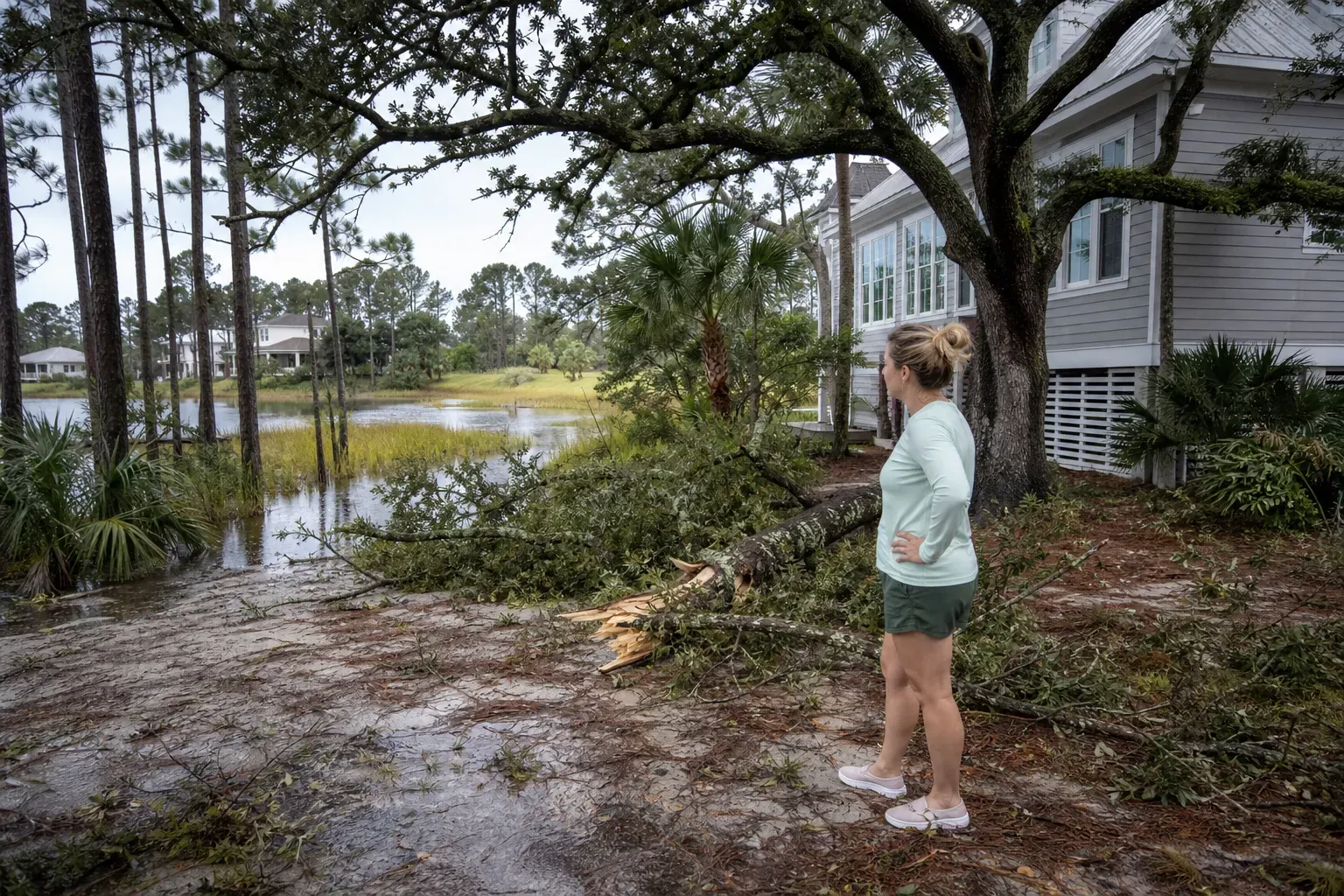
Hurricane Isaias Tree Work Near Wetlands In Perdido Key starts with two checks: whether the site is safe, and which public office should review the work. Ask Escambia County Development Review to identify the right land-use and environmental review contacts for your address. Do not assume storm damage creates a permit exemption.
This guide covers trees near wet ground, shore edges, and other sensitive areas. It does not confirm a wetland boundary or approve any work. For urgent threats, follow public safety officials and the utility. For site-specific tree decisions, seek a qualified arborist.
Who should you contact about Hurricane Isaias Tree Work Near Wetlands In Perdido Key?
Start with the property address and the planned work. Read the tree risk guide for Pensacola owners and Pensacola root recovery guide for related tree-care background. They do not decide claim, contract, or permit questions for your site.
Start with Escambia County Development Review. Its page asks for clear, accurate site plans and complete applications for proposed work. The office may not issue every approval you need.
Explain that a storm-damaged tree stands near possible wetlands. Ask which staff member can review the location and work scope. Also ask whether another public agency needs to be involved. The sources used here do not establish the full review path for a specific Perdido Key parcel.
A tree permit question and an environmental review question may differ. Removing a broken limb is not the same proposed task as pulling a stump, moving soil, or building an access route. Describe each part of the job rather than asking only, “Can I remove this tree?”
Useful questions include:
- Ask who handles tree rules for the exact parcel.
- Ask who can confirm whether wetland review is needed.
- Ask whether the planned access route needs separate review.
- Ask whether stump work, soil disturbance, or debris staging changes the review.
- Ask what records are needed for any storm-related process.
- Ask how to obtain written guidance for the stated work.
Keep the reply with your job records. Note the office, staff name, date, and scope discussed. If the work plan changes, ask whether that changes the answer. A reply about limb pruning should not be read as approval for stump removal.
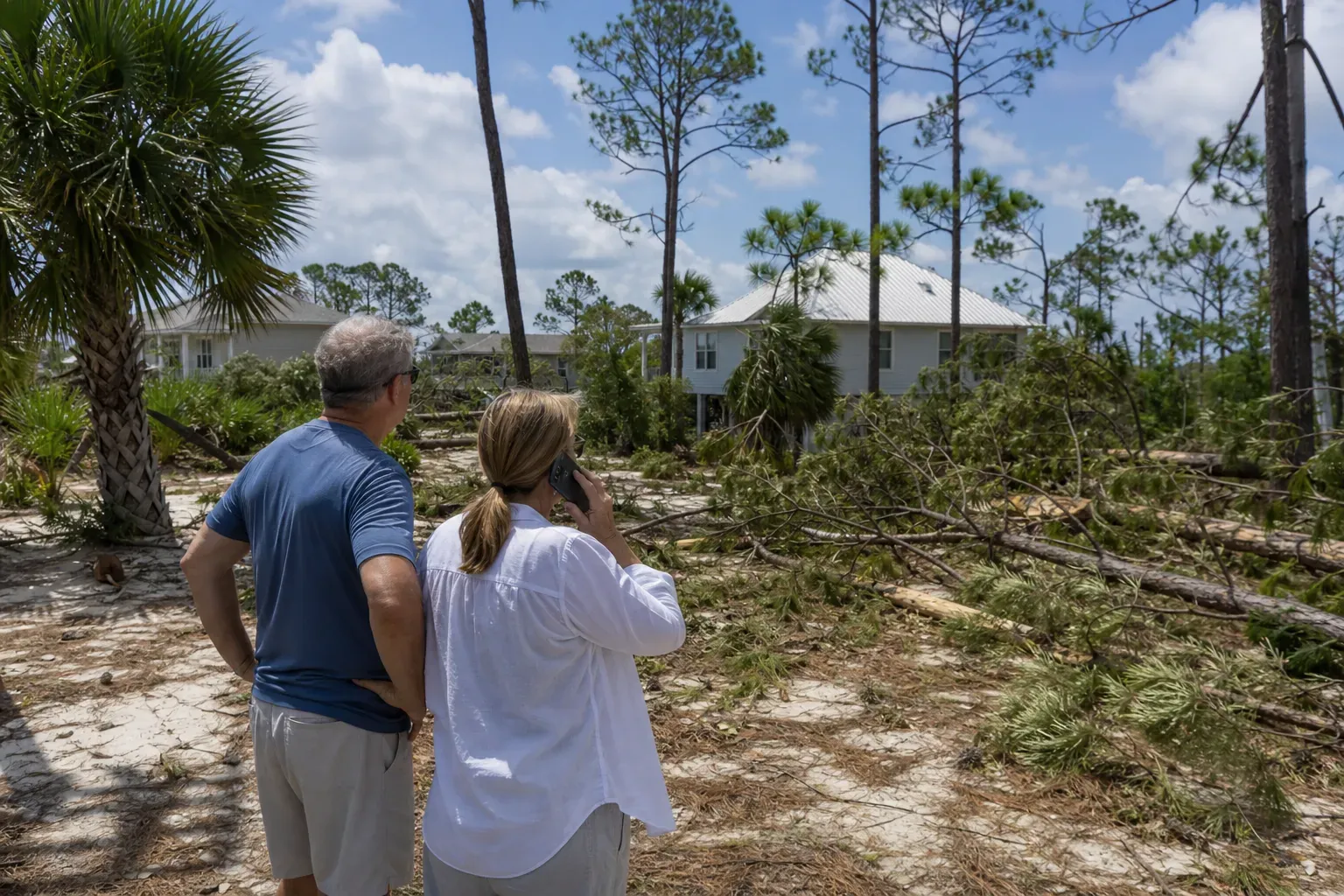
What should you gather before asking for site review?
Gather enough facts to show both the tree and its setting. Read the tree risk guide for Pensacola owners and Pensacola root recovery guide for related tree-care background. They do not decide claim, contract, or permit questions for your site.
A street address is the first useful detail. Add the parcel number if you have it. State whether the tree is on your land, near a boundary, or beside public space. Do not guess who owns a tree at a road edge.
Photos can help staff understand the request. Take them only from a safe place. Show the tree, nearby buildings, and the proposed approach route. Do not walk beneath hanging limbs or enter floodwater to get a closer view.
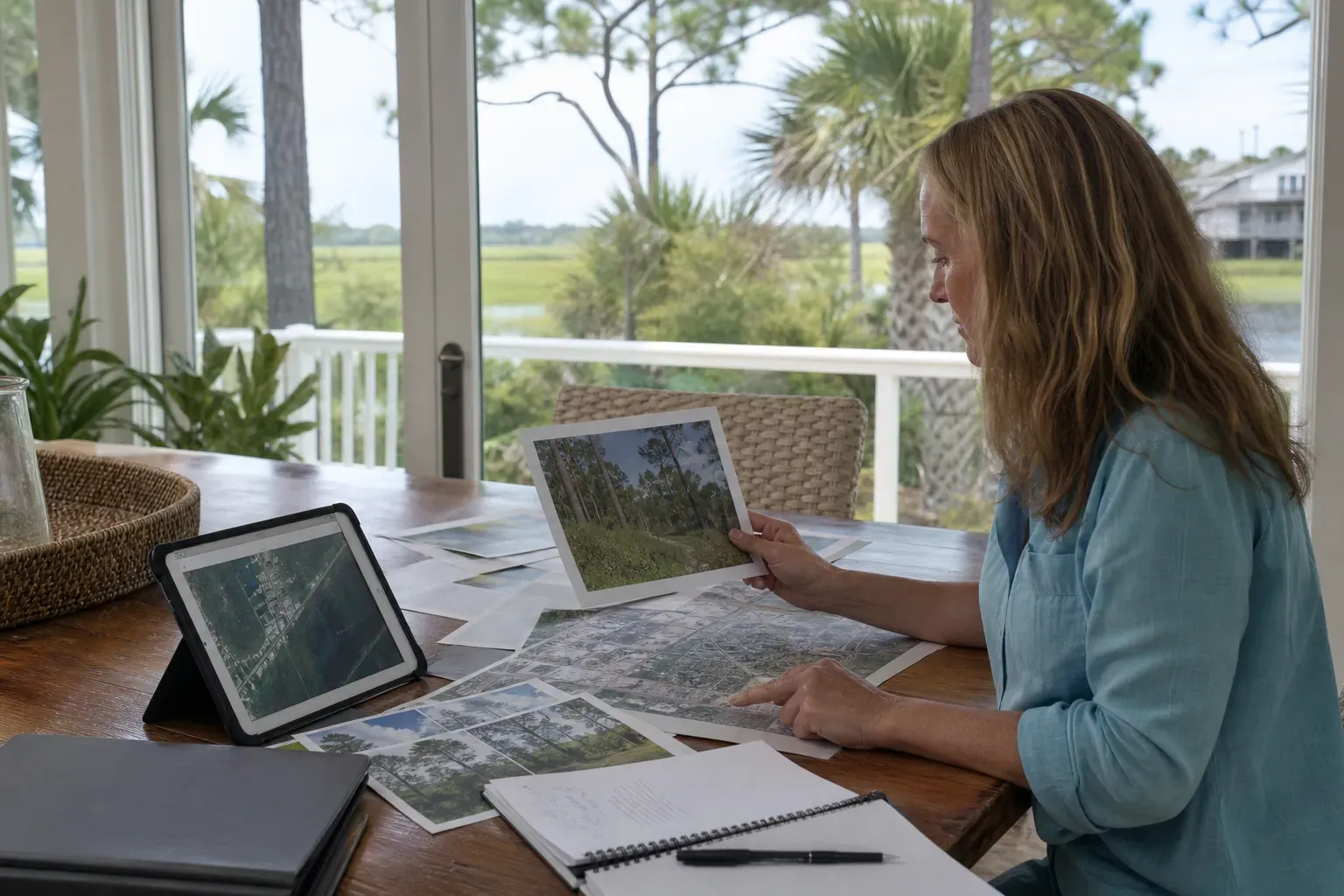
A simple sketch can show where the work would occur. Mark the house, road, tree, water edge, and planned debris area. Label any uncertain boundary as uncertain. A homeowner’s sketch does not establish a wetland line.
Use this order for a clear request:
- Identify the parcel. Give the address and parcel number, if known.
- Describe the damage. State what you can see without diagnosing the tree.
- List the proposed tasks. Separate pruning, removal, stump work, and hauling.
- Show the access plan. Explain where people and equipment would travel.
- Flag site concerns. Note nearby water, soft ground, and unclear boundaries.
- Request the review path. Ask which offices, records, and approvals apply.
Describe the equipment, but let qualified help choose the work method. Tell staff if the crew plans to drive off the paved area. Ask the crew to put the route and staging space in writing.
Do not present wet soil as proof of a wetland. Likewise, do not assume dry ground means no review is needed. Ask the public office what evidence it needs to assess the site. If a field check is required, ask who is qualified to perform it.
How should access, stump work, and debris be discussed?
Describe the full job, not solely the tree cut. Read the tree risk guide for Pensacola owners and Pensacola root recovery guide for related tree-care background. They do not decide claim, contract, or permit questions for your site.
Near possible wetlands, the approach route deserves clear attention. A tree may stand on firm ground while the proposed route crosses a soft area. Staff cannot assess that plan well if the request shows only the trunk.
Ask the contractor for a written scope that separates tree work from ground work. Cutting a trunk, grinding a stump, pulling roots, and grading soil are distinct tasks. This guide does not say which are allowed at your site. It helps you ask about them before the scope is set.
The same care applies to debris. “Cleanup included” may leave key details unclear. Ask where wood will be placed, how it will be loaded, and who will haul it away. Share any proposed staging area with the reviewing office.
Questions worth settling include:
- Ask whether equipment can use the proposed route.
- Ask whether any work limits must be marked first.
- Ask whether leaving the stump changes the review needs.
- Ask whether wood can be staged in the chosen area.
- Ask which local collection program serves your address.
- Ask whether contractor-generated debris is accepted by that program.
Do not assume Pensacola’s collection rules cover Perdido Key. The City of Pensacola Sanitation Services page describes services for city residents and businesses. It does not establish collection eligibility for a Perdido Key property.
Get disposal details from the program that serves your address. Confirm current storm instructions as well. Collection rules and schedules should come from that provider, not from a tree-care article.
If public land or a right of way is involved, flag it early. Do not treat a nearby public tree as yours to prune. Ask the responsible public office how to report damage and who may perform the work.
Can a damaged tree or palm be kept instead of removed?
Some storm-damaged trees may be candidates for restoration, but that needs a site assessment. Read the tree risk guide for Pensacola owners and Pensacola root recovery guide for related tree-care background. They do not decide claim, contract, or permit questions for your site.
A qualified arborist can assess the damage and discuss your options. At the site visit:
- Share the planned work limits.
- Point out site concerns, such as nearby water or soft ground.
- Ask what should be removed or kept.
- Ask what needs to be checked later.
- Request a written scope for the work.
UF/IFAS storm restoration guidance describes recovery as a process that can take several pruning visits. Large broken branches may take many years to develop replacement growth over a cut. The guide also identifies structural weaknesses that can matter in storms, including competing main stems and overextended limbs.
These facts are not a way to judge a damaged tree from the ground. A tree’s lean, root condition, cracks, and nearby targets need professional attention. Do not climb, cut loaded limbs, or try to move a tree resting on a structure.
Palms need a different approach from branching trees. UF/IFAS advises retaining bent green fronds when they remain attached and do not pose a hazard. They still help the palm make food during recovery. Removing too much live foliage can reduce vigor and expose the bud.
The separate UF/IFAS hurricane-damaged palm guidance says full canopy replacement takes at least a year, and usually longer, if the bud remains sound. It also notes that saltwater flooding can cause serious injury to some palms.
Tell the arborist if saltwater reached the site. Do not choose fertilizer or fungicide based only on storm damage. The UF/IFAS palm sources give different care details for different conditions, including uprooted and replanted palms. A site-specific plan should account for those differences.
The ISA Tree Owner Resources provide general guidance on pruning, tree risk, and storm damage. They can help you prepare questions, but they do not replace an inspection.
What should you do while weather, safety, and insurance questions remain open?
Keep the site closed to unsafe access and document what you can safely see. Read the tree risk guide for Pensacola owners and Pensacola root recovery guide for related tree-care background. They do not decide claim, contract, or permit questions for your site.
The supplied October 9 NHC advisory identifies Isaias as a current named system. Forecast details can change. Check the latest official advisory and National Weather Service Mobile/Pensacola information rather than treating this article as a live warning feed.
Follow evacuation and return instructions from local officials. Escambia County’s evacuation guidance stresses heeding official orders. A concern about a tree is not a reason to remain in an ordered evacuation area.
Keep people away from hanging limbs, unstable trees, and damaged lines. Contact the utility for line hazards. Call emergency services when there is an immediate threat to life. Do not enter a dangerous area just to gather permit or claim records.
When safe, preserve clear records:
- Photograph visible damage before cleanup, where possible.
- Record the date and location of each photo.
- Save written scopes, estimates, invoices, and receipts.
- Keep public-office replies with the proposed work plan.
- Tell your insurer what happened and ask what records it needs.
The Florida CFO homeowners insurance overview says tree and debris removal coverage varies. Coverage often depends on whether a fallen tree damaged insured property. Limits and other policy terms may apply.
Storm damage does not mean your insurer will pay. A permit, a tree report, and a claim decision serve different roles. Ask your insurer or agent what your policy covers before you rely on it.
The Florida CFO hurricane deductible guide explains how hurricane deductibles can affect claims. Use it for background, then confirm the terms of your policy. This article does not predict a claim result or give legal advice.
Frequently asked questions
For broader context, read the Isaias: Tree Permit Questions Around Pensacola. It does not decide claim, contract, permit, or safety questions for your site.
Does Isaias damage create an automatic exemption for wetland-area tree work?
This guide establishes no such exemption. Ask the responsible public offices about the exact parcel and work scope. Include access, stump work, soil changes, and debris staging in that request. If a special storm process applies, ask what records it requires and which tasks it covers.
Who is the first contact for a Perdido Key review question?
Start with Escambia County Development Review. Give staff your address and describe the planned work. Ask who handles tree rules, land use, and wetland review for that parcel. Include access, stump work, and debris staging in your request. One office may not handle every part of the job.
Can I use Pensacola’s tree rules for a Perdido Key property?
Do not assume that you can. The Pensacola City Arborist page describes city rules for protected trees, heritage trees, and public spaces. Those details do not establish the rules for a different parcel. Confirm the governing authority before applying a city requirement or exception.
Is a fallen tree safe to cut once the wind stops?
Not necessarily. Tell the qualified tree professional about the fallen wood and nearby limbs, structures, or lines. Ask which hazards the site review needs to address. Keep clear and seek qualified help. The end of strong wind does not confirm that the site is safe, nor does it settle access or review questions near wetlands.
Does Florida Foliage provide tree service in Perdido Key?
Florida Foliage is based in Daytona Beach and serves Volusia and Flagler. This guide is for Perdido Key readers. It does not mean the company has local crews, an office, or service in the Panhandle or Alabama. Seek qualified local help and contact the proper public offices.
Author and drafting disclosure: Tim Francis is Florida Foliage’s Tree Content Expert. This article was drafted with AI assistance. It provides general education, not a site inspection, permit decision, environmental boundary finding, or insurance determination.
Florida Foliage is a Daytona Beach tree service that works with an ISA Certified Arborist consultant.
For tree work in Volusia or Flagler County, call (386) 481-7913 to request a free on-site estimate.
For tree work in Volusia or Flagler County, call (386) 481-7913 to request a free on-site estimate.