Reviewed by Clinton Funk
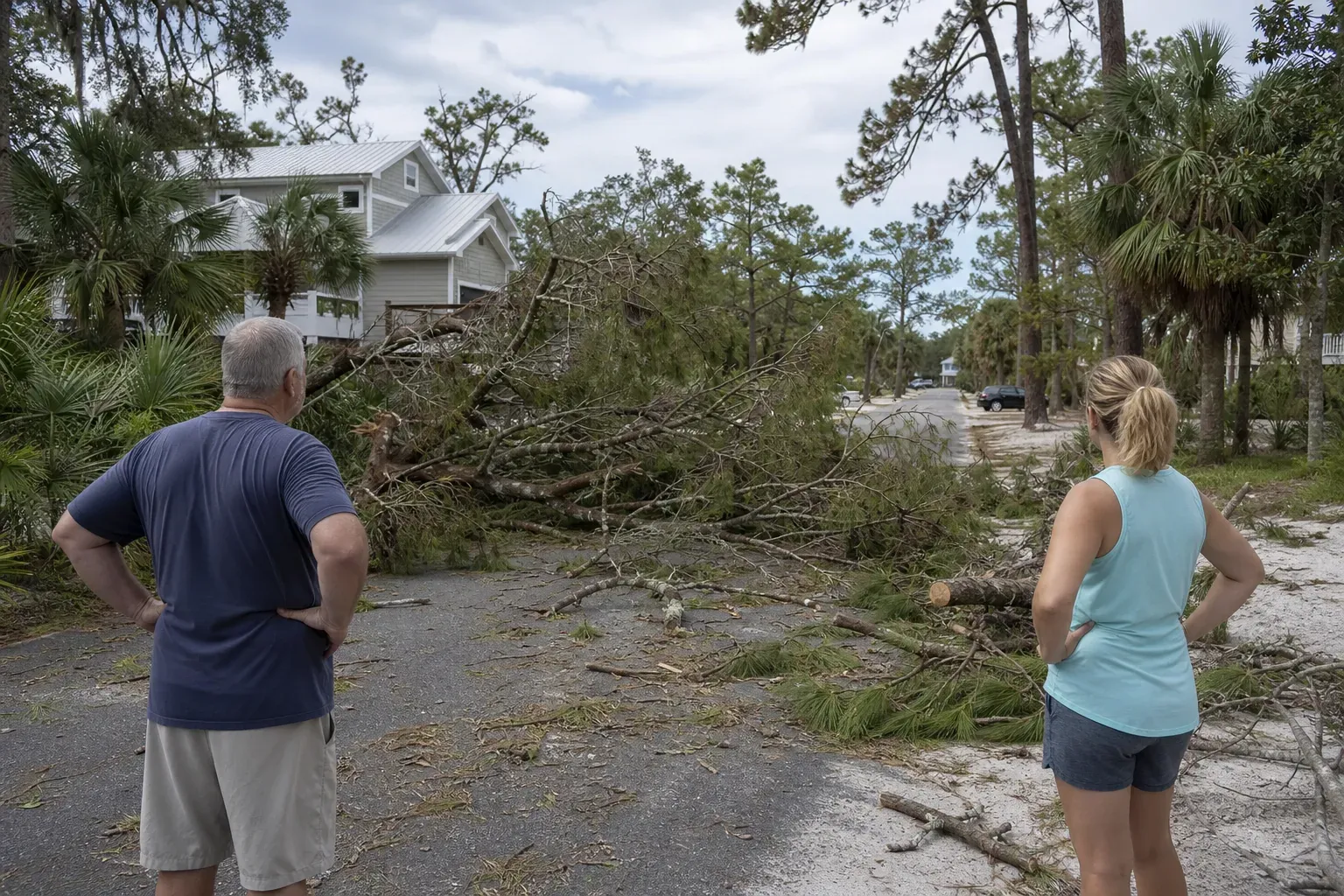
Hurricane Isaias Tree Work On Shared Lanes In Escambia starts with a shared access plan, not a saw. Confirm who can approve lane use. Keep people away from damaged trees and wires. Tell the right public authority when homes lose safe access. Let qualified crews assess the work before anyone promises a clear route.
This guide focuses on lanes used by several homes. It covers neighbor consent, work access, and debris plans. It is general education, not site-specific tree, legal, or insurance advice. Florida Foliage serves Volusia and Flagler counties from Daytona Beach. This article does not offer service in Escambia County.
What should Hurricane Isaias Tree Work On Shared Lanes In Escambia address first?
Start with the route each household needs to use. Read the tree risk guide for Pensacola owners and Pensacola root recovery guide for related tree-care background. They do not decide claim, contract, or permit questions for your site.
Do not confuse a visible gap with safe passage. A tree may hang above that gap. Wires may lie beneath leaves. Loose limbs may remain in trees beside the road. Keep people out until the right professional or authority assesses the hazard.
If someone faces immediate danger, call 911. Report downed wires to the utility and stay away. Do not touch the tree, fence, or equipment near them. A tree contractor cannot replace the utility's role in electrical safety.
Storm information also needs a clear date. The supplied October 9 NHC advisory for Isaias is a dated snapshot, not a lasting forecast. Check the latest official updates before making access plans. Follow local orders rather than relying on this article.
Escambia County's evacuation guidance tells residents to heed local officials. A tree-work plan must not delay an ordered evacuation. Nor should neighbors return to a closed area just to inspect a lane.
Once officials say it is safe to assess access, define the problem clearly:
- State which homes depend on the blocked section. Include homes beyond a bend or hidden driveway.
- Describe the blockage from a safe location. Note whether it affects the full lane or one side.
- Report visible wires or unstable trees without approaching them. Do not test whether a branch will move.
- Explain any known access needs to the appropriate authority. Do not assume responders can use another route.
- Keep a record of who received the report. A report does not mean the lane is cleared or approved for use.
Who should approve access across a shared lane?
Separate permission to use the lane from permission to work on a tree. Read the tree risk guide for Pensacola owners and Pensacola root recovery guide for related tree-care background. They do not decide claim, contract, or permit questions for your site.
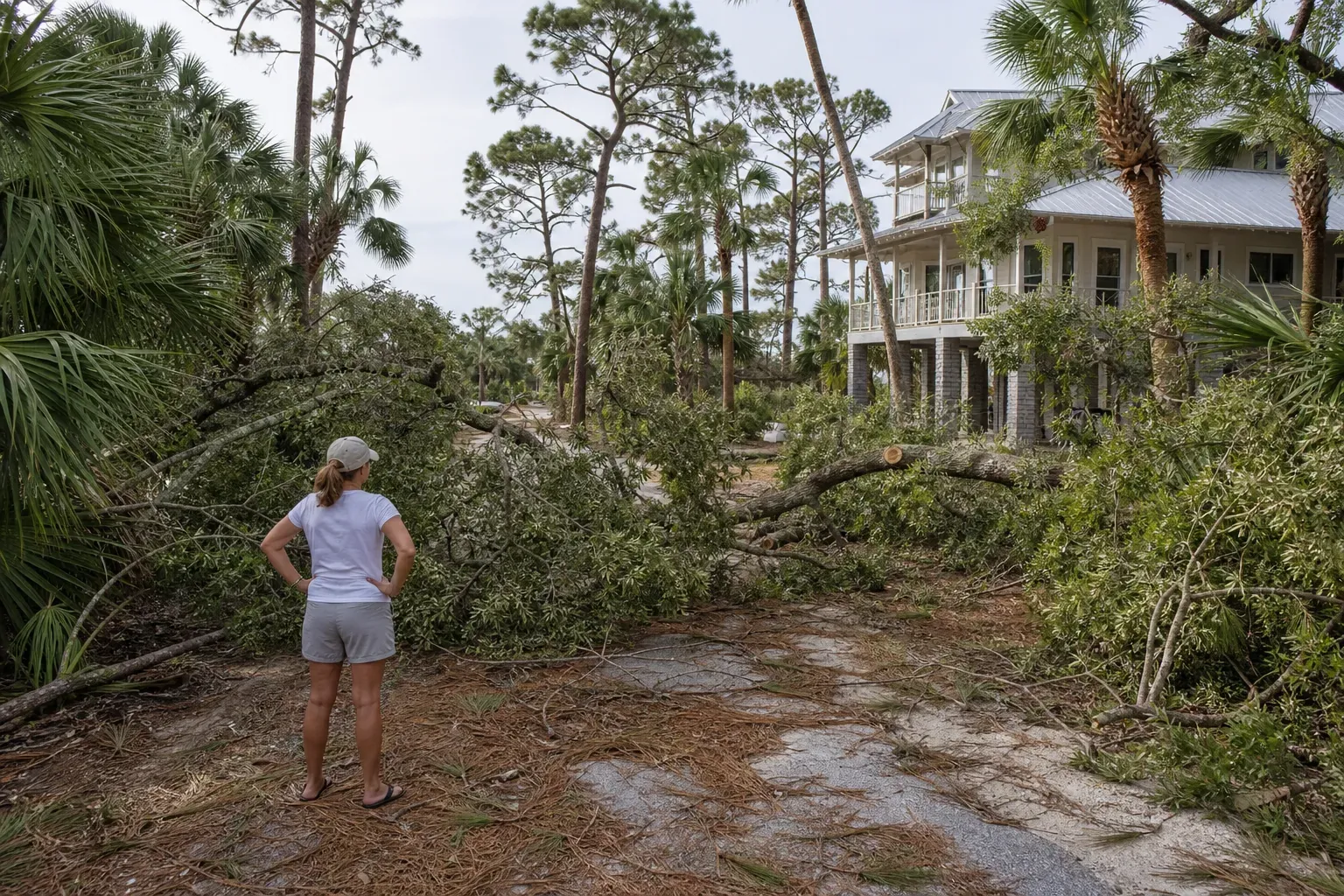
A shared lane may cross several parcels. The tree, access route, and proposed staging area may have different owners. One neighbor's consent may not cover all three. A lane that everyone uses is not necessarily public land.
Gather the records you have. These may include a survey, a recorded access document, or rules from your association. Ask the owner or association who can approve work. If the records conflict, get legal advice. Ask counsel how the property records and any neighbor decisions affect approval of this actual proposal.
The crew needs one main contact. That person can gather questions and share news. Ask counsel what authority, if any, that contact has for the proposed work. Keep a record of each consent and what it allows.
For example, approval to cross a driveway need not include permission to store logs there. Approval for a site visit need not include permission for heavy equipment. Spell out the proposed use before seeking consent.
Useful written approvals should address these points:
- Identify the property and area covered by the approval. A marked sketch can help avoid confusion.
- Name the person granting permission and their role. Ask for clarification when authority is unclear.
- Describe the proposed access and staging use. Leave equipment choices to the contractor's site review.
- Note areas that remain off limits. Include yards, gates, parking spaces, and private side paths.
- State who will receive change requests. New routes or larger staging areas may need fresh approval.
Local rules also depend on jurisdiction. Pensacola's City Arborist page describes permit requirements for city trees, public rights of way, and certain protected trees. Those city rules do not establish requirements throughout Escambia County.
Confirm whether the site is within city limits or unincorporated county land. Ask the relevant office about the specific tree and property. Escambia County Development Review offers county development-review contacts. Do not assume storm damage creates a blanket permit exemption.
How can neighbors plan around emergency access needs?
Treat access as a shared constraint throughout the job. Read the tree risk guide for Pensacola owners and Pensacola root recovery guide for related tree-care background. They do not decide claim, contract, or permit questions for your site.
Do not promise that a lane will stay open. Some work may require a full exclusion zone. That is an area people must stay out of while work occurs. Only a site review can establish the proposed work limits.
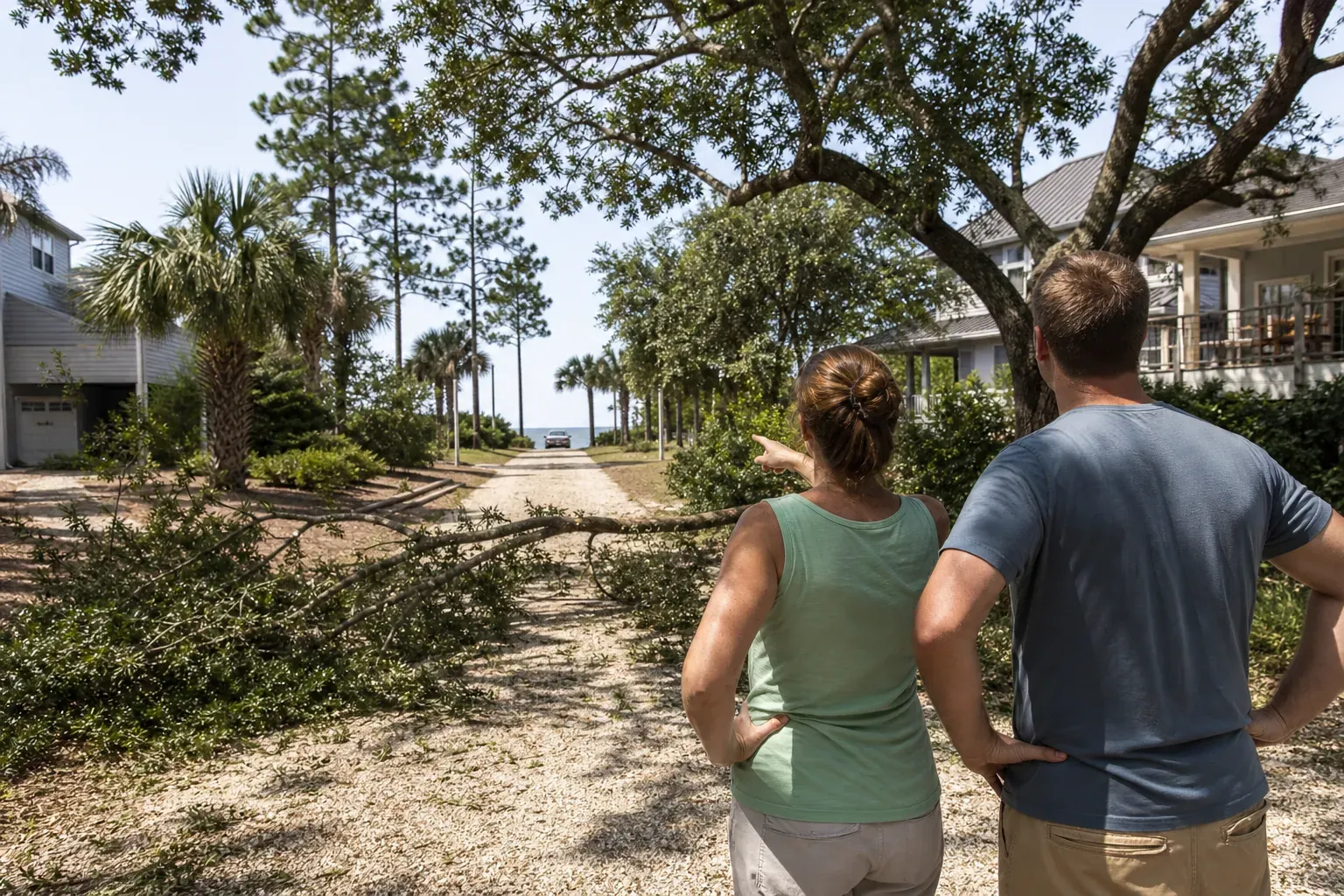
Ask the contractor to explain where vehicles may stand. Discuss whether a truck, trailer, or debris pile could block the only exit. Then ask the relevant road or emergency authority about access requirements. A neighbor cannot certify a route for emergency vehicles.
Use this sequence to organize the discussion:
- Identify every household served by the affected lane. Choose one contact to share the same information with all of them.
- Map the proposed route from a safe place. Mark gates, bends, driveways, and any known alternate entrance.
- Have the contractor assess access and work-zone needs. Do not choose equipment or clearance dimensions yourself.
- Ask the relevant authority about blocked access and proposed closures. Follow its instructions rather than making private assumptions.
- Confirm permissions and notice arrangements before work starts. Include how households will hear about changes.
- Review the access plan when site conditions change. Do not reopen the lane solely because equipment has moved.
Give each home a clear message. Say what you know, what is still unclear, and who will share the next update. Do not give a firm time to reopen unless the person in charge confirms it is still valid.
If a home needs access by a set time, tell the right person early. Share only the details they need. Do not post private health details in a group chat with neighbors.
A different path needs its own check. A lawn may hide a septic system. A side gate may lead to someone else's land. Floodwater may block the route. Never send cars over ground that has not been checked just to get past a tree.
What should the crew know about the lane before work starts?
Provide a simple site brief rather than a preferred cutting method. Read the tree risk guide for Pensacola owners and Pensacola root recovery guide for related tree-care background. They do not decide claim, contract, or permit questions for your site.
A useful brief shows more than lane width. Include turns, gates, slopes, and parking areas. Mark known drains, septic areas, and overhead lines. Label uncertain features as uncertain. A rough sketch is not a survey or utility clearance.
Photos can help if taken from a safe place. Show the approach as well as the blockage. A close view of a trunk may miss the tight bend where equipment would need to turn. Never enter a hazard zone for a better image.
Keep proposed staging areas separate from the travel route. Ask where logs, brush, and equipment would go. Confirm permission for each space before it becomes part of the work plan.
Give the contractor practical facts:
- Explain which gates normally stay locked. Confirm who can approve and arrange entry.
- Mark known private features beside the lane. Do not guess where buried systems extend.
- Identify places where standing water remains. Let the crew assess the ground before selecting equipment.
- Show driveways that households need to use. Ask how the work zone may affect them.
- Identify any public road connection. Ask the authority whether work there needs traffic controls or approval.
Tree care itself needs a separate assessment. A damaged tree is not automatically a removal case. The ISA Tree Owner Resources cover pruning, tree risk, and storm-related damage. A qualified arborist can assess the tree and discuss suitable options. Photos alone cannot confirm its condition.
UF/IFAS restoration guidance explains that some storm-damaged trees need repeated pruning visits. Larger wounds may take much longer to close over. Clearing lane access and planning long-term tree care are different tasks.
Palms also need care specific to their damage. UF/IFAS palm guidance recommends retaining broken green leaves in many cases because they support recovery. Do not ask for all bent fronds to be stripped merely to tidy the lane. Hazard removal and recovery needs should be assessed together.
How should neighbors handle debris, costs, and damage records?
Agree on the work scope before treating cleanup as complete. Read the tree risk guide for Pensacola owners and Pensacola root recovery guide for related tree-care background. They do not decide claim, contract, or permit questions for your site.
Cutting a tree off the lane is not the same as hauling it away. Ask if the price includes brush, logs, stump work, and cleanup. Check which land each task covers. Keep plans to split costs separate from guesses about what insurance will pay.
A written scope should answer these questions:
- State which tree or debris is included. Avoid vague descriptions such as “all storm cleanup.”
- Identify the agreed staging and disposal plan. Confirm that stored material will not block access.
- Name the person authorized to approve added work. Other neighbors should know how changes are handled.
- Explain who will receive the invoice. Do not leave payment responsibility to an informal group discussion.
- Record existing lane and gate conditions where safe. Keep photographs with the estimate and approvals.
Do not assume public crews will pick up debris. Ask the service for your address about its current rules. Check what it takes, where it must go, and any limits before moving it.
Pensacola Sanitation Services describes its service for city residents and businesses. That page is not proof of collection eligibility for every shared lane in the county. Keep private hauling terms clear if public collection is uncertain.
Insurance also depends on the contract. The Florida CFO homeowners insurance overview explains that tree and debris removal coverage often depends on damage to covered property. Some policies address trees blocking a main entrance. Limits and exclusions vary.
Take photos of damage from a safe place when you can. Keep price quotes, bills, receipts, and messages from your insurer. Ask what records it needs. These records do not mean it will pay.
The Florida CFO hurricane deductible guidance explains how hurricane deductibles may apply. Ask your insurer or agent about your policy. Do not assume several neighbors share coverage because they share a lane.
Frequently asked questions
For broader context, read the Isaias Tree Access Plans In Pensacola. It does not decide claim, contract, permit, or safety questions for your site.
Can one neighbor authorize all tree work on a shared lane?
Not always. Who can approve the work depends on who owns the land, access rights, and local rules. Check consent for the tree, lane, and space for trucks and logs. If neighbors dispute those rights, get legal advice before work starts.
What if the fallen tree blocks the only way out?
Keep people away from the tree and any wires. Call 911 if someone faces immediate danger. Report the blocked route to the appropriate local authority and utility when relevant. Do not attempt to force a vehicle through or move the tree yourself.
Can a crew use a neighbor's yard as a bypass?
Ask the owner or counsel what consent the proposed bypass needs. Ask qualified providers which site checks are needed for the actual route, including any known buried services or septic areas. Share the existing records and safe observations without declaring that the open yard is approved for use.
Will insurance pay for clearing the shared lane?
A blocked lane alone does not show whether a policy will pay. The terms, damage, limits, and deductible all matter. Each household should ask its own insurer what its plan covers. Keep any agreement to split costs separate from what the insurer decides.
Does Florida Foliage offer tree work in Escambia County?
No. This article does not offer service in Escambia County. Florida Foliage is based in Daytona Beach and serves Volusia and Flagler counties. For work on an Escambia lane, ask local officials for guidance and use qualified local crews to assess the site.
About the author: Tim Francis is Tree Content Expert. This author role does not imply practitioner credentials.
Drafting disclosure: This article was drafted with AI assistance. It provides general planning information, not an on-site assessment or individualized professional advice.
Florida Foliage is a Daytona Beach tree service that works with an ISA Certified Arborist consultant.
For tree work in Volusia or Flagler County, call (386) 481-7913 to request a free on-site estimate.
For tree work in Volusia or Flagler County, call (386) 481-7913 to request a free on-site estimate.