Reviewed by Clinton Funk
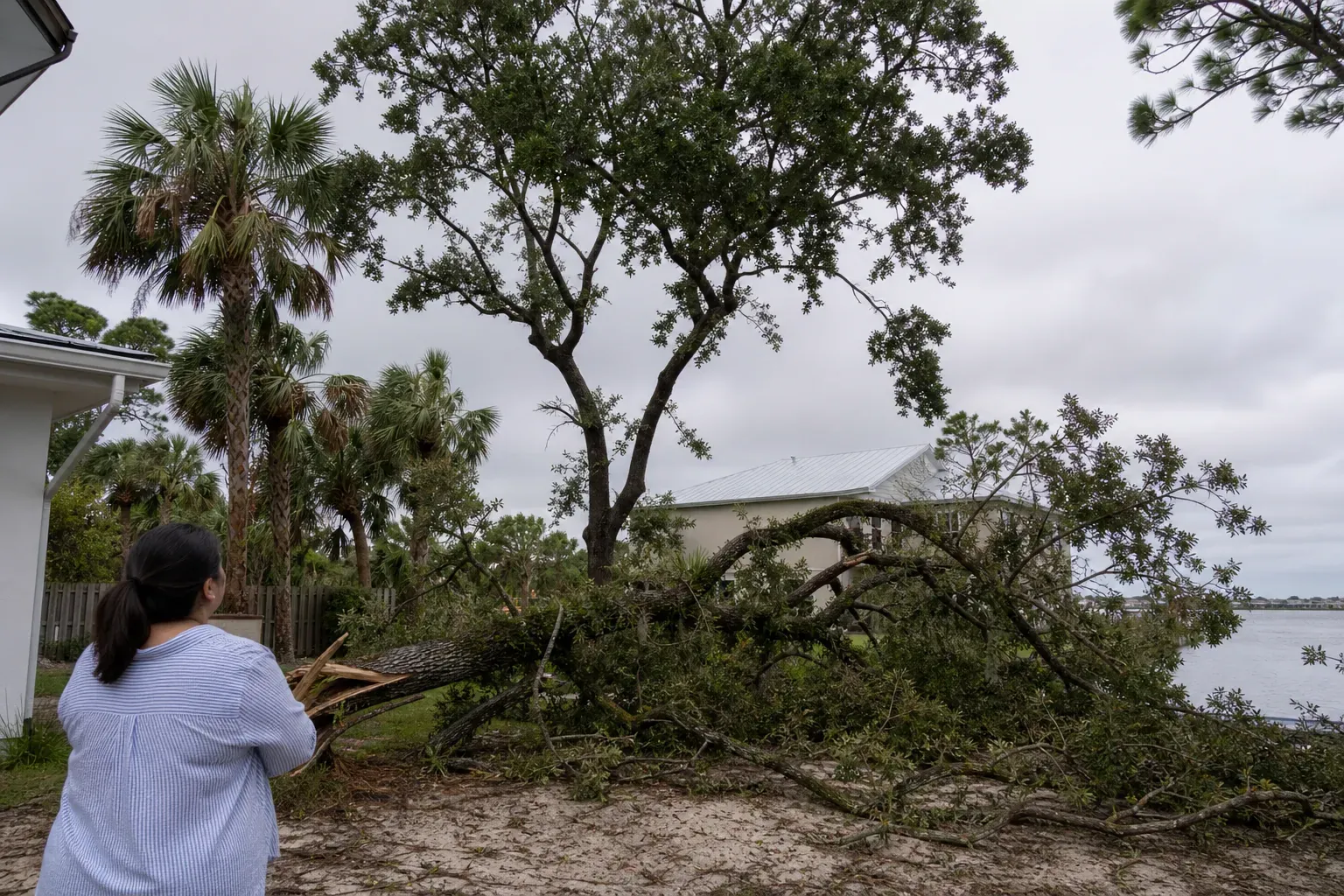
Ask the assessing professional which changes require renewed contact and what to record safely. Keep clear of damaged trees while seeking guidance. Hurricane Isaias When A Retained Tree Changes In Destin focuses on those questions, not on judging tree safety from a photo.
Keep people away from the affected area. Contact a qualified local tree professional for tree concerns. Report possible utility hazards to the utility. Call emergency services when there is immediate danger to life.
This is general education, not a site assessment. Follow current public instructions before entering a storm-hit property. The linked National Hurricane Center advisory is an October 9 snapshot. Use National Weather Service updates for current local instructions.
What does Hurricane Isaias When A Retained Tree Changes In Destin mean for owners?
The choice to keep a tree may need review. The Isaias tree canopy recovery guide covers recovery over time. The Pensacola tree risk guide offers related tree-care background. New signs may prompt another call.
A retained tree is one left standing after review. That choice is not a promise of future safety. It reflects the tree and site conditions seen then. Later changes may call for a new assessment.
Wind damage may affect more than the visible crown. The crown is the upper part with branches and leaves. A full review may also consider the trunk, roots, and places that falling parts could hit. Those places include homes, paths, roads, and parked cars.
The ISA tree owner resources provide guidance on tree risk, storm damage, and proper care. They support informed decisions, but cannot replace a site visit.
A change does not always mean removal is needed. Nor does fresh growth prove the tree is sound. The useful question is narrower: does this new sign change the earlier plan?
Give the next professional a clear record of the earlier decision:
- Keep the original assessment, its date, and any stated limits.
- Save the planned follow-up date for comparison.
- Say if no formal assessment took place.
- Ask what was checked before relying on the earlier decision.
A cleanup visit or quick glance may not include a full risk review.
Which new changes should prompt renewed professional contact?
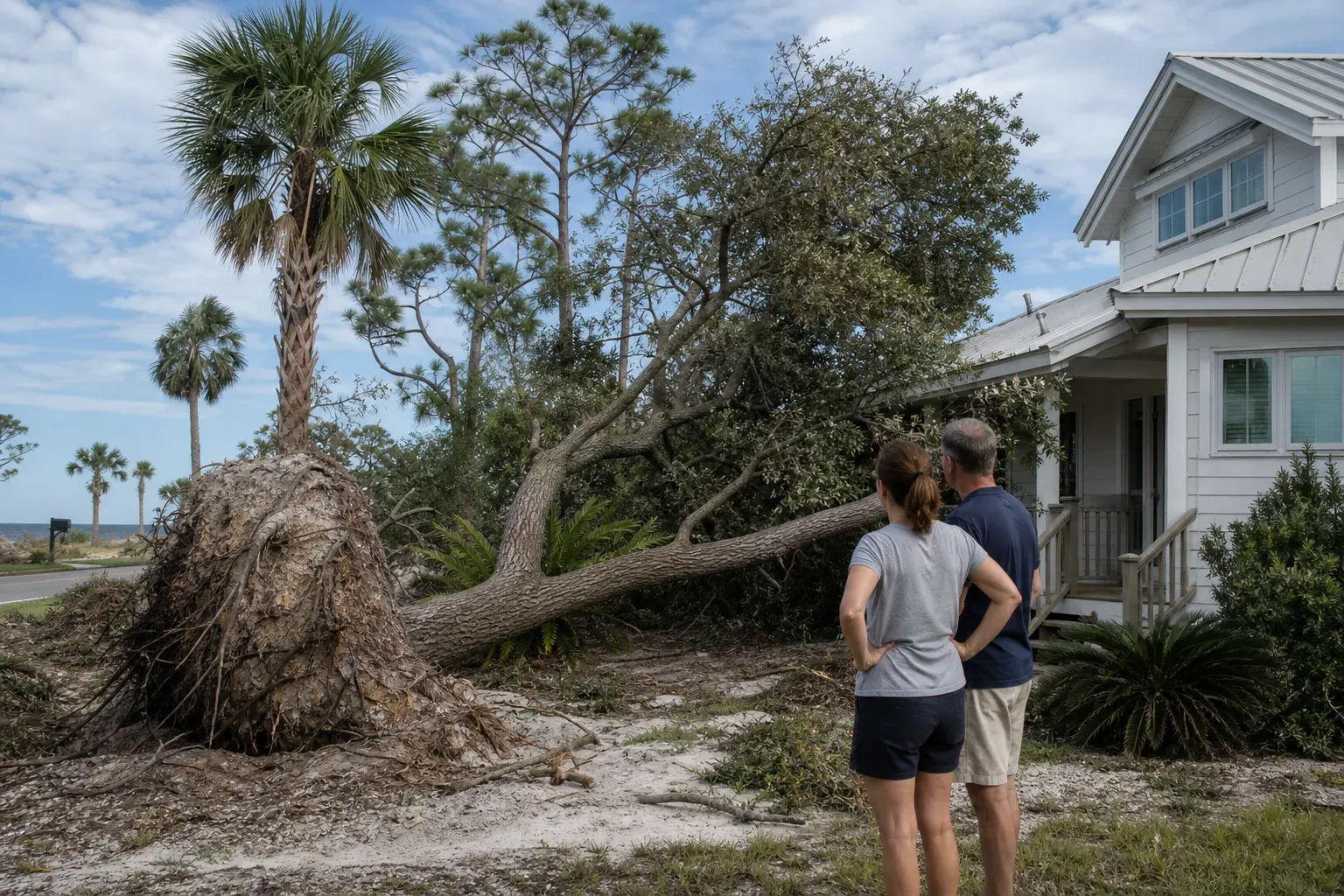
Contact a professional when the tree looks different from its last assessment, especially where people or property could be hit. The canopy recovery overview gives broader context, and Pensacola root recovery guide offers related tree-care background.
Do not try to grade risk yourself. Describe what changed, where it is, and when you noticed it. The professional can decide what kind of review is needed.
Changes worth reporting include the following:
- The tree has a new lean or leans more than before.
- Soil near the base has lifted, cracked, or shifted.
- A fresh split appears in the trunk or where large stems join.
- A broken limb now hangs over a place people use.
- A branch has dropped since the last assessment.
- A partly broken limb appears to have moved.
- A new dead area appears, or leaf loss keeps spreading.
- The tree or its limbs now touch a wire.
Record safely visible changes for the assessor. Ask what they mean for this tree and whether another site assessment is needed. This guide does not diagnose root failure.
New lean, large splits, and hanging limbs deserve particular caution. Keep people and pets out of the possible fall area. Do not walk beneath the tree to get a better view. Do not pull, push, or shake damaged parts.
If wires are involved, stay away from the tree and nearby debris. Contact the utility. Tree work should not begin until the utility hazard has been addressed by the proper authority.
A tree over an unused corner differs from one over a front door. Tell the professional what lies beneath it. Also mention any change in use, such as moving parking under the crown. The tree may look the same while exposure has changed.
For immediate danger to life, contact emergency services. A tree care estimate is not a substitute for emergency help.
What should you record before the next assessment?
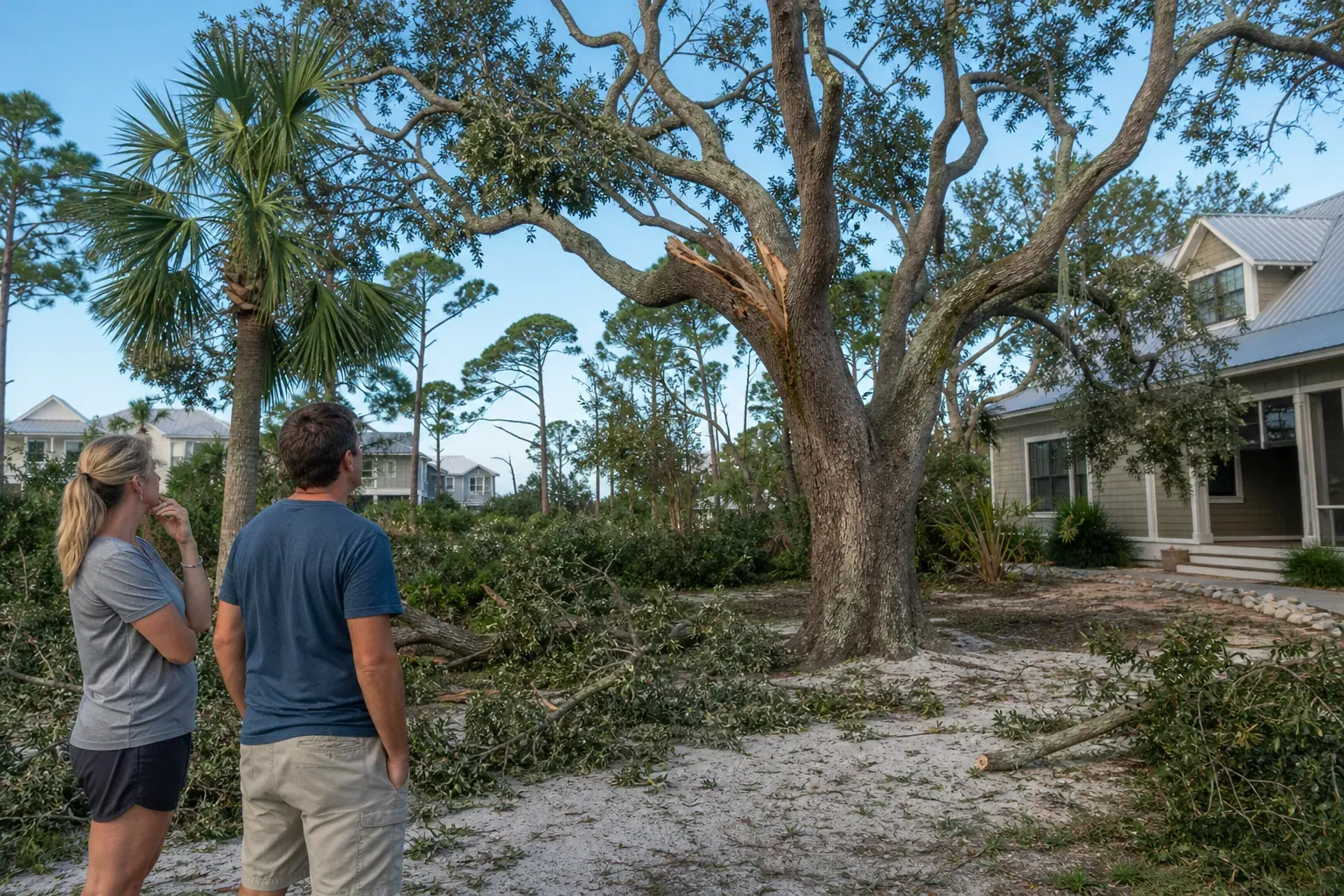
Record clear facts from a safe place, not a guessed cause. The Pensacola tree risk guide can help organize observations, while Pensacola root recovery guide offers related tree-care background.
Useful notes are brief and specific. “A limb fell beside the drive on Friday” helps more than “the tree seems bad.” You do not need to name a disease or defect.
Use this simple record for a follow-up call:
- Find earlier records. Save assessments, work scopes, and storm photos.
- State the change. Describe what looks new, without claiming why it happened.
- Add dates. Note when it appeared and any later changes.
- Take safe photos. Stay outside affected areas, never beneath damaged limbs.
- List nearby: doors, paths, roads, parked cars, play areas, utility lines.
- Share records. Ask whether changes need a visit or revised plan.
Include recent work near the tree if known. Digging, paving, or changes to drainage may matter to the assessment. Report the work as a fact, not as proof of a cause.
Photos from the same safe viewpoint can show change. A wide view shows the whole tree and nearby uses. A closer image may show a visible defect, but only if it can be taken safely. Do not climb or use a ladder for evidence.
Do not test a damaged branch or palm spear. Avoid digging around roots to inspect them. Such actions can expose you to danger and alter the site.
Ask what you should watch between visits. Also ask which signs should trigger another call. A clear written plan is easier to follow than a vague instruction to “keep an eye on it.”
How do you separate crown recovery from changes that need review?
Treat new leaves and sprouts as observations, not a safety test. For related tree-care background, read Pensacola root recovery guide and Pensacola tree risk guide.
According to UF/IFAS storm restoration guidance, restoring damaged trees may take several pruning visits. A replacement leader can develop within a year or two on some broken tips one to two inches wide. Larger breaks may take much longer.
Those time ranges are not promises for a particular tree. Species, damage, and site conditions still matter. The source also notes that large branches are less likely to close over than small ones.
A flush of sprouts can make a crown look fuller. It does not show that a split has healed. It also does not tell you how well new growth is attached. Have a professional review growth as part of the whole tree.
The same guidance describes later structural pruning after repeated restoration visits. That work addresses branch structure, not solely appearance. Owners should not copy a pruning schedule without a site-specific plan.
For palms, the rules differ from those for branching trees. UF/IFAS palm recovery guidance says broken green leaves can still help a palm recover. The storm restoration publication also advises keeping bent green fronds unless they pose a hazard.
Useful distinctions include these:
- A bent green palm frond may still provide energy for recovery.
- Dead fronds that could fall on people or property need attention.
- Broken fronds crossing over the palm bud may hinder new growth.
- Yellow leaves or brown tips alone do not justify stripping the crown.
- New growth does not resolve concerns about changed lean or trunk damage.
Palm recovery can be slow. UF/IFAS notes that replacing an entire canopy takes at least a year and often longer. Lack of a full crown soon after a storm is therefore not a stand-alone removal rule.
Do not add fertilizer or fungicide as a blanket response. The palm guidance makes different fertilizer recommendations for uprooted and non-uprooted palms. It also reports no research documenting the benefits of post-hurricane fungicide use. Ask for advice suited to the palm and site.
How can you prepare for a revised care decision in Destin?
Prepare for a fresh review rather than a preset outcome. The Isaias canopy recovery pillar explains the overall process, and Pensacola tree risk guide supports a clear follow-up record. Neither replaces advice for your Destin property.
A revised decision may involve monitoring, pruning, further assessment, or removal. Only a qualified professional with enough site information should recommend the next step. Ask why the plan changed and what remains uncertain.
Bring the earlier report and your new notes. Ask whether the new visit covers just the visible symptom or the whole tree. Clarify whether roots, branch attachments, and nearby uses were included.
Before approving work, ask practical questions:
- The written scope should identify which tree and parts are involved.
- The professional should explain the reason for the proposed work.
- The plan should state any follow-up needs or assessment limits.
- The work arrangement should address debris handling and site access.
- Any permit questions should be checked with the authority for that property.
Do not apply another city's rules to Destin. The supplied Pensacola city arborist guidance describes Pensacola requirements, not Destin requirements. Contact the authority serving your address for current rules. Do not assume storm damage removes all approval duties.
Keep insurance questions separate from tree safety decisions. The Florida CFO homeowners insurance overview says debris and tree removal coverage varies by policy. Coverage often depends on damage to insured property and stated limits.
Take damage photos when safe, and retain reports and receipts. Ask your insurer or agent what records they need. Do not assume that keeping or removing a tree guarantees coverage. The Florida hurricane deductible guidance offers general context, but your contract controls your specific questions.
For Destin assessment or work, contact a qualified professional serving Destin. Florida Foliage is based in Daytona Beach and serves Volusia and Flagler counties. This educational article does not imply Destin crews, a Destin office, or service availability there.
Frequently asked questions
Does a retained tree need another assessment after every change?
Record leaf, growth, trunk and ground changes only when safe. Ask the assessing professional which changes need a visit and which fit the existing monitoring plan. Keep clear of damaged areas while seeking guidance. This article does not set a tree-specific response or inspection interval.
Can green leaves prove that a storm-damaged tree is safe?
No. Green leaves show living foliage, not the strength of roots, stems, or branch joints. New leaves may grow while damage remains. Growth alone cannot show that a split has healed. Have a professional review the whole tree, including its roots, trunk, and branches.
How soon should I call about a new lean?
Contact a qualified local professional when you notice it. Keep people away while seeking advice. Do not wait for a planned pruning visit to report the change. If there is immediate danger to life, contact emergency services. For wires, contact the utility.
Should damaged palm fronds all be removed?
No. UF/IFAS advises preserving green fronds that still help the palm recover, unless they pose a hazard. Dead hazardous fronds and fronds obstructing the bud need separate consideration. A qualified professional should decide the scope. Removing more foliage is not always better care.
Does a changed tree mean insurance will pay for removal?
No. A changed condition does not establish coverage. Policy terms, covered damage, exclusions, limits, and deductibles may affect a claim. Ask your insurer or agent about your contract. Keep safe photos and records, but do not delay a necessary safety call while seeking a coverage prediction.
About the author: Tim Francis is identified as Tree Content Expert. That title does not represent a practitioner credential.
Drafting disclosure: This article was drafted with AI assistance. It provides general education, not a diagnosis, individualized tree care advice, legal advice, or an insurance coverage determination.
Florida Foliage is a Daytona Beach tree service that works with an ISA Certified Arborist consultant.
For tree work in Volusia or Flagler County, call (386) 481-7913 to request a free on-site estimate.
For tree work in Volusia or Flagler County, call (386) 481-7913 to request a free on-site estimate.